
And so we’re back, dear readers, with another installment of “Explaining American Politics to Non Americans”, in which yours truly attempts to guide you through the strange, savage, and unforgiving terrain of our nation’s government. Today we cover the other side to our two-party system: the Democrats.

Democrats are, like it or not, usually seen as the good guys by plenty of folks out there in the wide world. More diplomatic, less rapaciously capitalistic, more secular, less imperialistic, and so on.
Or so the image goes.
But is that reputation an accurate one?
The answer might surprise you.
No, It’s Not
Okay, I guess that wasn’t really a surprise.
I’ve made no secret of my contempt for the president and my fundamental issues with liberalism in general. But my own irritations aside, the facts must be faced- Democrats aren’t the glorious heroes that the world (or they) imagine them to be.
Let me break it down here.
Democrats Are Still Incredibly Right-Wing
And that’s going to be weird for a lot of the world. Pretty much everywhere else on the planet, there’s a comparatively broad range of political discourse, though even relatively conservative parties still tend to endorse free(ish) healthcare and education. The Democrats seem to get mistaken as being simply an American version of what many beyond our borders take for granted- a center-left party advocating universal healthcare, free education, environmental protection, and championship of the poor and working class.

That’s just not how it is.
First, let’s start with healthcare.
Don’t get me wrong- there are plenty of vocal liberals within the party (we’ll get to them in a second) who advocate the principles I mentioned above, the party has more often than not capitulated to these demands, rather than having fought for ’em.
The Affordable Care Act, or “Obamacare”, as it’s more commonly called, serves an example of this. While it’s absolutely an achievement (credit where credit is due), it’s about as far as possible from the systems used elsewhere in the world.
Now I’m not going to presume to know where you’re coming from, dear readers (Canada and Northern Europe tend to be big hits for us here at CWR), but I’m guessing that wherever it is, you enjoy some degree of universal healthcare. Chances are that you’re healthcare system is subsidized through hefty taxes, if not owned outright by the state. The present state of healthcare in the good ol’ US of A, however, works like so:
Since Obamacare’s legislation, all Americans are simply required to “have” health insurance. While certain points of the law keep insurance companies from preventing people with pre-existing conditions from getting service, these are all still private companies. Some programs exist to assist the extremely poor in getting some assistance in paying for insurance, but most everyone has to pay for it on their own (and it is not cheap, folks).

Does you cell phone bill equal about half of your rent? ‘Cuz that’s about how an insurance plan actually costs…
And that’s it. The hallmark of healthcare reform in this country.
The end. Continue reading

 create biological webs from her fingertips. Other favourites from the same publisher include Shang-Chi, the Master of Kung-Fu, an Avenger at the time of this writing. He primarily relies on his master of martial arts, an ability which didn’t keep him from participating in an intergalatic war to save the universe. Another is Amadeus Cho, a teenager who attained the title of “7th Smartest Man in the World” and frequently took down superhuman assailants with only his intelligence and whatever else was available. Yes, at one point one of those superhuman assailants was the Hulk. The Hulk.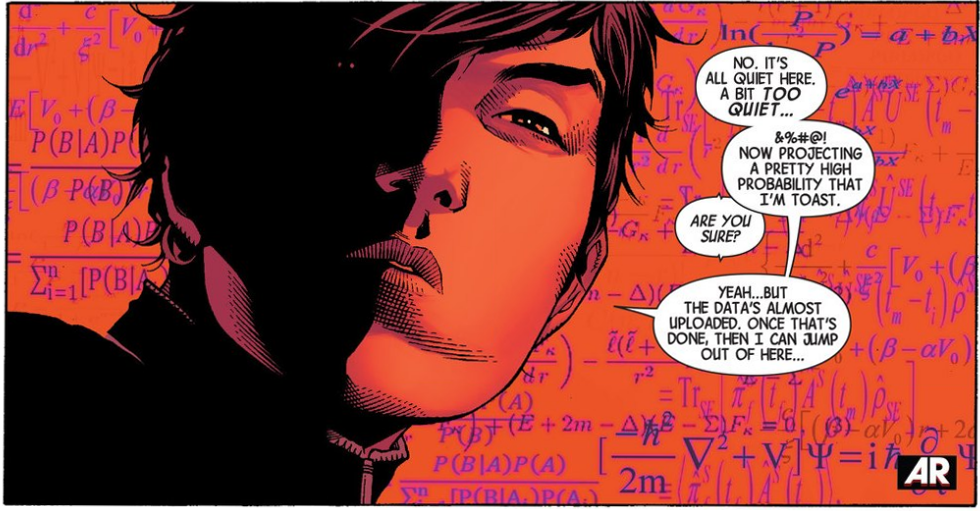
 Bradley Katsuyama is a real-life currently existing person. He is an Asian-Canadian and has been a doer of objectively heroic actions surrounding the investigation and consequent combating of algorithms that preyed on unwitting investors. While not the intellectual property of a company creating and producing recent years’ largest blockbusters he is the focus of the novel Flash Boys: A Wall Street Revolt, a film adaptation of which Aaron Sorkin is set to write the screenplay for. Yet at this point Katsuyama is no closer to having his story told than Shang-Chi or any of the rest of them.


 Culture War Reporters