GORDON:Ladies and gentlemen, because we are men of our word, today’s Evan and Gordon discussion will be based off a suggestion left by you, the readers.
Specifically, Joe Chinn, who asked us to talk about rest and leisure time in this crazy modern world.EVAN: The irony is not lost on me, as I embark on a forty-five minute chat at around 11:15 pm with work the following the morning.
GORDON: So I’m guessing we’re stating right off the bat that we don’t have enough hours in the day?
Let me begin by explaining that this is not a review of the simultaneously acclaimed and decried 2012 Tarantino blood-fest. You want to hear one of those, I’d recommend clicking over to Spill or The Escapist’s “Escape to the Movies.” No, what I want to talk about are some specific elements and segments of the film which have become points of contention, controversy, and debate in the past weeks.
Let’s start with the most obvious:
I. Saying “Nigger” Every Other Word
I won’t claim to know your stance on the word “Nigger”- heck, I’m not even sure of my own stance. Perhaps you view the term as so degrading and reprehensible as to merit burning it from spoken language. Perhaps you believe that appropriating and using the word strips it of its power to even be used as an insult. Maybe you see it as being purely contextual- a term of address with audience and a terrible insult with another.
It’s all Elmo ever thinks about
There are probably strong points to be made on all sides, but perhaps the stance you cannot take is that the use of the word “nigger” was inappropriate for the movie.
Now before you take up the battle-cry of “Tarantino is just trying to shock us!” or “Tarantino uses the word excessively in his other movies!” I have to say this.
You’re right.
It’s Tarantino; that’s not an excuse, that’s a fact. You wanna take up his use of the word in other films, then that’s part of the whole debate mentioned above. Simple truth of the matter is that this use of the word “nigger” would still be controversial if the film had been made by anyone else. So let’s talk about it.
Let’s assume that this movie, with selfish or noble intent, is trying to demonstrate a glimpse of the world in question; the use of that word is almost bound to come up. I might throw out the example of Mark Twain’s classic novel Huckleberry Finn, and while by sheer volume Django probably has Huck beat for use of the word, by percentage I’d posit the two are pretty evenly matched. The escaped slave Jim is repeatedly and almost exclusively referred to as “Nigger Jim,” as are the other black characters in the book. Now Twain was anti-slavery and used that word to demonstrate the dehumanization of African Americans (which is why taking the word out of versions of the book is so dumb), as well as reflect the general use of the word. Now I’m admittedly no historian, but if the writings of Twain and other authors are any indication of the times, I wouldn’t say the film is quite so far off as some critics might suggest.
And speaking of historical accuracy…
II. The KKK, or Lack Thereof
There is a scene in the film during which a group of men wearing white sacks over their heads attempt to stage an attack on Django and Schultz. New Yorker contributor Jelani Cobb writes “Tarantino depicts the K.K.K. a decade prior to its actual formation in order to thoroughly ridicule its members’ (literally) veiled racism.” While that scene was (in my own opinion) side-splittingly hilarious, Jelani, and many others, are dead wrong in assuming that this scene depicted historical inaccuracy.
Take this section from Huckleberry Finn:
Why don’t your juries hang murderers? Because they’re afraid the man’s friends will shoot them in the back, in the dark — and it’s just what they WOULD do.
“So they always acquit; and then a MAN goes in the night, with a hundred masked cowards at his back and lynches the rascal. Your mistake is, that you didn’t bring a man with you; that’s one mistake, and the other is that you didn’t come in the dark and fetch your masks.
Again, this is a Tarantino movie set in a Tarantino universe. That’s not a defense, simply, as I’ve already stated, a fact. If you’re looking for a historical account of the pre-war South, a spaghetti-western revenge flick probably ain’t the best place to look for it. There are going to be certain inaccuracies, and there are going to be things the filmmaker has to get right- but all of that is beside the point (which we’ll get to in a minute). All of that’s to say if you’re gonna try to criticize (or praise) the movie’s deviation from historical truth, make sure you’re (1) doing it for the right reason and (2) that you’re critique is actually right.
III. Samuel L. Jackson as Uncle Tom
In Django, Samuel L. Jackson plays the role of the villain’s head-slave Stephen, who isn’t so much a character as a caricature of the most groveling, snivelling Uncle Tom you will ever see or even imagine. This guy makes Uncle Ruckus look like Eldridge Cleaver.
You are guaranteed one genuine Gordon hug if you know who Eldridge Cleaver is.
I’ve heard people call this portrayal offensive, bordering on “black-face” in its depiction of stereotypical “black” mannerisms. It’s exactly for that reason that I didn’t have a problem with the character.
I really have no reason for putting this gif in here…
See, the entire point is to make fun of the guy- and not just him, but the quisling slaves that did indeed exist. I don’t think that this portrayal robbed the film of the gravity of slavery anymore than Bugs Bunny foiling a cartoonized Hitler robbed WWII of it’s gravity.
If Django Unchained exaggerated the horrors of the slavery, if the film depicted one one-hundredth of the horrors of slavery, I will never write again. Despite the allegations of this critic, the truth of the matter is that we could depict the institution of slavery for a century and be no closer to depicting an ounce the inhumanity of it all than when we first started. Does the film exaggerate slavery? Absolutely not. Does it make light of it? Certainly this was a concern of mine going into the movie, but having seen it, I really don’t think it can be faulted there either. The film does, I believe, make a distinct effort to show slavery as brutish and ugly as possible. Or, at the very least, the slavery scenes; this is, after all, a revenge movie first and foremost.
V. The Point
That’s the thing I feel most people are missing here. This ins’t a movie about slavery, this is a movie with slavery in it. It’s a revenge film in which one sorely persecuted character dispenses well-deserved justice upon his persecutors and we all nod our heads in approval and feel a sense of pride and joy well up as we look into this fantasy where the bad guy does get what’s coming to him. Slavery is the backdrop, not the subject, of the movie, but it’s just such a major issue that most of us are getting hung up on it. The equivalent might be bashing a western on the basis that the actual “wild west” was pretty peaceful- factually true, but still missing the goal of the story.
No, this is not a historically accurate film. No, it doesn’t capture the horror of slavery. No, it doesn’t even try to wrestle with it. No, it’s not a discussion of our checkered heritage. No, it’s not the film to drag that dark, bloody history out into the light of day.
EVAN: Today’s topic is something that I hold very near and dear to my heart. Years of research on the topic has made me witness to all of the arguments that can be used against needing to have racially accurate casting, and because of this I’m going to propose something a little different
GORDON: Namely?
EVAN: That I switch sides for this conversation, and speak out against it.
GORDON: Intriguing. Mind starting us off with the first salvo?
EVAN: Statement: Racially accurate casting is not important. The most talented actor should be the one who gets the role.
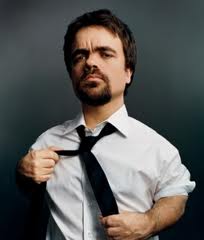
GORDON: Doesn’t appearance play a key role in what makes an actor good? Peter Dinklage is good, but you wouldn’t really find him believable playing Abraham Lincoln or Kareem Abdul Jabbar.
EVAN: In this case his stature, not his race, is what would keep him from playing either role in a convincing manner.
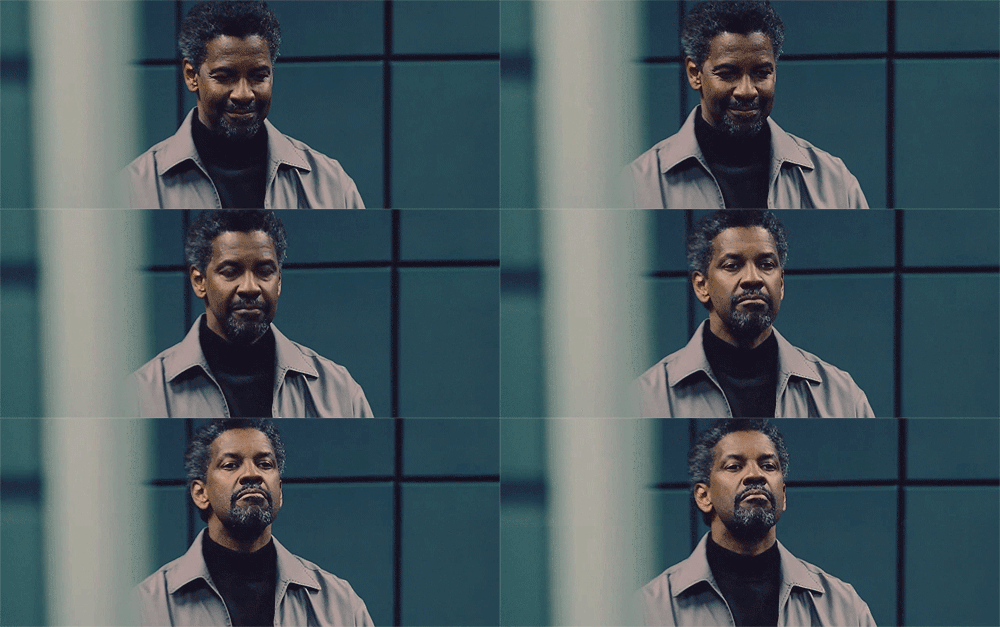
GORDON: But isn’t that essentially the same issue? Imagine the great Denzel Washington playing Lincoln- you’d be sitting there the entire time, no matter how much of a powerhouse Washington would be, taken out of the film because you have to deal with a black guy playing a white guy during the height of the civil war.
In any piece of film where you’re expecting realism, you’re going to expect the actors to conform to the styles and facts of the time. If you portray Georgia in the 1960s, you’re obviously not going to have a largely black cast portraying the upper class or if you were to set the scene in early 1900s Ghana you wouldn’t have a cast comprised of Caucasians. It wouldn’t make sense, no matter how good they are.
EVAN: If anything, Cloud Atlas at least proves that a talented actor can portray whoever they like, given an adequate amount of makeup. Halle Berry plays a Korean Man in the film, and does so in a convincing fashion that doesn’t at all take viewers out of the film in the least.
GORDON: I haven’t seen that film, so I can’t speak to the use of the actors for the parts they play. From my understanding that was a work of fantasy (or science fiction, I’m only going off what I can gather from the trailers). And in one or two movies, it’s probably not a big deal. After all, Cate Blanchett played Bob Dylan.
But imagine this applied to each and every movie, it simply wouldn’t work. Realism would deteriorate- and this would be especially detrimental in a film trying to deal directly with race relations.
EVAN: I personally feel that allowing any race to play any other speaks much more in terms of race relations. That’s a world where colour is a non-issue because it shouldn’t be.
EVAN:I’m dying, Gordon. My life force is seeping out of me.
GORDON: Try to stick with it…
GORDON: And while it’s true that race ought to be a non-issue, that’s simply not how things are or have been in the past. Using black actors to play black characters and white actors to play white characters is fundamental to demonstrating past inequity and injustice with American racism and segregation. And that’s just one element.
Let’s talk about Indians playing Arabs. It happened in Lost and it happened in Community (with multiple actors), but Arabs look nothing like Indians. Indian actors are used simply because they fit the stereotype of what most people think an Arab looks like. It perpetuates an inaccuracy.
EVAN: Isn’t the fact that the role is an Arab important a large enough step? This is a minority with a major role on a TV show, and an opportunity for minority actors to step up, which they have in both cases.
GORDON: Barring Monk and Arrested Development, when’s the last time you saw an Arab actor? I’m not trying to argue against Indian actors, or actors of Indian heritage getting roles, but for the purpose of portraying the world as it is (or at least with some realism) we should have actors with some vague resemblance to the people they’re portraying on film.
After all, would you not be thrown off by guys with German accents playing French resistance fighters during WWII?
EVAN: If they had German accents then they simply wouldn’t be right for the role, which brings me back to my first point.
GORDON: Which, by proxy, brings us back to my first response. Ethnicity (depending on the situation) is just as valid an element of a guy’s candidacy for a role dealing directly with ethnicity as accents, or height, or any other factor (actual talent, of course, being the most important).
Vincent Cassel should probably not play Malcolm X. Adrien Brody should probably not play the Queen of England, though that would be pretty funny.
EVAN: If we’re going to stick with believability, than why is it so important that Indians not play Arabs? No one has ever made a big deal out of this, so clearly people believe that they are what their role calls them to be-
Likewise a Korean can to play a Chinese person can play a Japanese person. Audiences can’t tell the difference and believe that they are whatever the role is, and that’s okay.
GORDON: But Koreans do not look Chinese, Chinese people don’t look Japanese, and Arabs and Indians certainly don’t look like each other. The only reason this happens is because most people either don’t know (partly due to this inaccurate casting) or don’t care (in other words, all non-whites are basically one homogenous mass.
If all your life, you had seen black men and been told “these are Uzbekistanis,” then you’d go your whole life simply assuming that Uzbekistanis are, in fact, indiscernible from guys from Benin.
Your ignorance should not dictate which actors get which parts. Further, no Uzbekistan could really ever get a chance to play and Uzbekistani because of the years of misinformation.
EVAN: But there is a huge difference between a black person and an Uzbekistani. The examples I made have similarities that the example you used clearly does not.
To be such a stickler for accuracy is the other extreme, and just as wrong. You wouldn’t get someone with mental problems to accurately portray a character with mental problems, that just doesn’t make sense. Race should matter if it is noticeable, and like I said in the case of shows like Lost it is not.
EVAN: The logic above was used against me by someone in a thread on Reddit You can check out our exchange here.
GORDON: Granted, my example was extreme, but that doesn’t change the point. Even though a Thai guy and a Japanese guy share more similarities than a Beninese guy and an Uzbekistani guy, there are still distinct differences between people from Thailand and people from Japan.
With regards to being a stickler- I admit, as I have previously, that you don’t have to have an exact replica of the character you’re trying to portray. Jet Li, I imagine, is doing pretty well for himself, and I still wouldn’t doubt his ability to portray a poor man very well. However, while you don’t need to be point for point, you do need to have some general similarity. That’s why we don’t have Emma Stone portraying Fidel Castro.
EVAN: I feel like the extremeness of your examples is damaging your point. If we’re sticking with race we should do that, and not bring in gender.
GORDON: It’s to demonstrate the underlying point in all of this: Verisimilitude. Realism. Accuracy.
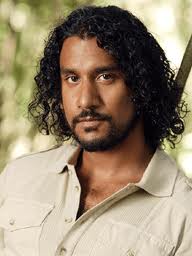
EVAN: And since you said “you don’t have to have an exact replica of the character you’re trying to portray” why isn’t it okay to have Naveen Andrews play Sayid Jarrah on Lost?
GORDON: But the distinction is great enough. The accent is Indian, not Iraqi. Naveen does not look Iraqi. When an actor neither looks nor sounds like the character he is meant to portray, we have a problem.
EVAN: So if Jarrah had managed to sound Iraqi, would that have helped?
GORDON: It would’ve added to the realism and accuracy, yes. But that doesn’t change the fact that he’s very clearly Indian, not Arab.
EVAN: Clear to a very select few. As mentioned, people didn’t seem to notice for the most part.
GORDON: Clear to a very select few. As mentioned, people didn’t seem to notice for the most part.
Most people don’t know what an Arab looks like. Do they know that Monk is Lebanese? That Cousin Maeby is Iraqi? Most do not. Ignorance is not an excuse for inaccurate casting.
EVAN: And that brings our exhausting exchange to an end. Trying to argue for something I so strongly disagree was one of the more difficult things I’ve ever done. I hope that in reading this you were able to see the holes in my argument and the truth in Gordon’s.
GORDON: Booyah.
The past few paragraphs alone have had the same effect on Evan as that life-sucking device in the Princess Bride. Commend him for biting the bullet.
And as for our discussion next time, your options are: What do we make of the upcoming Star Wars sequel?
EVAN: And. . . how about . . . How much artistic merit is there in a show like Adventure Time?
GORDON: I like it.
And to our beloved and devoted followers (who would organize into a vicious and unholy army of darkness if we ever were to ask it of ’em), feel free to suggest your own topic down in the comments section.
GORDON: Ladies and gentlemen- this is your captain speaking. After some unavoidable delays we will finally be taking off into our mid-week discussion. Our topic for today is “What’s the greatest flaw of this generation?”(This generation being those born in the late 80s to mid 90s: “The Millennials,” “Generation I”, “Gen Y”- call us what you will).
EVAN: As I mentioned in the news update, we scrapped our conversation last night, largely because it became cyclical. To be more specific, we ended up going back and forth between apathy and cowardice, with one leading back to the other and so on.
GORDON: But let’s widen the picture a bit. While apathy is the go-to criticism many have, also up there for our generation’s flaws is our alleged “sense of entitlement.” Thoughts?
EVAN: If we’re still going with your incredibly broad age range, then yes, I definitely think that a lot of kids these days feel a sense of entitlement. It’s just the norm now to have wireless internet, a phone, the latest iGadget, etc. They’re just expected, the new given.
GORDON: Is that fair, though? I mean- haven’t we assumed that phones, indoor toilets, and electricity are “the norm” since they were first invented?
EVAN: To a point, though, some of what you listed are basic necessities. I’d argue that indoor plumbing is considered much more standard than an iPad.
GORDON: This is true, but I don’t think our generation- barring the handful of people who actually do feel entitled- views the iPad or any specific item as being “standard”- it’s the interconnection that’s the norm, as well as the expectations for new technology.
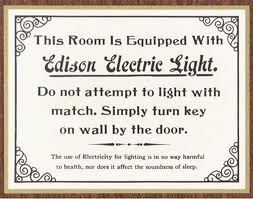
I mean, back in the day you didn’t need light bulbs. But if they’re mass produced, and safer than gas-lamps, then it just stands to reason that we’d eventually come to expect them.
But of course technology’s only one element. what about the idea that this generation is “entitled” in the sense that they get to “find themselves” or “focus on their art” or whatever hipster euphemism is being used to say “part-time employed”?
EVAN: Do I think that people feel they deserve the right to do more than just hit the ground running after college, get right down to the ol’ nine-to-five? I mean, yeah.
But I think this brings up a point I made yesterday about the “where” of our question. In France the age of retirement is 62 and that’s just expected. There are different standards depending on where you live in the world.
GORDON: This is true. I mean, each and every one of us would be considered spoiled brats if we jumped back a hundred years or so.
EVAN: Oh, no doubt. Especially you with your freakishly smooth hands.
GORDON: So would YOU say that the whole “entitlement” criticism stands?
And I use gloves. I refuse to be put down because I take better care of myself.
EVAN: You say that every time, but they’re still as smooth as a baby’s bottom.
GORDON: That means they’re working, and I’ll further have you know that I have a big ol’ scar in my right hand in the shape of a number “7.” But back to the issue-
It doesn’t seem like the “entitlement” bit sticks. Could we be classified as “lazy,” perhaps? The warped and stunted half-humans resulting from government dependence and the welfare state?
EVAN: Well, we discussed “laziness” last night specifically in the context of wanting to change what is clearly a broken system, but is what we’re talking about a general laziness? People just expecting to be spoon-fed?
GORDON: That’s the question. I recall a Cracked.com article in which the author kicked things off by apologizing for helping perpetuate the myth that a college education was a guarantee for a good job. Are we “lazy” in having had the expectation- as most of us had?
EVAN: Well, depending on who you ask, college is hard. In a way, I guess we expect that the hard work we put into maintaining a good GPA, et cetera, will result in finding employment once we’re out in the real world. Which, as I can attest to, is clearly not the case.
GORDON: So is that laziness then? Entitlement mentality?
EVAN: I don’t think that doing hard work and expecting a reward is laziness. That’s like someone working the fields and then being called a layabout because he expected crops to grow. A shaky comparison, I realize.
GORDON: Works for me. And I agree.
Now you yourself have accused us all of being creatively bankrupt. Could that be our major flaw? That we don’t make- we remix?
EVAN: I guess it depends on how we’re working this whole “greatest flaw of our generation” angle. The trend to rehash, remix, et cetera came about recently, but I’m not sure it’s because of us. Or is the question in regards to this day and age we’re in, and not those growing up in it?
GORDON: No, I mean us as an age-group, and that does pretty much answer the question right there. We are, for the most part, not the ones who are making the films and TV shows and music (give or take) of our time- that’s those who came before us.
EVAN: Exactly. Which is why we’re getting stuff like He-Man and Thundercats reboots, because those who were kids in the 80’s have a crippling nostalgia. Music is different, of course, but TV and movies are definitely controlled by the generation before us.
Okay, how about this. Maybe the flaw is our hellish appetite to be entertained.
GORDON: Ooh- interesting take. Expound, by all means.
EVAN: I mean, you’ve talked about the bilge that’s on television countless times. Do you know what we’ve been reduced to? A musical chairs gameshow called “Oh Sit!”
Are we so bored that we’ll watch people play “extreme musical chairs” for an hour?
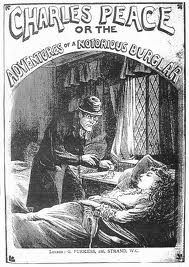
GORDON: I had no idea that existed. But surely this isn’t the first time in history that TV’s been crap. Or radio, or books, or music, or anything. Think of the “Penny Dreadfuls” back in the Victorian era- little, cheap trashy pulp-fiction novels made for mass consumption. Is that any worse than what we have today? Seems like the bilge is the same- it’s just the media that’ve changed.
EVAN: It may be the same, but it’s being produced at a frantic pace. That change, at least, has to be important.
GORDON: That speaks less to our appetites and more to our efficiency.
EVAN: I’d say that it has just as much to do with our appetites, judging by the content of what’s put out.
GORDON: We’re almost out of time, so let’s hit up some other key issues:
Apathy. As we said before, apathy tends to be the go-to criticism, at least, one of the major ones when it comes to our generation, and I think this is one of the easiest to put to rest. The Occupy Movement, environmentalism, increasing number of social movements, increasing global awareness- you name it. We’re strides ahead of the past couple generations. Heck, I’d go so far as to say we’re the most involved generation since the 60s and early 70s.
Well we’re out of time, and still of plenty of ground to cover- so rather than sloppily close up, we’ll be continuing our discussion next week with a question about hipster morality: “Do we want to be good, or do we just want to look good?” If you have any suggestions or recommendations for topics, don’t hesitate to shoot us a comment.
EVAN: Thanks for reading, and remember that CWR now updates every single weekday. I’ll see you tomorrow in our first ever “Fame Day” post!
If you’ve heard of this series (in either its film or book form), there’s a good chance it’s because David Fincher of Fight Club/Se7en/The Social Network fame directed the American remake. Even if you’ve heard of it, there’s a also a good chance you haven’t seen it- Fincher’s The Girl with the Dragon Tattoo did only so-so at the box-office, not quite tanking, but also not becoming as popular as many were speculating it would be. And that’s a real tragedy, because the story, in spite of its flaws, is a really good one- you’re just going to have to make a few adjustments in how you see it.
I. Watch the Swedish Version Instead
In my post about the differences between British and American television, I pointed out that American film typically physically glamorizes each and every character- no matter how minor- while the Brits are comfortable with their protagonists actually looking like people you’d meet on the street. While not quite to on the level of the British (from what little I have seen of Swedish film), the Swedes do seem to lean more towards the Brits when it comes to this, and while it doesn’t like it’s all that important, “humanizing” the characters a bit more by making them look like people you’d actually know gives all that more grittiness and clout to the issues the story grapples with.
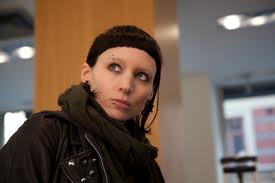
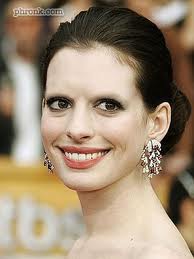
Beyond that, there’s the issue of casting for Lisbeth Salander. Now I’m not going to knock either Noomi Rapace or Rooney Mara, partly because they’re both terrifying…
But I do nevertheless have to address the eyebrows.
More specifically, the fact that Mara’s Lisbeth doesn’t have any.
Ok, that’s not entirely fair- Mara’s version does have eyebrows- they’re just wispy blonde and really hard to see. And that’s something that’s pretty dang unsettling- heck, it’s downright terrifying.
I know it’s probably petty, but Rapace’s Salander, having eyebrows we can actually see, makes it that much easier to watch an already tough movie.
II. Watch the Second Movie First (Then the First, Then the Third)
Not having had any background knowledge of the series, I accidentally wound up watching the second part of the trilogy (The Girl Who Played With Fire) instead of the first segment (The Girl With the Dragon Tattoo). As confusing as it was, I think that this is the best way to do it. While it’s a good movie, The Girl With the Dragon Tattoo really is something of a stand-alone piece, often accused of being pretty linear and slow. The subsequent stories, filled with high stakes of human trafficking and political intrigue, are a lot faster and more action-packed, but really depart from the general style of the first segment. By starting with The Girl Who Played With Fire, you get to be dropped right into the action and have a relaxing “flashback” with TGWTDT that fills in all the blanks and builds up tension and momentum for the final film, The Girl Who Kicked the Hornet’s Nest. Give it a shot- I promise it’ll pay off.
IV. Cut Steig Larsson Some Slack
A lot of critics of both the film and the books have pointed out that the male protagonist in the stories, Mikael Blomkvist, is essentially author Steig Larsson’s literary avatar. As a result, plenty of people blow off the films and books as just being Larsson’s own little fantasy in which he, the last honest journalist teams up with a goth-punk hacker to solve mysteries together. The fact that Fincher chose Daniel Craig (a.k.a. James ****ing Bond) to play Blomkvist probably didn’t do anything to assuage those accusations.
But here’s the thing- Larsson can’t be accused of writing a fantasized version himself into his books because the real Steig Larsson is way more badass!
As a boy, Larsson witnessed the rape of a woman, and so wracked with guilt at not having been able to do anything, wound up dedicating the rest of his life to fighting for justice and equality. In the 70s, he traveled to Eritrea to train an all-female squad in the Eritrean People’s Liberation Front. He returned to Sweden to found a watchdog journalist group and investigate and combat neo-nazism and white supremacy, despite continually receiving death-threats.
Yeah, that’s not so much a biography as it is a superhero origin story. That’s enough right there to make Jack London and Ernest Hemingway look like pansies. If anything, Blomkvist is a version of Larsson nerfed for the sake of believability. Let’s cut the guy some slack.
IV. Understand a Bit About What’s Being Addressed
Part of the issue with the series is that it’s a commentary in no small part on Swedish social and political issues. I only recall it being hinted at in the American version, but the Swedish version of the film spent a bit more time touching on the Wennerstrom family’s (and the entire country’s) shameful flirtation with Nazism in the 30s and 40s, as well as the ongoing issues of xenophobia and racism in contemporary Sweden. Beyond that the series tries to address issues of corruption within the state, as well as the ugly reality of human trafficking (which despite growing awareness, might not quite strike home with American audiences). You don’t need to have a detailed understanding of the intricacies of State-Capitalist governance and Scandinavian history, but knowing a bit about the very real issues of fascism and racism in Europe does add a whole lot.
EVAN: Hey, readers. Welcome back to yet another segment of “Evan and Gordon Talk.” This week we’re going to be discussing the limits of stand-up comedy, specifically in terms of crassness. How far, exactly, is too far?
GORDON: I’m gonna come on out swinging say that there’s really no such thing as “limits,” just inappropriate timing and venue.
EVAN: Alright, well, let’s take an example and see if you can provide an appropriate time and venue. To retread some well-worn territory, how about rape jokes?
GORDON: Before our readers jump to conclusions, please here me out-
Rape jokes aren’t alone in being terrible things. We have murder, the Holocaust, disease, Darfur- you name it. Yet we set rape aside. My best estimation for why that is for us (in the west) is that it’s a clear and present issue- as opposed to starvation and disease. It is, therefore, something that’s close to home- something that we don’t typically joke about on the grounds that it’s, well, “real,” for lack of a better term.
Now I’d be hard pressed to imagine a scenario in which a rape joke would be okay. But then again, if I were living in the late 1940s, I believe I’d be just as hard pressed to imagine a situation in which a Holocaust joke would be funny.
EVAN: I’m still waiting for an answer to the question.
I’ve got a video that my brother is quite fond of where Ricky Gervais jokes about Hitler and Nietzsche, and it’s actually quite funny, and does involve the Holocaust. I suppose it could be argued that time has allowed us to not turn to the oft-used cry of “too soon.” But, again, I am interested to know about a way rape jokes might be considered not extremely inappropriate.
GORDON: My point is- I can’t see the future; none of us can. The fact that I can’t imagine a venue in which such a thing would be funny doesn’t mean that it, like the Holocaust or any terrible event, won’t be joked about years from now and be just as funny as that Ricky Gervais bit.
You see what I’m saying?
EVAN: I think what needs to be discussed is the difference between funny and appropriate.
GORDON: Touché. But before we get into that, let’s clarify our terms here.
We’ve been saying “rape joke,” but the truth of the matter is, we’re not talking about “rape jokes”- we’re talking about ones specifically pertaining to women, aren’t we? I mean, how many “Don’t drop the soap!” jokes do we hear and think nothing of?
*For clarification to our readers- what got Evan and I thinking about this was a Tosh scandal– look it up.
EVAN: Okay, so specifically jokes regarding male on female rape, to clarify. Go on.
GORDON: Well- doesn’t that force us to rethink the entire question? With that in mind, do we have to ask rather “Who can be joked about?”
EVAN: I think that’s a pretty vague question. We can joke about a lot of people: kids, politicians, Americans-
There’s a difference between a priest walking into a bar and a woman who’s been sexually assaulted.
GORDON: Let me offer you this, for clarification. There’s a bit by (awesome) comedian Aziz Ansari which includes a rape joke. In this case the “victim” in the situation is a man. There was no outrage.
Contrast this with the outrage that surrounds rape jokes regarding women. Why is there this difference in public reaction?
EVAN: Again, what I’m asking is to specifically discuss an appropriate time and venue for the type of joke already clarified. To explore the difference is to go back to what you said earlier, that rape for us in the West is more “real” than genocide or drought, etc.
You explained it yourself fairly quickly, I think. For most of the public rape of men is not as “real” as the rape of women.
GORDON: Then, as awful as it sounds to us now, isn’t it possible that in a world where female rape is as “real” as the Holocaust (or any of the other stuff terrible stuff we joke about today) it’d be just as tame as the aforementioned jokes?
EVAN: But all you’re saying is that there’s a possible future in which rape jokes are acceptable. As an “appropriate time and venue” the same can be said of everything from cannibalizing your own children to bestiality.
I’d also argue that the aforementioned jokes aren’t classified as “tame” even today. Just less sensitive.
GORDON: Fair enough. I guess I should restate my position.
The issue isn’t with what gets put into a joke, so much as who or what is being mocked. Mocking a victim- be it a murder victim, rape victim, holocaust victim- that’s not cool.
EVAN: Let me try to reiterate what you’re saying- We can mock an action, just not the victim?
GORDON: Absolutely- as we wound up concluding in our discussion of “ironic racism,” the point is to satirize/mock/etc. racism for the hideous and idiotic thing that it is.
EVAN: As often exemplified by comedians such as Russell Peters and Dave Chappelle.
GORDON: Exactly.
I could cite similar jabs at that Arch-Dirtbag Todd Akin by political comedians and satirists who used rape NOT to make fun of rape, but to make fun of Todd Akin’s mind-boggling moronic views on the very same subject, and NOT to make fun of rape victims.
EVAN: That’s a really great way of putting it.
And I think this is the first time we’ve actually really broken down a topic, instead of following rabbit trails and culminating with me mocking you for your human failings.
GORDON: You’re just losing your touch.
EVAN: Hey, this has been a fairly deep and legitimate conversation.
GORDON: That it has.
EVAN: And we are now reaching the end of our allotted 45 minutes. The two choices for next week’s topic are:
GORDON: What’s the greatest flaw of our generation?
EVAN: And “Television Wars.” i.e. all of the shows that feel the need to just slap words in front of the word “wars” and have at it.
Once again, thank you all for reading. Feel free to stick around and check out other posts, and definitely come back next Wednesday for our next installment.











 I. Watch the Swedish Version Instead








 Culture War Reporters