Tag Archives: gender

Language as a Product of Cultural Evolution [Or Why Chimpanzees Can’t Talk and We Can]

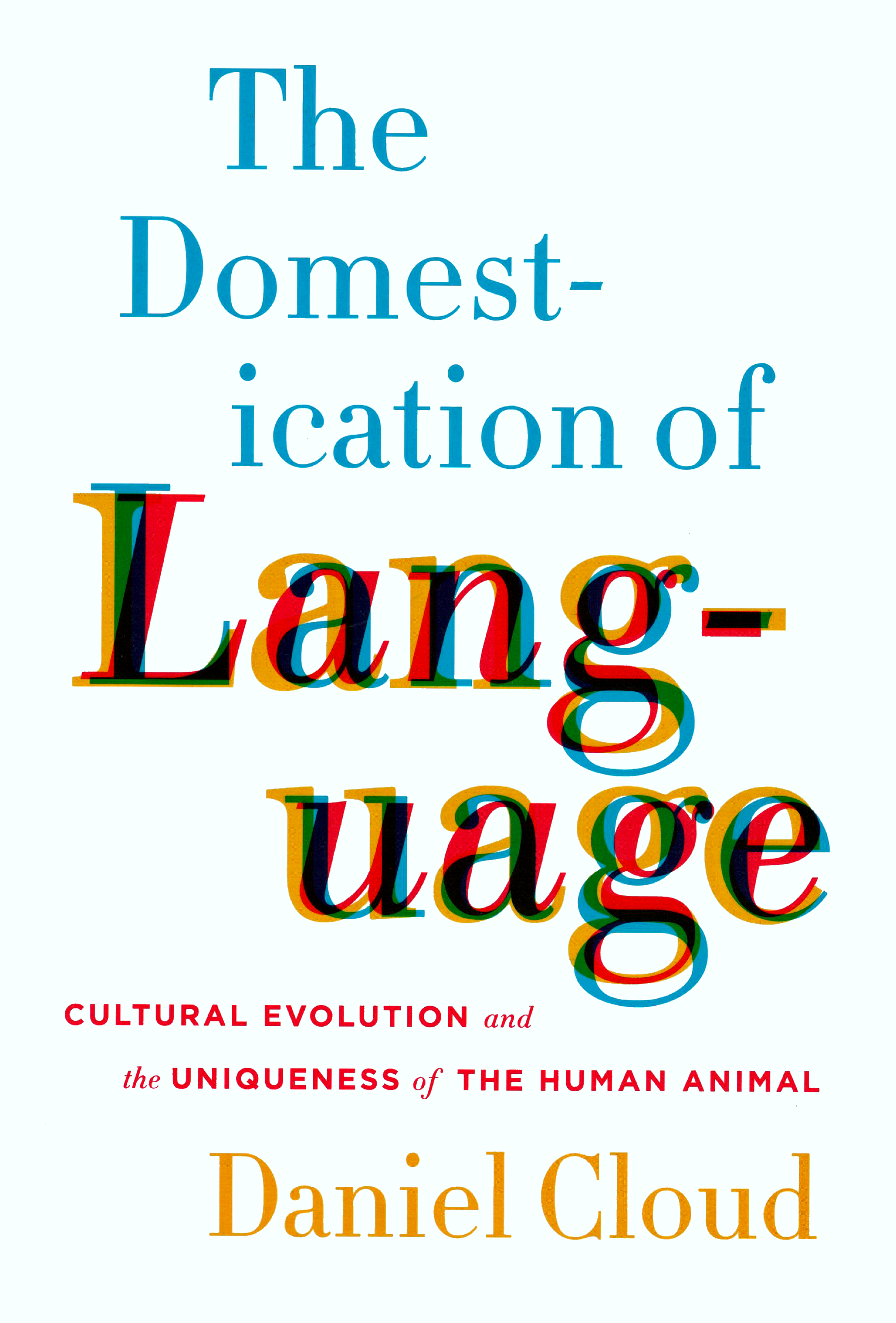
thedomesticationoflanguagecoverThis week I finished The Domestication of Language: Cultural Evolution and the Uniqueness of the Human Animal, a book whose subject matter should be self-evident. Shortly afterwards I was given the opportunity to talk to Daniel Cloud, the author of said work and professor of philosophy at Princeton University.

To summarize it very briefly the book is a thorough and eye-opening examination of language as a piece of culture that has been grown and thus evolved due to choices and actions we’ve made as human beings. While our discussion of his work was incredibly thorough and actually exceeded an hour I’ve managed to cut it down to something that closely approximates a conversation, and one that I hope will convince you to pick up a copy for yourselves.

Evan: Now I will of course be putting together some form of introduction to preface this interview, but I thought it would be good for our readers to hear you describe yourself in your own words-

Cloud: I would say that I am an American philosopher carrying on the American philosophical tradition. I worked in science for a while in Russia and China which gave me some some experience with socioeconomic change; I was in those places during a period of upheaval. Research as a philosopher most interested me when I decided to quit and go back to school. Biology and evolution in particular stood out as I already knew a lot about the social sciences.

Evan: As far as The Domestication of Language: Cultural Evolution and the Uniqueness of the Human Animal is concerned I would describe your primary goal as breaking down the origin of human language. Would you agree with that?

Cloud: My goal was and is to explain where language comes from, yes, but specifically the theory of cultural evolution and if it works relative to language. Language is one type of culture, and the specific type of culture I chose to focus on in this book was words as they’re discrete identities that are easy to identify and track throughout history.

The larger project is actually to track humans as being distinct from other types of living things. To return to language I present it as a tool for exploring the way cultural evolution works. It’s the application of the word “domestication” as seen in the title, the theory that just like animals and plants what we have in the present day is very different from how it began. Words are only the first thing I’ve tried to identify in this way. I could just as easily have turned to fashion or clothes or any other kind of culture. Continue reading

Is “Feminism” a Self-Defeating Label?

I’m a pretty slow learner when it comes to social media. I feel like I just mastered Facebook when it started going out of style. Unfortunately for me, social media sites are important tools when it comes to blogging. I’ve been making an effort to expand my horizons, starting with Twitter. So far, my favourite thing about Twitter is the hashtags.

Even before I started posting on Twitter, I would check to see what was trending and to follow conversations about race and gender that unfolded around hashtags like #WhyIStayed, #BringBackOurGirls, #GamerGate, #IfTheyGunnedMeDown, etc. Recently, when I went to tag a comment with “#feminist”, I noticed that the first two tags to show up were “#FeminismIsAwful” and “#FeministsAreUgly”. When I decided to make a comment about it, it wasn’t long before I got a response.

https://twitter.com/YTM1staWu1fy/status/590034450320199680

I’d like to consider what Jacob is saying. First, let’s set aside the long history of smearing feminism by calling feminists ugly for a second here.

Continue reading

Lisa Nakamura Part 2: Navajo Circuits and the “Nimble Fingers” of Asian Women

In my last post, I told you a little bit about Lisa Nakamura, her research, and the talk she gave at my university about Tumblr activism. I also promised to tell you about her second lecture the next time I wrote.

Both of Nakamura’s lectures were about digital media, but unlike her first talk, her second presentation focused on the physical material of digital technology.

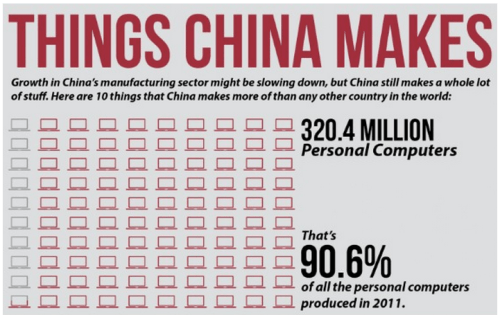
Unless you’ve been hiding under a rock, or recently time-travelled to 2015, you probably wouldn’t be surprised to hear that most of your digital hardware came from Asia. You may even be familiar with the way Asian women have been racialized as innately predisposed to factory work because of their “supposed docility, nimble fingers and attention to mind-numbing detail”.

Screen Shot 2015-03-09 at 8.39.54 PM

Click on the image to view the full infographic.

However, you might be surprised to learn that this stereotype has been applied to women of colour ever since the digital revolution. In her paper on “Indigenous Circuits: Navajo Women and the Racialization of Early Electronics Manufacture”  Nakamura examines the way digital factory work is both gendered and racialized. She refers to the work of Karen Hossfeld when she insists that

“…by the eighties in Silicon Valley, electronic assembly had become, not just women’s work but women of color’s work.” (290)

Continue reading

There Is Neither Male Nor Female – Rethinking Gender Roles

…And for those of you concerned, Evan has mandated a cut-off for these posts. As important as they are, and as many interesting questions as they raise, there’s only so many weeks in a row we can dedicate to beating a dead horse.

I feel first that I should clarify some of my points in my original response. When I was first drafting it, I was concerned that Kat (who had written a rather personal piece) might take it the wrong way- I’m glad that she gave me the benefit of the doubt on it. Truth is, my issue isn’t with Kat (who I think would agree with most of what I’m about to argue) but with the wider implications of Deschanel’s statements (though there were a few points I take issue with in Kat’s response- but we’ll get to that).

Deschanel argued that “we can be powerful in our own way, our own feminine way“. My response was “No, you ****ing can’t”.

Not “no, you *****ing can’t be powerful”, not “no, you can’t be feminine” (whatever “feminine” means), but rather “no, you can’t have your ‘own feminine way.'”

Why? Continue reading

Why I Decided to Stop Being a “Tough Girl” and Just Be Me

I used to cry a lot as a kid. A lot. I had all the feels and I didn’t know what to do with them. 

I was also a pretty uncoordinated kid. I mean, nothing spectacular (I only broke a couple bones), but enough to make me suck at the only thing that mattered in elementary school: winning stuff. Being stuck as “it” for hours at a time in grounders or tag really gets the spirit low, so, as you might expect, I spent a lot of recesses crying.

My mom loves to tell this one story from back when she worked at my school. She had been helping a friend of mine with her homework one day and when this friend became frustrated she had reminded her that “Some people are good at spelling, some people are good at sports, etc. Everyone has something that they are good at, and everybody has something we need to work on.”

Later that day, I came dead last in a race (my mom likes to emphasize this part when she tells the story, often repeating herself with “and I mean dead last“). Anyways, after coming dead last in this race I retreated to a distance to cry my eyes out. This same friend of mine came over and put her arm around me. Then she started to tell me “You know Katherine, some people are good at spelling, some people are good at sports…”

You get the gist of it. I used to cry a lot. Then, one day on the playground, a kid called me a “cry-baby”. I don’t remember who it was, but I remember clenching my fists and swearing to myself “I will never cry again!” Continue reading

Passing Post-Modernism

It’s 2015, readers, and what better way to start off the year that’s just beginning than by railing on an idea that need to end? Yup, we’re talking Postmodernism here.

Not too long ago, I wrote an article giving an overview of Postmodernism, and it nearly killed me. Yours truly tries to make a point of not including my own judgments in these posts and just let folks draw their own conclusions, but this one- gah. Took every ounce of my (limited) restraint not to rip it to pieces and cackle victoriously as I squat over the grave of Jacques Derrida and…

…well I’m getting ahead of myself, aren’t I?

What’s Postmodernism? Continue reading