Tag Archives: lgbt

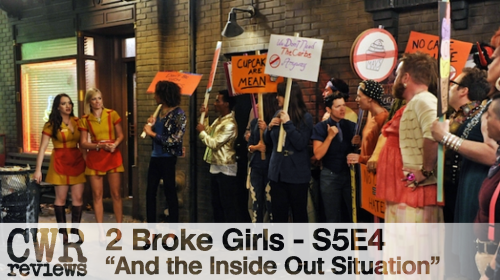
2 Broke Girls, S5E4 “And the Inside Out Situation”: A TV Review

insideout

As soon as I saw the promo pictures on the CBS website I began dreading this week’s episode of 2 Broke Girls. “And the Inside Out Situation” centres entirely around LGBT discrimination and political correctness, and let’s just say that the writers on this show have not exactly shown the tact of John Oliver and co. at Last Week Tonight or the biting satire of the South Park people.

From the very beginning things look rough, as the LGBT character they chose to put front and centre, I, introduces themselves:

“To be clear, I am neither he nor she, mister nor misses, male nor female. And the only part of me that is transitioning are my heels from day to evening. I am simply ‘I’. And I cannot be labelled. I am gender fluid.”

The issue with this is when the audience chooses [and/or is prompted] to laugh. After the first joke, the reference to heels, is a given. The second, on the other hand, comes right after I tells the two girls that they are gender fluid. Now this is a word that has garnered a good amount of negative connotations in the past few years, but that is problematic to say the least. Continue reading
Coming Out, Moving Forward

When I was last dating a man, I talked long and loud about my queerness. I objectified female celebrities with the gusto of a barely post-pubescent male; I loudly debated the finer plot points of such luminous queer media as MTV’s Faking It; I was here and I was queer and I was proud, and god forbid anyone think I was straight, just because I was dating a man. I was all too familiar with that sort of misconception, but in reverse: when I had dated a woman for the first time, in my last year of high school, we had done that most high school of things and changed our relationship status on Facebook. This led a group of people – people who had known me over the course of multiple years and witnessed many ridiculously dramatic and public instances of romantic interest in men – asking me over and over again if I was a “lesbian, now”.

Being tacitly bisexual is a constant parade of those sorts of questions (as is being openly bisexual, unfortunately, but to a lesser extent). My unwillingness to announce my sexuality to everyone I met meant that when I was dating a woman, people assumed I was a lesbian, and when I was dating a man, people assumed I was straight.

And I was tired of it. I was tired of desperately trying to flip my self-presentation every time I was in a relationship, tired of worrying if I was queer enough, not to mention whether I seemed queer enough. Those worries became even more present when I became the co-editor in chief of my college’s only LGBTQ+ campus publication. How could I position myself as a leader in the queer community when I was in an ostensibly heterosexual relationship? Would anyone take me seriously as a queer advocate and writer if I happened to be dating a man come publishing time? Continue reading

Safe Spaces and Echo Chambers – Finding The Middle Ground

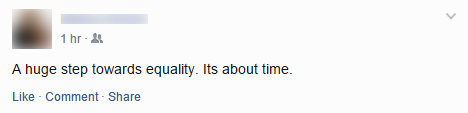
Today the Supreme Court legalized gay marriage in all 50 states. Right now my Facebook feed is blowing up, with the vast majority of my online acquaintances rejoicing that a ruling that’s been a long time coming has finally passed. To sum it up in only eight short words:

abouttime

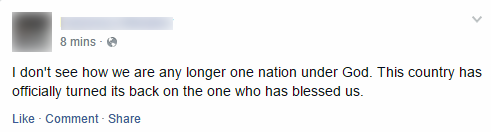
On the other side of things, though very few and far between, there is a sentiment in direct opposition. There weren’t many for me, but I think most people will find at least one status that falls roughly along these same lines:

turneditsback

The internet is never silent on the most innocuous of issues, and when it comes to an event as groundbreaking as this one there isn’t a person who can keep from putting in their two cents. As Kat observed last year the words we post online are made subject to scrutiny, with one of the tamest consequences being that someone will voice their disagreement. As another Facebook very wisely tacked on to the end of their status: “*If you do not support gay marriage, please do not respond to this post. This is a genuinely wonderful occasion for many that I love.”

This all connects back to a topic I’ve been meaning to cover for a while, which is the idea of “safe spaces”. It goes beyond simply wanting others to leave a Facebook status as a forum for positivity instead of debate to having a place where we can rest assured we won’t be outright attacked.  Continue reading

Tumblr and SJWs: The Difference Between Having a Problem and Being One

So roughly two months ago Gordon said I would be “providing some cutting observations on the state of Tumblr”, and I’ve finally gotten to the point where I’ve done enough research to finally tackle this thing. In this case “this thing” refers to “the internet’s conceptions of Tumblr and its users, specifically those who have been deemed ‘social justice warriors'”. It’s going to be a long one, so sit back, buckle up, and do one other thing you would do when riding in a vehicle.

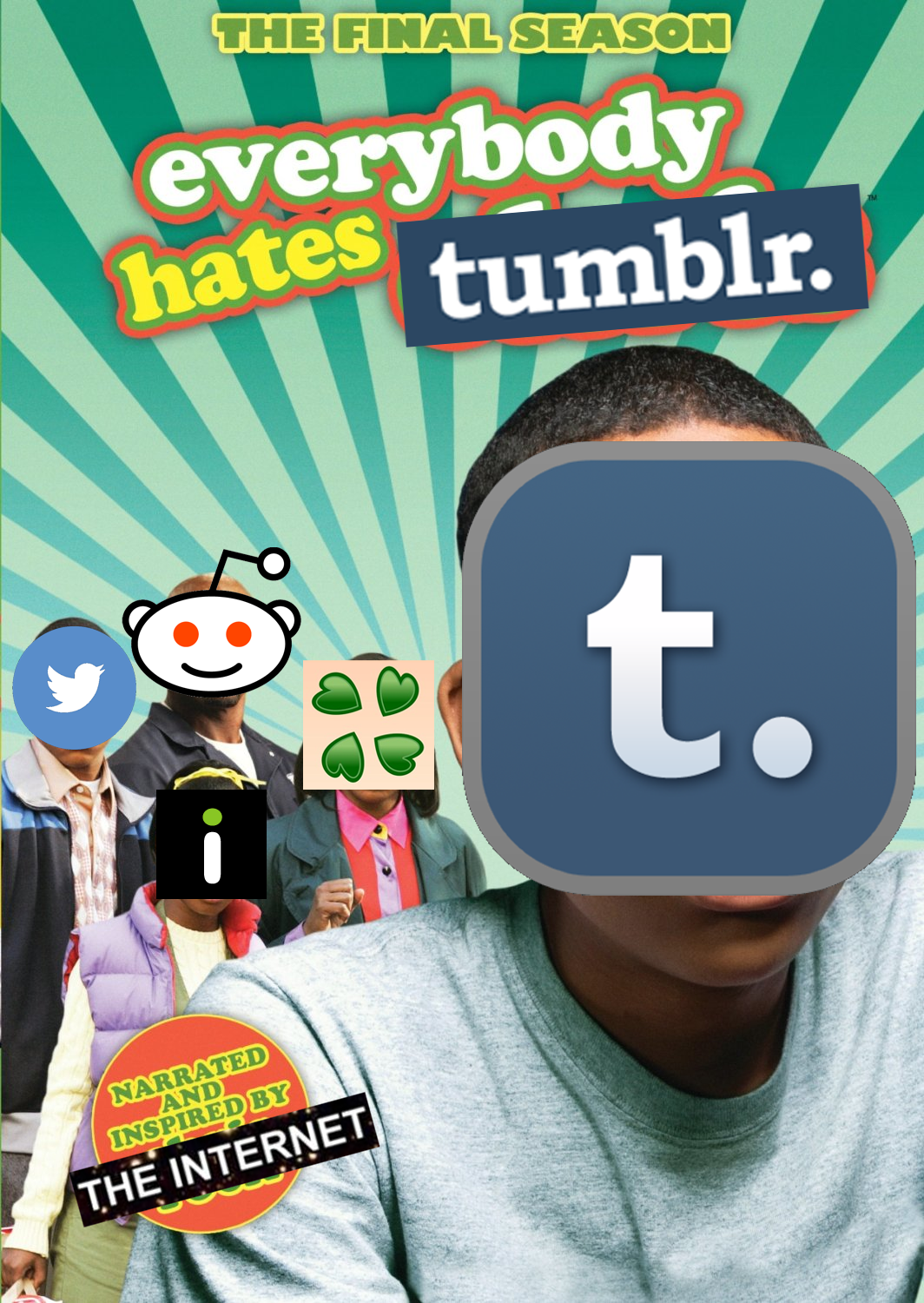
everybodyhatestumblrEverybody Hates Tumblr

I’m not going to pretend I know where you spend your time on the internet, but chances are that you’ve come across the general sentiment that Tumblr is “all that is wrong with the internet” or “a literal cancer” or some other hyperbole. It’s gotten to the point where just invoking the site’s name in relation to anything can be, and usually is, a damning condemnation.

As far as I can tell, there exists a much stronger bias towards it than even 4chan, with the latter being heralded as the primordial ooze that the vast majority of our memes come from, a primal, unadulterated place that has stood true to its roots. That’s a conversation for another time, but the point is that Tumblr has come to carry more negatie connotations than other social networking sites, with a lot of that having to do with it being the homeland of SJWs, or “Social Justice Warriors”-

What Is A Social Justice Warrior? [Wow, Google Image Search Has Not Been Kind To That Search Term]

This YouTube video is a pretty short, funny breakdown of what one is:

If you didn’t feel like watching it, here’s what the dude defines it as, providing three definitions that get more and more easy-to-understand:

  1. a derogatory term for people who advocate for socially marginalized groups
  2. a bad name for feminists
  3. a bad name for women-are-cool people

Continue reading

Homosexuality in Comics: Here Be Lesbians

Just as in most forms of media LGBT representation has been lacking in comic books, both in the content created and those responsible for its creation. It’s a conversation that will last for decades until such a time that we can look to art and see that yes, it does reflect the world we live in, such as it is. In regards to all of this there are times when a person will look at their pull list and decide that the stars have aligned just right, and that it’s time to dust off a blog feature of sorts that hasn’t been used in years.

It began with “Homosexuality In Comics As Of May 20th”, a post in 2012 that shone some light on DC Comics’ announcement that they would be introducing a previously straight character as gay,  having that person become “one of [their] most prominent gay characters.” One year later there was “… As of July 26th”, in which I revealed the aforementioned hero-

Alan Scott, the Green Lantern of Earth-2 [an alternate universe]

-and shared my personal opinion on how not to introduce LGBT characters [ie. as a revelation after decades of established straightness]. That was where I left things, saying that we need more gay, lesbian, bisexual, transgendered, etc. men and women and others in the medium that I love so dearly without offering much of a solution.

Thankfully two of this week’s titles helped a) me out in this regard and b) improve the pop culture landscape of which comic books are only a small part of. Continue reading

3 Things Christians Parents Can Learn From the Death of Leelah Alcorn

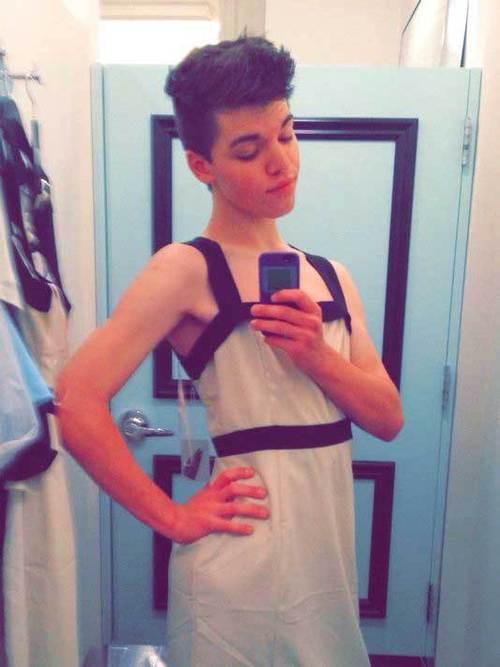
On December 28th Leelah (Josh) Alcorn committed suicide. In the Tumblr note she scheduled to upload after her death, Leelah implies that her parents’ strict rejection of her identity was one of the factor that led her to this decision.

I’m not a parent, so I don’t want to ignorantly hand out parenting suggestions. However, I do want to start a dialogue about this story in the Christian community.

Instead of offering my own naive words of advice, I’ve pulled out three quotes from Leelah’s note to focus on. Each of these three points highlight things Leelah seemed to deeply wish that her Christian parents would understand.

1. You can’t force your child to accept your beliefs

They felt like I was attacking their image, and that I was an embarrassment to them. They wanted me to be their perfect little straight christian boy…

– Leelah

I love what Jamie (the very worst missionary) once said on this topic. In her post titled “Not All Pastor’s Kids Are Christian. Sorry.” she talks about her own experience as a pastors wife, parenting a child who now identifies as an atheist. While Jamie expects their children to act respectful towards her and her husband (and their chosen profession), when it comes to their faith she only asks her children to be honest with her in their journey towards truth. She doesn’t ask them to pretend to be something they are not:

“Believing in Jesus? Receiving His redemption? These are not commands to be given by a father and obeyed by a child. They are a loving invitation from God to his people, every last one of His people, and He is patiently awaiting their reply…”

Continue reading