Tag Archives: movies

Fame Day: American Horror Story

americansdoghasdToday, I’d like to tip my hat to one of my favorite shows, a young series by the name of American Horror Story.

Now it’s no secret that the horror genre is universally despised, being seen by many as being lower on the totem pole than even toilet-humor comedies or the most saccharine romances out there. I could probably spend an entire post speculating on why exactly horror flicks are treated with such little respect (a lot of it is probably due to the genre’s inbred cousin, the “teen scream” flick), but that’s another topic for another time. I’m here to simply showcase the series and highlight a few of its key strengths and accomplishments that I think make it worthy of a Fame Day.

Each season of the show (the second has just concluded, and a third has been greenlit) is a separate story, made up of the horrific lives of the characters as they struggle with their pasts, their inner demons, and some ever-present terror always lurking just beyond the shadows. It essentially cashes in on the initial charm that LOST had before it jumped the polar bear.

Guilt and shame are themes that play heavily into the series as a whole (or at least, the past two “stories”), giving even the most heinous characters a degree of sympathy. Again, similar to LOST at its best, the constant shifting of the story from one perspective to the next prevents the series from ever being boring. Granted, the madcap pacing doesn’t always work (especially in the first story), but for the most part, the audience is always kept interested.

And that brings us to the first key accomplishment of the series:

Popularity

As I stated above, horror is simply not popular- at least, not in any mainstream way. Tim Burton’s lighter works are really the closest most people get to anything remotely macabre, and the fact that the series has continually drawn in high ratings (to say nothing of critical acclaim) is nothing short of amazing. And we’re not talking about a series that is eerie or has a handful of jump-scares, we’re talking about truly unsettling elements here. I’m certainly not alone in hoping that that AHS‘s continued success serves to begin building bridges between mainstream entertainment and horror subculture; heaven knows both could benefit from some fresh perspective.

And even in the subculture, AHS is playing a pretty major role. It’s…

Raising the Bar

As a result of the genre’s (comparative) isolation, quality in horror is typically pretty rare. When you can’t secure funding for special effects, good equipment, or even B-level actors, chances are your product isn’t going to be all that good. Of course, when you have a built in audience who would pay money to watch Dwayne Johnson protect an orphanage from chupacabras, why would you even bother trying?

I would actually probably watch that…

I’ve seen my fair share of (decent) horror movies, and I can count on one hand the films that had even passable cinematography. AHS, as a series that actually has some decent funding and actually puts effort into creating tense atmospheres and believable effects, is raising the bar for the entire industry. When AHS is the basis for most people’s experience with the genre, there’s going to be pressure on the rest of the industry to meet and excel the expectations the mainstream audience is going to have. Furthermore, AHS‘s star-studded cast (including Zachary Quinto, Ian McShane, James Cromwell, and, I kid you not, Adam Levine) is hopefully going to make the horror genre more inviting to high-caliber actors who can actually sell the audience on the direness of the situation and maintain interest without having to drag in a bunch of fornicating teenagers.

The series is actually one of the few I’ve ever seen that actually gives teens any credit or respect…

And perhaps most importantly, it comes down to this:

Depth

While the stories are good, as are the actors (Jessica Lange being easily more frightening than the goriest bits of the series), it’s some of the basic discussions held during the stories that really hit home. Oppression of women and the dark history of psychology are topics repeatedly brought up, and dealt with both in a historically accurate and totally visceral manner. Perhaps the most disturbing thing I’ve yet seen in the series hasn’t been any of the monsters or murders- it’s been a demonstration (scaled back for TV, even) of the psychological “treatment” given to people “suffering from homosexuality,” seen at the time as a mental disease. Those five minutes alone were more frightening than anything else in the story- and it was amazing. Amazing to see some serious and deep social commentary made, and to see the brutality and insanity some people had to undergo actually presented in a way that’s going to resonate with the audience. You will be a better human being for having watched that scene.

Though in the spirit of honesty, your view of nuns will probably diminish a bit…

When’s the last time you could say that about a rom-com?

American Horror Story, keep up the good work.

A final note. I would’ve included more gifs, but (1) I didn’t want to spoil anything and (2) easily 90% of all AHS images are of Evan Peters, who is apparently just the bee’s knee’, if the series’ female fans are to be believed.

Evan and Gordon Talk: Why Christian Media Is So Bad

EVAN: The particular topic of discussion that comes to us today is more one that finds itself passed back and forth within Christian circles, and that is: “Why is Christian media so bad?”

GORDON: I think the problem is self-imposed by the religion (I use the term loosely) itself. We’re not talking about a lack of funding (we’ve got plenty of good low-budget films), or a lack of good directors (there’s plenty of decent talent out there), we’re talking about an issue that runs right down the core of it all.

“Christian” media can’t just be media- they have to drag in everything that goes with it.

EVAN: So basically what you’re saying, and we talked about this a little earlier, is that Christian media more often than not has an agenda, correct?

GORDON: I’d say plenty of it has an agenda, but no, I don’t think that’s the core issue-  there’s plenty of other preachy movies out there.

EVAN: So what are you saying, exactly?

GORDON: I’m saying that “Christians” can’t make good media because they won’t allow themselves to. Every protagonist has to fit the moral code to a tee, so that they wind up as either Aslan 2.0 or the epitome of Christian morality: John Smith, the middle class suburban, patriotic family man. Which is why I keep putting “Christian” in quotation marks.

We’re not talking about Catholic peasants in El Salvador or the East Orthodox Church in Ethiopia.

EVAN: Okay, I like that a lot, this idea that those creators of Christian media [and primarily I think we’re talking about films] box themselves in. They’re telling the same sorts of stories to who they perceive to be their audience [and they’re not wrong]: white suburban middle class families.

To sort of break this up a little, I actually saw a Christian film that was reasonably passable at some point last summer.

GORDON: Was it related in any way to Steve Taylor?

EVAN: Is that any way related to “End of the Spear”? It was not, if that’s what you’re referring to.

GORDON: Steve Taylor is the only good Christian musician who ever has or ever will have existed.

But anyway, what was the movie you saw?

EVAN: It was called “To Save a Life,” and it stood out for a couple of reasons:

1) The cinematography was shockingly good for something produced and made by Christians. You can tell which movies they are within the first few seconds.

2) The “villain” of the piece was actually the pastor’s kid. Which was- refreshing, and kind of nice.

It kind of broke out of the whole stereotype you introduced earlier.

GORDON: Huh- interesting. I’ll have to check out the trailer. But let me ask you this:

Can a Christian make a James Bond movie?

EVAN: You mean a movie starring a suave, debonair British man who beds women and guns down henchmen as naturally as he dons his suit jacket every morning?

I’d say no, probably not.

GORDON: I think that’s the problem. It’s not just that you can’t have any explicit sex or graphic violence or excessive profanity (which are overused and abused as is), you can’t have anything even remotely sensual or rough or crude. It rips away reality and humanity in the name of not stepping on anyone’s toes.

Self-imposed legalism.

EVAN: Well, I’d say the difference is that you can’t have a protagonist who glorifies such things as wanton sexuality-

I say that Christian filmmakers will never produce anything like James Bond because of who the character is.

GORDON: Did you like the movie “Fight Club”?

EVAN: I liked it a fair amount.

GORDON: Did you like “Ocean’s 11” or “Snatch”?

EVAN: I haven’t seen the latter, but I very much enjoyed the former.

GORDON: Did you like “Superbad”? “Kick-Ass”? “Ironclad”?

EVAN: I enjoyed aspects of the first, thought the second was a shaky, though fairly decent adaptation of the source material, and thought the third was pretty unfair in its depiction of “strong female characters.”

But I think you’re going to have to get to your point-

GORDON: Could a Christian make any of these movies?

EVAN: I think a Christian could, yes. In relation to “Fight Club”, at least, Christian author Ted Dekker has penned novels [sold both in and out of Christian bookstores] which offer a fairly decent psychological thriller aspect to the reader.

GORDON: Ah, Dekker. The whole reason he stands out as an exception is- I believe- that he grew up among Indonesian headhunters, and not in Middle America. Again, it’s about having that different perspective on life.

EVAN: And I think what he’s realized, as a creator of the arts, as someone who has a hand in shaping Christian media, is that you can have these other sorts of exciting, thrilling stories told with a faith-built worldview. People of every religion want a little excitement.

GORDON: Of that there’s no question. The heavy use of the video library at our school stands in testament to that.

But again I think the issue is that “Christian” self-imposed isolation inevitably leads to the vast majority of their work winding up as “White People Problems” or “Chronicles-of-Narnia-minus-the-good-stuff”…

EVAN: Or “Lord-of-the-Rings-but-way-more-heavy-handed.”

GORDON: Exactly.

EVAN: I mean, we’ve talked a little bit about why Christian media can be bad [terrible production values, cookie-cutter story lines, sheer absurdity], but how could it be better [to harken back a little to our last talk]?

GORDON: They have to stop being terrified of the big bad world. They have to realize they can show characters with flaws- real flaws- not drunkard stereotypes and the occasional swear word.

Saying this will get you expelled from Liberty, Pensacola, and BJU

EVAN: I mean, a deeply flawed person who finds redemption is a much more compelling story than a white bread sort of guy with his middle class problems.

And they have to stop coddling their audience. Yes, Christians turn to Christian media for “better alternatives,” but the odd cuss word won’t negate an overall positive message; neither will a fight scene, or two guys sitting around enjoying a beer.

GORDON: There’s this one scene in a (Christian) movie Steve Taylor directed:

A character hurts his hand loading something into the back of van. He lets loose a cuss word and his buddy chides him for it, saying “God don’t like it when we cuss.”

Later on in the film, the buddy hangs his head and apologizes, saying “I’m sorry. I was upset that you cussed- I should’ve just been upset that you hurt your hand.”

EVAN: Wow. That is very, very good.

GORDON: That right there is the problem not just with Christian media, but with the whole religion.

EVAN: Misplaced priorities.

GORDON: More obsessed with present clean-cut paragons of middle class etiquette than anything really real.

That’s why we turn to “secular” movies for actual substance. The struggle for identity in “Fight Club”, the heroism in “Kick-Ass”, the friendship in “Superbad.”

EVAN: I think what’s really ironic is that Christian media-makers have a Christian-made work out there that’s immensely popular. “The Hobbit: An Unexpected Journey” came out just this past December.

GORDON: I again reference an (alleged) quote by Steve Taylor.

“I’m not a Christian artist- I’m an artist who is Christian- it affects what I do.”

EVAN: Really well-put. And something that a lot of us [I speak for many in our graduating class] as writers, musicians, artists, et cetera would benefit from keeping in mind.

And that puts us more than a little overtime.

GORDON: Well, people, you know what that means. Time to vote on our subject for next week.

EVAN: My contribution this time around is . . . wow, I never think ahead . . . masculinity. You’ve done a post about “Manly Culture” in the past, but I want to talk about what it is at present, and how we feel about the shifts and trends and things.

GORDON: Interesting subject. I submit we speculate on the upcoming Star Wars movies.

EVAN: If you think you’re up for it, then yeah, cool. I’ve read quite a few of the post-original-trilogy books, so I know a reasonable amount about the subject.

GORDON: Nerd.

And with that witty response, we’re out! Have a good night, everyone.

EVAN: Spend it with better friends than Gordon.

Evan and Gordon Talk: Nerd Culture

EVAN: To start this off by ignoring our readership and addressing you, this week’s topic is a weird sort of continuation of the various posts on culture you’ve written, such as “manly culture,” “science culture,” etc. And similar to these other groups of people, “nerd culture” is a pretty nebulous sort of thing to define.

GORDON: No argument there. After all, even the “nerds” insist on calling out “fake nerds”- especially in regards to women/girls. But what is a nerd anyways?

EVAN: See, now I’m torn, because we do need to define it, but you’ve also directly referenced an issue I wanted to discuss in depth this week.

GORDON: How about we abandon our previous track record, and just plunge recklessly ahead and hope the issue resolves itself?

EVAN: Well, let me throw this image out there:

And then hope that suffices for now.

GORDON: Works for me. So what was it that you wanted to address specifically?

EVAN: Well, just last month there was this guy, a comic artist, named Tony Harris. And he wrote this post on his Facebook page that was essentially a tirade against “faux nerd” women, and how they are whores, and so on.

To break it down further, these are women who dress up as superheroes and what have you without knowing about the actual characters themselves. He is upset because, to quote him:

BECAUSE YOU DONT KNOW SH-T ABOUT COMICS, BEYOND WHATEVER GOOGLE IMAGE SEARCH YOU DID TO GET REF ON THE MOST MAINSTREAM CHARACTER WITH THE MOST REVEALING COSTUME EVER.

Also that they attend to essentially just tease the regular con-goers and are actually not even hot, just “con-hot.” So yeah, he said a lot.

GORDON: Ah yes, I recall reading about this. And while I think we can all agree Harris went too far, is a bit hypocritical (seeing how most comic women ain’t exactly average looking), and probably getting too emotional, I can’t help but wonder if he has, somewhere in there, a point.

I mean, imagine if all of a sudden, something that you had been stigmatized for became popular, and people started trying to co-opt your identity knowing nearly nothing about it. I’d be ticked off too.

EVAN: That’s definitely something I’ve read people write about, that this used to be an exclusive club and that it took years to build up this knowledge and become, well, a nerd, and here are these noobs and they want in and it’s not that easy.

And I can see where they’re coming from as well.

But if you really love something, shouldn’t you want others to as well? The Avengers has an enormous following on tumblr these days [because of the movie], and these are people who are actually going out and starting to buy comics. They are helping sales, aiding the industry, etc.

GORDON: That’s true, and something I’ve considered, but there’s probably also an argument to be made for the other side. That something precious to you is being watered down and diluted for profit. I don’t believe that nerds (comic book nerds, anyways) can necessarily make this argument, but the line of logic is there.

Let’s try to come up with an example of this happening somewhere else, especially in regards to persecution.

EVAN: Mmk, go ahead-

GORDON: “Black culture” (or what was passed off as black culture) might be an example. Can you state that you’re not driven nuts by wealthy, comfortable suburban kids fronting like they’re from the streets of Oakland?

EVAN: Yeah, people are upset about it, sure, but there’s not this immense outcry over it. There are comic-con enthusiasts that are genuinely incensed that all of this is happening-

I doubt that an actual thug or gangbanger or whatever these rich White kids are playing at imitating is going to start freaking out that he’s getting ripped off. He’s going to laugh or shrug it off, because it hardly matters.

GORDON: I’d argue that the reason for this has more to do with the change in venue. It’s easy for the major players of the comic book industry to voice their opinions than, say, a Wu-Tang Clan fan in the late 90s. But maybe I’m wrong.

EVAN: For the most part, I see this as a mindset that is the foundation or core of hipsterism, and that we all feel to some extent, however minor. That we found something and we love it and there is a pride in joy in being one of the original fans.

And this outpouring of others somehow cheapens things. And all of a sudden we’re trying to assert how we’re better than them in some way.

“You chose to dress up as Spider-Woman? Do you even know who her alter-ego is, or what her powers are? Etc.”

GORDON: Again, do we not sympathize? Do we not feel frustrated with people who have more or less jumped on the bandwagon now that it’s all safe and socially acceptable to do so? Heck, just imagine if someone tried listing themselves as a fan of fine cooking, having only eaten sushi once- would you be ticked?

EVAN: If I equated sushi with fine cooking I guess I would, yeah. But just because we can understand someone’s anger and frustration doesn’t make it logical.

GORDON: I wouldn’t say that there’s not a logic to it. I mean, a major part of being a nerd is, and always has been, the social pariah element. All of the sudden you have these people trying to claim to be on the fringes of society? It’s condescending and insulting.

EVAN: I think that’s the issue- They’re not trying to “claim to be on the fringes of society.”

GORDON: I disagree- I feel this is a coward’s way of feigning rebelliousness and all that.

EVAN: Sometimes people who haven’t been exposed to comics for much of their lives see a movie, or read a trade, and go to a con. Maybe they wear a costume. That doesn’t mean they’re going into this thinking, in any way, that they’re suddenly a part of this group of outcasts.

Comics are popular now. I mean, more than they’ve ever been. To say “I like comics” is no longer the sort of thing that’s going to get you shunned. People are going to raise their eyebrows and wonder why you think that’s a big deal.

GORDON: Comics yes, no one is gonna argue that. The title of “nerd” however, that’s different. And after all, “nerd” is a much larger term. It applies to gamers, to film, and so on.

EVAN: So how does one become a “fake nerd”?

GORDON: Therein lies the rub- there’s always gonna be more obsessive nerds out there. People higher up and lower down the hierarchy. But for the most part, I think we can agree that a “false” nerd is one who does not meet the criteria in that diagram you posted.

The “social ineptitude”, the “obsessiveness”- if it’s not actually there (no matter how much the person or persons might insist otherwise) then that person is a “fake” nerd.

EVAN: So am I a “fake nerd”?

GORDON: Do you call yourself a nerd?

EVAN: I don’t really call myself anything. But I’d also say that many of the girls who go to cons and find themselves attacked by Harris don’t refer to themselves as anything in particular either.

GORDON: Then no, I wouldn’t define you or them as fitting this category. Like I said- Harris went overboard.

EVAN: I just don’t think social ineptitude needs to be a requirement in this. I think you could be a nerd and still have friends, and achieve some level of popularity. The diagram above really shoehorns the definition. I mean, what if I did call myself a nerd?

I’m fairly smart, about 80% of the time I’m thinking about comics, or comics-related media. At the same time, I’m a fairly social guy. What does that mean?

GORDON: You think about comics 80% of the time?

EVAN: I think about comics a lot.

GORDON: 80% of your waking thoughts is a craaaaaazy lot, though I’d say your self-identification as a nerd is flawed. Serial-killer in the making would be more accurate. But we begin to split hairs at this point.

EVAN: I guess it’s like, does Hugh Laurie have the right to play the blues?

GORDON: Hugh Laurie can do whatever the **** he wants. As does anyone. With everything he does, can he identify himself first and foremost as a blues musician? Not really. At least, that ain’t how we’re all gonna think of him, or remember him.

EVAN: Does it matter that it’s what you identify as first and foremost? I am positive that at some level, yes, he does identify as a blues musician.

GORDON: It does matter how you identify yourself first and foremost. I’ve eaten bugs on multiple occasions- I don’t declare myself “Gordon Brown: Bug Eater.” The rest of the stuff I do outweighs it by far.

EVAN: You’re missing my point. You’ve eaten bugs, so on some level you can identify as a bug-eater.

If he identifies as a blues artist less than he does as an actor, that doesn’t negate the fact that he identifies as a blues artist, and what we’re talking about is people being able to say that they can and do relate to a culture, and that doesn’t make them fake adherents of that.

GORDON: Let me offer another example: I’ve been camping, and I occasionally read survivalist pamphlets. For me to call myself a “survivalist” would nevertheless be inaccurate and misleading. That’s the crux of the matter, I believe.

A nerd is someone who is in this for the long haul- a person who enjoys The Avengers or Nolan’s Batman trilogy isn’t. At least, not necessarily.

EVAN: I’m not saying that a person who enjoyed The Avengers equates being a nerd. That’s like, half the Earth’s population, if the box office is any indicator.

I’m saying that a person who saw The Avengers, and then heads over to their local comics store to check some out, and gets really into it, has the potential to become a “comics nerd” of sorts. And people who see them and scorn them for not being there from the beginning should be ashamed of themselves.

If we’re sticking with the example of film and comics and so-on.

GORDON: And I agree- those people should not be viewed with derision. But that’s not who we’re talking about here.

We’re talking about ****ing hipsters, about people who have just enough knowledge of a culture to give themselves the veneer or adopting it. People who wear glasses as a ****ing fashion statement. You know the kind.

It’s about motives. The noob who is just now getting into the culture isn’t a “false” nerd- just a young one. The person who call himself or herself a nerd to co-opt the social stigma (now that it’s all but gone) deserves contempt.

EVAN: I honestly don’t think that what these people are trying to co-opt is the social stigma.

GORDON: My poor choice of words. I mean the false sense of rebellion. Like people who post pro-gay Facebook statements simply to draw attention and applause to themselves. Fake-rebels. Fair-weather activists.

EVAN: That’s fine, and I agree that these people are not to be applauded.

I just think that for the most part, people are realizing that there is a lot in the “nerd culture” that they find interesting and accessible, and are gravitating towards it. Not out of some misguided attempt to be on the edge of society, but because they legitimately enjoy whatever it is they’re trying to engage with.

GORDON: I agree- I simply don’t think it’s these people most old-guard nerds are angry at.

EVAN: But how can they differentiate? That’s a huge issue. It’s this reaction of the community against anyone that’s not legit, but without any way of truly being able to tell how people feel-

A person can go to comic-con in an elaborate costume simply because they enjoy the aesthetics and design of the character. They’re not required to know everything about them, and shouldn’t be hissed and booed at when they don’t.

GORDON: That in and of itself is another issue. If I showed up to the social justice convention dressed as Che Guevara  you’d best believe I’d better know a thing or two about the guy who I’m completely dressed up as- but we’re moving off track.

EVAN: But the point of social justice conventions isn’t to dress up as your favourite revolutionary- that’s entirely besides the point. I bring it up because it’s completely cogent to our topic, because it’s exactly what Tony Harris was railing against.

GORDON: Tony Harris ran his mouth and made a fool of himself, I ain’t trying to defend a word of what he said or wrote, only the general perspective he seems to be coming from.

EVAN: What I’m saying, without negating your points is this, and I’m going to try to wrap up since we’re 15 minutes past our cut-off, is this:

I’m someone says “LOL im such a nerd” and they wear glasses with big frames and have a Green Lantern patch on their backpack, yeah, I’d say that’s not okay. But a large issue is being able to, as a community, acknowledge when “outsiders” try to access what it is that we love so dearly.

We like comic books and Star Trek and Dungeons and Dragons, and if other people might as well, that’s fine. Just because others weren’t always welcoming of us in the past doesn’t mean we should do the same to others. Especially when there’s some likelihood, even a little, that they could one day be as big a fan as you [as hard as that may be to believe].

GORDON: Well put. Be sure to stop by next time for our discussion of . . .

EVAN: Of . . . uh . . . I threw out this topic last week, what’ve you got?

GORDON: Let’s address the portrayal of drugs- weed in particular- in media and popular culture.

EVAN: That’s a pretty contemporary topic too, because of the legalization in Washington and all that. Sounds good to me.

GORDON: Let it be so then. Merry Wednesday to all, and to all a good night!

Evan and Gordon Talk: Kung Fu Movies

EVAN: Last week you all voted for us to talk about the popularity of kung fu movies, so that is what we’re doing. The question that’s been on my mind being, why aren’t they popular anymore?

GORDON: See, I’m gonna have to butt heads with you right out of the gate. I just don’t think that kung fu movies are unpopular- at least, not anymore than at the supposed height of their glory…

EVAN: But there’s definite evidence of a time when they were all the rage. There were the dubbed martial arts films in the 70s and 80s, as well as the immense popularity of actors like Bruce Lee, Jackie Chan, and now Jet Li.

GORDON: No argument there.

EVAN: Recently, all that really comes to mind is Li’s role in The Expendables 2. Which is by no means a large one, considering the immensity of its cast.

GORDON: Well, that’s part of the problem- movies have developed since the 70s and 80s- none perhaps more dramatically than the action flick. Take The Matrix, for example.

EVAN: Definitely a revolutionary flick.

GORDON: Amazing stunts, choreography, and so on- and all hugely influenced by kung fu movies. In fact, Wikipedia goes right ahead and lists it as a “King Fu” movie.

Now look at an action film from the 60s or 70s. At the very best, you get Dirty Harry pistol-whipping some thug, and more often than not, you get Captain Kirk doing some weird slap-fight with a man in green spandex.

EVAN: Hey, that man in green spandex had it coming.

GORDON: This is true. What I’m driving at here, I guess, is that kung fu movies haven’t gone away- they’ve been incorporated into every major action flick made since the 80s.

Just look at fight scenes in a modern action movie- that’s Judo, or Jui Jitsu, or Karate, or Muay Thai, and so on and so forth.

EVAN: Okay, let me come at this from a different angle. Would you say that at this point in time, Jet Li is the go-to guy as an Asian actor who specializes in martial arts?

GORDON: More or less, sure.

EVAN: How many [Western] movies has the guy been in compared to Jason Statham?

GORDON: Couldn’t say. I’m guessing Statham’s got him beat, though.

EVAN: Why is it that more often than not, whenever martial arts are depicted in a movie they’re performed by a white guy?

GORDON: Oof- where to begin? Tacit racism, hiring ease, translation, and so on.

EVAN: I’m just saying that there was a time, mid to late 90s and early 00s where Asian actors could still headline these films. You’ve got the Rush Hour films and Shanghai Noon and its sequel, to name some Jackie Chan vehicles. And you had stuff like Romeo Must Die with Jet Li.

As far as Wikipedia can tell me, all the martial arts films starring Asians in the last few years were made in Asia.

GORDON: And are nevertheless seen by Western audiences. Take The Raid, an Indonesian film, or The Man With the Iron Fists, which people are pretty psyched for, or Tony Jaa’s work.

EVAN: Yes. Tony Jaa.

GORDON: As there did before. I mean, barring certain movies, like Crouching Tiger, Hidden Dragon or Rush Hour, how much appeal did kung fu movies have anyways? I’m not knocking them or anything, but it seems that with certain exceptions for major pieces, kung fu movies (in the West) have always been mostly popular as a sugenre with fans of said subgenre. Much like the monster movie, or the sci-fi horror.

EVAN: At some point they epitomized the action genre, so I’d say they had a lot of appeal. I mean, it rode the trend of dojos and whatnot opening up all over North America.

GORDON: Wasn’t that with the 80s stupid action flick, though? I mean, c’mon. It was the 80s. Get some Aryan guy to face-kick a bunch of minorities, slap on an over-the-top title and you’ve got a hit.

EVAN: I was mostly referring to the fact that Asian martial arts films became so popular that they started creating them in Hollywood, using Asian actors.

GORDON: So the issue here isn’t kung fu- it’s Asians in media…

EVAN: We can concentrate on the genre and its popularity before we follow that train of thought. Why do you think it’s lessened so much? And if it has, what has replaced it?

GORDON: I think that the rise in awareness of martial arts in the West is responsible for that. Suddenly, you can get all the amazing choreographed fights without them being (necessarily) rooted in Asian culture.

The equivalent would probably be the Western/Cop flick and it’s influence on Hong Kong action movies.

EVAN: So what you’re saying is that Western culture has realized that this isn’t a genre that solely the East can lay claim to.

GORDON: Not entirely, anyways. Depends on how you define a “Kung Fu Movie.” I was just going with a movie that’s heavily rooted in martial arts.

EVAN: I mean, I’d say that it’s because the Asian actors that we [Westerners] can relate to are getting old. Jackie Chan is 58. Jet Li is 49. No one has really stepped up [or has been able to] and taken their places.

GORDON: Well- no argument there. Barring perhaps Tony Jaa. Who will **** you up if you so much as look at his elephant the wrong way.

EVAN: ช้าง อยู่ ไหน [chang yuu nai]?! If you saw the movie, you’d get it.

GORDON: Go see the movie. Now.

EVAN: Watch it please. Tom Yum Goong as it was released in Thailand, but retitled The Protector for an American release.

GORDON: Also, eat tom yum goong. It is the best thing ever.

EVAN: Anyway. I just think it’s interesting, the fact that there’s clearly still an interest in Asian martial arts.

Using two panda-related examples, Dreamworks’ Kung Fu Panda movies, and Blizzard’s upcoming expansion for World of WarCraft, Mists of Pandaria.

GORDON: This is true.

EVAN: Pandarens had existed in WarCraft for years before those movies, by the way. Just for everyone who’s saying that Blizzard ripped the concept of anthropomorphic martial arts fighting pandas from a Jack Black movie.

GORDON: And with that, we’re out of time.

EVAN: Don’t we have ten more minutes? We started at ten past.

GORDON: Oh. I thought we started on the hour.

EVAN: Nay. And we’re keeping all of this dialogue.

GORDON: To assure our readers that we too are flawed mortals?

EVAN: Well, that one of us is.

GORDON: Touché.

Back on the subject- let’s not forget that thanks to Netflix and piracy, it’s easier and easier to get movies from out of the country anyways. Just look at Red Cliff.

EVAN: Red Cliff?

GORDON: Epic action movie. Based on ancient Chinese history, and a text called “The Romance of the Three Kingdoms,” if I recall correctly. Some sort of an Eastern equivalent to “swords and sandals” flicks. Which are awesome, by the way.

EVAN: Yes. We do love our “swords and sandals” movies.

GORDON: Go watch Ironclad. Watch it now.

EVAN: If only to watch Paul Giamatti’s veins pop out on his neck as an angry King John.

GORDON: Words cannot describe how irritated he is in that movie. It defies logic.  Also, a man gets beaten to death with his own arm.

EVAN: Actually, I am fairly sure the severed arm belonged to a different guy.

Back on topic one last, time, before we run out of it- It seems that Asian cinema continues to chug on, producing martial arts movies even if Western Cinema has since moved past that. In a way, what was popular for a period of time in Hollywood never stopped in Asia. Though those movies still changed the action genre in a huge way.

GORDON: Absolutely. From The Bourne Identity to Batman Begins, the blood of Kung Fu movies still pumps strong. And with that, we’re out of time. Be sure to swing in next week for our discussion on the upcoming season of Community.

EVAN: Nooooooooo. That’s next-next week. The day before the new season starts.

GORDON: Why must you make a fool of me?

EVAN: Why must you make a fool of yourself.

GORDON: Anyways. Be sure to vote for our discussion topic next week.

EVAN: And thanks for reading!

The Marvel Cinematic Universe Moves On [Without The Black Panther]

We all saw The Avengers; let’s not lie to ourselves here. It’s the third highest grossing film of all time, and we are the reason for that. As of earlier this month Joss Whedon was confirmed as returning to direct the sequel, with the film due to hit theatres on May 1st, 2015.

With a bit of a wait between movies, a buffer of films is currently in the works, including sequels Captain America: The Winter SoldierThor: The Dark World, and, probably the most highly anticipated, Iron Man 3. Also on the docket is the spacefaring super-group Guardians of the Galaxy.

All of this news pleases me. What’s problematic is that when researching this article I found out that the Marvel Studios have a model of “releasing just two films per year.” So let’s see what we have here:

  • Iron Man 3 – May 3rd, 2013
  • Thor: The Dark World – November 8th, 2013
  • Captain America: The Winter Soldier – April 4th, 2014
  • Guardians of the Galaxy – August 1st, 2014

With those four films taking up the next two years a horrifying fact emerges:

Marvel will not be making or releasing a Black Panther film before the next Avengers movie comes out.

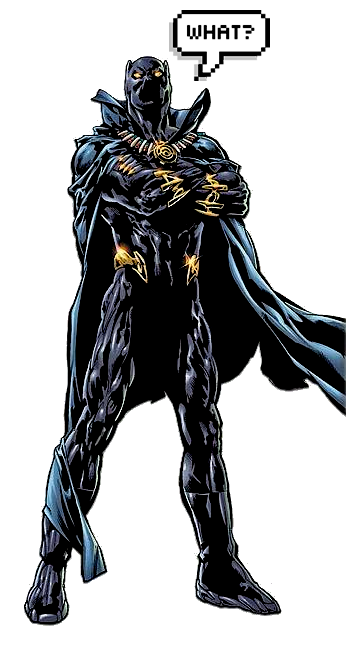
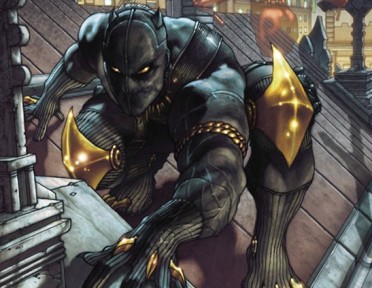
Let me back up a little. Black Panther is, as comic book fans know, T’challa, the king of the fictional African nation of Wakanda. It is an extremely technologically advanced country, and the character himself has a PhD in physics, as well as being a master hunter, martial artist, inventor, and politician. On top of that he wears a suit made of vibranium, the same stuff Captain America’s shield is made of. He’s like if Batman were also the president and he is awesome.

Adding the Black Panther to the Avengers’ roster is not only has precedence in the comics, but it would also add the much-needed diversity that the first film was so sorely lacking. Marvel Studios co-president Louis D’Esposito discussed the possibility of a film starring the Wakandan king by admitting that:

“He has a lot of the same characteristics of a Captain America: great character, good values,”

Which is true. But he doesn’t stop there, going on to say :

“But it’s a little more difficult, maybe, creating [a world like Wakanda]. It’s always easier basing it here. For instance, ‘Iron Man 3’ is rooted right here in Los Angeles and New York. When you bring in other worlds, you’re always faced with those difficulties.”

Cue outrage from fans everywhere. The general argument against the statement above being that a sizeable portion of Thor took place in Asgard. Asgard, the mystical dwelling of the Norse gods. But playing devil’s advocate, as I try to do, perhaps Marvel execs are afraid of portraying Africa badly. Counterpoint: Wakanda is a pretty well-to-do place. Point: maybe they’re afraid of portraying the continent insincerely? Counterpoint: it’s a comic book movie. Point: but, but, but . . . Counterpoint:

Those eyes sneer at D’Esposito’s claims.

Djimon Honsou is a number of things. An immensely talented Beninese American actor is one. The guy everyone wants to play the Black Panther is another. Honsou actually voiced the character for a short-lived TV series on BET which was essentially a motion comic.

Honsou himself has said in a 2010 interview with MovieWeb.com that:

“It is true that I have said certain things about it some time ago and that I would love to play the Black Panther. Also the opportunity came to do the voice over for the animation so I did that, maybe in the hopes that one-day they would finally get around to doing a movie. We have so many super heroes, but none that really defines the African American. I thought it could definitely happen and I have tried to push that envelope before.”

And if that wasn’t enough, Stan Lee himself is on the record as answering the question “What obscure characters would you like to see adapted into a big budget film?” in an AmA [Ask Me Anything] on reddit. His answer was this:

“Black Panther. He’s not too obscure, I hope.”

If the fans, the actor, and Stan “The Man” Lee [who also co-created the character] are all pushing for this there’s really no reason it should not or cannot happen. All that’s standing in the way are a bunch of executives too willing to take the way that’s “always easier.”

Oscar Nominated Live Action Shorts Review (Also Austin is a Hipster City)

So I’m spending my February break in Austin, which is like a surprising hipster bastion in the middle of the yee-hawing gunslinging frying pan that is Texas. It is a strange situation.

I took a picture of this myself but it was at nightThe Alamo Drafthouse, for example, is not very much like the Alamo or a traditional drafthouse. The Alamo (at various locations; we went to South Lamar) in Austin greets you first with its selection of Princess Bride wines (“As You Wish White” and “Inconceivable Cab”), lightbulbs set in old film reels, and murals of retro movie scenes on the walls. Instead of trivia questions (“How many movies has Tom Hanks starred in that start with M?”) while you are waiting for the movie, they show old cartoons and news reals from the early 20th century; instead of a timid reminder to silence cell phones, they show a video clip of an old lady coming to beat you up if you speak or leave your cell phone on at all. On top of this, they serve pretty decent food that you can order throughout the film. Some people may call this Heaven (Who knew that Heaven would be in Texas?). The Alamo plays blockbusters, but also has events like Marlon Brando marathons and Princess Bride quote-alongs and – what I went to see last Sunday – a showing of the 5 Oscar-nominated short films.


All of the movies are 100% worth watching and you should go do it right now if you are doing nothing better (which I’m going to assume is the case). They range from a sad and stressful tale of moral ambiguity (Indian/German collaboration Raju) to a short (and brilliantly acted) depiction of an altar boy’s revenge (Pentecost).
The shortest film, Time Freak, has (arguably) the most pleasantly original plot scenario and is only 10 minutes. I recommend it (it’s on iTunes for 2 bucks and probably on the Internet somewhere illegally. But hey – support good filmmakers).

Tuba Atlantic, directed by Hallvar Witso

The most memorable part of the whole collection is in the Norwegian film Tuba Atlantic, directed by 27-year-old Hallvar Witzo. The film follows an old man, with a hatred for seagulls, who is told that he has 6 days to live. There is a sudden cut scene to Oskar (the dying guy) opening his door to a youthful, braces-bearing blonde girl, who says “Hi, I’m your local angel of death!”. If my vote were relevant, it’d be for Tuba Atlantic, I think.

Oscar winner for Best Live Action Short "The Shore", by Terry and Oorlagh George

I actually thought that the winner, The Shore, had the weakest acting of all of the films. That’s not too much of a slight, as all of the films were excellent, and the film’s ability to cram 25 years of backstory into a single, pivotal moment was impressive – but each of the other films, I thought, worked better with presenting interesting present moments and didn’t depend so much on measured history-exposition.

Go watch short films. Now.
I like short films – they seem more honest, especially plot-wise, than longer films, which sometimes just fill in an allotted time slot with pre-approved plot devices. The happy thing about short films is that their time constraints depend more on the demands of the story than anything else – the films nominated this year ranged from 10 minutes to over half an hour. Short films are worth your time; they are less likely to be contrived and the length allows them to develop honestly and cleanly, without being bogged down by the need to fill in time constraints or plot holes. So go see some, if you get the chance.