Tag Archives: race

Coming Out, Moving Forward

When I was last dating a man, I talked long and loud about my queerness. I objectified female celebrities with the gusto of a barely post-pubescent male; I loudly debated the finer plot points of such luminous queer media as MTV’s Faking It; I was here and I was queer and I was proud, and god forbid anyone think I was straight, just because I was dating a man. I was all too familiar with that sort of misconception, but in reverse: when I had dated a woman for the first time, in my last year of high school, we had done that most high school of things and changed our relationship status on Facebook. This led a group of people – people who had known me over the course of multiple years and witnessed many ridiculously dramatic and public instances of romantic interest in men – asking me over and over again if I was a “lesbian, now”.

Being tacitly bisexual is a constant parade of those sorts of questions (as is being openly bisexual, unfortunately, but to a lesser extent). My unwillingness to announce my sexuality to everyone I met meant that when I was dating a woman, people assumed I was a lesbian, and when I was dating a man, people assumed I was straight.

And I was tired of it. I was tired of desperately trying to flip my self-presentation every time I was in a relationship, tired of worrying if I was queer enough, not to mention whether I seemed queer enough. Those worries became even more present when I became the co-editor in chief of my college’s only LGBTQ+ campus publication. How could I position myself as a leader in the queer community when I was in an ostensibly heterosexual relationship? Would anyone take me seriously as a queer advocate and writer if I happened to be dating a man come publishing time? Continue reading

Christopher Zeischegg [aka Danny Wylde] on Art, Horror, Racism, and, of course, Porn

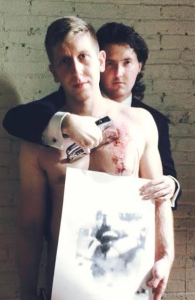
wyldefisherEarlier this month LA-based artist Luka Fisher reached out to me through the site’s email, calling my attention to an art project that may be the first of its kind. Christopher Zeischegg, more commonly known online as porn star Danny Wylde “On The Moral Imperative To Commodify Sexual Suffering“. Accompanying the short story was a silkscreen print created by Fisher, which was in turn featured in a high-concept art commercial directed by Matthew Kaundart. Through this correspondence I was given the wonderful opportunity to discuss the story with Zeischegg, as well as pick his brain on a number of other topics.

Before proceeding onto the interview I would strongly encourage you to read his story, or at least watch the video, which I’ve embedded below. I would also like to warn you that both are decidedly not safe for work before proceeding.


So before we really get into things, Luka Fisher, the artist who emailed me and who collaborated with you on the release of your short story, described you as a “BuzzFeed sensation”. Would you say you live up to that title?

[laughs] Well, I would say I don’t live up to that title. I mean, Luka is a friend of mine and he’s an artist producer in LA. I think more than anything he was just trying to get press and attention for this thing we did; trying to get keywords. As far as being a “Buzzfeed sensation”, I’ve been in a few videos about porn stars, et cetera.

I didn’t participate in that press release. I would not call myself one.

I also noticed that in their [Buzzfeed’s] feature they describe you as a “porn star”, whereas most places I could find state that you’re no longer an active part of the industry. I was wondering if you could clear that up for both me and my readers.

I retired actually about two years ago from mainstream porn. Though I have been submitting videos to Make Love Not Porn. I also do some other sex work that I’m not going into for legality issues. I retired two years ago. But, y’know, stuff is out there forever on the internet, so people kind of associate that with you.

So the reason for this interview even existing is because of your short story, “On The Moral Imperative To Commodify Sexual Suffering” [which I’ve asked my readers to check out first], which of course presented alongside a piece of static visual art-

Some Such _Fisher1

-as well as a short film. On top of all that you’re also one half of a Chiildren, a metal band, so I think it probably goes without saying that you’re by most definitions an artist-

Yeah, I guess so, I would agree to that.

before we really dive into the story I thought it would be cool to hear your thoughts on pornography as art.

Well, in general I don’t think it is. I can say that there are some examples of people who are doing art within porn, and I guess one of them is even my current employer, or one of them, James Deen. I work for him a lot in production and last year we did some higher end art films [7 Sins, we made a porn version but there’s also a cut-down version going around].

But my interest in porn did not really participate in art, especially in the beginning. It was just something to get through school. And then continued doing that for some years after. Because it pays better in retail, you know what I mean.

I don’t think typically it is, though. It’s just entertainment to jerk off to. That’s what most porn is. I don’t have anything more to say about it. We’re not doing anything important with it, there’s no real higher cause. We’re just making stuff so people can jerk off to it.

Which I guess you could call art. It’s a nuanced conversation. It’s entertainment. Continue reading

Putting The Martian On Blast – Racebending, Whitewashing, and the Last Straw

The Martian is Guilty of Whitewashing

Last Thursday the Media Action Network For Asian-Americans [MANAA] issued a statement criticizing director Ridley Scott for the whitewashing of Asian roles in his film The Martian. Their judgements are twofold, namely citing that:

  • NASA’s director of Mars operations Dr. Venkat Kapoor as an Asian-Indian character who identifies religiously as being “a Hindu.” The group pointed out that in Scott’s film, his name is changed to Vincent Kapoor, and he’s played by British black actor Chiwetel Ejiofor, who says his father was “a Hindu” but that his mother was “Baptist.”
  • Mindy Park, described by Weir as Korean-American, is played in the movie by Mackenzie Davis, a white, blonde actress.

Now I wish I could proceed on to the rest of this blog post, but people have asked the question as to whether or not this is, technically, whitewashing. It’s going to take a few paragraphs, but let’s get that out of the way-

Okay, The Martian is Guilty of Racebending/Whitewashing

Let’s start from the very, very, very top. The Wikipedia entry for this can actually be found under “racebending”, with “whitewashing” cited as being [citation needed] a more archaic term. Their definition of this practice is:

“when the race or ethnicity of a character, in a story, is altered to an ostensibly more ‘palatable’ or ‘profitable’ ethnicity.”

The reason people have been asking the question as to whether or not this did in fact take place is that The Martian is a film adaptation of a novel by author Andy Weir. As such the source material is devoid of any visual aids in regards to the explicit ethnicities of its characters. Weir himself had a number of things to say about this with MTV News at the Toronto International Film Festival where the film debuted [the interview occurred before MANAA’s statement]:

In regards to writing and describing his characters’ ethnicities-

“So unless a physical description is somehow relevant to the plot, OK, you know he’s missing a leg — something like that, but unless it’s like really important to the plot then I don’t physically describe my characters at all.”

“You can imagine them however you like. Like, for instance, the ethnicity of Mark, I never told you.”

In response to criticisms of Chiwetel Ejiofor being cast as Vincent Kapoor-

“He’s an American. Americans come from lots of different sources! You can be Venkat Kapoor and black.”

In response to criticism of Mackenzie Davis being cast as Mindy Park-

“Whatever ethnicity she has, she’s an American and her family has been in America forever, which is why her first name is just Mindy, but her last name is Park. But Park is also a British surname so the casting people [could have] thought Mackenzie Davis looks like someone descended from Brits. And she did a great job! I’m certainly not complaining about anything related to casting.”

mindyparkWhile not a direct quote, MTV News also shares how Weir envisioned Park while writing the novel:

“He did admit that he’d always pictured Mindy Park as of Korean lineage, but emphasized again that he had never actually explicitly written her as Korean.”

This is all well and good, but problematic in that it doesn’t jive with an interview that took place in May of this year with the blog domesoph. When asked by blogger Sophie Milam about how he approached writing his extensive cast, Weir responded [emphasis added]:

“I didn’t set out to deliberately balance the crew. For the most part, I just wanted them each to be unique enough for the reader to tell them apart without prompting. It’s a real problem in written fiction. You don’t have the face on-screen or voice being heard to remind the audience who’s who. They need to know it immediately from the name.
So there are no two people on Hermes who are the same demographic. There’s one white American guy (Beck), one Hispanic guy (Martinez), and one German guy (Vogel). There are two women of undefined ethnicity (presumably white) but one of them is the Commander, so you won’t get them confused either. Especially since they all call her ‘Commander’.
So it wasn’t any deliberate attempt at diversity. It was really just a shortcut to making sure the reader knew who was who. You’ll find I pulled the same trick with the NASA characters: Teddy (white guy who is in charge), Mitch (white guy who isn’t in charge), Venkat (Indian), Annie (white woman), Mindy Park (Korean woman), Rich Purnell (African American).”

Now I want to be fair and admit that not every author is [or can be] Alan Moore, who has very publicly denounced all film adaptations of his own work. Weir is currently working on his sophomore novel, with The Martian making up the entirety of his current bibliography. As an author with his first-ever book being adapted by Hollwood, and with the film rumoured to be nabbing an Oscar, there are more reasons against than for when it comes to rocking the boat. So let’s discard what Weir has to say, separate from his novel, completely.

All art is open to interpretation regardless of the creator’s intent, so without Weir’s opinions here’s what we know about the characters:

That being said I’m willing to make the concession that free of Weir’s intentions Mindy Park certainly could have been either White or East Asian. When it comes to Venkat Kapoor, on the other hand, most signs point towards him being South Asian, more specifically East Indian. Let’s pull up the definition for “racebending” again:

“when the race or ethnicity of a character, in a story, is altered to an ostensibly more ‘palatable’ or ‘profitable’ ethnicity.”
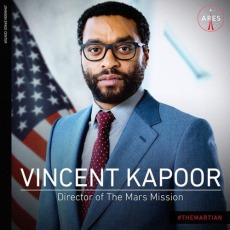
vincentkapoor

Chiwetel Ejiofor is an Academy Award winning actor. He’s also a Nigerian English man, part of a demographic that has not struggled in Hollywood compared to many others. Comparatively speaking I would run out of American films headlining East Indian talent before I ran out of fingers. Are Black men more profitable than Indian men? Everything I know about North America answers a resounding yes. So this is what we’re left with:

Venkat Kapoor was racebent for The Martian.

Mindy Park [given the author’s intent] was whitewashed for The Martian.

To be fair [and I think I have been thus far], East Indian actor Irrfan Khan had been in talks to play Kapoor but had to decline due to another commitment. It’s worth noting that the role had been intended for Khan, and it’s also commendable that- Continue reading

Marvel’s New Black Panther and the Ghettoization of Comic Books

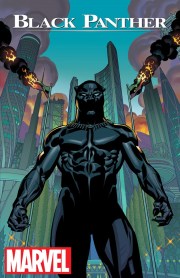
Black_Panther_Cover_StelfreezeThis week Marvel announced that their new Black Panther title, dropping next spring, would be drawn by Brian Stelfreeze and, more importantly to many, penned by Ta-Nehisi Coates. For those of you unfamiliar with the latter Coates was at one point most well-known for his contributions to The Atlantic, in particular the contentious “The Case for Reparations”. More recently, however, a significant amount of attention has been given to his second published book, Between the World and Me, which was released just this past July.
The various news outlets that have covered this story, those dedicated to comic book journalism and otherwise, have taken note of the fact that both Coates and Stelfreeze are African-American. While the character himself hails from the fictional African nation of Wakanda he is nonetheless Black, and many have praised the publisher for allowing top-of-their-game, Black creators to take the reins of the person soon to be their most famous Black hero [due to his appearance in the upcoming film Captain America: Civil War].

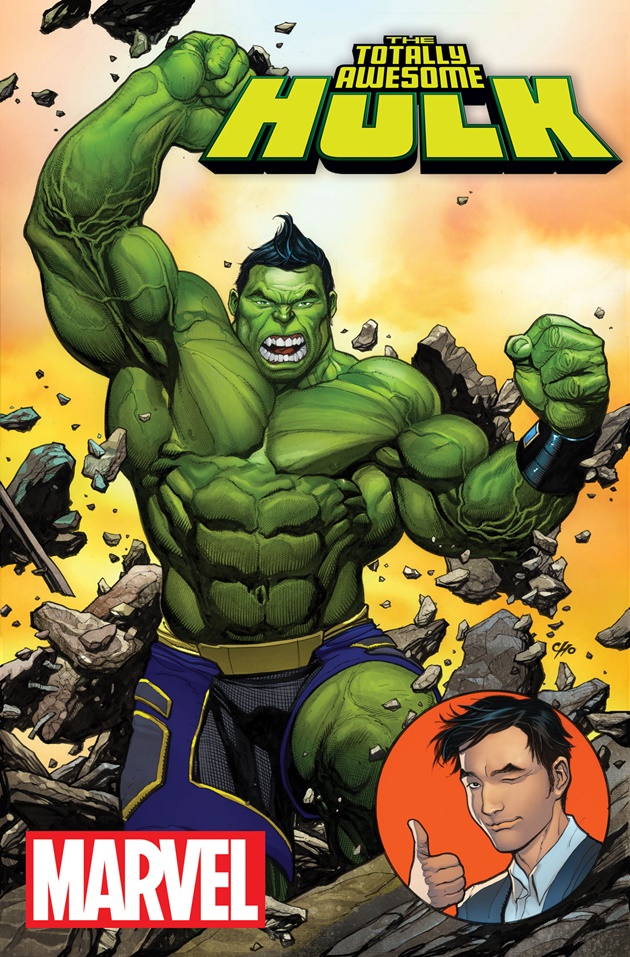
Totally_Awesome_Hulk_1_CoverThis announcement comes, while not necessarily hot on the heels of, soon after Marvel breaking the news that the latest character to hold their own Hulk title will be Amadeus Cho. A Korean-American character and one of the smartest people on the planet despite his years, his adventures were also given to another match made in comic book A-list heaven. Writer Greg Pak and artist Frank Cho are both Korean-Americans themselves, with the former being of mixed descent. In the very same vein as next year’s Black Panther this December’s Totally Awesome Hulk bears a creative team that has a lot racially, as well as culturally, in this case, in common with their book’s titular character. Continue reading

On The Image Problem of Christ

Back when this blog started up, Evan and I had a discussion about a lecture given by Socialist novelist China Miéville. During that lecture, Miéville commented that “if one person hears what you’re saying and does something horrible, the issue’s probably with them. If hundreds of people consistently start doing horrible things, it’s probably time to re-examine your message.”

Those words returned to me a few months ago as I watched Family Guy’s “The 2000-Year-Old Virgin”, which depicted Jesus as a cowardly shyster, lying about being a virgin in order to bed Lois Griffin (and more than a few other women).

Family Guy: Season 13, Episode 6

Grotesque? Repulsive? Offensive beyond all description?

For me, it wasn’t.

It was certainly far from being funny, but readers, yours truly simply was not offended.

As sacrilegious and bitingly edgy as I’m sure the writers thought the story was going to be, I was merely disappointed by it. While I’m not going to excuse the laziness or insensitivity of Seth MacFarlane or any of Family Guy’s writer’s, I actually don’t think the majority of blame should be placed on them.

I think it should be placed on Christians.

Continue reading

This Post Contains Pictures of Dead Children

43 years ago, a picture was taken. It captured the moments after a napalm attack on a Vietnamese village. Against a backdrop of smoke a nine-year-old girl runs towards the camera, naked and screaming.

The shock that image’s managed to elicit is credited as having helped end the war, and that photograph has become perhaps the most powerful pictures of the horrors of war ever taken.

Until last Thursday.

That is the body of Aylan Kurdi, 3 years old.

Refugees from the Syrian civil war, Aylans family’s had attempted to escape to Vancouver, only for their application to be rejected by the Canadian government. With nowhere else to turn, the Kurdi family fled to Europe in a final effort to escape. While the Kurdis found passage on a small boat bound for Greece, the vessel was far overloaded with refugees and tipped a few miles off the Turkish coast. Aylan, his brother Galip, and six other passengers (all but one of them children) fell overboard and drowned, their bodies washed ashore to where this heartbreaking picture was taken.

Once again, there are no words. Continue reading