Author Archives: Evan

Evan and Gordon Talk: Alcohol and Western Culture

EVAN: Alright, people of the internet, it’s time to stop correcting each other’s grammar in YouTube comments sections and start tuning in to the wisdom we’re about to drop out of our mouth-holes/fingertips.

On this installment of E&GT we will be discussing the ever-popular C2H5OH, more commonly known as alcohol, and how it’s treated in Western culture.

GORDON: Now right here we’re running up against a problem: “Western” culture isn’t exactly united on the subject of drinking. I mean, for the most part we’re fans, but there ARE some pretty distinct differences. For example, a severe alcoholic in Canada or America would in Europe be simply known as an Englishman.
EVAN: You make a very astute point, so I’m going to propose we boil this down to how North America [barring Mexico, sorry (though to be fair they should be used to this by now)] treats alcohol.

GORDON: Poor Mexico.

But let’s get right down to it and try to get a handle on the general stance we have on drinking in the west. We certainly like drinking, but drunkenness is largely viewed as something either juvenile or to be relegated to the weekends. Is that fair?

EVAN: Somewhat debatable.

GORDON: Then let’s debate.

EVAN: I suppose the question you have to ask yourself is who thinks it’s juvenile? I know a fair amount of people who consider it fairly normal to drink until they can’t see on the weekends, as regular and sacred a routine as my going to church on Sundays.

GORDON: I’ll admit freely that this does happen, but I wouldn’t say it’s what the average person does. In fact, the only people who really have the time and/or physical ability to do so are usually young people and students, bringing me back to the original point.

WHAT’S THE DEAL WITH YOUNG PEOPLE IN AMERICA [AND CANADA] AND BOOZE?

EVAN: I agree. So let’s talk about that. What’s the deal with young people in America [and Canada] and booze? Imagine I said that in a Jerry Seinfeld sort of voice.

GORDON: Well, Canada I can’t speak to as much, but I’d argue that the fact that booze is forbidden until the age of 21 has a lot to do with it. It turns alcohol, and to a similar degree, inebriation, into a taboo pleasure and a sign of rebellion and… well, I don’t want to say “maturity,” but I guess “adulthood” is gonna have to suffice.

EVAN: You’re preaching to the choir. A drinking age of 21 is levels of ridiculous, I mean, the only thing you can’t do at that age is rent a car [that’s at 25]. In Ontario the drinking age is 19, which is more or less what I imagined it would be when I was a kid.

GORDON: I’m guessing drinking doesn’t have quite the same mystique that it does in the US, huh?

EVAN: Well, to paint a picture of underage drinking, I visited Toronto for a summer while I was still living in Thailand. I must’ve been . . . sixteen, I guess. When I hung out with some former schoolmates a lot of what was talked about was fake IDs, and something called “drunk dial,” or something, which was apparently a number you could call where people of age would bring you booze for cash.

GORDON: Booze for cash? As opposed to what? Beads and trinkets? You have forever altered my image of Canadian society.

Youth drinking is such a small/easily dismissed part of drinking, though. What else is there to say?

EVAN: Well, it’s a pretty big deal, I mean, look at that new movie that has that Asian kid turning 21, or all of Superbad.

GORDON: So says the hyped-up Hollywood media. High school is nothing but a drug-frenzied orgy to listen to ’em.

EVAN: Dude, when people become of age a lot of them get smashed, this is a true fact.

GORDON: Hence the need to get rid of the drinking age.

EVAN: Okay, so we do away with the drinking age altogether. Now what?

GORDON: Now drinking isn’t something you get to do, it’s something that has to be earned. 21 isn’t some magical number at which you can do no wrong and drink as much as you’re able. Abuse will still be there, but ideally we’ll see a drop in a lot of the stupid binging for binging’s sake.

EVAN: Wait, so how would we earn the right to drink?

GORDON: Well, naturally there’s not going to be any universal standard. I’m hoping decent parenting and societal pressure will enforce general standards for drinking. An eighteen year old who doesn’t drive recklessly and maintains a general balanced perspective on life shouldn’t be barred from having a glass of wine with dinner, especially when his twenty-four year old brother who still acts like a four year old has no limitations in this regard.

EVAN: I just realized that in many Canadian provinces drinking with parental supervision is permitted. I cannot find anything to the same effect for the US. Wait. Hold the phone.

“…17 states do not ban underage consumption, and the remaining 18 states have family member and/or location exceptions to their underage consumption laws.”

GORDON: I’m pretty sure there’s one state somewhere in the Midwest with an old prohibition-era law stating that a minor can buy alcohol if accompanied by an adult, though only in very select situations; it’s pretty archaic.

Though let’s hash this out a bit- I’m guessing that most families aren’t going to be hosting chugging contests, or having little Timmy do tequila shots off the baby-seat.
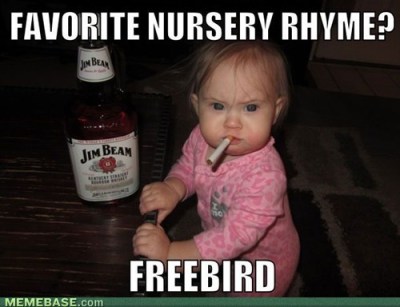
EVAN: I don’t think that’s what people are worried about, though. I think the concern is more about fourteen-year-olds heading down to their local liquor store and buying a bottle of something that would kill an elephant.

Not to that extreme, of course, but at my old high school there was at least one kid who turned to drinking as a way to deal with stress.As to how, let it be known that you can buy beer at 7-11s in Thailand.

GORDON: You can buy anything in Thailand.

EVAN: You are not wrong.

GORDON: While I do absolutely agree with you, I think we’re asking the wrong question. It’s not “How can we stop kids from drinking” it’s “Why are kids drinking (stuff that would kill an elephant)?”

EVAN: It’s because, as we’ve said, it’s a taboo thing. I think what needs to happen is for us to somehow, in America and Canada, bring alcohol back to the level it currently is in Europe, where you can have wine on a table alongside your water and not have the kids think anything of it.

My question to you is how we change that Western way of viewing hooch.

GORDON: Well, I think the first step is to, like I said, abolish the drinking age.

From there I think it’s a matter of getting people to see drinking more realistically. Again- demystify

EVAN: I get what you said about nixing the drinking age, and we both admitted there may be a few issues there. How exactly are supposed to demystify, though? That was my question to begin with.

GORDON: Well, I don’t want to say we institute a campaign trying to portray the downsides of alcohol, but I imagine that’d backfire more than anything else. As surreal as it might sound, I’d say that more open drinking and easier access to drinking would be the answer. You get to see drinking in it’s entirety- the good stuff and the bad- without an agenda being shoved down your throat.

EVAN: My counterpoint to your suggestion that we should let loose on the public drinking is that we work on the institution that has so demonized the bottle.

Southern Baptists have been down on booze for quite the while, in spite of the fact that our Lord and Saviour partook of the fruit of the vine more than a few times in the Good Book.

GORDON: And the Wesleyans share their part in this. Though in regards to that, I’m not exactly sure how to argue with those people- what argument can I make that hasn’t already been made in the past couple hundred years?

EVAN: Yeah, I don’t know.

“You guys, Jesus drank. He drank with friends and enjoyed it, but he never got drunk. It’s cool, you guys.”

Anyway, we should start wrapping up. Do you want to give us a recap of what we’ve discussed?

GORDON: We’ll as great minds think alike, we’ve pretty much bagged on the existence of drinking ages, agreed that drinking among underage kids is a problem resulting from alcohol’s taboo nature, and batted around a few ideas for solving that problem- generally concluding that we need more drinking and exposure to it. That sound about right?

EVAN: I don’t necessarily think more people need to drink to increase awareness that it’s not a bad thing, but that’s more or less correct.

I wish I had a beer right now.

GORDON: Mmm. New Belgium is coming out with a new stout. It looks fantastic.

EVAN: Yeah, I don’t know a lot about beer past the fact that I wouldn’t mind a cold one right now.

GORDON: It would be refreshing. And speaking of which, we need a new topic for next week. I’ll keep with our discussion of vices and offer up the topic of Smoking and Society.

EVAN: That’s a pretty good one. I’ll propose that we discuss . . . dangit . . .

I’d say we should discuss this new season of Community, but that’d require you to watch all of the new season before next Tuesday night.

GORDON: I have way more free time than you think. It shall be done.

EVAN: Excellent.

GORDON: And so, our dear readers, here’s to you-

See you next time.
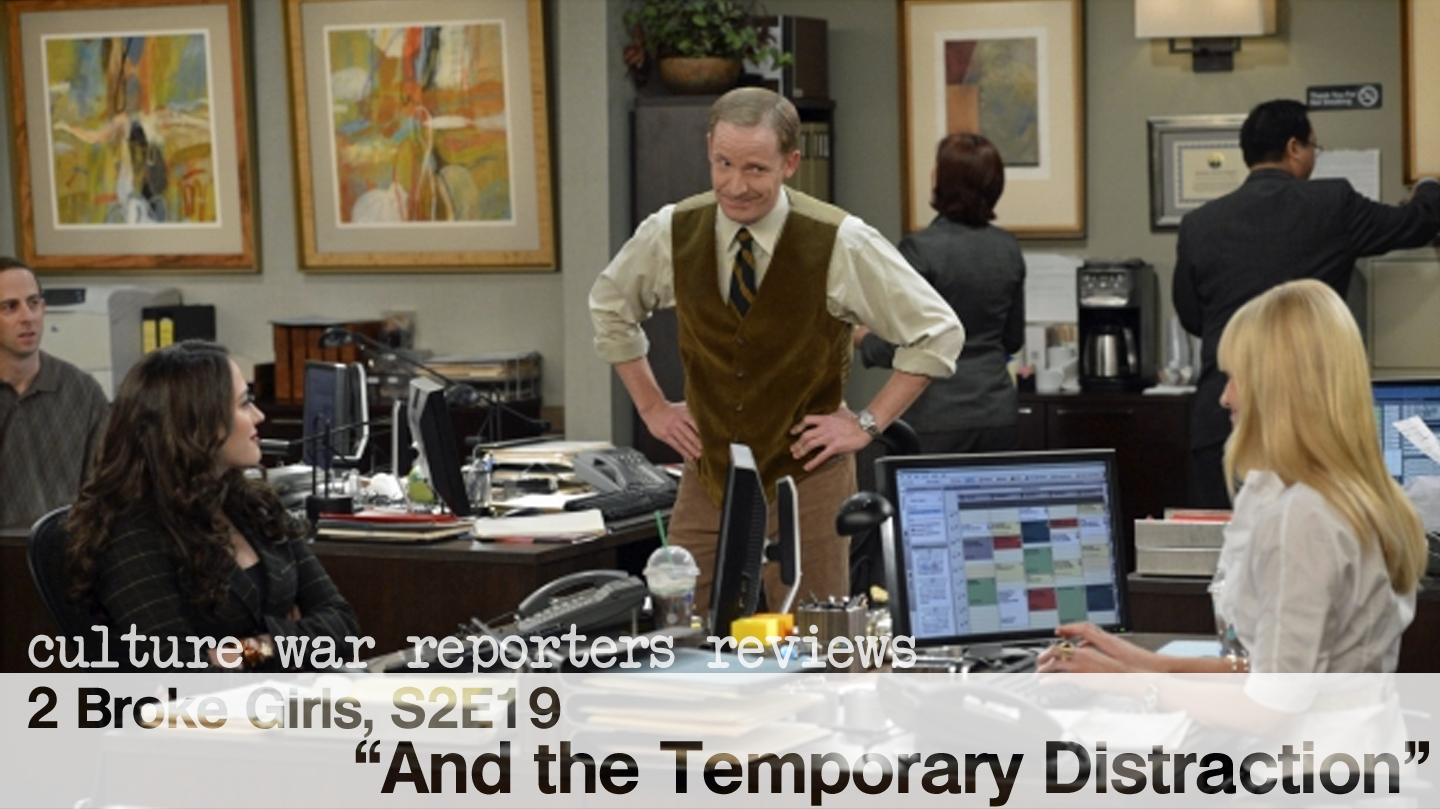
2 Broke Girls, S2E19 “And the Temporary Distraction”: A TV Review

necessarydistraction

I’m not going to lie, I’ve been infinitely grateful for the two week break CBS decided to give the show; working had made it hard to write these on Monday nights. It couldn’t have come at a better time, either, since last episode worked great as a sort of midseason finale, the opportunity for the show to head in vastly different and mysterious directions.

Open up on the diner, Max cracking wise about Han’s sexuality. Enter the character who is making the diner’s manager feel strange things in the downstairs department, the androgynous-looking lesbian Max has dubbed “Tina the Turner” due to her penchant for converting straight girls. Caroline scoffs at her co-waitress’ warnings and teenage boys the world over hold their breath.

Then they let out a sigh of disappointment, because all Caroline does is unconsciously give up her number before we cut to opening credits.

The next morning both girls wake up and Max lets her roommate know that her old temp agency calls. This elicits Caroline lamenting their fall from being small business owners,  but we all know where this is headed. Some inconsequential Sophie-and-Oleg-burst-into-their-apartment shenanigans later and the two are in an office talking to a delightfully deadpan office drudge. The way she answers questions with “Lemme give you a f’instance” is pretty darn funny.

They watch a sexual harassment video which will be a key plot point later.

As you may have guessed, the conflict of the episode presents itself when Caroline turns out to be a person who actually does her work instead of watching funny cat videos, and is legitimately interested in advancing at the company, filling out an application for a Junior Executive Position. This worries Max, who has been baking cupcakes to make a little extra cash at the diner, and clearly hasn’t completely given up on their dream.

Caroline nabs the position in a really quick back and forth of “YES’s” and “NO’s” between Max, Caroline, Office Manager Eli Green, and some dude named Ryan [I mean Leon]. For some reason her promotion is reason for champagne, which leads me to believe that this is a company with money to spare. Caroline talks to the boss and gets Max the position of Junior Executive’s Executive Assistant.

Max ultimately declines, pretty upset that Caroline quite the cupcake biz. After hearing her excuse that their dream blew up in their face, she asserts that “Lots of things blow up in your face, that’s part of being a woman.” I felt like this was somehow weirdly sexist, until Max continued on and I realized it was an ejaculation joke. Then I knew it was weirdly sexist. End on emotional note with them talking about whether or not cupcakes were the actual temp job, and that maybe it’s good not to have a dream.

Then Max gets Caroline fired by claiming that she sexually harassed her, which puts her on my list of horrible television characters. The scene leads to some laughs, such as Caroline’s explanation that “[they] were drinking and [she] was pretending to be a man,” but ultimately left me wondering why Max was being awful. Her excuse ends up being that Caroline forgot her dream, and that even if she’s not down with starting up the business again she should at least wait before jumping at the first opportunity that comes along.

We end with Caroline declaring [to cupcake-withdrawal sufferer Sophie] that they are back in business. Max declares that they’re doing things differently this time, but doesn’t explain how.

I guess it’s time for a plot hole paragraph. To begin with, how has Caroline not gotten a job in an office prior to this? Yes, her father was convicted of embezzling, but she still went to Wharton, “the most comprehensive source of business knowledge in the world.” She’s got the qualifications to land far better than a temp job, and we have to wonder why, before chasing the dream of Max’s Homemade Cupcakes became a thing, she wasn’t scouring offices all over NYC for a business position. It’s something that she clearly has a passion for, and it made me really think about how what Max did was a pretty big dick-move.

To end with, the final tally lies at $5.00, which I suppose we’re supposed to assume is from the cupcakes they’re selling at the diner. It’s also a 500% increase in funds, the largest financial jump the show has ever had, considering the last episode left them with a single dollar. The fact that the show has decided to have the two girls continue pursuing their cupcake shop dream was a pretty big letdown for me; the last episode set them up to do anything and this episode informed us we’re be back to more of the same. I understand that they don’t want to be waiting tables forever, but how about trying something new?

I was genuinely excited for 2 Broke Girls to come back, even if I wasn’t relishing writing these reviews [my Monday nights have been so free!]. Max and Caroline have returned to pursuing a dream I though they’d shelved when a car crashed into their storefront, and I guess the last five episodes of the season will reveal whether or not this new-old direction was the right one.

Stray Observations:

  • Max keeps her Temping Blazer in a big red bucket.
  • Caroline’s really embracing the “Broke Girl” lifestyle, talking about turning her underwear inside out instead of washing it and drinking way-too-old iced coffee.
  • Audience continues to mistake Sophie for Kramer.
  • Han is rapidly becoming one of my favourite characters on the show, with a fairly long speech addressing Caroline’s comment about wanting a workplace where her skills are valued and supported:

“Oh, are you not feeling supported here? I’m sorry, I’m a boss, not a bra. Should I praise you more? ‘Really killing it with the leaning on the counter doing nothing.’ Kudos, Caroline! Huzzah!”

  • Office Manager Eli Green displays some fairly obvious gay mannerisms, but is apparently straight judging by his admission to being accused of sexual harassment coupled with his desire to obtain one of Max’s butt photocopies.
  • 2 Broke Girls Cheesecake Menu: Got some skimpy morning wear on the nubile Ms. Channing; Caroline rubs at Max’s breasts after she spills some champagne on her good bucket blazer.

Shame Day: Negativity

As some of you may know, I played a lot of StarCraft II: Heart of the Swarm last week. Having played the campaign from Tuesday to Friday, I can say that I thoroughly enjoyed it. It was many, many times better than its predecessor, Wings of Liberty, and I only had good things to say about it.

Now, I am a person who thoroughly believes that a discerning eye is needed when approaching anything. Millions upon millions of people ate Nolan’s The Dark Knight Rises up with a spoon, and shower it in praise. I haven’t personally taken the time to write this all of this out, but I’ve discussed it with friends for hours, and can leave it up to Christopher Sebela of Comics Alliance and “first black comics editor” Christopher Priest to speak on my behalf. Suffice to say, I was not terribly impressed.

You read that right. I did not like The Dark Knight Rises.

And, since The Dark Knight Rises was a film I thoroughly disliked, I should mention that I am very willing to find flaws in the things I love. The Avengers was a film that I really, really liked, but I’ll be one of the first people to tell you that Hawkeye really got the short end of the stick, and that [SPOILERS] the Chitauri just flopping over like a bunch of Trade Federation droids probably deserved some sort of explanation.

To get to the reason I decided to write this post. When StarCraft II: Wings of Liberty came out StarCraft Legacy writer Gradius put together a very extensive review of the single-player campaign, and he was not very gracious. I remember reading it three years ago and agreeing with him on almost every point, the story needed quite a bit of work.

Then maybe four or so hours ago I read his review of Heart of the Swarm, and he ripped it a new one. While I will admit that he peppers his review with positivity he ultimately ends up damning its entirety with faint praise. It leaves no stone unturned, and takes time to dub the game’s creators as being “juvenile” and utilizing “fridge logic.” I finished it and felt sick to my stomach.

I wish I could edit this to have Kerrigan shedding a single tear.

Why was I so upset? I have argued extensively about why I think a widely beloved film is objectively bad, does this make me a hypocrite? Have I taken something that other people hold dearly and spat on it, making them feel as I have?

No, I don’t think so, and it all has to do with how you say what you’re saying.

There exists a very popular series of YouTube videos reviewing the Star Wars prequels done by Red Letter Media. My housemates in college adored them, and I distinctly remember them watching the Phantom Menace review and having a really great time doing so. I didn’t really share in their enthusiasm.

The honest truth is that the reviewer acknowledges where the prequel films went wrong, and makes some incredibly insightful comments about simple storytelling structure within film; there’s some great stuff there. The problem for me was that his videos are dripping with sarcasm, disrespect, a smattering of immaturity, I could go on. It’s a fantastically written analysis packaged in a format that I found really unappealing.

When my friends and I saw X-Men: The Last Stand back in high school we walked out and broke down how it could have been improved. Highlight the relationship between Bobby [Iceman], Kitty [Shadowcat], and Rogue [does anyone call her by her real name?], make the mutant cure more of a topic of discussion among the X-Men, creating divisiveness within the team, etc. We did a lot of the same things that the reviewer did for The Phantom Menace, but we did so by focusing on how it could be better instead of why it was so awful.

We did.

I am a huge proponent of people thinking hard on what sort of media they consume, and processing whether or not it was actually good. On top of that, I also strongly value the ability to find the good in everything [The Last Airbender had good . . . costume design . . . there, I found something]. My mother told me for years that “if you have nothing good to say, don’t say it.” I slightly disagree. If you have nothing good to say, say it in a way that isn’t dripping with snark. Say it in a way that will convince people to see that no, it wasn’t good, and this is exactly why, and this is how it could be.

There are some things I downright disagree with in regards to Gradius’ review of Heart of the Swarm, but at it’s core I see a huge fan of the franchise who has ultimately been disappointed by Blizzard’s first two installments in over a decade. That being said, he doesn’t so much throw the baby out with the bathwater as he just chucks the whole tub out the window.

I love reading reviews. I love reading what other people have to say about films I’ve watched or comic books I’ve read. What I hate is when negativity seeps in, and when it actively seeks to prevent me from legitimately enjoying something that I once did. I appreciate your opinion, and I generally want to hear about it, but I also want you to give it to me straight, free of your spite and vitriol.

No Post This Morning [What Does That Mean?]

Hey guys and girls, I really wish there was a more casual way to refer to members of the female gender that was on par with the term “guys.” I mean, honestly, I’m at the point in my life where I’m 22 and I no longer know whether I’m supposed to tell my friends that I saw a girl or a woman on the streetcar earlier in the day.

Anyway, to get to the point, this week has been a kick to the body as far as the blog goes. I’ve had a lot of work to do, and when I wasn’t doing that I’ve been playing through the Heart of the Swarm campaign. So it’s just been a big ol’ kick to the body.

A kick. To the body.

That being said, I haven’t even looked over the posts for this whole week, which I always do to fix all of the typos in Gordon’s posts and making sure he’s tagged them “Gandhi” and not “ghandi.” I will be doing all of that tomorrow, and I will also be finishing up said StarCraft II campaign.

I may have a post up late tomorrow. No promises.

My productivity has bowed before THE QUEEN OF THE BLADES.

Evan and Gordon Talk: The Role of Religion in a Secular World

GORDON: Dearly beloved, we are gathered here today before these witnesses to discuss the role of religion in our comparatively secular world.

Not too long ago, Evan and I discussed the subject of separating art from its artist, which brought up controversial science fiction writer Orson Scott Card, selected by DC to author a series of Superman comics.

Public outcry ensued as a result of OSC’s viciously homophobic views- including a statement advocating the overthrow of the American government should gay marriage ever be legalized.

EVAN: I am going to be honest and admit that I am counting down the second until this is over, when I get to finally play my copy of StarCraft II: Heart of the Swarm.

That being said, this relates back to our talk because OSC’s views are deeply founded in his religion, Mormonism.

GORDON: Now back in that post, Evan asserted that OSC’s views were “reprehensible, regardless of where you stand.” Could you expound on that a bit for us?

EVAN: Well, the general consensus of the internet [from what I could tell] is that OSC is free to believe whatever he wants. If a man believed his cat created the universe he would, by anyone’s standards, certainly be wrong, but would not necessarily be chided for it.

People drew the line at Card’s support of organizations that were actively boycotting the legalization of gay marriage in America, as well as, like you said, advocating the overthrow of the government.

Homosexuality as a sin is something I think on almost every day, due to my belief that the Bible is without errancy and my observation that there is, from what I can see, absolutely nothing negative about a healthy homosexual relationship with another person. That being said, I am not about to cry that we burn down Parliament [or the White House, whatever] simply because the government allows two men to wed.

GORDON: So ultimately, your issue with OSC is that he shouldn’t let his personal views lead to him commit drastic acts?

EVAN: My personal issue, I suppose, is that he takes a stance that I’m already extremely uncomfortable with having and pushes it to its most extreme. That’s my honest answer.

On the surface, and certainly where I was last week or whenever it was, yes. Essentially that was where I was coming from, that his cry to overthrown the powers that be was an overreaction.

GORDON: And that’s certainly something that’s fair.

I often hear the argument that “You can’t force your religious views on others,” usually using a homophobic, sexist, or totalitarian agenda as an example. My issue with that has always been that you never hear the same people making that argument when something positive is on the table.

I’d probably reference John Brown, MLK Jr., Bonhoeffer, or Malcolm X as examples.

EVAN: I definitely agree with what you’re saying. Just regarding basic good behavior you never really hear people saying, “How dare you tell people to tell the truth and not murder and steal! Stop pushing your antiquated morals on the rest of us!”

GORDON: Exactly. That brings me to the core of the issue I wanted to hash out a bit: is militancy really a bad thing? Earlier today, I came across this image:

And I was kinda bugged by it. The implication seemed to be that Jimmy’s only two courses of action are silence or rage. I mean- if a friend posted something on Facebook I thought was incorrect, I don’t think I’d just ignore it.

EVAN: I rarely do when it comes to misspellings, grammatical issues, and anything regarding comic books.

GORDON: Exactly. If something is important to you, you should speak up about it, right? Heck, you shouldn’t you take direct action on it?

EVAN: I’m going to bring up an experience of mine that essentially no one knows about:

When I was much, much, much younger I thought it would be a good idea to evangelize to a classmate [this was in 8th Grade, I think]. It didn’t pan out the way I’d hoped, because they were quite satisfied with their own religious beliefs, and reasonably so.

The thing is, I was coming from a place where I thought I was doing the right thing. After all, if Christians really do believe that Jesus is “the way the truth and the life” and that no one gets to heaven except through him, isn’t there some sort of responsibility to tell others? And if there isn’t an onus, wouldn’t you want the people you care about to get in?

So yes, it was important to me, and no, I don’t think I went about it the right way. But I did take action, for better or for worse.

GORDON: Let me throw you an extreme scenario:

The government has decided to start indiscriminately throwing minorities into internment camps, dragging ’em out of their homes in the middle of the night because, I don’t know, if you don’t, the terrorists win. Do you take militant action?

EVAN: Would I directly oppose the government, you mean?

GORDON: Yes.

EVAN: Do I count as a minority?

GORDON: For the purposes of this example, yes.

EVAN: If I was not a minority I would probably act in the same capacity as those who hid Jews in Nazi-occupied Europe.

As a minority, I’m honestly not sure. I’m not particularly disposed to act violently, so I suppose I have to ask what you would deem as being “militant action.”

GORDON: But one way or another, your actions would be rooted in your understanding of your religious/moral code, right?

EVAN: Correct.

GORDON: So it’s not so much an issue of extremism, even in regards to religion- it’s just a question of the issue itself

In this case, OSC is a jerk not because he advocates the overthrow of the government, but because he makes that threat over something so benign as Adam and Steve getting a sheet of paper.

EVAN: I suppose it is contextual, yes. Though I’m sure there are people out there [myself not included] who would equate gay marriage with throwing babies into the Nile.

GORDON: This is indeed true. with that in mind, How do we address the question of the separation of church and state?

EVAN: That’s a really great question. I guess we have to ask how well of a job we’re doing with that at the moment.

GORDON: Not knowing the ins and outs of Canadian politics, I’m afraid I won’t be able to make so much of a universal statement. Speaking for myself, I prefer a pretty staunch elimination of the cosmetics of religion in my government.

Get “In God We Trust” off my money, take “Under God” out of the Pledge of Allegiance. Though in total honesty, that’s more from a distrust of government in my religion than vice versa.

EVAN: The whole issue that “money is the root of all evil,” so why do we have religious institutions that have a net worth that goes into the billions? Yeah, I can be pretty into that sentiment.

GORDON: A very interesting topic, considering the elections currently going on in the Vatican.

EVAN: Well, the question we were presented today is what role does religion have to play in our increasingly secular world. In terms of Christianity, my hope is that its role is a positive one.

That Christians [myself included] can be seen as loving and not hateful [see: The Westboro Baptist Church], as giving and not selfish [see: most people in general], as willing to consciously process what we believe to be the truth instead of sticking to them blindly because they’re what we were told.

Christianity has changed a lot over the centuries without straying from what it is at its core. We can keep changing, we should keep thinking.

GORDON: So at the end of the day, religion becomes a social movement, rather than a distinct community or culture?

EVAN: I think that as a culture Christianity is, ideally, a social movement.

GORDON: So how do you reconcile other religions with this?

EVAN: Honestly it depends on the religion. I think Buddhism, when done right, more or less works along the same lines.

Are we counting Scientology as a religion and not a cult?

GORDON: Oooh. Them’s fighting words. Let’s call it a religion, for now.

EVAN: I suppose I would like every religion, Scientology included, to stick to my format of what I would like Christianity to be. If you hash out logically that alien soul debris is the cause of every human’s problems, more power to you; I have done the same thing in believing that a man who was also God died on a cross and was resurrected.

What’s really important is that we act on the positive aspects of our religious beliefs [taking care of the poor, not being dicks to one another] and really thinking upon our beliefs. Like I said, homosexuality as a sin does not at this point in my life make a lick of sense to me, and I continue to struggle with reconciling that with the rest of my faith. Make sure what you believe makes sense to you.

So as a TL;DR, do good things and think.

GORDON: Fair enough- but what about when it doesn’t work? There are plenty of vile groups out there whose diseased, twisted “logic” has led them to some pretty nasty conclusions. They’re obligated to act on those beliefs, right? How do you deal with conflicting agendas?

EVAN: How are they acting on these beliefs?

GORDON: Let’s say they’re banning the Hijab for Muslim Women; passing legislation on it.

EVAN: I’d say that infringes on basic human rights, and that people should stick to the words of public awareness campaign “If You See Something, Say Something.” People should protest.

GORDON: Certainly something we don’t get enough of. And with that, dearly beloved, we are out of time. 

EVAN: It’s creeping me out that you’re calling our readers that. Or me. That’s even more troubling.

GORDON: Imagine if I actually did have a cult following. How awesome would that be?

EVAN: Extremely troubling.

GORDON: I for one believe our readers have learned their lesson- I’d like to leave them the option of offering an “other” topic in the comment section.

EVAN: Guys and girls, this week we talked as much as we could upon the topic for the week, and were only able to get so far. So in addition to us possibly discussing what you want us to, next week you can possible look forward to us discussing:

GORDON: Violence in media: How much is not enough?

EVAN: Which you’ve written about before. I propose we talk about alcohol in our [Western] culture.

GORDON: I’m down with that.

EVAN: Thank you for wading through our back and forths, and we sincerely hope you join us again next week [and every weekday, really]. I am now off to go play some Heart of the Swarm.

Shame Day: Microaggressions

A few weeks ago I stumbled onto a website called The Microaggressions Project and then promptly forgot about it. Returning to it tonight I looked over the “About” page, which had the following paragraph at the top:

This project is a response to “it’s not a big deal” – “it” is a big deal. ”It” is in the everyday. ”It” is shoved in your face when you are least expecting it. ”It” happens when you expect it the most. ”It” is a reminder of your difference. ”It” enforces difference. ”It” can be painful. ”It” can be laughed off. ”It” can slide unnoticed by either the speaker, listener or both. ”It” can silence people. ”It” reminds us of the ways in which we and people like us continue to be excluded and oppressed. ”It” matters because these relate to a bigger “it”: a society where social difference has systematic consequences for the “others.”

A little later on they define what “microaggressions” are, a term that was originally coined to speak about racial experiences. From the essay “Racial microaggressions in everyday life: implications for clinical practice,” which appeared in American Psychologist, Vol. 62, No.4:

“Racial microaggressions are brief and commonplace daily verbal, behavioral, or environmental indignities, whether intentional or unintentional, that communicate hostile, derogatory, or negative racial slights and insults toward people of color.”

One example of this could be a White couple walking down the street and having a Black man pass by them on the sidewalk. The woman clutches her purse tighter against her body, the subconscious idea being, of course, that Black men are prone to crime and should not be trusted.

As an Asian-Canadian I’ve experienced microaggressions plenty of times. I’ve had someone ask me if I was half-White [I am clearly not] with their rationale being that my “English was very good.” It can be an everyday occurrence for non-White people [I deign to use the word minorities, since I do believe that balance is turning the other way], and begs the question: “Why is this such a big deal?”

Writer of the aforementioned article and author of Microaggressions in Everyday Life: Race, Gender, and Sexual Orientation, Derald Wing Sue, PhD, has observed that microaggressions have actually been found to: “(a) assail the mental health of recipients, (b) create a hostile and invalidating work or campus climate, (c) perpetuate stereotype threat, (d) create physical health problems, (e) saturate the broader society with cues that signal devaluation of social group identities, (f) lower work productivity and problem solving abilities, and (g) be partially responsible for creating inequities in education, employment and health care.”

In other words, a Black or Latino man being stopped for a “random vehicle check” by police could be upset, and may even be accused of overreacting. Maybe they should simply be used to this and not let it bother them. The truth is that it makes them feel, even if only subconsciously, like second-class citizens. It’s true in a case as blatant as this one, and in an as subtle an action as hanging a Confederate flag or  having a Native American stereotype as a high school mascot.

To broaden this to the scope that The Microaggressions Project seeks to attain, microaggressions can include people saying to a person with Asperger’s, with no ill-intent whatsoever, “That you seem so normal!” It can be a 17-year-old girl being told by her gynecologist that just because she has access to birth control pills doesn’t mean she can just sleep around.

Microaggressions work in every direction. It’s like going to a Vietnamese restaurant and being given a fork and spoon instead of chopsticks because you’re White and not Asian. Microaggressions are built on assumptions and can make people painfully aware of who they are. They are rarely meant to offend, but often do. 

It truly is a shame that so much of the time we send out microaggressions without so much as a second thought, and then defend ourselves by deeming the offended to be “too sensitive.” While we won’t always be aware of how our words or actions can harm others, we can at the very least listen to the people being hurt, and in doing so try to lessen the presence of microaggressions in our society.