Category Archives: crime

If Protecting Women Against Sexual Assault was the Point, Bathroom Preference Wouldn’t Be Our Main Focus

The bathroom use of transgender people has been a topic that’s hard to avoid, especially on social media. Here in Canada, the following video began to circulate after Alberta’s 61 school boards decided to “revise regulations and hash out new policies by March 31 to protect the rights of LGBTQ students and teachers, support gay-straight alliances and create a safe learning environment.”

https://youtu.be/o9JeZ5PEdFI

And in the U.S., the American Family Association recently began a boycott of Target after the organization stated that transgender visitors should be allowed to use the bathroom they feel most comfortable in. Meanwhile, several States have attempted to pass bills that would force “transgender people to use restrooms that don’t match the gender they live every day”.

Along with the debate, a variety of memes have popped up on both sides of the conversation. While it irritates me to see the particularly popular Chuck Norris-themed meme belittle transgender experiences, I thought trans activists were easily holding their own in the meme department by reminding readers of how difficult it can be to spot a transgender person, and therefore how ridiculous it is to police who enters which bathroom.

Unfortunately, there have already been several cases of bathroom policing, where women who aren’t deemed feminine enough are challenged for entering their bathroom (as might be expected, the video below includes some strong language).
https://youtu.be/V1s5e4RXDjM

Continue reading

Stereotypes and Tokenism: What Daredevil Did Wrong and What Riverdale Appears to Be Doing Right

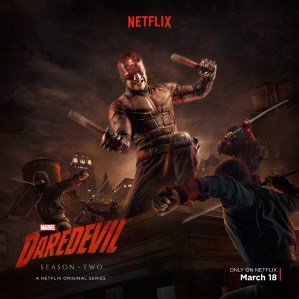
So right off the bat, I want to say that Arthur Chu of Jeopardy-winning fame has already done much of the groundwork for me with his [spoiler-filled] article “Not Your Asian Ninja: How the Marvel Cinematic Universe Keeps Failing Asian-Americans“. In it he recounts his primary disappointment with the second season of Netflix’s Daredevil, namely that the Asians presented in that show are generally villains across the board.

daredevil2poster

Not only are they of an evil persuasion, they’re also, as the title of his piece implies, mostly ninjas. In terms of sheer volume the vast majority of Asians seen on screen during the season’s 13 episodes are that particular brand of martial artist. The rest are, in terms of representation, gangsters, white collar criminals, and crime lords. It is, as Chu says, “Not a good look.”

He picks the Kitchen Irish, a gang of an obvious ethnic background, as his primary example of the show using nuance with a people group. Matthew Murdock, the titular crimefighter himself, is of Irish descent, and another character nicknamed “Grotto” is a former member of the mob who elicits sympathy from both the show’s cast and its audience. While I understand that Irish heritage is unique and distinct from many others, and that people of Irish descent suffered extreme racism in early American history, what shouldn’t be ignored is the fact that on the surface they are White. As are the members of fellow gang the Dogs of Hell. As are Murdock’s friends Karen Page and Foggy Nelson. As is Frank Castle, the Punisher, as well as newspaper editor Mitchell Ellison. Television is full of White people, and with Daredevil being no exception simply stating that there are varied roles within even one subgroup feels like a given.

Unfortunately, Asians fail even when stacked up against other racial minorities. Continue reading

The One with Ghomeshi, Trauma, and the Truth

As of this morning, Jian Ghomeshi has been acquitted of all charges.

The judge (Horkins) in this ruling told the witnesses that navigating this proceeding is “really quite simple”.

All he asks is that they “tell the truth, the whole truth, and nothing but the truth.”

The truth.

What happens when the truth isn’t that simple?

 When trauma is involved, the truth— the reality of an experience, the story—is not clean cut. With trauma, the truth is never so simple.


A little psychoeducation, if you’ll bear with me:

Trauma memories do not have clear beginnings, middles, and ends.

This is not widely understood, and it needs to be.

When we experience trauma, our bodies and brains undergo an involuntary instinctual response that interrupts normal neuropsychological functioning.

Put simply, our brains often can’t physiologically encode traumatic memories in a linear or coherent fashion.

Our memories of trauma end up being without narrative organization and may be stored in a nonverbal realm of the brain.

Which makes it inherently problematic in cases like this where the outcome relies on the witnesses’ ability to recount the assault or trauma.

The judge is asking for something that our brains cannot physiologically accomplish under the weight of trauma.  Continue reading

Bigotry, Borders, and Beyond

Let’s try a little exercise here-

What’s the first image that pops into your head when I say the word “refugee”?

For many, it will be that of displaced African villagers, perhaps with stomachs bloated from hunger, listlessly waiting in line for water in some desecrated wasteland.

For others, it might be more recent images: those of shivering, terrified Syrians, crammed into boats as they prepare to make a perilous voyage across the Mediterranean.

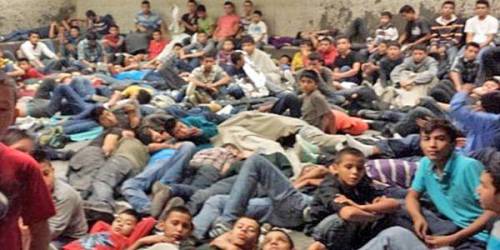
But how many would think of scenes like this?

borderemergency-diowesttxerd

No, that’s not the Balkans or Turkey or Darfour. That’s the Congregational Church of Austin in Texas, barely over a thousand miles from where I’m writing these very words.

The “American Immigration Crisis” has been quietly brewing since 2014, when a sudden surge of migrants- most of them young children– attempted to cross into the US from countries in Central America.

The response by many, as you can probably guess, was less than welcoming-

Across the Southwest (and the country at large), outrage was expressed over these “illegals”, the town of Murietta, CA perhaps serving as the best example. In July of 2014  buses carrying migrant families were protested in a manner that can only be described as repulsive- but I’ll let you watch for yourself and decide:

Continue reading

Why Horror Movies Are Good For You

That’s right, boys and ghouls-

Good for you.

That’s not something you’d expect someone to say about the genre, is it?

Sure, you might hear about horror “classics”. There are plenty of fans out there who’ll talk about their personal favorites. You might even hear critics fondly contemplate how certain horror flicks were telling of their times. But morally edifying?

Well that’s the argument I’m going to be presenting to you today.

Be warned- spoilers may follow.

Now this isn’t the first time I’ve tried to champion the macabre. I don’t expect it to be the last either- not considering the reaction folks give me when I say I enjoy the stuff.

And before we really dig in here- let me get the obvious out of the way.

Yes, a lot of horror movies are garbage. The slasher/”teen-scream” subgenres use cheap gore and excessive nudity as a crutch for plot. More serious attempts still rely on the same cliches that have been around for decades. Plenty are poorly acted and have production values that could be outstripped by a middle school enactment of Romeo & Juliet.

But that’s hardly unique to horror. Continue reading

Straight Outta Compton: A Film Review

It can’t be easy making a biopic.

Err to much on the side of leniency and you get a sappy, self-congratulatory, and ultimately meaningless popcorn flick. Err to much on the side of harsh truth and you’ll often get a vicious hatchet job.

Now try doing that while the main character’s still alive.

Suddenly there’s the additional burden of being honest and fair and avoiding litigation at the hands of the offended and his or her legions of lawyers.

Now try doing that with eleven characters at once.

Against all odds, Straight Outta Compton does just that.

Continue reading