Way back in April of last year I wrote a post called “Mashin’ It Up” [titled after something Harley Morenstein says on Epic Meal Time] that mentioned the new upcoming Teenage Mutant Ninja Turtles film. You don’t have to read it if you don’t you want to, and I can sum it up with the following sentence: the turtles will now be aliens.
Oh, and Michael Bay will be directing, but you knew that from the title.
TMNT: we are bringing Megan Fox back into the family!
Michael Bay
To be more specific, Megan Fox will be playing April O’Neil, the Turtles’ ladyfriend. Prompting rage from all corners of the internet [not that they weren’t already upset about the “alien” thing].
As you all probably know, Megan Fox played a pretty pivotal role in his first two Transformers movies, until the two had a falling out and she was replaced in the third film by a blonde goldfish [looks are subjective, but that’s just how I feel about Rosie Huntington-Whiteley]. Now it appears that the two have patched things up and the actress will have moved on from hanging out with alien shapeshifting robots to hanging out with ninja turtle aliens.
She managed to beat out starlets Jane Levy, Anna Kendrick, and Elizabeth Olsen, who were all also in the running. I can say for a fact that the latter two, at least, are very talented actresses and that I am very glad they didn’t make it. Allow me to explain myself.
No one out there expects this to be a good movie. I mean, sure, co-creator of the original TMNT comic Kevin Eastman thinks it’s going to be “a fantastic film,” but I’m not buying it. We’ve all seen Transformers, we know what to expect: a testosterone-fueled explosion-fest that will include at least one decent fight scene that you’ll have to find on YouTube after you’ve seen the movie because there was too much detail in too short an amount of time. It won’t be good.
And because it won’t be good I don’t want Anna Kendrick in it. If it’s going to be a train wreck of a movie I don’t want decent actors and actresses to be involved in it. Megan Fox can be April O’Neil because if I watch this film I want to enjoy it like I do a triple bacon cheeseburger, knowing it does nothing good for me whatsoever. Casting a truly gifted actress would be like putting spinach on that burger; it’s not where it should be, and in spite of being healthy would actually hinder my enjoyment of it as a whole.
So I’m not mad, personally. It’s just a Michael Bay movie, something we’ve all had to get used to at some point this past decade. You can be upset about it if you want to, but that’d be like being mad that an episode of Here Comes Honey Boo Boo doesn’t have better cinematography.
Today, I’d like to tip my hat to one of my favorite shows, a young series by the name of American Horror Story.
Now it’s no secret that the horror genre is universally despised, being seen by many as being lower on the totem pole than even toilet-humor comedies or the most saccharine romances out there. I could probably spend an entire post speculating on why exactly horror flicks are treated with such little respect (a lot of it is probably due to the genre’s inbred cousin, the “teen scream” flick), but that’s another topic for another time. I’m here to simply showcase the series and highlight a few of its key strengths and accomplishments that I think make it worthy of a Fame Day.
Each season of the show (the second has just concluded, and a third has been greenlit) is a separate story, made up of the horrific lives of the characters as they struggle with their pasts, their inner demons, and some ever-present terror always lurking just beyond the shadows. It essentially cashes in on the initial charm that LOST had before it jumped the polar bear.
Guilt and shame are themes that play heavily into the series as a whole (or at least, the past two “stories”), giving even the most heinous characters a degree of sympathy. Again, similar to LOST at its best, the constant shifting of the story from one perspective to the next prevents the series from ever being boring. Granted, the madcap pacing doesn’t always work (especially in the first story), but for the most part, the audience is always kept interested.
And that brings us to the first key accomplishment of the series:
Popularity
As I stated above, horror is simply not popular- at least, not in any mainstream way. Tim Burton’s lighter works are really the closest most people get to anything remotely macabre, and the fact that the series has continually drawn in high ratings (to say nothing of critical acclaim) is nothing short of amazing. And we’re not talking about a series that is eerie or has a handful of jump-scares, we’re talking about truly unsettling elements here. I’m certainly not alone in hoping that that AHS‘s continued success serves to begin building bridges between mainstream entertainment and horror subculture; heaven knows both could benefit from some fresh perspective.
And even in the subculture, AHS is playing a pretty major role. It’s…
Raising the Bar
As a result of the genre’s (comparative) isolation, quality in horror is typically pretty rare. When you can’t secure funding for special effects, good equipment, or even B-level actors, chances are your product isn’t going to be all that good. Of course, when you have a built in audience who would pay money to watch Dwayne Johnson protect an orphanage from chupacabras, why would you even bother trying?
I would actually probably watch that…
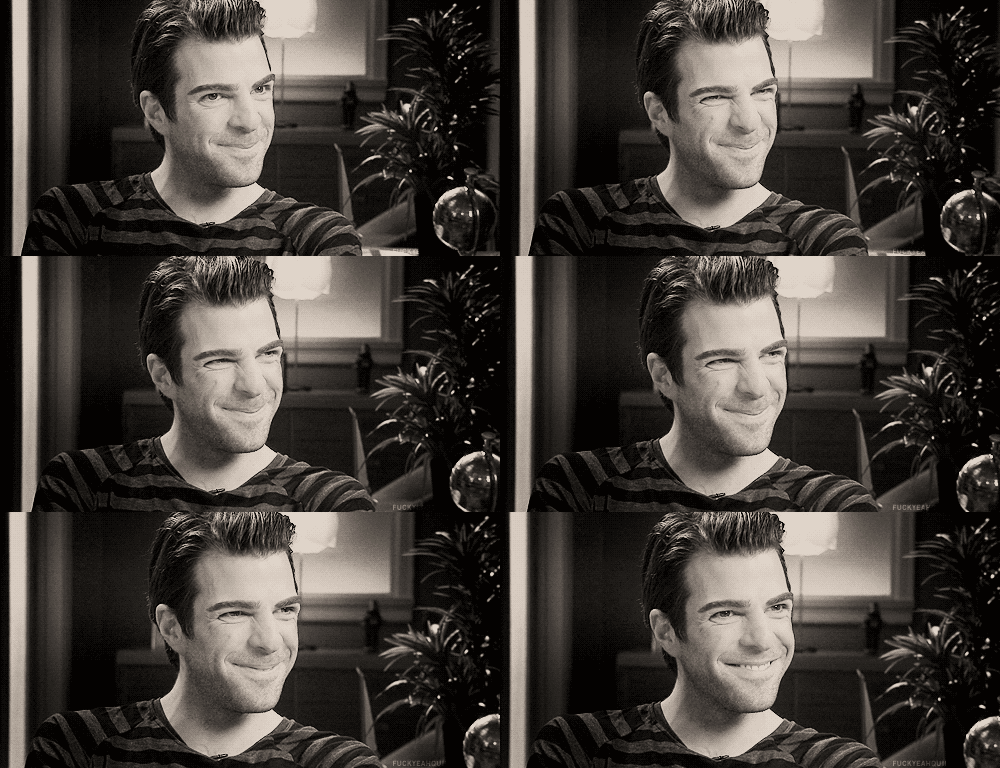
I’ve seen my fair share of (decent) horror movies, and I can count on one hand the films that had even passable cinematography. AHS, as a series that actually has some decent funding and actually puts effort into creating tense atmospheres and believable effects, is raising the bar for the entire industry. When AHS is the basis for most people’s experience with the genre, there’s going to be pressure on the rest of the industry to meet and excel the expectations the mainstream audience is going to have. Furthermore, AHS‘s star-studded cast (including Zachary Quinto, Ian McShane, James Cromwell, and, I kid you not, Adam Levine) is hopefully going to make the horror genre more inviting to high-caliber actors who can actually sell the audience on the direness of the situation and maintain interest without having to drag in a bunch of fornicating teenagers.
The series is actually one of the few I’ve ever seen that actually gives teens any credit or respect…
And perhaps most importantly, it comes down to this:
Depth
While the stories are good, as are the actors (Jessica Lange being easily more frightening than the goriest bits of the series), it’s some of the basic discussions held during the stories that really hit home. Oppression of women and the dark history of psychology are topics repeatedly brought up, and dealt with both in a historically accurate and totally visceral manner. Perhaps the most disturbing thing I’ve yet seen in the series hasn’t been any of the monsters or murders- it’s been a demonstration (scaled back for TV, even) of the psychological “treatment” given to people “suffering from homosexuality,” seen at the time as a mental disease. Those five minutes alone were more frightening than anything else in the story- and it was amazing. Amazing to see some serious and deep social commentary made, and to see the brutality and insanity some people had to undergo actually presented in a way that’s going to resonate with the audience. You will be a better human being for having watched that scene.
Though in the spirit of honesty, your view of nuns will probably diminish a bit…
When’s the last time you could say that about a rom-com?
American Horror Story, keep up the good work.
A final note. I would’ve included more gifs, but (1) I didn’t want to spoil anything and (2) easily 90% of all AHS images are of Evan Peters, who is apparently just the bee’s knee’, if the series’ female fans are to be believed.
It took me some time to think of a Fame Day topic that also intersected with Valentine’s Day [which is today, if you didn’t know], but once I came up with it there was no doubt in my mind that it was the right one.
In the pile-on of proper nouns that was that last paragraph, I’ve neglected to define what exactly Sci-Fi Speed Dating is. Sci-Fi Speed Dating is regular speed dating, but at a comic convention, meaning that most of the participants are cosplaying [in costume]. Everyone must involved must be single and interested in members of the opposite sex [they can be interested in the same sex as well, but it must be in addition to that], and, since I don’t want to go through every single rule, it’s hosted by a very large man dressed up as a Jedi; he is hilarious.
To give you a fuller understanding here’s the first episode, “Brony Friend Zone (Alex)”:
It paints a picture of the stereotypical nerd/geek, a bespectacled pudgy young man with chops who lives with his parents. A show’s got to have some variety, though, and Episode 3 stars a girl named Brittany:
For the record, I would go get coffee with this girl in a heartbeat. I don’t even like coffee, but I would order some and drink it if it was something she was into.
Brittany is a person who “likes video games, particularly BioWare, comic books, Marvel, [she likes] the shows Once Upon A Time, Lost, Doctor Who,” in case you missed that. She’s also, by most people’s standards, not a physical representation of what a nerd looks like. She’s also friendly and personable, exhibiting none of the tendencies we’ve been expected to observe thanks to shows like The Big Bang Theory.
The reason I’ve decided to spotlight Geek Love today is because it highlights the diversity within the growing community of people who identify themselves as “nerds” or “geeks.” Episode 4 features a guy who cosplays as Jimmy Olsen [“Superman’s Pal”], and basically no one he talks to recognizes him. As a comic-lover it was hard for me not to get upset at them and scream at the screen, “You call yourselves nerds?!” They were, though. They just like different things. Episode 6 follows Mary, who’s primarily a movie buff. That differentiates her from someone who is very into anime, but doesn’t discourage her from “looking for love” at this convention.
As a show Geek Love also serves as a means of discussing how important your personal likes, passions obsessions etc. are in finding a significant other. Over on his blog Mightygodking discussed this in reaction to a story arc of popular webcomic PvP, and while I may not agree with him 100% his discussion on the necessity of shared interests in a relationship is a good one [be sure to check the comments section, too!]. Clearly the people on this show are looking for potential girlfriends and boyfriends at Sci-Fi Speed Dating because finding another person who loves the same things you love is important to them. How high this should be on your personal compatibility list is up to you, but for them its rank is up there.
Geek Love is a pretty fantastic show for people who are interested in comic books, video games, science fiction, and finding a person to share all of that with. It’s also arguably a good show for anyone who wants their perceptions of that particular sub-culture to broaden their views.
Some time ago, I submitted a brief post recasting the Batman universe. Today, I will be doing the same for the Last Son of Krypton, a challenge greater than that of the Dark Knight first because it will be pretty much impossible to find a better Lex than Kevin Spacey…
…And second because of how much I hate and despise Superman.
Now I know that’s gonna be shocking news. After all, who could find anything but love and appreciation for an inherently powerful, indestructible being serving the US government and acting without any accountability? What could possibly go wrong?
But my issue with Big Blue is neither here nor there. Presented below, for your thoughts, consideration, and potential outrage are my picks for the cast of the perfect Superman series.
Kent Clark/Superman:
Actor: John Hamm
Why We Want Him: Because in addition to being the spitting image of Superman, Hamm is probably best known for his role as Don Draper, 1960s businessman. While I can’t say that I see Superman downing enough whiskey to kill a bull elephant, I can see Hamm’s immersion in a world with an antiquated sense of morality (and uncomfortable suits) as being a huge bonus in playing Clark Kent.
Cons: Weird as it may seem- Hamm is only 6′ tall- a full four inches shorter than Clark Kent’s reported height. While I like the idea of a slightly older superman, the simple truth of the matter is Hamm may be relegated to the speaking roles while a stunt double or two takes on any action scenes.
Lex Luthor:
Actor: Jason Isaacs
Why We Want Him: I’ve seen Isaacs play some pretty despicable characters (The Patriot), but also nail some complexly heroic ones as well (Brotherhood). Ideally, Lex is meant to be tragic hero- someone who could’ve or should’ve been a great leader of men were it not for his obsession with defeating Superman. If there’s anyone who can do this, it’s Isaac’s (also, did you know he played Lucius Malfoy in Harry Potter? I just found that out).
Cons: He’s not Kevin Spacey.
Lois Lane
Actress: Jennifer Morrison
Why We Want Her: It’s tough to respect an investigative journalist who can’t recognize Superman as the guy who works the next cubicle down from her simply because he’s wearing glasses. This being (in my experience) pretty much the extent of what Lois does in any Superman book, filling her shoes is a job that pretty much anyone can do- the question is, who can do it best? I submit Jennifer Morrison (House, How I Met Your Mother). She’s played intelligent characters, and we’re banking on that offsetting Lois’s apparent ineptitude.
Cons: As I said, L.L., having the same basic role as Princess Peach, could be played well by pretty much anyone- John Hamm included.
General Zod:
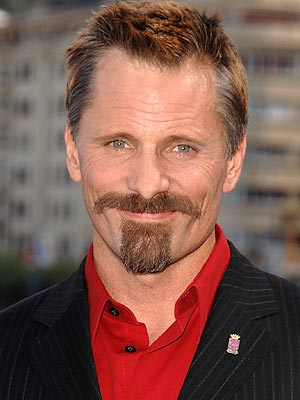
Actor: Viggo Mortenson
Why We Want Him: Because we (or at least, I) have yet to see him deliver on being a truly evil character (SPOILER ALERT: he’s a good guy in Eastern Promises).
Cons: I can’t say for certain that I can see Mortenson pulling off the self-assured, swaggering crypto-Fascist character that Zod has.
Bizarro Superman:
Actor: Benecio Del Toro
Why We Want Him: You might think that the anti-Superman would still be best played by John Hamm. I disagree, and submit instead Benecio Del Toro, who (and I mean no disrespect to him, I really like his work) looks more or less how you’d expect Hamm to look if you took a shovel to his head for a while.
Cons: Del Toro is slightly taller than Hamm, and like Hamm, may be beyond doing some heavy-duty action scenes at this point (but hey, 45 is the new 38).
Pa Kent:
Actor: Rutger Hauer
Why We Want Him: Because the man improvised the “Tears in the Rain” monologue in Bladerunner. That’s right- this guy right here made up on the spot one of the most iconic and moving speeches in film history.
Cons: What about “Improvised ‘Tears in the Rain'” did you not understand?
Ma Kent:
Actress: Jessica Lange
Why We Want Her: Because I’ve seen this woman do some incredibly moving scenes and play her insanely layered and complex characters to the hilt.
Cons: She’s terrifying. AHS fans know what I’m talking about.
Jor-El:
Why We Want Him: Because Rickman, in addition to being just generally awesome, has that strange accent (something entirely beyond British) that’s almost alien. Even if Jor-El is only going to have a few moments of screen time, you want to make ’em count for something- who better for the job than Rickman?
Cons: There’s a strong chance that the accent might be too much- but hey, he could always do that flamboyant American one that fooled John McClane.
Jimmy Olsen:
Actor: Rupert Grint
Why We Want Him: Because of the three ginger comic-relief go-to-guys ( the others being Seth Green and Fran Kranz), Grint is the only one young enough to actually pass for the Daily Planet’s whipping boy.
EVAN: The particular topic of discussion that comes to us today is more one that finds itself passed back and forth within Christian circles, and that is: “Why is Christian media so bad?”
GORDON: I think the problem is self-imposed by the religion (I use the term loosely) itself. We’re not talking about a lack of funding (we’ve got plenty of good low-budget films), or a lack of good directors (there’s plenty of decent talent out there), we’re talking about an issue that runs right down the core of it all.
“Christian” media can’t just be media- they have to drag in everything that goes with it.
EVAN: So basically what you’re saying, and we talked about this a little earlier, is that Christian media more often than not has an agenda, correct?
GORDON: I’d say plenty of it has an agenda, but no, I don’t think that’s the core issue- there’s plenty of other preachy movies out there.
EVAN: So what are you saying, exactly?
GORDON: I’m saying that “Christians” can’t make good media because they won’t allow themselves to. Every protagonist has to fit the moral code to a tee, so that they wind up as either Aslan 2.0 or the epitome of Christian morality: John Smith, the middle class suburban, patriotic family man. Which is why I keep putting “Christian” in quotation marks.
We’re not talking about Catholic peasants in El Salvador or the East Orthodox Church in Ethiopia.
EVAN: Okay, I like that a lot, this idea that those creators of Christian media [and primarily I think we’re talking about films] box themselves in. They’re telling the same sorts of stories to who they perceive to be their audience [and they’re not wrong]: white suburban middle class families.
To sort of break this up a little, I actually saw a Christian film that was reasonably passable at some point last summer.
GORDON: Was it related in any way to Steve Taylor?
EVAN: Is that any way related to “End of the Spear”? It was not, if that’s what you’re referring to.
GORDON: Steve Taylor is the only good Christian musician who ever has or ever will have existed.
But anyway, what was the movie you saw?
EVAN: It was called “To Save a Life,” and it stood out for a couple of reasons:
1) The cinematography was shockingly good for something produced and made by Christians. You can tell which movies they are within the first few seconds.
2) The “villain” of the piece was actually the pastor’s kid. Which was- refreshing, and kind of nice.
It kind of broke out of the whole stereotype you introduced earlier.
GORDON: Huh- interesting. I’ll have to check out the trailer. But let me ask you this:
Can a Christian make a James Bond movie?
EVAN: You mean a movie starring a suave, debonair British man who beds women and guns down henchmen as naturally as he dons his suit jacket every morning?
I’d say no, probably not.
GORDON: I think that’s the problem. It’s not just that you can’t have any explicit sex or graphic violence or excessive profanity (which are overused and abused as is), you can’t have anything even remotely sensual or rough or crude. It rips away reality and humanity in the name of not stepping on anyone’s toes.
Self-imposed legalism.
EVAN: Well, I’d say the difference is that you can’t have a protagonist who glorifies such things as wanton sexuality-
I say that Christian filmmakers will never produce anything like James Bond because of who the character is.
GORDON: Did you like the movie “Fight Club”?
EVAN: I liked it a fair amount.
GORDON: Did you like “Ocean’s 11” or “Snatch”?
EVAN: I haven’t seen the latter, but I very much enjoyed the former.
GORDON: Did you like “Superbad”? “Kick-Ass”? “Ironclad”?
But I think you’re going to have to get to your point-
GORDON: Could a Christian make any of these movies?
EVAN: I think a Christian could, yes. In relation to “Fight Club”, at least, Christian author Ted Dekker has penned novels [sold both in and out of Christian bookstores] which offer a fairly decent psychological thriller aspect to the reader.
GORDON: Ah, Dekker. The whole reason he stands out as an exception is- I believe- that he grew up among Indonesian headhunters, and not in Middle America. Again, it’s about having that different perspective on life.
EVAN: And I think what he’s realized, as a creator of the arts, as someone who has a hand in shaping Christian media, is that you can have these other sorts of exciting, thrilling stories told with a faith-built worldview. People of every religion want a little excitement.
GORDON: Of that there’s no question. The heavy use of the video library at our school stands in testament to that.
But again I think the issue is that “Christian” self-imposed isolation inevitably leads to the vast majority of their work winding up as “White People Problems” or “Chronicles-of-Narnia-minus-the-good-stuff”…
EVAN: Or “Lord-of-the-Rings-but-way-more-heavy-handed.”
GORDON: Exactly.
EVAN: I mean, we’ve talked a little bit about why Christian media can be bad [terrible production values, cookie-cutter story lines, sheer absurdity], but how could it be better [to harken back a little to our last talk]?
GORDON: They have to stop being terrified of the big bad world. They have to realize they can show characters with flaws- real flaws- not drunkard stereotypes and the occasional swear word.
Saying this will get you expelled from Liberty, Pensacola, and BJU
EVAN: I mean, a deeply flawed person who finds redemption is a much more compelling story than a white bread sort of guy with his middle class problems.
And they have to stop coddling their audience. Yes, Christians turn to Christian media for “better alternatives,” but the odd cuss word won’t negate an overall positive message; neither will a fight scene, or two guys sitting around enjoying a beer.
GORDON: There’s this one scene in a (Christian) movie Steve Taylor directed:
A character hurts his hand loading something into the back of van. He lets loose a cuss word and his buddy chides him for it, saying “God don’t like it when we cuss.”
Later on in the film, the buddy hangs his head and apologizes, saying “I’m sorry. I was upset that you cussed- I should’ve just been upset that you hurt your hand.”
EVAN: Wow. That is very, very good.
GORDON: That right there is the problem not just with Christian media, but with the whole religion.
EVAN: Misplaced priorities.
GORDON: More obsessed with present clean-cut paragons of middle class etiquette than anything really real.
That’s why we turn to “secular” movies for actual substance. The struggle for identity in “Fight Club”, the heroism in “Kick-Ass”, the friendship in “Superbad.”
EVAN: I think what’s really ironic is that Christian media-makers have a Christian-made work out there that’s immensely popular. “The Hobbit: An Unexpected Journey” came out just this past December.
GORDON: I again reference an (alleged) quote by Steve Taylor.
“I’m not a Christian artist- I’m an artist who is Christian- it affects what I do.”
EVAN: Really well-put. And something that a lot of us [I speak for many in our graduating class] as writers, musicians, artists, et cetera would benefit from keeping in mind.
And that puts us more than a little overtime.
GORDON: Well, people, you know what that means. Time to vote on our subject for next week.
EVAN: My contribution this time around is . . . wow, I never think ahead . . . masculinity. You’ve done a post about “Manly Culture” in the past, but I want to talk about what it is at present, and how we feel about the shifts and trends and things.
GORDON: Interesting subject. I submit we speculate on the upcoming Star Wars movies.
EVAN: If you think you’re up for it, then yeah, cool. I’ve read quite a few of the post-original-trilogy books, so I know a reasonable amount about the subject.
GORDON: Nerd.
And with that witty response, we’re out! Have a good night, everyone.
First and foremost, apologies about the state of the blog next week. E> was postponed ’till tomorrow due me forgetting about it completely and watching a movie/drinking with my cousins last night. This morning’s replacement was delayed due to my being sick all day today.
The following contains spoilers to films you should’ve seen by now.
The first and third films in the franchise concerned the Ark of the Convenant and the Holy Grail, respectively. Both are Judeo-Christian relics, and both are shown to have a great deal of power in the series; the former melts the face off of a bunch of Nazis and the latter brings Henry Jones Sr. [Sean Connery] back to full health from grievous wounds. Which is great.
Then take into account the second film, Indiana Jones and the Temple of Doom. The Hindu goddess Kali is introduced, who is pretty into human sacrifice. This movie’s relic is actually five relics, sacred Sankara stones that do . . . something. All I’m really sure of is that Indy says things and they get super hot and burn the guy who says “kali ma shakti de” and pulls out another dude’s heart.
The first three movies of the franchise make a lot of sense in context with the protagonist’s profession, that of archaeologist. The main issue here is that the Holy Grail and Ark of the Covenant are shown to draw their powers from the Judeo-Christian God, father of Jesus Christ, et cetera. High priest Mola Ram [Mr. Kali Ma] finds his supernatural abilities in Kali, I assume. This can be explained away with the following-
“Kali” and the source of her powers originate in the demonic. This resolves the idea of an actual healing Holy Grail existing in the same universe as magical burning stones. God and Kali are essentially just opposite sides of the same coin, the divine and the diabolic. Which is great. We’ve reconciled the two, fantastic.
Enter Indiana Jones and the Kingdom of the Crystal Skull. The relic: the skull of a genuineextraterrestrial. The source of its powers: genuine extraterrestrials. Which leaves us- where?
As an audience we’re left to believe that a divine Jesus Christ, death goddess Kali, and aliens all co-exist on some level. The addition of that last source of otherworldly power really throws a wrench into the works.
Sure, I guess we could say that the source of both the divine [for both Judeo-Christian and Hindu faiths] is in the extraterrestrial, that these aliens seeded the world with their technology or power or however else you want to say it, but really? There’s a definite stretch to suspend disbelief on the part of the audience. I mean, sure, we can accept face-melting Arks, but aliens?
And that’s the problem that, I personally, have with the fourth Indiana Jones movie.








 Actress: Jennifer Morrison
 Actor: Viggo Mortenson
 Actor: Benecio Del Toro
 Actress: Jessica Lange
 Why We Want Him: Because Rickman, in addition to being just generally awesome, has that strange accent (something entirely beyond British) that’s almost alien. Even if Jor-El is only going to have a few moments of screen time, you want to make ’em count for something- who better for the job than Rickman?
 Actor: Rupert Grint



 The first and third films in the franchise concerned the Ark of the Convenant and the Holy Grail, respectively. Both are Judeo-Christian relics, and both are shown to have a great deal of power in the series; the former melts the face off of a bunch of Nazis and the latter brings Henry Jones Sr. [Sean Connery] back to full health from grievous wounds. Which is great.


