Category Archives: politics

(Gay) Mawige Is Wat Bwings Us Togever Today

As you already know, June 26th saw the US Supreme Court’s ruling in Obergefell v. Hodges- an agonizingly boring name for what was one of the most momentous decisions in American legal history.

Effectively legalizing same-sex marriage in all 50 states, the ruling was met by many Americans with resounding applause and celebration that often seemed to border on being downright aggressive.

But we’re not here to talk about that. Nor are we here to talk about the outcries and horror and disgust from the ever-dwindling minority of marriage equality opponents. At least- not the nutjobs.

The pastor who promised to set himself on fire if the ruling was made (though he swiftly retracted that oath), the folks claiming that gays cause hurricanes, the ones who hold up picket signs reading “God hates Fags!”-

-these are not the people I want to talk about.

I’m referring to the non-crazy (but by no means less angry) rank and file of the opposition here. Your conservative uncle. Your Wesleyan Aunt. Folks who’d never shriek obscenities, or claim the impending wrath of God, but who’d still shake their heads sadly and call this ruling a “tragedy” or “evidence of our culture’s moral free-fall”.

These folks:

FB capture 1FB Capture 2FB Capture 3 Continue reading

Rachel Brown on Food, Religious Identity, and the Appeal of Muslim Extremists

A few months ago, I had the opportunity to hear PhD candidate Rachel Brown speak about her research on food and religious identity in French and Quebecois Muslim immigrant communities. I found Brown’s talk fascinating and contacted her soon afterwards; I wanted to find out if her work was publicly available so I could write about it here on the blog. While Brown has written a chapter on her work for an academic publication it hasn’t been published quite yet. Lucky for me, Brown was willing to share a draft with me. Throughout this interview I will be referring to, and occasionally quoting, that draft in order to give you context for the questions I ask Brown.

According to Brown, her “primary research interest lies in the study of immigrant religious experience and how members of immigrant communities negotiate their religious identities through food and food practices in their host countries.” In order to write on this topic, Brown conducted fieldwork and semi-structured interviews in both Paris, France and Montreal, Quebec.

This was the most French gif I could find.

Kat: Hi Rachel, thanks again for being willing to share your research with me and our readers. Before I dive into the questions I have from reading your draft, can I ask, what drew you to this area of study?

Brown: I came to the project out of a love of all things food and all things France. On one of my many visits, I noticed that how and what the Muslim community in France ate was a point of interest for media, politics, and everyday conversation on the street between friends and neighbours. There was clearly a subject to be addressed. I figured if I was going to be in the field for a year I might as well be somewhere I love and studying something I am passionate about, and so I set out to study the topic of food and religion. As I got further and further into the topic I realized just how essential food practice is to identity, especially religious identity and my research has grown exponentially ever since. The importance of food in religious identity negotiation for immigrants can be seen across a variety of locations and traditions.

Kat: I’m also curious about the technical side of things. Did you intentionally limit your case studies to individuals from the Maghreb? If yes, then why? Also, how did you go about arranging these interviews, or even making these connections in the first place?

Brown: I definitely limited my study to individuals from the Maghreb. I did this because the largest Muslim community in both France and Quebec comes from the countries of the Maghreb. This is not only because of proximity, of the Maghreb to France, but also because of a colonial history between France and the countries of the Maghreb. When one thinks of Muslims in France, this is most often the community that comes to mind.

In terms of arranging the interviews, this was a tough process. I started by going to the Grand Mosque of Paris and just getting to know people there. I had to build up trust, and spent many hours just helping out at the mosque in order to show that I was not a journalist (a profession folks are very hesitant of in France) and that I meant well with my research. After people got to know me, some started to agree to do personal interviews with me. Once I conducted the first interviews the people I interviewed then put me in contact with friends or family members to interview. So I followed a snowball methodology. It was not easy to get people to talk to me, but because my topic is such an approachable one (who doesn’t want to talk about food?), it made it a little bit easier to get people to agree to interviews. Having the personal connection, and a validation from friends or family members that had already done the interview was also key. Continue reading

Culture War Reporters’ Memorial Day Montage

War.

For the vast majority of the lives of every writer here at CWR, wars and rumors of war have been a part of daily life. As of 2013, over 43% of the US military is comprised of men and women aged 25 or younger, an additional 22% just barely older. The majority of this nation’s army are tasked with fighting in conflicts many are barely old enough to remember the start of. The once rare presence of a person in uniform has now become a commonplace in airports all across the continent, and for good or ill, the armed forces have become a major element in our culture, and we here at CWR have engaged the subject over and over again.

Today’s post comes to you on Memorial Day for Americans. In the spirit of the day, I figured we should take a moment to offer a review on the material we’ve produced on the subject of the military. The good, the bad, the ugly- altogether.

Why We Need Graphic Violence

Violence in media is often cited as being one of the chief sources of violence in everyday life. But is our paralytic fear of showing blood and gore actually a good thing? Here we argue that disturbing images need to be seen for us to be really and truly disturbed, and that there’s no better place to start than with war. How else can we measure the real cost?

Stars Earn Stripes (Is A Terrible, Awful, Idiotic Abomination)

Fortunately cancelled after only four weeks of airtime, NBC’s Stars Earn Stripes stands as a demonstration of just how depraved we can be when it comes to exploiting the horror of war and our sympathy for folks in uniform. Here we break down every repellent detail of why this show (and shows like it) are as damaging as they are deluding.

No War, No More

During the height of tensions with North Korea during the spring of 2013 there was more than a little bravado on the side of Americans mocking the little dictatorship and laughing at the prospect of bombing the country out of existence. Frustrated by the cavalier attitude of so many, we provided this reminder of the actual nature of war and conflict.

Shame Day: War As A Fashion Statement

Later that same year, Evan covered the trend on militaria as a fashion, targeting the ironic(?) use of Vietnam War caps specifically. Disrespectful to veterans? Trivializing of combat? Read on to see for yourself.

(Admittedly, the title’s probably a giveaway. It’s still a good piece- read it anyways.)

America Wants Dead Soldiers

In what was perhaps the most shocking titles ever given to a post here at CWR, yours truly argues that the sympathy offered the members of the armed services (especially on days such as today) are by and large crocodile tears. Actual gratitude to the men and women in uniform has a strange habit of disappearing when it involves any actual sacrifice or effort on our part. Read on to discover why.

The Black And White Of American Sniper [No, This Isn’t About Race]
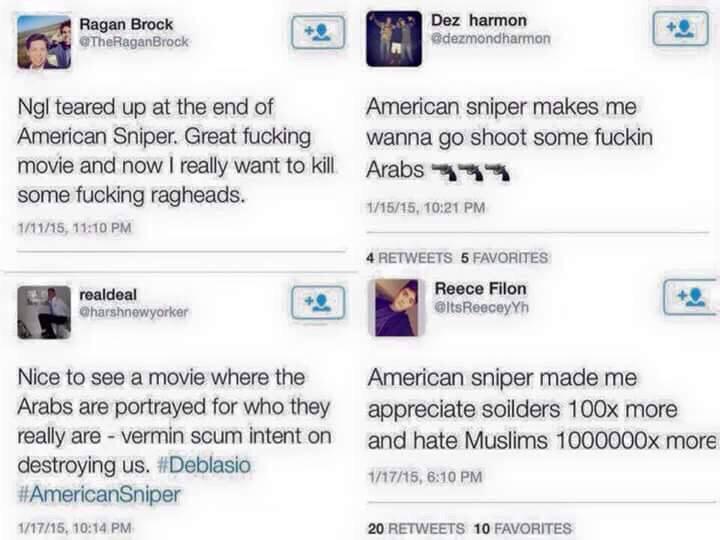
While real support for the armed forces is no easy task, honest criticism’s no picnic either, as Evan demonstrates in his analysis of the reactions to American Sniper. In addressing the legacy of celebrated marksman Chris Kyle we examine how quickly both history and our depictions of it can be distorted to complement our own views. If you look at nothing else today, look at this one.

When Patriots Inflate

Surprise!  There’s not going to be a lot of football in this post.  But I’ll work it in where I can.

I grew up within a thirty minute drive of one of the most deployed military bases in the U.S., so it’s safe to say that I’ve been exposed to just about every brand of hyper-patriotism in existence.  Every house on every street sported an American flag, and Memorial Day was actually more than just “Giant BBQ Day,” because everyone knew/loved somebody who was literally putting their life on the line for their country.  Because of this, there’s almost a sense of urgency to the way people there go about loving their country.  Basically, your friends and family may die for the USA at any point, so you need to love your country to pieces, because otherwise questions about the necessity of their sacrifice will eat you alive from the inside.

And you know what?  I get it.  I really do.  I know people who’ve lost parents, siblings, and spouses in the military.  It’s heartbreaking.  However, emotions only ever get in the way of rationality, and when you take all of that away, I can only reasonably come to the conclusion that patriotism–or at least, the inflated emphasis on it that I encounter daily–is straight up dumb.  I really could go on and on about this, but for now, I’ll sum up my problems with patriotism in a few points.

1. It’s Practically Nationalism.

In most cases I’ve encountered, the two are inseparable.  There’s a reason why synonyms of nationalism include both “flag-waving” and “jingoism.”  Sure, you can argue that the two are distinct; patriotism, at its core, is devoted love of your country, and doesn’t necessarily have to lead to all of the negative “us vs. them” bulls**t we so often see.  I’m not about to go the route of the “slippery slope” argument, but seriously, that’s a fine line to tread.

Most American patriots I know will throw around phrases like “the greatest country on earth” or “the city on a hill.”  It’s sickening, but we put up with it because, in our case, there either aren’t any major negative consequences (yet) or they’re so far removed from us as to be a non-issue (unless you happen to live in a country where we currently have boots on the ground).  It could be worse.  It could be ethnic nationalism, or religious nationalism. The fact is, inflated patriotism generates a pretty prime climate for that sort of nonsense to proliferate.  This would be forgivable if it actually did us any good otherwise, but… Continue reading

Can’t Hang ‘Em Thrice: Dzhokhar and the Death Penalty

Friday saw a federal jury sentence Dzhokhar Tsarnaev, one of the culprits behind the horrific bombing of the 2013 Boston marathon, to death by lethal injection. When I saw the headline pop up on my news feed, all I could think to myself was-

What’s the point?

Readers, no one- even the defendant- disputes Tsarnaev’s guilt. Tsarnaev’s cowardly attack murdered three innocent people and wounded over a quarter thousand others. That Dzhokhar and his brother, Tamerlan (killed in a standoff with police shortly after the bombing) are monsters is likewise not in question.

But with all of that in mind- the guilt, the heinous nature of the act- what’s a lethal injection going to solve?

Now this isn’t the first time I’ve talked about the death penalty on this blog, but I think there’s hardly a better example of how fundamentally useless the thing is. And don’t for a minute think this is some bleeding-heart outcry against killing- I’ve got no problem with that, and I actually think we don’t resort to violence nearly as fast or often as we should.

I. Just. Don’t. Get. It.

What are we trying to acomplish here?

It’s Not Justice

It’s not.

Tsarnaev murdered three people and mutilated hundreds of others. If we take a balance-the-scales approach to justice (which I don’t- but that’s another discussion), then we’d have to find some way of killing and reviving him three times and subject him to years of physical and emotional torture.

We can’t do that.

Morally or practically.

You can pick whichever you want, but it’s just not going to happen. If you want to you make justice your sticking point, then fantastic. And I don’t say that with an iota of sarcasm, I really and truly to laud that. But again, this isn’t justice. Continue reading

Movies For Socialists

Readers, it’s the beautiful month of May, and you know what that means-

That’s right! It’s a seemingly unending salvo of rabidly Socialist-themed blog posts!

From me, anyways…

Now readers, normally I’d get right into the thick of things and engage in a lengthy tirade on the insidious-and-soul-crushing nature of the Capitalist system and the failure of the radical left to challenge that. But since this post is coming to you late, how about I talk about something a bit lighter than the minutiae of modern political-economy instead?

How about movies?

Everyone likes movies, and lord knows that these ones listed here have probably done more to inspire righteous radicalism in the common man than all of the cliff notes on Das Kapital put together. Whether you’re a dirty, seditious Commie or just a fan of the berets and impassioned speeches, here’s Culture War Reporter’s recommendations for your revolutionary viewing pleasure:

The Edukators (German Title: Die Fetten Jahre Sind Vorbei)

Now right off the bat, yes, that is Daniel Brühl, of Rush and Inglorious Basterds. Now that you’re done wondering “where the **** have I seen that guy?”, let’s get into it.

Our story opens with a cadre of disaffected youth, tired and disillusioned with capitalism but not sure exactly what to do with themselves. The characters find themselves drawn into a campaign of pranking the houses of the wealthy elite- harmlessly, at first, but building momentum and severity. Their well-intentioned social statements spiral wildly out of control when they accidentally kidnap the owners of one of the estates they vandalize. Don’t think this is some cheap action movie though- the quiet, contemplative tone packs just as much punch, if not more, than any thriller.

More than anything, The Edukators is an exploration- touching on the zealotry of youth, the realities of growing up, and idealism in a world where ideals just aren’t relevant. The Edukators raises more questions than it offers, and is sure to convict both revolutionary and reactionary alike. Continue reading