Tag Archives: Evan and Gordon Talk

Evan and Gordon Talk: Nerd Culture

EVAN: To start this off by ignoring our readership and addressing you, this week’s topic is a weird sort of continuation of the various posts on culture you’ve written, such as “manly culture,” “science culture,” etc. And similar to these other groups of people, “nerd culture” is a pretty nebulous sort of thing to define.

GORDON: No argument there. After all, even the “nerds” insist on calling out “fake nerds”- especially in regards to women/girls. But what is a nerd anyways?

EVAN: See, now I’m torn, because we do need to define it, but you’ve also directly referenced an issue I wanted to discuss in depth this week.

GORDON: How about we abandon our previous track record, and just plunge recklessly ahead and hope the issue resolves itself?

EVAN: Well, let me throw this image out there:

And then hope that suffices for now.

GORDON: Works for me. So what was it that you wanted to address specifically?

EVAN: Well, just last month there was this guy, a comic artist, named Tony Harris. And he wrote this post on his Facebook page that was essentially a tirade against “faux nerd” women, and how they are whores, and so on.

To break it down further, these are women who dress up as superheroes and what have you without knowing about the actual characters themselves. He is upset because, to quote him:

BECAUSE YOU DONT KNOW SH-T ABOUT COMICS, BEYOND WHATEVER GOOGLE IMAGE SEARCH YOU DID TO GET REF ON THE MOST MAINSTREAM CHARACTER WITH THE MOST REVEALING COSTUME EVER.

Also that they attend to essentially just tease the regular con-goers and are actually not even hot, just “con-hot.” So yeah, he said a lot.

GORDON: Ah yes, I recall reading about this. And while I think we can all agree Harris went too far, is a bit hypocritical (seeing how most comic women ain’t exactly average looking), and probably getting too emotional, I can’t help but wonder if he has, somewhere in there, a point.

I mean, imagine if all of a sudden, something that you had been stigmatized for became popular, and people started trying to co-opt your identity knowing nearly nothing about it. I’d be ticked off too.

EVAN: That’s definitely something I’ve read people write about, that this used to be an exclusive club and that it took years to build up this knowledge and become, well, a nerd, and here are these noobs and they want in and it’s not that easy.

And I can see where they’re coming from as well.

But if you really love something, shouldn’t you want others to as well? The Avengers has an enormous following on tumblr these days [because of the movie], and these are people who are actually going out and starting to buy comics. They are helping sales, aiding the industry, etc.

GORDON: That’s true, and something I’ve considered, but there’s probably also an argument to be made for the other side. That something precious to you is being watered down and diluted for profit. I don’t believe that nerds (comic book nerds, anyways) can necessarily make this argument, but the line of logic is there.

Let’s try to come up with an example of this happening somewhere else, especially in regards to persecution.

EVAN: Mmk, go ahead-

GORDON: “Black culture” (or what was passed off as black culture) might be an example. Can you state that you’re not driven nuts by wealthy, comfortable suburban kids fronting like they’re from the streets of Oakland?

EVAN: Yeah, people are upset about it, sure, but there’s not this immense outcry over it. There are comic-con enthusiasts that are genuinely incensed that all of this is happening-

I doubt that an actual thug or gangbanger or whatever these rich White kids are playing at imitating is going to start freaking out that he’s getting ripped off. He’s going to laugh or shrug it off, because it hardly matters.

GORDON: I’d argue that the reason for this has more to do with the change in venue. It’s easy for the major players of the comic book industry to voice their opinions than, say, a Wu-Tang Clan fan in the late 90s. But maybe I’m wrong.

EVAN: For the most part, I see this as a mindset that is the foundation or core of hipsterism, and that we all feel to some extent, however minor. That we found something and we love it and there is a pride in joy in being one of the original fans.

And this outpouring of others somehow cheapens things. And all of a sudden we’re trying to assert how we’re better than them in some way.

“You chose to dress up as Spider-Woman? Do you even know who her alter-ego is, or what her powers are? Etc.”

GORDON: Again, do we not sympathize? Do we not feel frustrated with people who have more or less jumped on the bandwagon now that it’s all safe and socially acceptable to do so? Heck, just imagine if someone tried listing themselves as a fan of fine cooking, having only eaten sushi once- would you be ticked?

EVAN: If I equated sushi with fine cooking I guess I would, yeah. But just because we can understand someone’s anger and frustration doesn’t make it logical.

GORDON: I wouldn’t say that there’s not a logic to it. I mean, a major part of being a nerd is, and always has been, the social pariah element. All of the sudden you have these people trying to claim to be on the fringes of society? It’s condescending and insulting.

EVAN: I think that’s the issue- They’re not trying to “claim to be on the fringes of society.”

GORDON: I disagree- I feel this is a coward’s way of feigning rebelliousness and all that.

EVAN: Sometimes people who haven’t been exposed to comics for much of their lives see a movie, or read a trade, and go to a con. Maybe they wear a costume. That doesn’t mean they’re going into this thinking, in any way, that they’re suddenly a part of this group of outcasts.

Comics are popular now. I mean, more than they’ve ever been. To say “I like comics” is no longer the sort of thing that’s going to get you shunned. People are going to raise their eyebrows and wonder why you think that’s a big deal.

GORDON: Comics yes, no one is gonna argue that. The title of “nerd” however, that’s different. And after all, “nerd” is a much larger term. It applies to gamers, to film, and so on.

EVAN: So how does one become a “fake nerd”?

GORDON: Therein lies the rub- there’s always gonna be more obsessive nerds out there. People higher up and lower down the hierarchy. But for the most part, I think we can agree that a “false” nerd is one who does not meet the criteria in that diagram you posted.

The “social ineptitude”, the “obsessiveness”- if it’s not actually there (no matter how much the person or persons might insist otherwise) then that person is a “fake” nerd.

EVAN: So am I a “fake nerd”?

GORDON: Do you call yourself a nerd?

EVAN: I don’t really call myself anything. But I’d also say that many of the girls who go to cons and find themselves attacked by Harris don’t refer to themselves as anything in particular either.

GORDON: Then no, I wouldn’t define you or them as fitting this category. Like I said- Harris went overboard.

EVAN: I just don’t think social ineptitude needs to be a requirement in this. I think you could be a nerd and still have friends, and achieve some level of popularity. The diagram above really shoehorns the definition. I mean, what if I did call myself a nerd?

I’m fairly smart, about 80% of the time I’m thinking about comics, or comics-related media. At the same time, I’m a fairly social guy. What does that mean?

GORDON: You think about comics 80% of the time?

EVAN: I think about comics a lot.

GORDON: 80% of your waking thoughts is a craaaaaazy lot, though I’d say your self-identification as a nerd is flawed. Serial-killer in the making would be more accurate. But we begin to split hairs at this point.

EVAN: I guess it’s like, does Hugh Laurie have the right to play the blues?

GORDON: Hugh Laurie can do whatever the **** he wants. As does anyone. With everything he does, can he identify himself first and foremost as a blues musician? Not really. At least, that ain’t how we’re all gonna think of him, or remember him.

EVAN: Does it matter that it’s what you identify as first and foremost? I am positive that at some level, yes, he does identify as a blues musician.

GORDON: It does matter how you identify yourself first and foremost. I’ve eaten bugs on multiple occasions- I don’t declare myself “Gordon Brown: Bug Eater.” The rest of the stuff I do outweighs it by far.

EVAN: You’re missing my point. You’ve eaten bugs, so on some level you can identify as a bug-eater.

If he identifies as a blues artist less than he does as an actor, that doesn’t negate the fact that he identifies as a blues artist, and what we’re talking about is people being able to say that they can and do relate to a culture, and that doesn’t make them fake adherents of that.

GORDON: Let me offer another example: I’ve been camping, and I occasionally read survivalist pamphlets. For me to call myself a “survivalist” would nevertheless be inaccurate and misleading. That’s the crux of the matter, I believe.

A nerd is someone who is in this for the long haul- a person who enjoys The Avengers or Nolan’s Batman trilogy isn’t. At least, not necessarily.

EVAN: I’m not saying that a person who enjoyed The Avengers equates being a nerd. That’s like, half the Earth’s population, if the box office is any indicator.

I’m saying that a person who saw The Avengers, and then heads over to their local comics store to check some out, and gets really into it, has the potential to become a “comics nerd” of sorts. And people who see them and scorn them for not being there from the beginning should be ashamed of themselves.

If we’re sticking with the example of film and comics and so-on.

GORDON: And I agree- those people should not be viewed with derision. But that’s not who we’re talking about here.

We’re talking about ****ing hipsters, about people who have just enough knowledge of a culture to give themselves the veneer or adopting it. People who wear glasses as a ****ing fashion statement. You know the kind.

It’s about motives. The noob who is just now getting into the culture isn’t a “false” nerd- just a young one. The person who call himself or herself a nerd to co-opt the social stigma (now that it’s all but gone) deserves contempt.

EVAN: I honestly don’t think that what these people are trying to co-opt is the social stigma.

GORDON: My poor choice of words. I mean the false sense of rebellion. Like people who post pro-gay Facebook statements simply to draw attention and applause to themselves. Fake-rebels. Fair-weather activists.

EVAN: That’s fine, and I agree that these people are not to be applauded.

I just think that for the most part, people are realizing that there is a lot in the “nerd culture” that they find interesting and accessible, and are gravitating towards it. Not out of some misguided attempt to be on the edge of society, but because they legitimately enjoy whatever it is they’re trying to engage with.

GORDON: I agree- I simply don’t think it’s these people most old-guard nerds are angry at.

EVAN: But how can they differentiate? That’s a huge issue. It’s this reaction of the community against anyone that’s not legit, but without any way of truly being able to tell how people feel-

A person can go to comic-con in an elaborate costume simply because they enjoy the aesthetics and design of the character. They’re not required to know everything about them, and shouldn’t be hissed and booed at when they don’t.

GORDON: That in and of itself is another issue. If I showed up to the social justice convention dressed as Che Guevara  you’d best believe I’d better know a thing or two about the guy who I’m completely dressed up as- but we’re moving off track.

EVAN: But the point of social justice conventions isn’t to dress up as your favourite revolutionary- that’s entirely besides the point. I bring it up because it’s completely cogent to our topic, because it’s exactly what Tony Harris was railing against.

GORDON: Tony Harris ran his mouth and made a fool of himself, I ain’t trying to defend a word of what he said or wrote, only the general perspective he seems to be coming from.

EVAN: What I’m saying, without negating your points is this, and I’m going to try to wrap up since we’re 15 minutes past our cut-off, is this:

I’m someone says “LOL im such a nerd” and they wear glasses with big frames and have a Green Lantern patch on their backpack, yeah, I’d say that’s not okay. But a large issue is being able to, as a community, acknowledge when “outsiders” try to access what it is that we love so dearly.

We like comic books and Star Trek and Dungeons and Dragons, and if other people might as well, that’s fine. Just because others weren’t always welcoming of us in the past doesn’t mean we should do the same to others. Especially when there’s some likelihood, even a little, that they could one day be as big a fan as you [as hard as that may be to believe].

GORDON: Well put. Be sure to stop by next time for our discussion of . . .

EVAN: Of . . . uh . . . I threw out this topic last week, what’ve you got?

GORDON: Let’s address the portrayal of drugs- weed in particular- in media and popular culture.

EVAN: That’s a pretty contemporary topic too, because of the legalization in Washington and all that. Sounds good to me.

GORDON: Let it be so then. Merry Wednesday to all, and to all a good night!

Evan and Gordon Talk: New Lit. Genre

GORDON: Ladies, gentlemen, voices I hear in my head during the dark, long hours of the night, we’re going to deviate from our past record of discussing television to talk about creating a new literary genre.

EVAN: Which is a daunting task, to say the least. I mean, genres have gotten ridiculously specific as of late. There’s a “gay horror” genre now. It’s not something to spook homophobes, it’s literally horror fiction for homosexuals.

GORDON: There are so many terrible, ignorant jokes I wanna make right now, but I’m not going to. But I agree- we can’t just slap two genres together. Poe is credited with inventing the deective novel- is there a particular profession that hasn’t really been explored much?

EVAN: Hm . . . Everything dramatic and even slightly connected to death is out. That includes forensic scientists, doctors or any sort, lawyers, etc. And the thing is, a genre that revolves around a profession requires an exciting one.

GORDON: Would it count if we revived the explorer/exploration novel?

EVAN: Not if the title of this post is “Evan and Gordon Talk: New Lit. Genre.”

GORDON: Touché. Here’s an idea: a “Nietzschean” novel.

EVAN: Go on-

GORDON: Well, to brutally simplify the philosophy, the only “bad guys” are the people who aren’t doing anything. Otherwise it’s more like an epic tale of colliding forces all of whom technically could be the protagonists and antagonists.

EVAN: That’s an interesting direction, but I suppose my issue is how alternatingly broad and specific it is- So in these novels you’re proposing, the only villains are the idle?

GORDON: the idle, the apathetic, those trapped by their antiquated sense of morality, and those enslaved to their brute instincts and empty rationality.

EVAN: I suppose it works, but have difficulty seeing it as the header to a shelf in a bookstore. Which is sort of what I was envisioning we would do in creating our new genre.

GORDON: Huh. What’s your idea?

EVAN: Well, this isn’t my idea, but I recently came across this brilliant new novel put together by Ryan North, creator of the webcomic Quantz.

GORDON: Go on.

EVAN: He Kickstarted it and it made like, twenty times what they asked for, but basically it’s Hamlet, but a Choose Your Own Adventure story. And it’s for various characters, too- like, you can read as Hamlet’s father, who eventually must die to become a ghost, et cetera.

GORDON: Huh. If we’re going down that track, how about a novel written in such a way where you can rip out certain sections, rearrange ’em, and wind up with a completely different story?

EVAN: It would work, but sounds exceedingly difficult to pull off. I’m trying to think of how exactly one would go about writing one . . .

I think, keeping in discussing literature, we could devise a new medium of sorts- it would be a marriage of the graphic novel and the traditional novel. Heavy on both text and imagery, a seamless integration that showcases both the artist and the author.

GORDON: That’s sounds like your average Alan Moore book.

EVAN: The Watchmen comes close to it, but it’s ultimately still a graphic novel which prioritizes that sort of storytelling over the bits of prose sandwiched in between the panels.

How about we look at steampunk, and see if we can branch out from it? That seems to be the newest sort of genre out there nowadays.

GORDON: Fair enough. I’m just struggling to figure out an era of technology to “punk.” After all, steam power was really the first major leap in technology.

EVAN: And “cyberpunk” is already a thing as well.

Thanks, tumblr, for once again providing the perfect gif.

GORDON: This is true. But what else is there? Modern tech? “Modpunk”?

EVAN: Well, we don’t necessarily need to “punk” something. We just need to look at what makes/made steampunk so popular and work off of that-

GORDON: It’s the art, the world, the fancy suits. But yeah, it’s the rich world that’s created; it appeals to us.

EVAN: It’s also a union of history junkies and the sci-fi/fantasy crowd, I think that’s a pretty large aspect of it.

Are there two sort of interest groups that we can intertwine? I mean, it’s already been done with horror and romance, long before Stephenie Meyers ever came along.

GORDON: Huh. I’ll admit, I’m having trouble trying to think of one that hasn’t already been covered. As of yet, I think my Nietzschean idea was the strongest lead we yet have.

What if went down that route? Trying to twist philosophies into narratives- the allegory of the cave would make a good story.

EVAN: I think the main issue is how broad it could get- though I suppose it could just be “Philosophical Fiction.” That I could see in a bookstore.

GORDON: That’d be cool. I mean, it all appeals to the questions and struggles we already have. Yet barring Rand (may raccoons urinate on her grave) and LeGuin, I can’t think of any explicitly “philosophical” novels.

EVAN: That may speak for their effectiveness/popularity.

I was thinking about taking a genre that’s immensely popular to this day, and smashing it together with another one. Self-help books.

GORDON: Heh.

EVAN: People eat ’em up.

GORDON: I’m just imagining a really sarcastic self-help book.

EVAN: Comedy and self-help has probably been done . . . hm . . . I would love to see a whole line of books that masqueraded as self-help books that you could gift to the naive.

GORDON: Heh, that’d be cool.

EVAN: They’d be excessively over the top, but just believable enough for people to [literally] buy them.

GORDON: That’d be funny, but it’s really not a genre.

EVAN: I think if self-help books are a genre then fake self-help books would be as well.

GORDON: It’s really more of a gag.

EVAN: Yeah, I suppose you really couldn’t have that many of them.

How about an exaggeration of the choose your own adventure book?

GORDON: Like forcing you to branch out into multiple novels?

EVAN: Ooh, that’s an idea! So your choices would determine what novels you get next; that’s brilliant.

GORDON: Ain’t it? You’re welcome, America.

EVAN: And Canada. And the world. Let’s open up our borders here.

GORDON: Except Luxembourg. **** you guys.

EVAN: You don’t even know anyone from Luxembourg.

GORDON: Exactly- what makes ’em think they’re so good they don’t talk to me?

EVAN: We are going to lose the viewership of an entire country because of you.

GORDON: Boo hoo.

EVAN: All . . . possibly one of them.

GORDON: Hey, Luxembourg! Andorra called, they want their quaint charm and history back!

EVAN: And with the slamming of an entire nation done, and with a few very decent ideas about exciting places literature could go, we should look forward to what we talk about next-

GORDON: New film style?

EVAN: Seems like we’d be following very closely the same sort of conversation. Not to mention really most of what can be done has been done.

GORDON: This is true.

EVAN: Hm . . . How about . . . nerd culture, just in general- The Big Bang Theory, the current conversation about “nerd girls,” the whole shebang.

GORDON: Sure thing.

EVAN: Okay, that fully wraps up our time. Say good-bye to the nice people, Gordon.

GORDON: AAAAAAAAAAAAAAAAAAAAAAAAAAAAAAAAAH!

I’m lousy at saying good-bye.

EVAN: I don’t know what I expected.

You can vote below as usual, if you’d like.

Evan and Gordon Talk: The Walking Dead

GORDON: Ladies and gentlemen  devoted readers and people who found our blog by googling “dokata fanning playboy.” We’re were to have a frank and open discussion about “The Walking Dead,” both the critically acclaimed television series and Robert Kirkman comic books of the same name.

EVAN: I’d like to issue a fair warning to those who haven’t read the comic series or caught up on the show that there will be SPOILERS. You have been duly warned.

GORDON: Indeed. I’d like to kick things off by talking a bit about how the books and the television series differ, and whether or not that’s a good thing.

EVAN: I think there’s a firm answer there. The show differs a lot from the books, and that’s definitely a good thing.

GORDON: How so?

EVAN: Sticking to the book means that there aren’t any surprises for loyal fans of the series, and keeps them guessing. Furthermore, it allows AMC and others involved to play a little bit more loosely with the way the show is going, without feeling too tied down.

GORDON: I thought about that.

EVAN: And?

GORDON: At the same time, I feel there’s definitely a lot lacking from the series as a result of their pretty strong (and ever increasing) departure from the source material. Take some of the deaths, like Dale’s and Shane’s, for example. It’s like knowing you’re gonna go get Chinese food versus being surprised that you get some potato chips with your nasty sandwich.

EVAN: I agree. Both deaths were undeniably very well-written and powerful moments. I just think there’s something to be said for not being slavishly dedicated to one vision of the show.

And as far as Dale’s death is concerned, I can easily see his key line being spoken by some other character some ways down the road.

GORDON: I guess my point is that while the show does keep you on your toes, the changes it makes are typically just less impressive than the story itself. I think loyal fans of the series would be just as cool seeing a faithful show as one that goes its own way.

I mean, look at it this way: The books are dark. Really dark. I’m talking Laurie’s comic-book ending dark. It pushed the envelope in ways I just have yet to see the show do. That was a lot of the charm of the books- how unflinching it was. I’m just not getting that same power with the show’s spin.

EVAN: It’s obvious that fans are going to want a show that is as close to what they originally experienced in the comics as possible. I also agree that the comics are undeniably better than the show.

My point is that I think the deviation is good and realistic. Having the Governor both physically and sexually assault Michonne is probably not something we’re going to see. Neither did I think we were going to be witness to a woman and her baby being brutally gunned down.

The writing is weaker, but I don’t think that faults the direction to not stick to the book, it faults the current writers.

GORDON: Interesting, but it seems that the logical solution to that is to try to get closer to the hard-hitting story the books gave us. Here’s what I’m hearing from you:

“The books are objectively better, but the fault is with the show’s poor writing.”

Seems like you either just start trying to write a better zombie story while trying to stay within sight of the original material and characters (which kind of kills the point), or just stick to the material to begin with.

EVAN: I don’t think they’re not trying to write better stories. I’m saying they’re not succeeding. I don’t think they set out to do a bad job.

GORDON: Fair enough. So what needs to be done then?

EVAN: As with most forms of media taking into account constant feedback from fans and acknowledging their mistakes. Season 2 at the farm really dragged on, and was low on the zombie killing. At the very least, this season has given us plenty of “walker”-eviscerating action.

GORDON: No argument there . . . no complaint either. But I don’t think it’s a solution; just something to help ease the need for something more.

EVAN: You do get that not everything in the comics can make it on TV, though, right?

GORDON: Of course. And I wasn’t going to say that. I mean, ever since the season began, I’ve been like: “How the **** are they going to show a baby being shot on national television?”

The rest I could imagine, but not that.

EVAN: Okay, how about we move on to something most fans of the AMC show can relate to: How horrible Andrea is all the time always.

GORDON: That bugs me. I like Andrea. Andrea gets it.

EVAN: Andrea is horrible. Andrea almost shot Daryl in the face. Because she couldn’t listen to people telling her to hold the **** up.

GORDON: That was messed up. But otherwise, I think the criticism of her is all just BS.

I mean, everyone’s like, “Gah- I hate Andrea! Why can’t she see that the Governor is evil?”

And I’m like: “Please. If you had survived as long as she had, which you wouldn’t, you would be groveling at the man’s feet for a bowl of warm soup, let alone a flippin’ suburban paradise free from living corpses.”

Relatively, anyways.

EVAN: She only survived because of Michonne, who I don’t like all that much at the moment. And for the most part, I agree with you about the Governor not being a bad dude.

GORDON: Let’s not turn this into my twisted/completely reasonable sense of morality. What I think the show is really lacking is the eeriness. You got that in the first season, when Rick was on his own, that feeling of isolation. Upping the action doesn’t solve that problem, especially as more an more characters come in.

EVAN: What I really want to see is the whole idea, which has been communicated but could be better, that it’s not the zombies you’re afraid of, it’s the people. Two kids die, and everyone things it’s the huge black dude who did it. Turns out it’s the mild-mannered white guy who decapitated these two little girls.

GORDON: Very unexpected. Dang, there was so much good stuff there that we’ll never get to see. . .

EVAN: The theme of the books, if I could sum it up in three words, is “People Are Monsters.” I think that’s really what needs to come out of AMC’s Sunday evenings.

GORDON: I agree completely.

EVAN: We’ve got a little bit of time, do you want to share with the nice people why, barring slaughtering a few US Army men, the Governor’s not such a mustachio-twirling villain?

GORDON: In their defense, that version was pretty over-the-top; like a living Snidely Whiplash.

EVAN: In the books, you mean?

GORDON: Yeah.

EVAN: What I meant, though, is that as you said people are yelling at their screens, crying “Andrea you dumb blonde, can’t you see you’re making out with the devil?”

GORDON: They are, and without cause (barring knowledge from the book). I mean, people suspect because they’re the audience and can see the big picture. But if we’re talking realistically, they would be more eager than Andrea. I’m just saying the criticism of Andrea as being blind is utter nonsense.

EVAN: And furthermore, what has he done to have anyone assume he’s a bad dude? Taken away their weapons in a peaceful town. Shown them tons of hospitality. If anything, we’d all be telling Michonne to chill the eff out and stop glaring at everyone/thing.

GORDON: Exactly. People need to chill out.

EVAN: And, even though I’m sure we could’ve gone on for another hour, that just about concludes our time. Any topics you have in mind for next week? Probably not something television-related, to avoid the hat trick.

GORDON: True. Let’s talk about food. Let’s hypothesize the greatest food show of all time.

EVAN: Yes. Agreed. EVAN AND GORDON OUT.

Evan and Gordon Talk: Deadliest Warrior

EVAN: Ladies and gentlemen, boys and girls, welcome to the first installment of E&GT where Gordon and I try to uncover the magic that was lost. The last post we did fell a little flat, so we’re here to casually discuss a subject we both know is awesome: DEADLIEST WARRIOR.

GORDON: That’s right- Deadliest Warrior, a show 90% about mutilating ballistic gel dummies, and it was STILL too intellectual for Spike. At least, that’s my version of why they cancelled it. You can probably tell we’re a little bit bitter about the whole thing.

EVAN: Ugh, Spike. Have you seen the little bits of footage they slot in between shows to fill up the space?

GORDON: I have not.

EVAN: It’s like . . . Here, let me find one.

Readers, the following is kinda PG-13. I kind of apologize for embedding this, but it’s just too ridiculous not to:

Continue reading

Evan and Gordon Talk: Adventure Time‘s Artistic Merit

DISCLAIMER: This week we kind of dropped the ball, so our discussion on the topic is short and then turns to how WE can write this feature a little better. Our apologies.


GORDON:
 Dear faithful and fanatically devoted readers, before we begin, I’d like to give a shout-out to my buddy Pat Noble, socialist candidate for the Board of Education in Red Bank, NJ, who has just been elected. Nice going, comrade!

And now back to the subject of the night: Is there artistic merit in Adventure Time?

EVAN: Whoa. You’re gonna shameless-plug your friend and then let me discuss the topic? Say something about it, haha.

GORDON: Is there artistic merit in beloved Cartoon Network show Adventure Time? Well, let’s break down what we mean by “artistic merit.” Evan?

EVAN: Is it worthy or deserving of being called art? Alternatively, does the show have the admirable qualities or attribute that art has? I guess a question to answer your question is: What is art?

GORDON: Well, let’s not try defining “art”. We’ve been trying to do that ever since we first started scratching pictures of fat ponies onto cave walls, and I doubt we’re gonna solve it in the next half hour or so. Let’s instead focus on the “merit”- what is it that makes ANY show good?

EVAN: Here’s a factor that relates directly to Adventure Time: Accessibility. How accessible does a show have to be to be good? Does it have to be accessible to be good?

GORDON: Are we talking about mass appeal here?

EVAN: Eh, sure, why not.

GORDON: Well, we gotta address that then. I mean, Twilight and the work of Michael Bay are popular, but they aren’t good. At the same time, you can’t just have a show that only you find funny, and then still call it good, right?

EVAN: You’re right. So is there a magic number of people we have to reach when it comes to a show being good? I shudder to remember Tim and Eric Awesome Show, Great Job! and how much our one friend used to love it.

GORDON: What’s worse is that my dad is into that show for some unfathomable reason. But the point is, a good thing ought to be popular to some degree, but popularity can’t be the sole element.

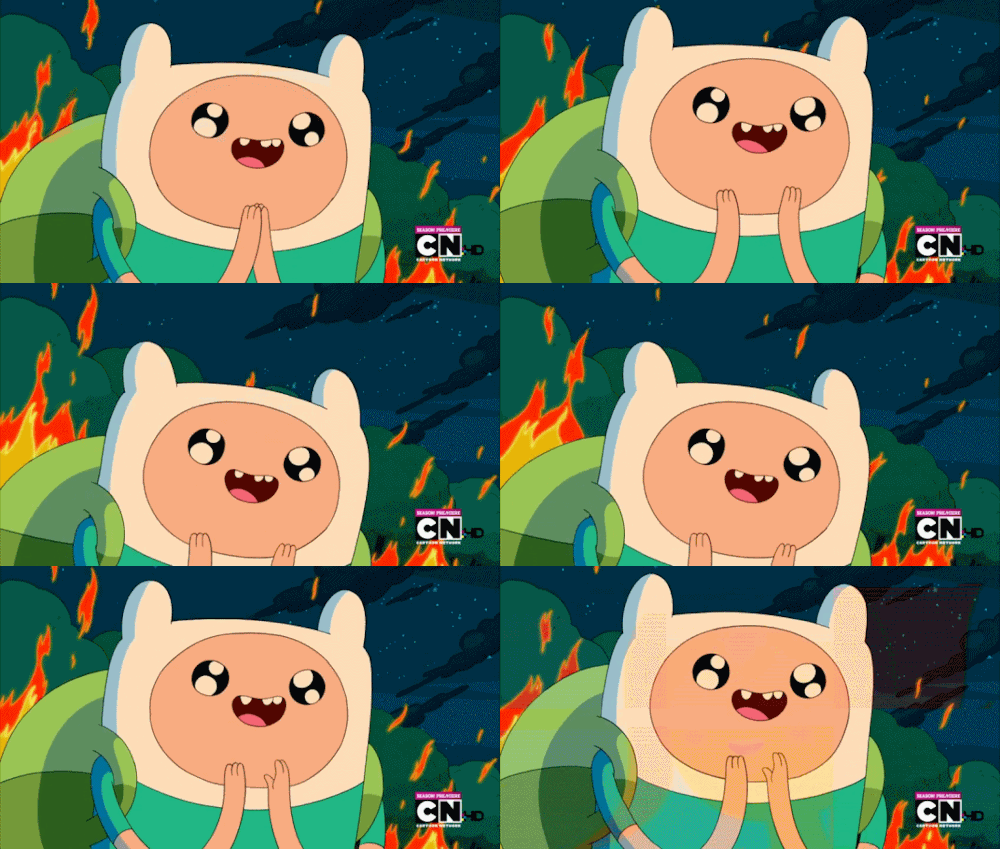
EVAN: Okay, so how about execution? How well the show pulls off whatever it’s supposed to be doing. Adventure Time is a show about a boy and his magical dog that is also his brother adventuring in a colourful post-apocalyptic fantasy world, but it works. They pull it off. I personally think this has a little something to do with its easy-to-digest ten minute segments.

GORDON: And there’s really no way of arguing with that- the story-telling is spot-on, but there’s gotta be more than that. The same can be said  (and this is gonna give Evan an aneurysm), to some degree, of the copy-paste work of Seth McFarlane.

EVAN: Wait. What. What are you saying. What about Seth McFarlane and his horrible, horrible television.

GORDON: What I’m saying is that McFarlane’s shows are both popular and (for what they are) well-executed, and yet we can both agree that his shows aren’t really “good,” at least, not anymore than a bag of chips is “good” food.

Therefore, there’s got to be another element at play, right?

EVAN: Ugh. I can’t even look at the chat window I’m so offended you would say something like that. I wish he would be “well-executed.” Share your other element if you must.

GORDON: Uniqueness. The show has to be unique. It’s not enough to go through the motions (as McFarlane’s shows do), you have to actually be able to make your show something that can’t be seen anywhere else.

EVAN: Something to make your stuff stand out of the crowd, okay, that’s fair. So I guess we can see how Adventure Time stands up to the criteria we’ve come up with.

  • Accessible? Eh, I’d say so, for its demographic and older.
  • Popular? Yeah, again for who I’ve stated.

You want to let these nice people know if it’s unique?

GORDON: Soooo Unique. If you can find anything remotely similar to it made in the past decade, I will slap Evan on the ears and vote for taxing the homeless.

EVAN: I mean, like I said: Boy. Magical Dog. Colourful fantasy world that is also post-apocalyptic.

EVAN: What more could you want?

GORDON: Vampire rocker girls?

EVAN: I would not mind.

GORDON: Oh wait, we’ve got that too.

You want D&D references spliced in with Science Fiction and elements of Gothic Horror?

EVAN: I think we could go for some.

GORDON: WELL WE’VE GOT IT!

EVAN: I think it’s clear that we think Adventure Time is a good show, but one thing that’s been painfully clear with this entry of E&GT is how much trouble it’s been doing this. Might I suggest a little something?

GORDON: Go for it.

EVAN: Let’s just choose our own topics for a little while, just to really get back into the swing of things. Keep things casual, going back and forth, avoid the heavy questions. And then we can ease our way back into all this.

GORDON: I am inclined to agree with you on this one.

EVAN: Yeah? Awesome. Anything in particular you wanted to casually discourse about next time?

GORDON: Well, I don’t think my suggestion about the Disney takeover of the Star Wars franchise was all that bad, even if Adventure Time did win by a landslide…

EVAN: I kinda wanted to talk about Deadliest Warrior.

GORDON: That would be likewise awesome. Let’s do that.

EVAN: Yes. Awesome. I’m going to post this because we are men true to our word and we promise an E&GT every Wednesday. We shall discuss Deadliest Warrior in a week. Or this weekend, maybe, just to get ahead. I mean, whatever.

GORDON: Good night, everyone.

EVAN: Yep, sorry this wasn’t as awesome or decent as usual. But we will be back! With a vengeance. And remember:

Evan and Gordon Talk: Racially Accurate Casting

EVAN: Today’s topic is something that I hold very near and dear to my heart. Years of research on the topic has made me witness to all of the arguments that can be used against needing to have racially accurate casting, and because of this I’m going to propose something a little different

GORDON: Namely?

EVAN: That I switch sides for this conversation, and speak out against it.

GORDON: Intriguing. Mind starting us off with the first salvo?

EVAN: Statement: Racially accurate casting is not important. The most talented actor should be the one who gets the role.

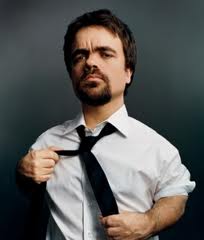
GORDON: Doesn’t appearance play a key role in what makes an actor good? Peter Dinklage is good, but you wouldn’t really find him believable playing Abraham Lincoln or Kareem Abdul Jabbar.

EVAN: In this case his stature, not his race, is what would keep him from playing either role in a convincing manner.

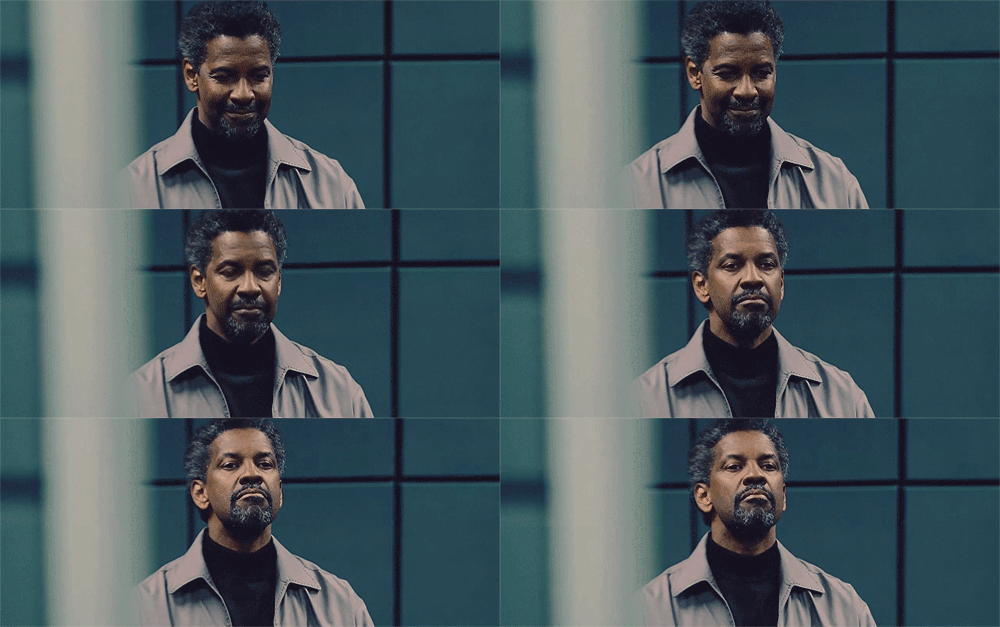
GORDON: But isn’t that essentially the same issue? Imagine the great Denzel Washington playing Lincoln- you’d be sitting there the entire time, no matter how much of a powerhouse Washington would be, taken out of the film because you have to deal with a black guy playing a white guy during the height of the civil war.

In any piece of film where you’re expecting realism, you’re going to expect the actors to conform to the styles and facts of the time. If you portray Georgia in the 1960s, you’re obviously not going to have a largely black cast portraying the upper class  or if you were to set the scene in early 1900s Ghana  you wouldn’t have a cast comprised of Caucasians. It wouldn’t make sense, no matter how good they are.

EVAN: If anything, Cloud Atlas at least proves that a talented actor can portray whoever they like, given an adequate amount of makeup. Halle Berry plays a Korean Man in the film, and does so in a convincing fashion that doesn’t at all take viewers out of the film in the least.

GORDON: I haven’t seen that film, so I can’t speak to the use of the actors for the parts they play. From my understanding that was a work of fantasy (or science fiction, I’m only going off what I can gather from the trailers). And in one or two movies, it’s probably not a big deal. After all, Cate Blanchett played Bob Dylan.

But imagine this applied to each and every movie, it simply wouldn’t work. Realism would deteriorate- and this would be especially detrimental in a film trying to deal directly with race relations.

EVAN: I personally feel that allowing any race to play any other speaks much more in terms of race relations. That’s a world where colour is a non-issue  because it shouldn’t be.

EVAN: I’m dying, Gordon. My life force is seeping out of me.

GORDON: Try to stick with it…

GORDON: And while it’s true that race ought to be a non-issue, that’s simply not how things are or have been in the past. Using black actors to play black characters and white actors to play white characters is fundamental to demonstrating past inequity and injustice with American racism and segregation. And that’s just one element.

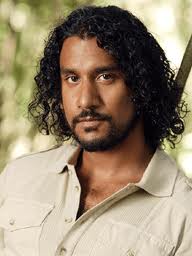
Let’s talk about Indians playing Arabs. It happened in Lost and it happened in Community (with multiple actors), but Arabs look nothing like Indians. Indian actors are used simply because they fit the stereotype of what most people think an Arab looks like. It perpetuates an inaccuracy.

EVAN: Isn’t the fact that the role is an Arab important a large enough step? This is a minority with a major role on a TV show, and an opportunity for minority actors to step up, which they have in both cases.

GORDON: Barring Monk and Arrested Development, when’s the last time you saw an Arab actor? I’m not trying to argue against Indian actors, or actors of Indian heritage getting roles, but for the purpose of portraying the world as it is (or at least with some realism) we should have actors with some vague resemblance to the people they’re portraying on film.

After all, would you not be thrown off by guys with German accents playing French resistance fighters during WWII?

EVAN: If they had German accents then they simply wouldn’t be right for the role, which brings me back to my first point.

GORDON: Which, by proxy, brings us back to my first response. Ethnicity (depending on the situation) is just as valid an element of a guy’s candidacy for a role dealing directly with ethnicity as accents, or height, or any other factor (actual talent, of course, being the most important).

Vincent Cassel should probably not play Malcolm X. Adrien Brody should probably not play the Queen of England, though that would be pretty funny.

EVAN: If we’re going to stick with believability, than why is it so important that Indians not play Arabs? No one has ever made a big deal out of this, so clearly people believe that they are what their role calls them to be-

Likewise a Korean can to play a Chinese person can play a Japanese person. Audiences can’t tell the difference and believe that they are whatever the role is, and that’s okay.

GORDON: But Koreans do not look Chinese, Chinese people don’t look Japanese, and Arabs and Indians certainly don’t look like each other. The only reason this happens is because most people either don’t know (partly due to this inaccurate casting) or don’t care (in other words, all non-whites are basically one homogenous mass.

If all your life, you had seen black men and been told “these are Uzbekistanis,” then you’d go your whole life simply assuming that Uzbekistanis are, in fact, indiscernible from guys from Benin.

Your ignorance should not dictate which actors get which parts. Further, no Uzbekistan could really ever get a chance to play and Uzbekistani because of the years of misinformation.

EVAN: But there is a huge difference between a black person and an Uzbekistani. The examples I made have similarities that the example you used clearly does not.

To be such a stickler for accuracy is the other extreme, and just as wrong. You wouldn’t get someone with mental problems to accurately portray a character with mental problems, that just doesn’t make sense. Race should matter if it is noticeable, and like I said in the case of shows like Lost it is not.

EVAN: The logic above was used against me by someone in a thread on Reddit  You can check out our exchange here.

GORDON: Granted, my example was extreme, but that doesn’t change the point. Even though a Thai guy and a Japanese guy share more similarities than a Beninese guy and an Uzbekistani guy, there are still distinct differences between people from Thailand and people from Japan.

With regards to being a stickler- I admit, as I have previously, that you don’t have to have an exact replica of the character you’re trying to portray. Jet Li, I imagine, is doing pretty well for himself, and I still wouldn’t doubt his ability to portray a poor man very well. However, while you don’t need to be point for point, you do need to have some general similarity. That’s why we don’t have Emma Stone portraying Fidel Castro.

EVAN: I feel like the extremeness of your examples is damaging your point. If we’re sticking with race we should do that, and not bring in gender.

GORDON: It’s to demonstrate the underlying point in all of this: Verisimilitude. Realism. Accuracy.

EVAN: And since you said “you don’t have to have an exact replica of the character you’re trying to portray” why isn’t it okay to have Naveen Andrews play Sayid Jarrah on Lost?

GORDON: But the distinction is great enough. The accent is Indian, not Iraqi. Naveen does not look Iraqi. When an actor neither looks nor sounds like the character he is meant to portray, we have a problem.

EVAN: So if Jarrah had managed to sound Iraqi, would that have helped?

GORDON: It would’ve added to the realism and accuracy, yes. But that doesn’t change the fact that he’s very clearly Indian, not Arab.

EVAN: Clear to a very select few. As mentioned, people didn’t seem to notice for the most part.

GORDON: Clear to a very select few. As mentioned, people didn’t seem to notice for the most part.

Most people don’t know what an Arab looks like. Do they know that Monk is Lebanese? That Cousin Maeby is Iraqi? Most do not. Ignorance is not an excuse for inaccurate casting.

EVAN: And that brings our exhausting exchange to an end. Trying to argue for something I so strongly disagree was one of the more difficult things I’ve ever done. I hope that in reading this you were able to see the holes in my argument and the truth in Gordon’s.

GORDON: Booyah.

The past few paragraphs alone have had the same effect on Evan as that life-sucking device in the Princess Bride. Commend him for biting the bullet.

And as for our discussion next time, your options are: What do we make of the upcoming Star Wars sequel?

EVAN: And. . . how about . . . How much artistic merit is there in a show like Adventure Time?

GORDON: I like it.

And to our beloved and devoted followers (who would organize into a vicious and unholy army of darkness if we ever were to ask it of ’em), feel free to suggest your own topic down in the comments section.

EVAN: And, as usual, thanks for reading.