Tag Archives: feminism

Fame Day: Kelly Sue DeConnick

Way back in February I dedicated a Fame Day post to Marvel Editor in Chief Alex Alonso. In the very first paragraph of that post I observed that every one of these features thus far had been dedicated to a man or an organization, and that “[a post on a woman [was] in the near future].” Almost two months late is better than never, right?

Art by Jamie McKelvie.

Kelly Sue DeConnick is a writer for Marvel Comics, and a person who is doing all sorts of things for women in comics. For one, she’s part of the creative team that took Carol Danvers, formerly Miss Marvel, and promoted her to Captain Marvel. She even went out of her way to bring in artist extraordinaire Jamie McKelvie to help redesign her new look.

In writing the Danvers’ new title, DeConnick made sure to include a particular moment in history in her first arc. Talking about those first few issues of Captain Marvel, she recounts that:

“…think it started with me talking about something I’d read about the Women Air Service Pilots of World War II over family dinner at our friends’ house one night. I was so angry about this thing that happened 60 years ago that I was shaking. I felt like I needed to do something with that anger, and then I realized that I had an angle on a story I cared about.”

While never shying away from the fact that she was writing a superhero comic, DeConnick used her 20-or-so pages per issue to shine light on the injustices that women pilots faced in years past, and that is worthy of praise, to put it lightly. Continue reading

Shame Day: Microaggressions

A few weeks ago I stumbled onto a website called The Microaggressions Project and then promptly forgot about it. Returning to it tonight I looked over the “About” page, which had the following paragraph at the top:

This project is a response to “it’s not a big deal” – “it” is a big deal. ”It” is in the everyday. ”It” is shoved in your face when you are least expecting it. ”It” happens when you expect it the most. ”It” is a reminder of your difference. ”It” enforces difference. ”It” can be painful. ”It” can be laughed off. ”It” can slide unnoticed by either the speaker, listener or both. ”It” can silence people. ”It” reminds us of the ways in which we and people like us continue to be excluded and oppressed. ”It” matters because these relate to a bigger “it”: a society where social difference has systematic consequences for the “others.”

A little later on they define what “microaggressions” are, a term that was originally coined to speak about racial experiences. From the essay “Racial microaggressions in everyday life: implications for clinical practice,” which appeared in American Psychologist, Vol. 62, No.4:

“Racial microaggressions are brief and commonplace daily verbal, behavioral, or environmental indignities, whether intentional or unintentional, that communicate hostile, derogatory, or negative racial slights and insults toward people of color.”

One example of this could be a White couple walking down the street and having a Black man pass by them on the sidewalk. The woman clutches her purse tighter against her body, the subconscious idea being, of course, that Black men are prone to crime and should not be trusted.

As an Asian-Canadian I’ve experienced microaggressions plenty of times. I’ve had someone ask me if I was half-White [I am clearly not] with their rationale being that my “English was very good.” It can be an everyday occurrence for non-White people [I deign to use the word minorities, since I do believe that balance is turning the other way], and begs the question: “Why is this such a big deal?”

Writer of the aforementioned article and author of Microaggressions in Everyday Life: Race, Gender, and Sexual Orientation, Derald Wing Sue, PhD, has observed that microaggressions have actually been found to: “(a) assail the mental health of recipients, (b) create a hostile and invalidating work or campus climate, (c) perpetuate stereotype threat, (d) create physical health problems, (e) saturate the broader society with cues that signal devaluation of social group identities, (f) lower work productivity and problem solving abilities, and (g) be partially responsible for creating inequities in education, employment and health care.”

In other words, a Black or Latino man being stopped for a “random vehicle check” by police could be upset, and may even be accused of overreacting. Maybe they should simply be used to this and not let it bother them. The truth is that it makes them feel, even if only subconsciously, like second-class citizens. It’s true in a case as blatant as this one, and in an as subtle an action as hanging a Confederate flag or  having a Native American stereotype as a high school mascot.

To broaden this to the scope that The Microaggressions Project seeks to attain, microaggressions can include people saying to a person with Asperger’s, with no ill-intent whatsoever, “That you seem so normal!” It can be a 17-year-old girl being told by her gynecologist that just because she has access to birth control pills doesn’t mean she can just sleep around.

Microaggressions work in every direction. It’s like going to a Vietnamese restaurant and being given a fork and spoon instead of chopsticks because you’re White and not Asian. Microaggressions are built on assumptions and can make people painfully aware of who they are. They are rarely meant to offend, but often do. 

It truly is a shame that so much of the time we send out microaggressions without so much as a second thought, and then defend ourselves by deeming the offended to be “too sensitive.” While we won’t always be aware of how our words or actions can harm others, we can at the very least listen to the people being hurt, and in doing so try to lessen the presence of microaggressions in our society.

Internet Disgusted By Video Game Promotion [Also: Zombie Breasts]

Way back in the February of 2011 the following trailer was released for the video game Dead Island:


It was so impressive that last I heard, Lionsgate was going to make a Dead Island film based on the trailer. Not the game, the trailer for the game. A feature-length film based on the trailer for a video game. Think on that for a bit.

What it does is speak volumes for the game’s publisher, Deep Silver, and those it hired to advertise the game. There was an emphasis placed on the feelings of terror and loss and the need to protect one’s family; it sought to set itself apart from other zombie games [of which there are so many]. Unfortunately the game turned out to be your fairly standard run-of-the-mill zombie hack and slash, but that’s not the point here.

The point is that this trend was actually continued in the promotion of the game’s sequel, Dead Island: Riptide, the trailer of which can be viewed here. The tone is once again consistent with that of the first, highlighting the terrors of a vacation gone horribly, horribly wrong. Which is great. And which is why the following seems so shockingly out of place.

The image you see above is a promo image for the European “Zombie Bait Edition” of the game, the crowning glory of which is the statuette at the centre. This was, earlier this week, described as being “Dead Island’s grotesque take on an iconic Roman marble torso sculpture.” This was met with understandable outrage and disgust from the internet, which prompted those at Deep Silver to scramble wildly and release the following apology:

“We deeply apologize for any offense caused by the Dead Island Riptide “Zombie Bait Edition”, the collector’s edition announced for Europe and Australia. Like many gaming companies, Deep Silver has many offices in different countries, which is why sometimes different versions of Collector’s Editions come into being for North America, Europe, Australia, and Asia.

For the limited run of the Zombie Bait Edition for Europe and Australia, a decision was made to include a gruesome statue of a zombie torso, which was cut up like many of our fans had done to the undead enemies in the original Dead Island.

We sincerely regret this choice. We are collecting feedback continuously from the Dead Island community, as well as the international gaming community at large, for ongoing internal meetings with Deep Silver’s entire international team today. For now, we want to reiterate to the community, fans and industry how deeply sorry we are, and that we are committed to making sure this will never happen again.”

 So no harm now foul, right? Dead Silver took back their horrible statuette and we can chalk another victory up for the internet! But why exactly were people upset? An article on Rock, Paper, Shotgun which I linked to but will link to again said this about it:

This is beyond disgusting. It’s as if someone were attempting to demonstrate the most misogynist idea that could possibly be conceived, in an attempt to satirise the ghastly trend. A text book example of the most extreme ends of misogynist fantasy, a woman reduced to nothing but her tits, her wounds hideously depicted in gore, jutting bones, and of course barely a mark covering her globular breasts.

It’s very prevalent in a lot of zombie imagery you can find nowadays, and it’s certainly present in this picture of a zombified Snow White on the left. Her body is mutilated [appropriately so, for a zombie] but her breasts remain completely untouched. There’s this sense of the grotesque from the image as a whole, but her chest remains an object of potential titillation.

I don’t think I have to say too much about how grossly sexist this is, and how prevalent it is in the society we live in. What I am going to say is thank God that on some level we can make enough of a public outcry to stop stuff like this before it happens. The bottom line is this: if we as a community [on the internet or otherwise] care enough about something, we really can do something about it.  Even if it’s just stopping the production and sales of a tasteless statue.

———

A rebuttal to essentially everything I’ve written can be read in an article by Daav Valentaten on Venture Beat entitled “The Dead Island: Riptide reaction was an equality fail.” I present it as a counterpoint to my own post.

Taylor Swift and Artistic Intent

You can’t ignore Taylor Swift. Whether it’s having her mic snatched by Kanye, hosting Saturday Night Live three years ago, or having her hit “We Are Never Ever Getting Back Together” play as you flip through radio stations [yes, some people still listen to the radio] she’s become a public pop culture icon and she’s not going anywhere anytime soon.

Yes, she’s loved by millions, but also derided by a sizable number. While many of the judgements stem from her seeming inability to hold down a relationship, this more often than not seems like the public concentrating on an aspect of superstardom that they tend to turn a blind eye to when it comes to their  respective favourites. What Taylor Swift really receives a lot of flak for [and for better reason]  is the content of her music.

I first came across this idea on a blog post by Shelby Fero that has since been taken down. Recently I managed to dig it up again since it had been replied to on another tumblr, and you can check it out here[EDIT: That has since been taken down as well] There’s a four-minute video you can watch, but if not, Let me recap it:

It’s a follow-up to another post on tumblr where she says, in one line without profanity, “‘Mean’ by Taylor Swift pisses me off so much.” Which is fine. The video goes on to elaborate her point, and is largely about the music video. In essence Fero says that it’s fine to have a song about those bullied because of their sexuality or poverty [both seen in the music video], but you can’t marry or compare that to your own problems about being told you’re not a good singer; you can’t put yourself into this song and still have it be about these other bigger problems.

Continue reading

Shame Day: Masculinists

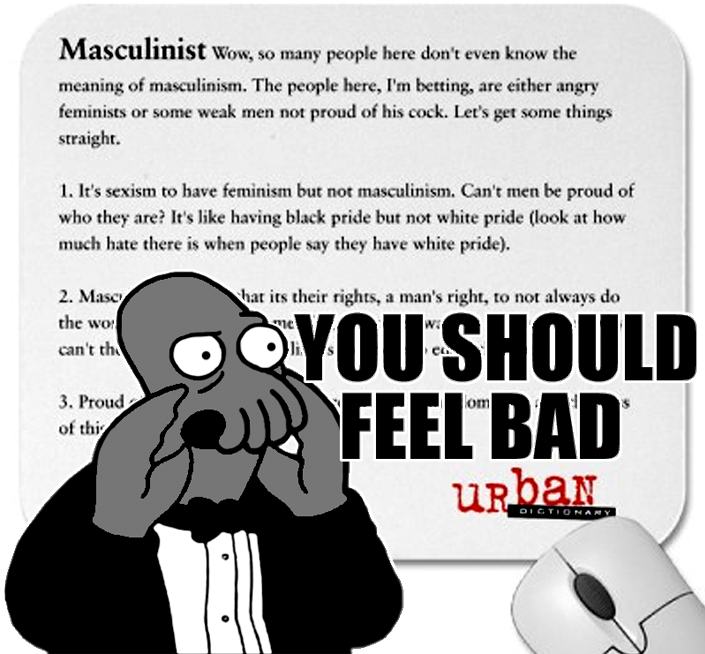
Let’s be clear right here and now- I’m not talking about “masculinism” in the original “let’s recognize gender discrimination against men too” philosophy. No, I’m talking masculinism in its modern day sense: the general idea that women have somehow hijacked everything it means to be a man, and have either watered down everything manly, or made it socially unacceptable. This is the gripes of countless dads and uncles around the country at every kid on the team getting a medal given an intellectual motor.

That’s not to say that there are certain points which these guys aren’t correct on. In custody battles, the courts are almost certainly going to side with the mother on the basis that her gender somehow makes here a superior parent. That’s stupid. If a man were to make a pass at a female co-worker, the consequences would in all likelihood be more severe than if the positions were reversed. That’s unfair. A man striking a woman gets a visceral reaction out of us, a woman striking generally does not. That’s sexist.

Now promoting gender equality is perfectly fine. After all, when a person hits a person, that’s all that really matters. Gender (or race, creed, religion, etc.) don’t make the act any better or worse. But tragically, that positive element of the movement is mired down by all the psychotic and apologetically misogynistic madness that makes up the other 50%. Stuff like:

  • Equating circumcision with genital mutilation (or even wrongly declaring that women are exempt from any such practice)
  • Declaring the existence of a “war on men”
  • Complaining of the lack of existence of any day celebrating men
  • Complaining the women are somehow exempt from heavy, dangerous, and strenuous labor (again, what planet are these people living on?)
  • And countless other bat**** crazy claims of male victimization and persecution

Again, as stated above, there is a double standard, and while any inequality in the rules is obviously unfair there’s no way on earth we can possibly imagine that these offenses against men in any way stack up to the offenses against women. Is there female domestic abuse of males? There is. Is it as much as male domestic abuse against females? Not even remotely. Does that mean that one side is more right or wrong than the other? Of course not. The same basic logic applies to pretty much each and every one of the nutty gripes the masculinist movement brings against the supposedly woman-dominated world we’re trapped in. Other claims are quite simply false. The idea that women somehow have a “glass floor” protecting them from working physical labor or living in rough, dismal conditions is simply an utter lie. Women are disproportionately the majority in sweatshops around the world. Not two hours ago, I drove past a homeless woman on the street, and I saw another one the day before (although it could’ve been a hipster, I’m not entirely sure). Again, it’s true that men are sometimes treated unfairly on the basis of their gender, or subjected to a double standard. However, the degree to which men are persecuted and the degree to which women are persecuted are leagues apart.

That’s not to say that injustice to a man is any less unjust, but rather, when you’ve got a paper cut and the person in the emergency room with you is missing an arm, you should still apply a band-aid, just maybe without griping about it.

Manly Culture

Even if you haven’t recognized it for what it is, chances are, you’ve seen elements of it. The resurgence of beards, comments on period piece clips like “Why don’t we wear hats anymore?” or “Dang- they knew how to dress back then.” Or perhaps you’ve stumbled across The Art of Manliness or are (like me) a faithful apostle of Ron Swanson.

Now whether you’re aware of it or not, there is a growing culture based around this general perspective of “manliness” that supposedly existed from 5,000 BC to 1974 AD. The resurgence in the popularity of the beard, the wave of internet memes centered around being “classy,” our love affair with period pieces- all of this compounded has created the beginnings of a whole new subculture.

Don’t believe me? Just take a look at some of our favorite TV characters.

Don “F***-You, Liver!” Draper

Jack “Even Ayn Rand Thinks I’m Egotistical” Donaghy

Rick “Bad Decisions” Grimes

Walter “Tied with Draper for Making People Love Fedoras” White
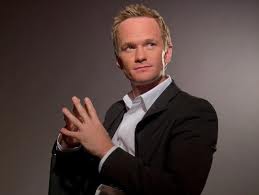
Barney “Legen- wait for it… -DARY!” Stinson
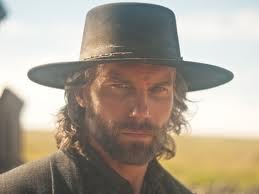
Cullen “I Will Punch You For No Particular Reason” Bohannon
Comedy, Drama, Action/Horror, Westerns- this is a pretty broad range, and we’ve got the same strong, dour antihero type in all of them. Men who remind us of our fathers and grandfathers. Tough as nails bastards who came to this country with only a dollar in their pockets- who took a break from their honest 8 to 8 jobs of hitting metal with other pieces of metal to kill Nazis and look dapper doing it.

So what’s this culture all about? As with any group, we can talk about the superfluous or cosmetic elements- in the case of the “manly” group, handshake etiquette, strait-razor whetting, and driving stick- but to really understand ’em, we’re going to need to look at the underlying values in play here.

Independence:

What do all the men shown above have in common? A degree of independence. They’re DIY guys. Men who aren’t reliant on the help or charity of others- in short, dudes who can take care of themselves in most any situation, from car repair to providing for the family to killing the undead. And on that note…

Initiative:

These are all men who don’t allow themselves to be victims. They’re proactive moment-seizing leaders who don’t wait idly by for someone to step up. Good or bad, they’re leading the way- and speaking of bad…

Stoic:

These are guys who tend to lend credence to the stereotype of the unspeaking, unfeeling male. At best, the strong, silent type- at worse, the uncommunicative lout. One way or another, they don’t let the situation get the better of them. That’d be undignified, and if there’s one thing that they’re about, it’s…

Dignity/Pride:

It’s in the way they dress, the way they speak, the way they expected to be treated. A kind of code that prohibits some things and makes others compulsory. You can’t hold your head high, then what’s the point in having one?

Moral Ambiguity:

These men are all, to varying degrees, antiheroes. Guys with their own agendas and a certain degree of moral ambiguity that keeps you on your toes. There’s a level of egotism, self-centeredness, and disregard for others that makes them pretty good at what they do, but what they do not all that good- certainly they don’t fit the traditional mold of the selfless, self-sacrificial hero.

Wealth:

And while it’s not true for all of them, money tends to be a major element of their stories. A drive to be successful, prosperous, and (again) independent. It’s the age-old dream of being your own boss.

So what does all of this boil down to?

Power.

It’s about power. These guys represent everything we, as a generation, aren’t. Independent, wealthy, self-assured, proud. Does that sound like us? Not at all. We’re the casual dressed, globally conscious masses struggling to make it by, and taking whatever miserable, degrading soulless job we can find. We’re not strong like these glamorized images of our grandparents are (having conveniently erased the racism, bigotry, and misogyny).

But we want to be.

And so begins the perpetual motion machine of life-imitating-art and art-imitating-life. Epic Meal Time, Memes, Period Pieces- the list goes on.
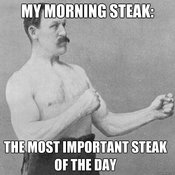
So is this a good thing or a bad thing?

Well, there are good and bad elements to every culture (some more bad than good, and vice versa), but let’s list out the positives and negatives.
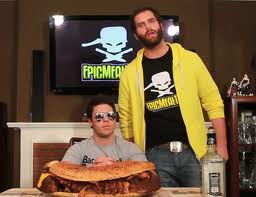
The positives have been wrapped in bacon

Positive:

  • We can stand to toughen up a bit a lot as a generation. We don’t need to be bending horseshoes with our teeth, but some basic survival skills and a thicker skin when it comes to discomfort and hardship would be nice (battery running out on your phone doesn’t count as suffering).
  • In these tough economic times, be able to do basic repairs to your house and car aren’t just good- they’re necessary. Same goes for any of the thrifty elements of the culture.
  • Even if we don’t have it quite yet, demanding a certain level of dignity in our work and our day to day lives isn’t just good for you as an individual- it improves society on the whole.
  • While we probably shouldn’t worship the fedora or declare the suit to be the only appropriate clothing for a man over the age of twelve, it certainly doesn’t hurt to know how to dress ourselves, or conduct ourselves well in any given situation.

Negatives:

  • The glorification of the past can, as I jokingly mentioned above, lead to the uglier elements of it being glossed over. We hail our grandfathers as being great men, forgetting how easy it is to make a name for yourself when none of the good or prestigious jobs can be given to equally qualified women or non-white men.
  • The culture really doesn’t leave a whole lot of room for women at all, other than the kitchen. This is not to say that all adherents of the culture see it this way, but when you’re trying to espouse 1950s society, that includes 50s traditional gender roles as well.
  • It can’t be denied that there’s a strong conservative appeal in this culture, as well as hints of Ayn Rand’s Objectivism. Glorifying wealth and success, especially when coupled with a “do whatever you need to do” mentality, can lead to the twisted perspective that poor people are poor because they are lazy.
  • This culture, despite the intentions of its adherents, does give a home for sexism. The uglier elements of the masculinity movement, those who view women as belonging in the home and nowhere else will doubtlessly find it a lot easier to fly under the radar in a culture that’s utterly dominated by males.

So what’s the final verdict?

“Manly” culture doesn’t appear to be either helpful or harmful- at least, not yet. The underlying issue being power, it’s going to be faced with the task of walking the thin line between empowerment and megalomania. So long as self-control is kept in mind, they oughta be fine.

Be sure to look for next week’s installment: “Science” Culture.