Tag Archives: media

I Don’t Know If Anyone’s Said This About Boston Yet

I’ve made it a habit not to report on a lot of the bigger news events due to the fact that, with so many people writing about them, someone is bound to have already said what I want to, and probably much more eloquently as well. When it comes to something as thoroughly horrific as the Boston Marathon bombing, I’m even more hesitant to do so, especially because of how delicate a topic it truly is.

I write this post with a great amount of trepidation, and with the hope that I can add to the discourse that’s resulted from this tragedy.

The following image appeared in my Facebook feed this past Monday, April 15th, and I immediately shared it upon reading it. I did this as a knee-jerk reaction to the sentiment communicated, and in spite of the fact that, as a friend of mine commented, “it says it in a stupid and borderline offensive way.”

This was posted soon after the bombing, long before the third victim had passed away.

Continue reading

Fame Day: Massoud Hassani

Anyone know what this alien-looking device is?

Any guesses?

That right there is the “Mine Kafon,” an ingenious device used to safely blow up land mines. Light enough to be blown around by the wind, the Mine Kafon is still heavy enough to touch off detonation when it comes into contact with a mine or pressure-activated explosive. While there’s some skill that goes into getting the weight right, the real beauty of it is it’s simplicity- anyone anywhere in the world could mass produce these. Definitely a blessing for areas emerging or dealing with long periods of conflict and militarization. Continue reading

Fame Day: The Young Turks Arabs

A few days ago, a client at the nonprofit where I work heard that I was from the Middle East.

The conversation went as it usually does, beginning with some surprise, followed by a few questions like “why on earth were over there?” and “How did you learn to speak English?”

You get used to questions like that.

Then came the inevitable comments on the ongoing violence in my adopted homeland of Syria. Those comments are always pretty vague- existing as a result of having to say something so as to not appear ignorant while being ambiguous enough to avoid proving that you are ignorant. In this case it was a theatrical, sad shake of the head, followed by the statement “Well that’s a shame. But y’know? There always has been fighting over there and there probably will be to the end of time.”

I’ve always hated that statement.

In all fairness, that’s true as well…

First and foremost, it’s a complete lie: “There’s always been war in the Middle East?”

No, there hasn’t. For centuries, the Arab world was the shinning pinnacle of human civilization. Even in its decline, the Middle East was still a relatively peaceful place- especially when compared with the rest of the world. Look at European History in the 19th and 20th centuries and compare its body count with that of the Middle East in the same time period.

Secondly, there’s a deeply racist implication in the statement that “there will always be war in the Middle East.”

Why?

Because of the way the borders are drawn? Because there’s oil in certain parts of the desert?

Or is it because the Arabs are simply and inherently angry, violent people?

That statement is on par with saying “Africa will always be poor.” Why?

Because, you know… Africans?

This is some ol’ bull. “Africans are capable of nothing but starving, as they always have done and always will do, and Arabs are capable of nothing but fighting- always have and always will”?

Nevertheless, that was the line (and often still is) that was fed to the public over the past couple decades. Recently however, the events of The Arab Spring have completely and utterly turned that picture on its head.

Starting with the self-immolation of 26-year-old street vendor in Tunisia, ripples of protest spread out across the Arab world, building in power and momentum until they evolved into revolutions against some of the most brutal and dictators and entrenched bureaucracies in modern history. Egypt, in particular, stands out as a shining example, with thousands of young, unarmed Egyptians doing in 18 days what the US and all her allies couldn’t do for Iraq in nearly 10 years.

And no, in case you’re wondering, that had nothing to do with either Facebook or Twitter. I recall during the weeks following the victory of the Egyptian revolutionaries, pundits in the West were desperately fishing for some way to co-opt the accomplishments of the young Arabs and paint them as somehow being ultimately rooted in the bounty and decency of America. Facebook and Twitter were cited as essential tools, without which there would surely be no free Egypt. Again, any sane person is going to call bull on this. Twitter never set itself on fire. Facebook didn’t dodge gas canisters or face-off with riot police and tanks. Again, as a result of the American media’s desire to scare you without actually showing you any blood or gore, grasping the full scope of what many of these young protesters were up against is difficult, if not impossible.

You’ve got to see the casualties of battle to really and truly understand the courage and sacrifice of those going into the maw. Perhaps its for that reason that westerners often look to social media to take a slice of a glory (though my bet is still on jealousy).

And what’s even more impressive isn’t simply that the Arab people have faced off with their governments in the past, it’s that they’re still doing it.

You might think “Hey- we came, we saw, we conquered. Insert-dictator-here is dead and/or gone, let’s all go home and take a much deserved and well earned break.”

That’d certainly be a temptation for me.

But instead of resting on their laurels, the Arab people (again, the Egyptians serving as a prime example) continue to stand on the front line and demand nothing short of total freedom and complete justice. Yesterday, another young Tunisian vendor set himself ablaze in protest. In the occupied West Bank, Palestinians continue to hold hunger strikes. In spite of recently reaching over one million refugees, the rebels in Syria continue fight on against the Assad regime.

Across the Arab world, in the face of vicious repression, the Arab people are fighting on. Through their perseverance and valor, this generation of Arabs is changing the image of the Middle East from a place that “always has been violent and always will be” to something soon to be synonymous with democratic revolution, collaboration, and freedom. There’s certainly still a long way to go, but time and time again the young Arabs have proven that they’re on the right path and they’re not taking one step backwards.

What did you do today?

Django and the N-Word

Let me begin by explaining that this is not a review of the simultaneously acclaimed and decried 2012 Tarantino blood-fest. You want to hear one of those, I’d recommend clicking over to Spill or The Escapist’s “Escape to the Movies.” No, what I want to talk about are some specific elements and segments of the film which have become points of contention, controversy, and debate in the past weeks.

Let’s start with the most obvious:

I. Saying “Nigger” Every Other Word

I won’t claim to know your stance on the word “Nigger”- heck, I’m not even sure of my own stance. Perhaps you view the term as so degrading and reprehensible as to merit burning it from spoken language. Perhaps you believe that appropriating and using the word strips it of its power to even be used as an insult. Maybe you see it as being purely contextual- a term of address with audience and a terrible insult with another.

It’s all Elmo ever thinks about

There are probably strong points to be made on all sides, but perhaps the stance you cannot take is that the use of the word “nigger” was inappropriate for the movie.

Now before you take up the battle-cry of “Tarantino is just trying to shock us!” or “Tarantino uses the word excessively in his other movies!” I have to say this.

You’re right.

It’s Tarantino; that’s not an excuse, that’s a fact. You wanna take up his use of the word in other films, then that’s part of the whole debate mentioned above. Simple truth of the matter is that this use of the word “nigger” would still be controversial if the film had been made by anyone else. So let’s talk about it.

Let’s assume that this movie, with selfish or noble intent, is trying to demonstrate a glimpse of the world in question; the use of that word is almost bound to come up. I might throw out the example of Mark Twain’s classic novel Huckleberry Finn, and while by sheer volume Django probably has Huck beat for use of the word, by percentage I’d posit the two are pretty evenly matched. The escaped slave Jim is repeatedly and almost exclusively referred to as “Nigger Jim,” as are the other black characters in the book. Now Twain was anti-slavery and used that word to demonstrate the dehumanization of African Americans (which is why taking the word out of versions of the book is so dumb), as well as reflect the general use of the word. Now I’m admittedly no historian, but if the writings of Twain and other authors are any indication of the times, I wouldn’t say the film is quite so far off as some critics might suggest.

And speaking of historical accuracy…

II. The KKK, or Lack Thereof

There is a scene in the film during which a group of men wearing white sacks over their heads attempt to stage an attack on Django and Schultz. New Yorker contributor Jelani Cobb writes “Tarantino depicts the K.K.K. a decade prior to its actual formation in order to thoroughly ridicule its members’ (literally) veiled racism.” While that scene was (in my own opinion) side-splittingly hilarious, Jelani, and many others, are dead wrong in assuming that this scene depicted historical inaccuracy.

Take this section from Huckleberry Finn:

Why don’t your juries hang murderers? Because they’re afraid the man’s friends will shoot them in the back, in the dark — and it’s just what they WOULD do.

“So they always acquit; and then a MAN goes in the night, with a hundred masked cowards at his back and lynches the rascal. Your mistake is, that you didn’t bring a man with you; that’s one mistake, and the other is that you didn’t come in the dark and fetch your masks.

Again, this is a Tarantino movie set in a Tarantino universe. That’s not a defense, simply, as I’ve already stated, a fact. If you’re looking for a historical account of the pre-war South, a spaghetti-western revenge flick probably ain’t the best place to look for it. There are going to be certain inaccuracies, and there are going to be things the filmmaker has to get right- but all of that is beside the point (which we’ll get to in a minute). All of that’s to say if you’re gonna try to criticize (or praise) the movie’s deviation from historical truth, make sure you’re (1) doing it for the right reason and (2) that you’re critique is actually right.

III. Samuel L. Jackson as Uncle Tom

In Django, Samuel L. Jackson plays the role of the villain’s head-slave Stephen, who isn’t so much a character as a caricature of the most groveling, snivelling Uncle Tom you will ever see or even imagine. This guy makes Uncle Ruckus look like Eldridge Cleaver.

You are guaranteed one genuine Gordon hug if you know who Eldridge Cleaver is.

I’ve heard people call this portrayal offensive, bordering on “black-face” in its depiction of stereotypical “black” mannerisms. It’s exactly for that reason that I didn’t have a problem with the character.

I really have no reason for putting this gif in here…

See, the entire point is to make fun of the guy- and not just him, but the quisling slaves that did indeed exist. I don’t think that this portrayal robbed the film of the gravity of slavery anymore than Bugs Bunny foiling a cartoonized Hitler robbed WWII of it’s gravity.

Now let’s get right to it-

IV. The Horror, The Horror

LA Times journalist Erin Aubry Kaplan said this of Django’s depiction of slavery: “It is an institution whose horrors need no exaggerating, yet Django does exactly that…”

This is a flat-out falsehood.

If Django Unchained exaggerated the horrors of the slavery, if the film depicted one one-hundredth of the horrors of slavery, I will never write again. Despite the allegations of this critic, the truth of the matter is that we could depict the institution of slavery for a century and be no closer to depicting an ounce the inhumanity of it all than when we first started. Does the film exaggerate slavery? Absolutely not. Does it make light of it? Certainly this was a concern of mine going into the movie, but having seen it, I really don’t think it can be faulted there either. The film does, I believe, make a distinct effort to show slavery as brutish and ugly as possible. Or, at the very least, the slavery scenes; this is, after all, a revenge movie first and foremost.

V. The Point

That’s the thing I feel most people are missing here. This ins’t a movie about slavery, this is a movie with slavery in it. It’s a revenge film in which one sorely persecuted character dispenses well-deserved justice upon his persecutors and we all nod our heads in approval and feel a sense of pride and joy well up as we look into this fantasy where the bad guy does get what’s coming to him. Slavery is the backdrop, not the subject, of the movie, but it’s just such a major issue that most of us are getting hung up on it. The equivalent might be bashing a western on the basis that the actual “wild west” was pretty peaceful- factually true, but still missing the goal of the story.

No, this is not a historically accurate film. No, it doesn’t capture the horror of slavery. No, it doesn’t even try to wrestle with it. No, it’s not a discussion of our checkered heritage. No, it’s not the film to drag that dark, bloody history out into the light of day.

But damn it, it’s a start.

Evan and Gordon Talk: Nerd Culture

EVAN: To start this off by ignoring our readership and addressing you, this week’s topic is a weird sort of continuation of the various posts on culture you’ve written, such as “manly culture,” “science culture,” etc. And similar to these other groups of people, “nerd culture” is a pretty nebulous sort of thing to define.

GORDON: No argument there. After all, even the “nerds” insist on calling out “fake nerds”- especially in regards to women/girls. But what is a nerd anyways?

EVAN: See, now I’m torn, because we do need to define it, but you’ve also directly referenced an issue I wanted to discuss in depth this week.

GORDON: How about we abandon our previous track record, and just plunge recklessly ahead and hope the issue resolves itself?

EVAN: Well, let me throw this image out there:

And then hope that suffices for now.

GORDON: Works for me. So what was it that you wanted to address specifically?

EVAN: Well, just last month there was this guy, a comic artist, named Tony Harris. And he wrote this post on his Facebook page that was essentially a tirade against “faux nerd” women, and how they are whores, and so on.

To break it down further, these are women who dress up as superheroes and what have you without knowing about the actual characters themselves. He is upset because, to quote him:

BECAUSE YOU DONT KNOW SH-T ABOUT COMICS, BEYOND WHATEVER GOOGLE IMAGE SEARCH YOU DID TO GET REF ON THE MOST MAINSTREAM CHARACTER WITH THE MOST REVEALING COSTUME EVER.

Also that they attend to essentially just tease the regular con-goers and are actually not even hot, just “con-hot.” So yeah, he said a lot.

GORDON: Ah yes, I recall reading about this. And while I think we can all agree Harris went too far, is a bit hypocritical (seeing how most comic women ain’t exactly average looking), and probably getting too emotional, I can’t help but wonder if he has, somewhere in there, a point.

I mean, imagine if all of a sudden, something that you had been stigmatized for became popular, and people started trying to co-opt your identity knowing nearly nothing about it. I’d be ticked off too.

EVAN: That’s definitely something I’ve read people write about, that this used to be an exclusive club and that it took years to build up this knowledge and become, well, a nerd, and here are these noobs and they want in and it’s not that easy.

And I can see where they’re coming from as well.

But if you really love something, shouldn’t you want others to as well? The Avengers has an enormous following on tumblr these days [because of the movie], and these are people who are actually going out and starting to buy comics. They are helping sales, aiding the industry, etc.

GORDON: That’s true, and something I’ve considered, but there’s probably also an argument to be made for the other side. That something precious to you is being watered down and diluted for profit. I don’t believe that nerds (comic book nerds, anyways) can necessarily make this argument, but the line of logic is there.

Let’s try to come up with an example of this happening somewhere else, especially in regards to persecution.

EVAN: Mmk, go ahead-

GORDON: “Black culture” (or what was passed off as black culture) might be an example. Can you state that you’re not driven nuts by wealthy, comfortable suburban kids fronting like they’re from the streets of Oakland?

EVAN: Yeah, people are upset about it, sure, but there’s not this immense outcry over it. There are comic-con enthusiasts that are genuinely incensed that all of this is happening-

I doubt that an actual thug or gangbanger or whatever these rich White kids are playing at imitating is going to start freaking out that he’s getting ripped off. He’s going to laugh or shrug it off, because it hardly matters.

GORDON: I’d argue that the reason for this has more to do with the change in venue. It’s easy for the major players of the comic book industry to voice their opinions than, say, a Wu-Tang Clan fan in the late 90s. But maybe I’m wrong.

EVAN: For the most part, I see this as a mindset that is the foundation or core of hipsterism, and that we all feel to some extent, however minor. That we found something and we love it and there is a pride in joy in being one of the original fans.

And this outpouring of others somehow cheapens things. And all of a sudden we’re trying to assert how we’re better than them in some way.

“You chose to dress up as Spider-Woman? Do you even know who her alter-ego is, or what her powers are? Etc.”

GORDON: Again, do we not sympathize? Do we not feel frustrated with people who have more or less jumped on the bandwagon now that it’s all safe and socially acceptable to do so? Heck, just imagine if someone tried listing themselves as a fan of fine cooking, having only eaten sushi once- would you be ticked?

EVAN: If I equated sushi with fine cooking I guess I would, yeah. But just because we can understand someone’s anger and frustration doesn’t make it logical.

GORDON: I wouldn’t say that there’s not a logic to it. I mean, a major part of being a nerd is, and always has been, the social pariah element. All of the sudden you have these people trying to claim to be on the fringes of society? It’s condescending and insulting.

EVAN: I think that’s the issue- They’re not trying to “claim to be on the fringes of society.”

GORDON: I disagree- I feel this is a coward’s way of feigning rebelliousness and all that.

EVAN: Sometimes people who haven’t been exposed to comics for much of their lives see a movie, or read a trade, and go to a con. Maybe they wear a costume. That doesn’t mean they’re going into this thinking, in any way, that they’re suddenly a part of this group of outcasts.

Comics are popular now. I mean, more than they’ve ever been. To say “I like comics” is no longer the sort of thing that’s going to get you shunned. People are going to raise their eyebrows and wonder why you think that’s a big deal.

GORDON: Comics yes, no one is gonna argue that. The title of “nerd” however, that’s different. And after all, “nerd” is a much larger term. It applies to gamers, to film, and so on.

EVAN: So how does one become a “fake nerd”?

GORDON: Therein lies the rub- there’s always gonna be more obsessive nerds out there. People higher up and lower down the hierarchy. But for the most part, I think we can agree that a “false” nerd is one who does not meet the criteria in that diagram you posted.

The “social ineptitude”, the “obsessiveness”- if it’s not actually there (no matter how much the person or persons might insist otherwise) then that person is a “fake” nerd.

EVAN: So am I a “fake nerd”?

GORDON: Do you call yourself a nerd?

EVAN: I don’t really call myself anything. But I’d also say that many of the girls who go to cons and find themselves attacked by Harris don’t refer to themselves as anything in particular either.

GORDON: Then no, I wouldn’t define you or them as fitting this category. Like I said- Harris went overboard.

EVAN: I just don’t think social ineptitude needs to be a requirement in this. I think you could be a nerd and still have friends, and achieve some level of popularity. The diagram above really shoehorns the definition. I mean, what if I did call myself a nerd?

I’m fairly smart, about 80% of the time I’m thinking about comics, or comics-related media. At the same time, I’m a fairly social guy. What does that mean?

GORDON: You think about comics 80% of the time?

EVAN: I think about comics a lot.

GORDON: 80% of your waking thoughts is a craaaaaazy lot, though I’d say your self-identification as a nerd is flawed. Serial-killer in the making would be more accurate. But we begin to split hairs at this point.

EVAN: I guess it’s like, does Hugh Laurie have the right to play the blues?

GORDON: Hugh Laurie can do whatever the **** he wants. As does anyone. With everything he does, can he identify himself first and foremost as a blues musician? Not really. At least, that ain’t how we’re all gonna think of him, or remember him.

EVAN: Does it matter that it’s what you identify as first and foremost? I am positive that at some level, yes, he does identify as a blues musician.

GORDON: It does matter how you identify yourself first and foremost. I’ve eaten bugs on multiple occasions- I don’t declare myself “Gordon Brown: Bug Eater.” The rest of the stuff I do outweighs it by far.

EVAN: You’re missing my point. You’ve eaten bugs, so on some level you can identify as a bug-eater.

If he identifies as a blues artist less than he does as an actor, that doesn’t negate the fact that he identifies as a blues artist, and what we’re talking about is people being able to say that they can and do relate to a culture, and that doesn’t make them fake adherents of that.

GORDON: Let me offer another example: I’ve been camping, and I occasionally read survivalist pamphlets. For me to call myself a “survivalist” would nevertheless be inaccurate and misleading. That’s the crux of the matter, I believe.

A nerd is someone who is in this for the long haul- a person who enjoys The Avengers or Nolan’s Batman trilogy isn’t. At least, not necessarily.

EVAN: I’m not saying that a person who enjoyed The Avengers equates being a nerd. That’s like, half the Earth’s population, if the box office is any indicator.

I’m saying that a person who saw The Avengers, and then heads over to their local comics store to check some out, and gets really into it, has the potential to become a “comics nerd” of sorts. And people who see them and scorn them for not being there from the beginning should be ashamed of themselves.

If we’re sticking with the example of film and comics and so-on.

GORDON: And I agree- those people should not be viewed with derision. But that’s not who we’re talking about here.

We’re talking about ****ing hipsters, about people who have just enough knowledge of a culture to give themselves the veneer or adopting it. People who wear glasses as a ****ing fashion statement. You know the kind.

It’s about motives. The noob who is just now getting into the culture isn’t a “false” nerd- just a young one. The person who call himself or herself a nerd to co-opt the social stigma (now that it’s all but gone) deserves contempt.

EVAN: I honestly don’t think that what these people are trying to co-opt is the social stigma.

GORDON: My poor choice of words. I mean the false sense of rebellion. Like people who post pro-gay Facebook statements simply to draw attention and applause to themselves. Fake-rebels. Fair-weather activists.

EVAN: That’s fine, and I agree that these people are not to be applauded.

I just think that for the most part, people are realizing that there is a lot in the “nerd culture” that they find interesting and accessible, and are gravitating towards it. Not out of some misguided attempt to be on the edge of society, but because they legitimately enjoy whatever it is they’re trying to engage with.

GORDON: I agree- I simply don’t think it’s these people most old-guard nerds are angry at.

EVAN: But how can they differentiate? That’s a huge issue. It’s this reaction of the community against anyone that’s not legit, but without any way of truly being able to tell how people feel-

A person can go to comic-con in an elaborate costume simply because they enjoy the aesthetics and design of the character. They’re not required to know everything about them, and shouldn’t be hissed and booed at when they don’t.

GORDON: That in and of itself is another issue. If I showed up to the social justice convention dressed as Che Guevara  you’d best believe I’d better know a thing or two about the guy who I’m completely dressed up as- but we’re moving off track.

EVAN: But the point of social justice conventions isn’t to dress up as your favourite revolutionary- that’s entirely besides the point. I bring it up because it’s completely cogent to our topic, because it’s exactly what Tony Harris was railing against.

GORDON: Tony Harris ran his mouth and made a fool of himself, I ain’t trying to defend a word of what he said or wrote, only the general perspective he seems to be coming from.

EVAN: What I’m saying, without negating your points is this, and I’m going to try to wrap up since we’re 15 minutes past our cut-off, is this:

I’m someone says “LOL im such a nerd” and they wear glasses with big frames and have a Green Lantern patch on their backpack, yeah, I’d say that’s not okay. But a large issue is being able to, as a community, acknowledge when “outsiders” try to access what it is that we love so dearly.

We like comic books and Star Trek and Dungeons and Dragons, and if other people might as well, that’s fine. Just because others weren’t always welcoming of us in the past doesn’t mean we should do the same to others. Especially when there’s some likelihood, even a little, that they could one day be as big a fan as you [as hard as that may be to believe].

GORDON: Well put. Be sure to stop by next time for our discussion of . . .

EVAN: Of . . . uh . . . I threw out this topic last week, what’ve you got?

GORDON: Let’s address the portrayal of drugs- weed in particular- in media and popular culture.

EVAN: That’s a pretty contemporary topic too, because of the legalization in Washington and all that. Sounds good to me.

GORDON: Let it be so then. Merry Wednesday to all, and to all a good night!

A Brief Argument Against Anti-Piracy

Over the past couple years, the issue of regulating the internet has repeatedly arisen, and while there have been many issues contributing to this, there is perhaps none more well known than the contention over copyright infringement and piracy.

Now for  a brief disclaimer.

I am a Marxist. I do not believe in “property” as the word would be recognized today. Every written work, every film, every piece of art belongs to every human being living. The Godfather series is just as much a part of our legacy and inheritance as the Mona Lisa, and as such, access to it should be enjoyed by all.

https://i0.wp.com/gifninja.com/animatedgifs/297918/it-belongs-in-a-museum.gif

This is all to say that I don’t view “copyright infringement” as constituting any true offense. On the contrary, it’s simply the people taking back what was rightfully meant for them to begin with- but I’m not here to talk about that.

No, I’m here to talk about how the music and film industries’ witchhunt for media pirates is doing them (and everyone else) far more harm than good. Let me break it down for you.

I. Some People Will Never Buy

It’s a strange statement, but a true one. There may be a slim minority of people who pirates actually are keeping from the major industries through their cheaper/free service, however it ought to be fairly safe to say that there are plenty of people out there who would not otherwise listen to certain artists or watch certain shows. We’re living in tough times, and with your average movie ticket running at about twenty bucks (to say nothing of the gas getting to the theater and back), for many of us piracy is the only way we’ll see new movies and shows. Assuming there’s a segment of the population who will never, ever pay to see The Godfather, stamping out free avenues- namely piracy- doesn’t save the industry any cash. On the contrary, it just means that those people who don’t get to see the movie because they won’t pay for it aren’t talking about it, and generating buzz that might well attract people who will pay to see the movie. And speaking of them…

II. Some People Will Always Buy

https://i0.wp.com/www.reactiongifs.com/wp-content/uploads/2012/11/take-my-money.gif

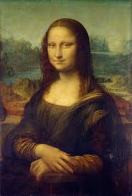
Just as some people simply can not or will not pay (such outrageous prices) for entertainment, you will find people who will spare no expense when it comes to it. There are plenty of people who want to see movies on the big screen. There are plenty of people who want to see their band live in concert.The Mona Lisa is a perfect example of this.

No ownership claimed...

You can see pictures of Mona Lisa anywhere; it’s one the most widely recognized images in human history. Because it’s available for free most anywhere, no one will actually go see it, right? After all, it’s been “pirated” to death. Yet that room in the Louvre is packed wall to wall with people who want to see the thing for themselves. Why? Because it’s the original. Doesn’t matter that it’s roped off, or behind glass, or barely visible, or that the guards usher you along after thirty seconds- it’s still wildly popular. The same is true of all media. Some people- plenty of people- will part with their cash to see Avatar in 3D, rather than watching some grainy, laggy version taken on a hand-held video camera in Thailand.

III. Anti-Piracy Hurts the Audience

You may not have experienced this in the states, but there was once a time when DVDs were listed by region codes, and could only be played on players that recognized that region. In other words, a DVD from America couldn’t be played on a DVD player from Europe and vice versa. You were granted a limited number of “switches,” but seeing as how you typically only got seven, it just put off the problem, rather than solving it. The goal (one of ’em, at least) was to prevent international piracy of DVDs through cracking down on how far away they came from, but all that just came down to it being a huge hassle for everyone, regardless whether or not their purchase was legitimate. Imagine all the time, money, and manpower that was invested in that venture that wound up solving nothing and quite possibly leading the industries involved to lose more money over that debacle than they would’ve lost to actual piracy. The same could be said for those hyperbolic ad campaigns comparing piracy to car theft

IV. Anti-Piracy Hurts the Industry

And while we’re talking about the industry shooting itself in the foot, let’s not forget the fact that preventing access to one film will very often lead to prevention of access to another. Quite simply, a person who doesn’t see The Godfather is not likely to go see the sequel, whereas someone who has seen The Godfather has a far better probability of winding up trying to see the sequel, either legitimately or through piracy. Is it a guarantee? No, but it’s still a better chance for the industry to make some cash than by preventing the person from seeing the first film at all.

V. Anti-Piracy Hurts the Environment

Lastly, I have to point out that we have free access to most films, music, and TV shows anyways- down at the local library. Only problem with that is when I drive to the library, I’m spending gas money, creating traffic, and spitting out exhaust fumes. Now I can get most anything down there for absolutely free, and no one complains. But imagine instead that I save on gas money, I keep the streets clear, and I reduce my carbon footprint by staying inside and watching the same movie I would’ve gotten free at the library. Suddenly, I’m a soulless criminal. Does that make sense to you?

https://i0.wp.com/www.reactiongifs.com/wp-content/uploads/2011/09/1239638148802.gif

What’s to be gained from all of this? Despite the doom-and-gloom prophecies of the industries, piracy continues on its merry path and yet we haven’t seen a decrease in the quality or production values of our movies.

Though "quality" is such a tricky word...We have more music artists now than we did a decade ago (at least, more access to them), in spite of piracy, and two of the most popular genres of our generation, techno and dub-step (I will never stop being ashamed of that) is heavily based on remixing and sampling other people’s work, i.e., piracy.

Look- I’m not asking the media giants to be happy about piracy, but at the same time, I have to question whether it’s really even worth it. All that cash being poured into anti-piracy gambits isn’t workingif it doesn’t already outweigh the revenue lost, wouldn’t all that time and effort be better spent elsewhere? Wouldn’t it be more profitable elsewhere?

https://i0.wp.com/media.tumblr.com/tumblr_manlx9hrn71r2sv68.gif

Just sayin’.