Tag Archives: white

5 Privileges I’m Thankful for on International Women’s Day (and That I Want All Women to Enjoy)

Today, on International Women’s Day, I’ve been reminded of how grateful I should be. Maybe it’s because I’ve been flipping through images of women’s protests around the world. Maybe it’s because I’ve been watching sentimental videos that make me feel inspired (even if they are marketing ploys by Google). Either way, I can’t help but feel grateful.

By the time this post goes up around midnight tonight, it will no longer be International Women’s Day. Before then, I’d like to take a moment to be thankful, and highlight ways we can support other women in their fight to win these privileges too.

1. Freedom and Safety

When I get up in the morning, I do not feel afraid. My country is not at war. My physical safety is not threatened. Throughout history, this was not something most women could take for granted. In many countries around the world this is still something women cannot take for granted.
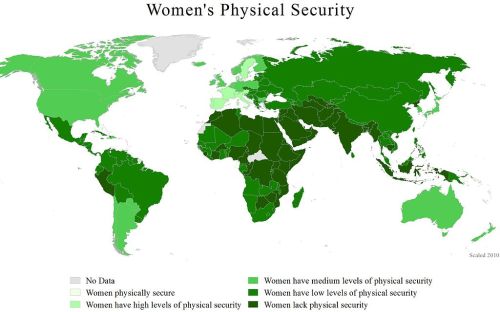
There are many organizations working to ensure women’s safety. There are a variety of organizations that are working to help women (and men and children) from areas like Syria that have been affected by war. Unfortunately, in unstable situations like these, rape and sexual violence become weapons of war. The Stop Rape Now website highlights a variety of organizations that work with victims of sexual assault and promote rape prevention education. Continue reading
For Your Consideration: Asian Doctor Strange, Courtesy of Kurt Busiek

Some weeks will prove busier than others, and on those occasions I’m choosing to present all of you with something worth thinking about.

As you may know just last week I covered both sides of the debate over Daniel Rand, AKA Iron Fist, being played by a person of Asian descent. Of particular concern to the writer in the “for” camp was that the narrative within the comics pushes the idea of a White man entering a foreign land, mastering their arts, and ultimately rising up to be one of the greatest among them. It’s a trope that belongs to Sorcerer Supreme Doctor Strange just as much as it does to The Living Weapon himself.

Kurt Busiek is a writer who has been in the industry for decades, with a four year stint on Avengers being his greatest claim to fame. With an extensive biography that spans the Marvel universe he’s widely regarded in comic book circles as a professional who knows what he’s talking about. Roughly a week ago he began sharing over Twitter about how Doctor Strange was very likely intended to be Asian from the very beginning, or at least depicted in such a fashion. I’ve compiled all relevant tweets below, for your consideration [all tweets not by Busiek were retweeted by him]:

https://twitter.com/karloff_fan/status/703650412381868032

https://twitter.com/devincf/status/703650991409750016

Continue reading

Asian Iron Fist: Point, Counterpoint, and My Two Cents

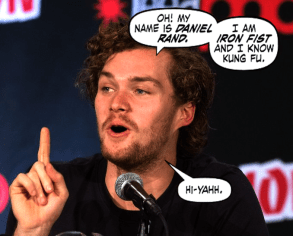
hi-yahhYesterday Entertainment Weekly revealed that Marvel had finally found their next star in Game of Thrones actor Finn Jones. The character he’ll be playing is Daniel Rand, AKA Iron Fist, the face of their fourth Netflix-exclusive series [following DaredevilJessica Jones, and the upcoming Luke Cage]. I could sum up who he is, but EW did a pretty good job with that in their coverage already:

“…Iron Fist is Daniel Rand, who at age of 9 travels with his family from New York to a lost mystical city called K’un-L’un. After some tragic twists of fate, Rand is adopted by the city’s ruler and taught advanced martial arts and the mystical power of the Iron Fist. As an adult, Rand returns to his native New York and begins a career as a superhero.”

In the comic books Danny is, much like his silver screen compatriots Captain America and Thor, White, blonde-haired, and blue-eyed. Ever since it was announced that he would be headlining his own show there has been a discussion over what race he should be, with Keith Chow over at Nerds of Color making his stance clear with his article “Marvel, Please Cast An Asian American Iron Fist“. As soon as the news hit my tumblr feed was flooded with like-minded individuals, with one post in particular that caught my eye, presenting the following two tweets-

https://twitter.com/Wheeler/status/702941414942855170

-labeled “Point” and “Counterpoint”, respectively.

Now I have no intention of dedicating a large portion of this post to Liefeld, known in many comic book circles as being a man incapable of drawing feet [though now probably vastly more famous for co-creating Deadpool]. He also had just the two words to share, as opposed to a full article that Wheeler penned on the subject, so instead I’ve chosen to have Albert Ching of Comic Book Resources take his stead. Continue reading

Running the Race on The Bachelor

It’s been a quite a few years since the summer I spent watching Jillian Harris do her level best to find the perfect man on Season 5 of The Bachelorette. Fast forward to the beginning of 2016 and I find myself in the same position, this time with 27-year-old Hoosier heartthrob Ben Higgins. A number of things have changed in those seven years, like the price of bitcoin and the existence of this blog, while others haven’t, like my relationship status [single], ABC’s continued broadcasting of the search for love, and The Bachelor and The Bachelorette‘s respective track records with race.

Is Race on The Bachelor/Bachelorette Really an Issue?

Luckily for me, I’m not nearly the first person to cover this topic. Of particular note is Karen X. Cheng’s “Minorities on The Bachelor: When do they get eliminated?”, which lists the contestants who were racial minorities on both shows and, as the title suggests, exactly what week they did not receive a rose. Worth keeping in mind is that as of 2014 The Bachelor was in its 18th season, and The Bachelorette in its 10th.

Minorities On The Bachelor and The Bachelorette

Check out more specific, well-designed graphs by heading over to the article itself.

Cheng noted that there appeared to be a drastic spike after 2012, during which there was a class action lawsuit leveled against the series regarding “the deliberate exclusion of people of color from the roles of the Bachelor and Bachelorette underscores the significant barriers that people of color continue to face in media and the broader marketplace.” While the lawsuit was later dismissed she posits that the sheer amount of negative press the show garnered is what resulted in the network scrambling to make a change so quickly. Continue reading

Filmmaker Christine Welsh on Tracing Her Heritage in Women In the Shadows

My Canadian studies class recently watched Women in the Shadows, a documentary by feminist filmmaker and professor, Christine Welsh. Not long after we had watched her film Welsh agreed to visit our class for a question and answer period. Below I’ve included a little of what I learned from her film and her visit.

christine20qu27appelle20valley

1101331

Norbert Welsh’s oral history was recorded by Mary Weekes.

In an article detailing her documentary experience, Welsh explains that her interest had been sparked when her mother recovered a copy of The Last Buffalo Hunter, an oral history by her great grandfather, Norbert Welsh. In the film, however, Welsh attempts to recover more information about her great grandmothers, figures who were much harder to trace.

Along her search, Welsh discovers the name of her great grandmother, Margaret Taylor, and Margaret’s mother, Jane. Welsh surmises that Jane was most likely Cree. Jane’s union with George Taylor meant that Margaret was one of the first generations of Metis women. While documentation about women was lacking during early colonization, Welsh was able to uncover some details about her foremothers because of Margaret Taylor’s connection to Hudson’s Bay Company Governor George Simpson.

In the early period of Canadian colonization, Hudson’s Bay employees often took “country wives”. These women, of First Nations or Metis heritage, would create family ties between the explorers and the local community and were often the reason their husbands survived their first few Canadian winters. In Women in the Shadows, Welsh discovers that Taylor had been Simpson’s “country wife” for many years, only to be cast aside by Simpson when he returned from a trip to England with a new white wife.

Continue reading

The Remnants of Colonization in La Loche: What Factors Lead to Tragedy?

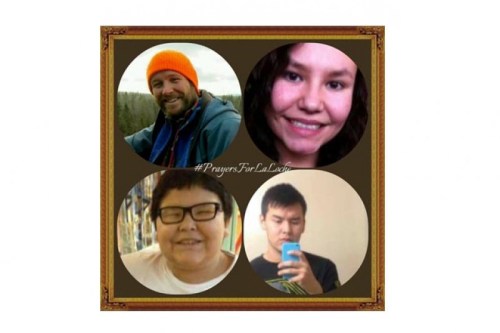
On January 22nd, a 17-year-old student killed four individuals in La Loche, Saskatchewan.

8521289_1453768082-5629

The four victims of the La Loche shooting, Adam Wood, Marie Janvier, and Dayne and Drayden Fontaine.

When I first heard about this heartbreaking tragedy I was shocked. Since then, I’ve been reading more and more about the town of La Loche in order to better understand the context of what happened. Below I’ve shared some of what I’ve learned about the situation this small Northern town has faced.

1. Rural isolation

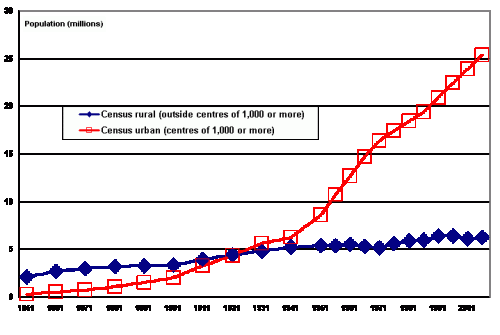
Canada has become an urban nation, so the city is where most of our jobs and resources are.

figure1_e

In some ways the popular Canadian cliche of a “vast, empty wilderness” is still true today. Just like the “discovery” of Canada – when a country filled with many different nations was considered “empty” by explorers – today Canadians still consider the jobless pockets of Northern Canada “empty”.

While settler-Canadians have congregated primarily in the region of Canada closest to the American border, First Nations peoples still tend to be the majority in Northern rural areas. In La Loche, for example, more than 2,400 of the 2,600 community members identify as First Nations or Metis.

However, these communities have changed considerably since “the discovery” of Canada. Generations of First Nations peoples were forced to give up their cultural practices during their time in the Residential school system, which lasted from the 1870s all the way into the 1990s. They also gave up huge portions of land to white settlers. Not as a gift, but in an exchange drafted out in treaties that the Canadian government has yet to honour.

First Nations communities continue to survive, despite the loss of many traditional practices and lands. While these communities struggle to overcome their isolation, many settler-Canadians continue to ask why they don’t move south to find more jobs and a “better lifestyle”. In her article responding to this question, Susanna Kelley argues that many rural reserve members are forced to give up their land and community support if they want to find employment and education.

“First of all, the overwhelming majority of [rural] reserve residents have not completed high school and have no place to work once they hit the urban south. And many fly in reserves don’t have high schools.  Would you like to send your 13-year-old to live 70 km. away for months at a time?

Many who do come to the cities end up in the sex and drug trade.  They simply are unqualified to make a living other ways…

Which is why many [First Nations] people stay where they are, close to family and their community.

But what most Canadians don’t know is that our nation is legally bound to provide housing, health care and education to [First Nations people] who live on reserves.

The federal government isn’t just doing it out of the goodness of its heart.

The obligation comes from legally binding agreements made by treaty many years ago.”

Continue reading