
Well, readers, it’s another sweltering day in June, and here in the trenches of the culture war accusations of “misogyny” and “political correctness” are being fired back and forth. And what’s that out there in the middle of the no-man’s land? Well, it’s the photo that started this latest skirmish:
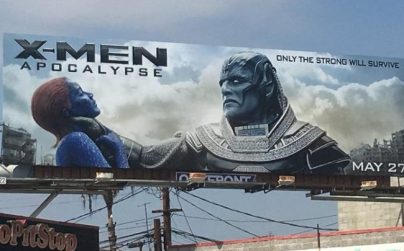
Image retrieved via Telegraph.com, fair use
That right there folks is a billboard for X-Men: Apocalypse, and it’s got more than a few people upset. So much so, in fact, it’s being reported that Fox has issued an apology for the ad– caving to arguments made by some that the advertisement promotes misogyny.
And in all fairness, they are some compelling arguments.
Now ads featuring violence towards women exist, as evidenced in Jean Kilbourne’s famous documentary Killing Us Softly. Critics of this ad have cited (though I am paraphrasing for the sake of space) that the inundation of these images in our society leads to the normalization of violence. Show enough ads featuring women getting choked out and people will start assuming that it’s the natural way of the world.
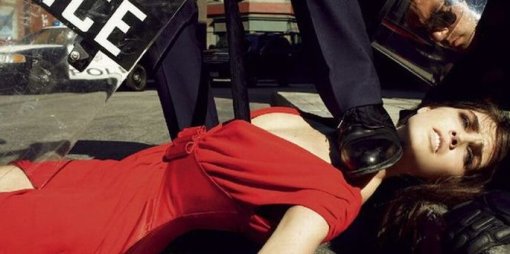
Image retrieved via BusinessInsider.com, fair use
Even if the person doing the choking is the bad guy (and Apocalypse is), the simple fact that it’s a yet another man committing an act of force on a women should be enough to elicit outrage from us all.
Like I said- a compelling argument.
Let me tell you why it’s bull****. Continue reading
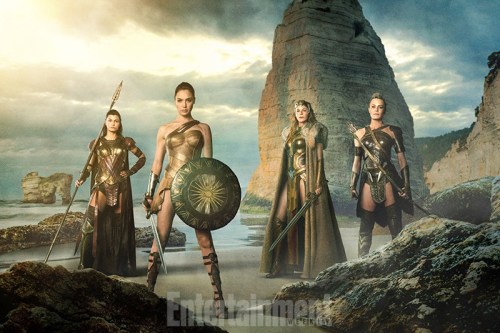
 Make no mistake, I am very excited for it. Seeing the Amazonian on the silver screen for the first time is also the primary reason I’m seeing BvS in the next few days, and a Wonder Woman t-shirt that I shamefully purchased at Hot Topic [shameful for the store, not the product] is the only merchandise I have bought and plan on buying [the poster on the right was free]. In spite of that, or maybe directly because of it, I ended up with a number of thoughts about the promo picture released. While the first point is the shortest and has nothing to do with my gender, the ones that follow may be defended by readers who can better relate. Which is to be expected, and that I hope people feel comfortable doing if they want to.
 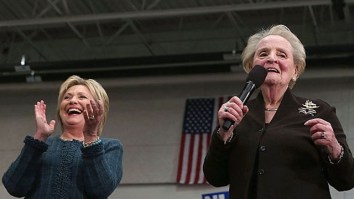 “There’s a special place in hell for women who don’t help women…”


 Culture War Reporters
“You Might as Well Have [insert character here] Be [insert 2-4 minority types here]!”
One of the most common adages on the internet is “don’t read the comments”. While this global network that we’re all currently using [unless you somehow managed to snag a printout of this post] has given us all the ability to share and discuss everything under the sun, the unfortunate truth is that a lot of that conversation amounts to hot garbage. You could scroll down past an article to see what people are saying about it, but chances are that it won’t be a particularly uplifting experience.
As someone who spends much of his time online reading about entertainment there’s a type of comment that I’ve seen crop up time and time again. It’s existence ties directly into a lot of the recent trends in comic books, television, and film, the push towards inclusivity and the people who are actively working to make that happen. A perfect example [of a handful I’ll be referencing throughout this article] is:
“disabled, multiracial trans women with disfiguring facial scars” – posted on “There are more (white) women starring in movies than ever before”
I’ve been compiling these for the past few months, originally with the intent of putting together another “For Your Consideration” and allowing readers to look them over and come to their own conclusions. A general [and accurate] takeaway would be to note them as being typical of inane online comments and move on, but I’d like to spend a little time breaking down the idiocy they represent.
They Perpetuate the Default
The default person, in case you needed to be informed of who generally holds the most power and screentime across the board, is a straight able-bodied cisgendered White man. I’m painfully aware that simply listing those words in successive order like that marks me as being one of the SJWs [my thoughts on that term here], but every one is important to take note of.
Take the following:
“black Asian gay lesbian transgender Spider-man” – posted on “Dear HOLLYWOOD REPORTER: May We Have a Word About ‘Cultural Appropriation’?”
To look at the list and mark it against the checklist of what makes a default human being, in the eyes of at least a few, we have:
Other comments I’ll be including later on will add examples that include disabled people, but the general gist of every one capitalizes on the absurdity of a person who doesn’t match the standard cutout. A straight able-bodied cisgendered White woman? Not a terrible strain of the imagination. Once you start to tick off more items that don’t coincide with the norm, however, things apparently get a lot shakier.
I don’t even think that many of these commenters are aware of the implicit message behind the words they type. By listing these adjectives and identifiers they end up with a person who most of them share absolutely nothing in common with, which exposes the very reason we need diversity at all. Everyone should be able to relate to entertainment, and for too long the industry has catered to an audience that gets smaller every day. Continue reading →
Rate this:
1 Comment
Posted in comics, film, gender, internet, lgbt, race, television
Tagged believable, black, character, comment, comments section, complaints, default, disabled, diversity, gay, internet comments, lesbian, lgbt, marginalized, minority, possibility, race, realistic, representation, straight, Transgender, transgendered, visibility, white, why not have