Category Archives: interview

2015’s Cultural Battleground – Kat’s Account

EDITOR’S NOTE: We end this year by each taking a look back and picking our five best posts, explaining both their importance to us and to the world we currently live in.  Clicking the banner images will link you to each post, so as 2014 comes to a close join us in remembering how far we’ve come, but also how far we still have to go.

RachelBrown

After the recent acts of Daesh terrorism in Paris I returned to this interview with PhD Candidate Rachel Brown to get some perspective. While Brown’s work was focused on food and religious identity in French and Quebecois Muslim immigrant communities, it also highlights how isolation and religious persecution can push young people towards accepting religious extremism. In the interview, Brown explains,

“I’m not really an expert in ISIS or Jihadist fighters or any of the topics that relate to this. I can say that when people, especially youth, feel alienated, when they don’t feel at home anywhere, this can lead to finding identity in extreme forms of religion. If the religious identity is the only identity that one feels they can claim, he/she is going to place a huge amount of importance on that identity.”

nestle

This year, a petition began circulating that condemned Nestlé’s operations here in British Columbia. While Nestlé has been operating here in B.C. for 15 years, residents became particularly concerned during the drought this past summer.  As Gordon has pointed out in his previous Shame Day post, Nestlé doesn’t have the greatest track record when it comes to respecting other countries and their water needs. In this post we take a closer look at the relationship between Canadian water and the American corporations that would like to bottle it up. Continue reading

Rachel Brown on Food, Religious Identity, and the Appeal of Muslim Extremists

A few months ago, I had the opportunity to hear PhD candidate Rachel Brown speak about her research on food and religious identity in French and Quebecois Muslim immigrant communities. I found Brown’s talk fascinating and contacted her soon afterwards; I wanted to find out if her work was publicly available so I could write about it here on the blog. While Brown has written a chapter on her work for an academic publication it hasn’t been published quite yet. Lucky for me, Brown was willing to share a draft with me. Throughout this interview I will be referring to, and occasionally quoting, that draft in order to give you context for the questions I ask Brown.

According to Brown, her “primary research interest lies in the study of immigrant religious experience and how members of immigrant communities negotiate their religious identities through food and food practices in their host countries.” In order to write on this topic, Brown conducted fieldwork and semi-structured interviews in both Paris, France and Montreal, Quebec.

This was the most French gif I could find.

Kat: Hi Rachel, thanks again for being willing to share your research with me and our readers. Before I dive into the questions I have from reading your draft, can I ask, what drew you to this area of study?

Brown: I came to the project out of a love of all things food and all things France. On one of my many visits, I noticed that how and what the Muslim community in France ate was a point of interest for media, politics, and everyday conversation on the street between friends and neighbours. There was clearly a subject to be addressed. I figured if I was going to be in the field for a year I might as well be somewhere I love and studying something I am passionate about, and so I set out to study the topic of food and religion. As I got further and further into the topic I realized just how essential food practice is to identity, especially religious identity and my research has grown exponentially ever since. The importance of food in religious identity negotiation for immigrants can be seen across a variety of locations and traditions.

Kat: I’m also curious about the technical side of things. Did you intentionally limit your case studies to individuals from the Maghreb? If yes, then why? Also, how did you go about arranging these interviews, or even making these connections in the first place?

Brown: I definitely limited my study to individuals from the Maghreb. I did this because the largest Muslim community in both France and Quebec comes from the countries of the Maghreb. This is not only because of proximity, of the Maghreb to France, but also because of a colonial history between France and the countries of the Maghreb. When one thinks of Muslims in France, this is most often the community that comes to mind.

In terms of arranging the interviews, this was a tough process. I started by going to the Grand Mosque of Paris and just getting to know people there. I had to build up trust, and spent many hours just helping out at the mosque in order to show that I was not a journalist (a profession folks are very hesitant of in France) and that I meant well with my research. After people got to know me, some started to agree to do personal interviews with me. Once I conducted the first interviews the people I interviewed then put me in contact with friends or family members to interview. So I followed a snowball methodology. It was not easy to get people to talk to me, but because my topic is such an approachable one (who doesn’t want to talk about food?), it made it a little bit easier to get people to agree to interviews. Having the personal connection, and a validation from friends or family members that had already done the interview was also key. Continue reading

2 Broke Girls And the Interview with Federico Dordei, Part 2 – Behind the Scenes at Stage 21

AT THE REQUEST OF FEDERICO DORDEI HIMSELF I HAVE TAKEN DOWN THIS ARTICLE. APOLOGIES TO ANYONE INTERESTED IN READING IT.

Language as a Product of Cultural Evolution [Or Why Chimpanzees Can’t Talk and We Can]

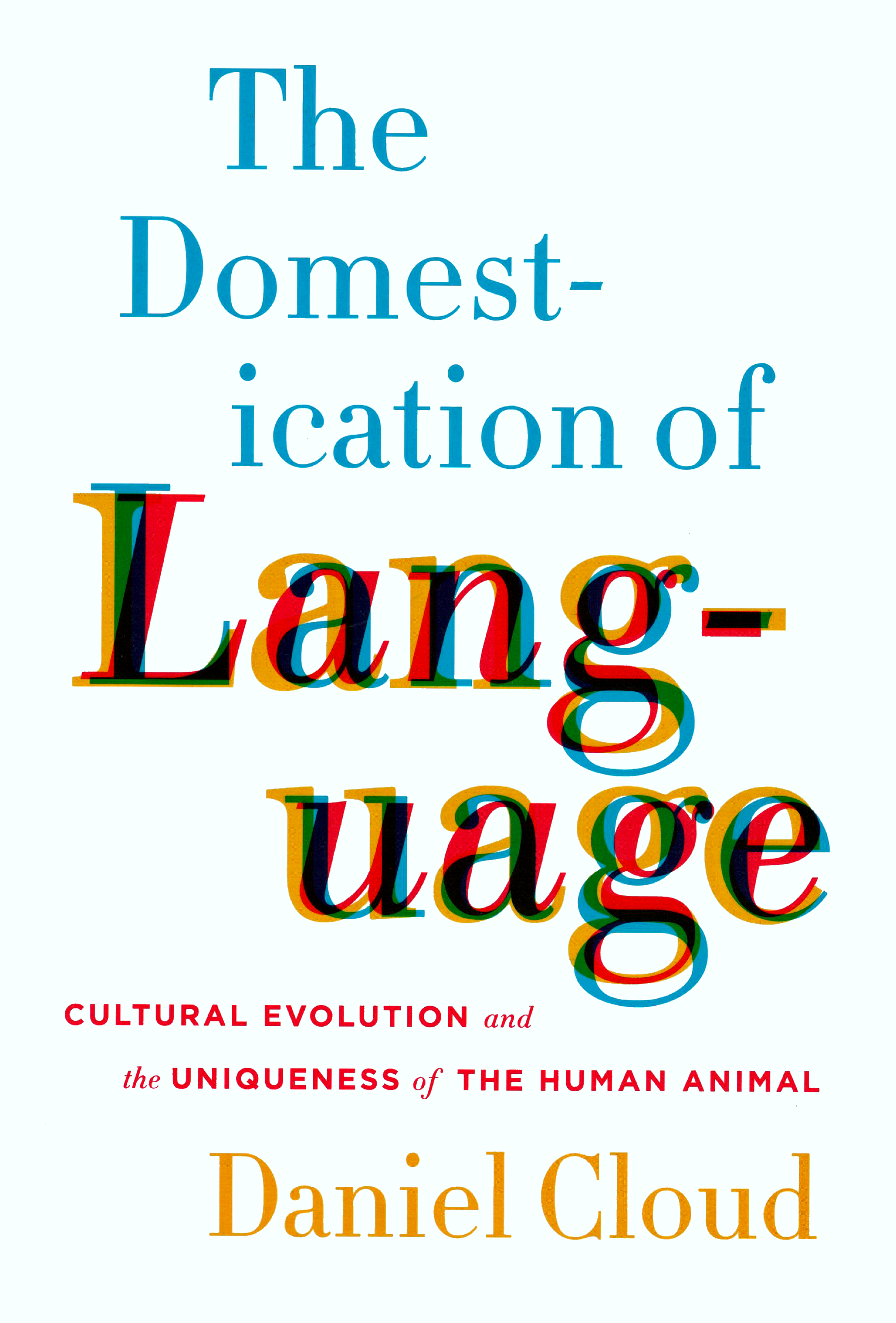
thedomesticationoflanguagecoverThis week I finished The Domestication of Language: Cultural Evolution and the Uniqueness of the Human Animal, a book whose subject matter should be self-evident. Shortly afterwards I was given the opportunity to talk to Daniel Cloud, the author of said work and professor of philosophy at Princeton University.

To summarize it very briefly the book is a thorough and eye-opening examination of language as a piece of culture that has been grown and thus evolved due to choices and actions we’ve made as human beings. While our discussion of his work was incredibly thorough and actually exceeded an hour I’ve managed to cut it down to something that closely approximates a conversation, and one that I hope will convince you to pick up a copy for yourselves.

Evan: Now I will of course be putting together some form of introduction to preface this interview, but I thought it would be good for our readers to hear you describe yourself in your own words-

Cloud: I would say that I am an American philosopher carrying on the American philosophical tradition. I worked in science for a while in Russia and China which gave me some some experience with socioeconomic change; I was in those places during a period of upheaval. Research as a philosopher most interested me when I decided to quit and go back to school. Biology and evolution in particular stood out as I already knew a lot about the social sciences.

Evan: As far as The Domestication of Language: Cultural Evolution and the Uniqueness of the Human Animal is concerned I would describe your primary goal as breaking down the origin of human language. Would you agree with that?

Cloud: My goal was and is to explain where language comes from, yes, but specifically the theory of cultural evolution and if it works relative to language. Language is one type of culture, and the specific type of culture I chose to focus on in this book was words as they’re discrete identities that are easy to identify and track throughout history.

The larger project is actually to track humans as being distinct from other types of living things. To return to language I present it as a tool for exploring the way cultural evolution works. It’s the application of the word “domestication” as seen in the title, the theory that just like animals and plants what we have in the present day is very different from how it began. Words are only the first thing I’ve tried to identify in this way. I could just as easily have turned to fashion or clothes or any other kind of culture. Continue reading

BURAAQ: Two Brothers, A Superhero, And the Truth About Islam

adilkamil

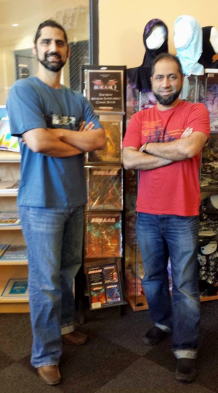
Kamil and Adil Imtiaz.

This past Saturday I had the opportunity to connect with Adil Imtiaz, one half of the two sibling team responsible for the comic book BURAAQ, which stars a Muslim superhero. While he was the illustrator starting out he shared, and continues to share, creative responsibilities with his brother Kamil, and was more than happy to talk to me a little bit more about how this project came to be and why.

Ms. Marvel, as you may have guessed, came up in conversation, and I ended up learning a few things about Islam that I didn’t originally know.
Throughout our talk it was clear that this character and all he presents is a passion for Adil, and that he believes it can, and has done, good things for Muslim youth.

After thanking him for finding the time to speak with me about his work we got right down to questions and answers, the latter of which he was very ready to provide.

Evan: Now I can’t wait to get into talking about BURAAQ, but before we get there would you like to say a few words about yourself?

Adil: Adil Imtiaz is my name. I’m an IT professional, just so you know. And I came here from Pakistan back in 1990; me and my  brother and my family. So we’re here with our families and that’s pretty much it as far as my background is concerned.

Evan: Would you say that your interest in comic books began at a very young age?

Adil: Absolutely. Even in Pakistan as kids, my brother and I used to have a stack of comic books by our bedside. Every night we used to read Marvel, DC, superhero stories. We were, and still are, fascinated with sci-fi and superhero stories and characters.

And movies, of course. Hollywood as you can see is all about superhero films. And we used to draw comics and superhero characters as kids. I got sidetracked when I had to focus on higher education, pursuing a career. I had to put it on the back burner so to speak.

buraaqpreview

Evan: In the PDF I was given to review you and your brother’s mission was very clearly stated, and I’m just going to reiterate it for all my readers:

  • To provide a clean, fun (halal) and positive entertainment media alternative for our Muslim youth.
  • Reconnect our Muslim youth to Islam and make them feel proud to be a Muslim.
  • Enable interfaith dialogue and increase positive Islamic awareness.
  • Our principles are based on the Quran, Islamic values, and the teaching of the Prophet Muhammad (PBUH).

How long this been in the works? It seems particularly relevant now given recent events in North Carolina [with what I’m going to call a hate crime]-

Adil: Well, no, actually. This is something, the idea was born back in 2009 actually. Especially after 9/11 things changed in the US. And in the media, traditionally, Arabs and Muslims have been portrayed in a negative light in Hollywood, but after 9/11 things really picked up steam; a bunch of crazy people around the world who claim to be Muslims and other agencies at play, not to get into politics…

Sammy Sheik as Mustafa in American Sniper.

Continue reading

Unpacking the Importance of The Whiteness Project

I rarely double up on posts during the week, and I just wrote pretty great review of this month’s issue of Ms. Marvel [if I do say so myself], but I felt the need to spotlight a little something called The Whiteness Project and field a few more opinions from you about the entire thing-

I chose to feature the same guy The Guardian did, because how could I not?

I chose to feature the same guy The Guardian did, because how could I not?

The Whiteness Project is, to let their About page speak for itself:

“a multiplatform investigation into how Americans who identify as ‘white’ experience their ethnicity.”

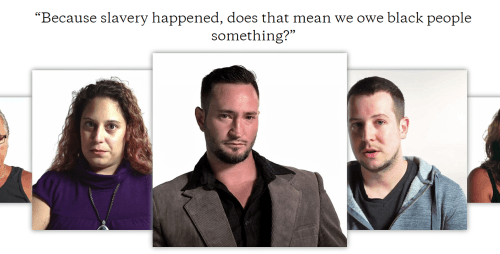
This investigation is carried out through interviews with White Americans, some of whom you can see in the image up above. Speaking to the camera, and consequently us [due to their use of the Interrotron camera technique], these men and women share how they relate to and understand their ethnicity and what it means in today’s United States. Continue reading