Re: #DontStayInSchool: In Defense of the System

A few weeks ago my brother sent me the following video and asked if I could write about it on the blog. He challenged me to defend academia and promised that he would respond by commenting on why this video resonated so deeply with him. So, although I agree with many of the comments Dave from Boyinaband makes in his video, I’m going to offer you several reasons why our education system can be, and has often been, a good thing.


1. Our education system was designed to promote equality

In his video on the history of education, Salman Kahn explains how our contemporary education system was shaped by ideologies that valued class equality. According to Kahn, the Prussian education system, despite its faults, insisted on providing public education for all citizens. Meanwhile, even the “Committee of Ten”,  the group of educators who originally introduced standardized curriculum, were motivated by their belief that economic status should not prevent students from having access to “higher order” skills. Standardization of curriculum meant that every student would (ideally) have access to the kind of information that was once restricted to the elite.

Continue reading

47 Traitors – A Torrid Tale of Tumidity

Sounds like the title of a really good or really awful thriller, doesn’t it?

Let me bring you up to speed on what happened.

With a hotly contested election still raging in Israel, embattled prime minister Benjamin Netanyahu decided to make an impromptu visit to US Congress, in a desperate bid to show his voters that he can dictate US foreign policy better than his rivals can.

Which, in his defense, is probably true.

After (yet another) fear-mongering speech on the dangers of a nuclear Iran, Netanyahu received the kind of tearful, thunderous applause that’d normally be reserved by preteen girls for their favorite boy band.

Like this, but so much more so…

Continue reading

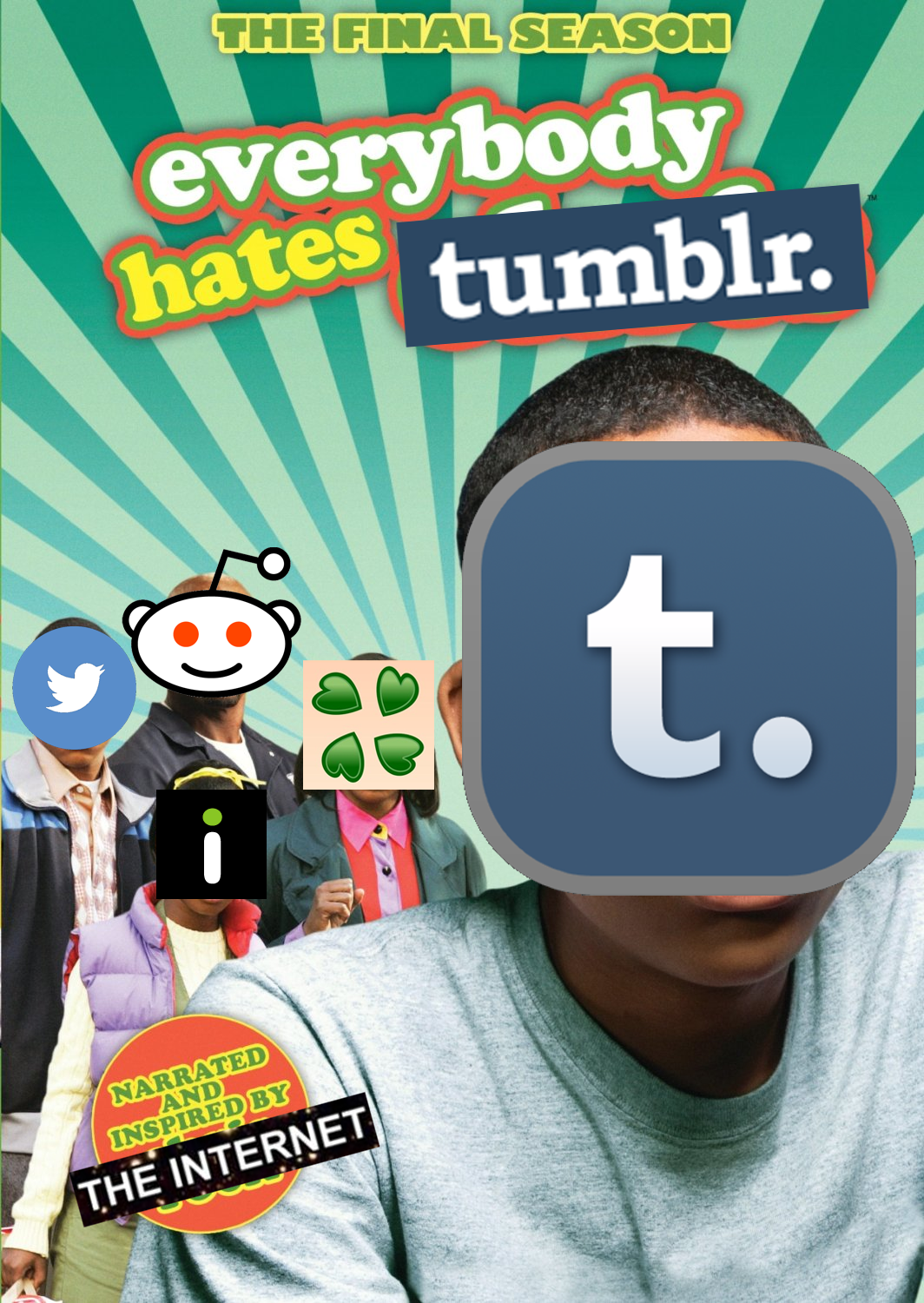
Tumblr and SJWs: The Difference Between Having a Problem and Being One

So roughly two months ago Gordon said I would be “providing some cutting observations on the state of Tumblr”, and I’ve finally gotten to the point where I’ve done enough research to finally tackle this thing. In this case “this thing” refers to “the internet’s conceptions of Tumblr and its users, specifically those who have been deemed ‘social justice warriors'”. It’s going to be a long one, so sit back, buckle up, and do one other thing you would do when riding in a vehicle.

everybodyhatestumblrEverybody Hates Tumblr

I’m not going to pretend I know where you spend your time on the internet, but chances are that you’ve come across the general sentiment that Tumblr is “all that is wrong with the internet” or “a literal cancer” or some other hyperbole. It’s gotten to the point where just invoking the site’s name in relation to anything can be, and usually is, a damning condemnation.

As far as I can tell, there exists a much stronger bias towards it than even 4chan, with the latter being heralded as the primordial ooze that the vast majority of our memes come from, a primal, unadulterated place that has stood true to its roots. That’s a conversation for another time, but the point is that Tumblr has come to carry more negatie connotations than other social networking sites, with a lot of that having to do with it being the homeland of SJWs, or “Social Justice Warriors”-

What Is A Social Justice Warrior? [Wow, Google Image Search Has Not Been Kind To That Search Term]

This YouTube video is a pretty short, funny breakdown of what one is:

If you didn’t feel like watching it, here’s what the dude defines it as, providing three definitions that get more and more easy-to-understand:

  1. a derogatory term for people who advocate for socially marginalized groups
  2. a bad name for feminists
  3. a bad name for women-are-cool people

Continue reading

Florida’s War on Context

Florida, one of the crazier states in the Union, has taken climate change denial to a whole new level.

Apparently, Florida’s Governor Rick Scott is responsible for an off-the-books ban on the terms “climate change” and “global warming” (among others) at the state’s Department of Environmental Protection (DEP).

I mentioned “others” because, according to some, DEP employees have also been pressured to avoid using the term “sustainability.”

That’s the last I’ll say about that one, because, if it’s true, the stupidity of it could very well give me a brain aneurysm. Continue reading

Ms. Marvel, #13: A Comic Book Review

msmarvel13Look, I know I was tough on Ms. Marvel last month. It was a so-so issue, a fact that surprised me greatly considering it guest starred the Norse god of trickery. The thing is, even then I wasn’t worried that it was some sort of herald of less-great things to come, and the latest installment of Kamala Khan’s adventures is one of the best yet.

Everything that was missing from the Valentine’s issue is present here. Inhumans? Check. Genuine hero vs. villain throwdowns? Check. An exploration of the life hyphenated-American youth live, AKA the cornerstone of immigrant literature? Ch-ch-ch-check.

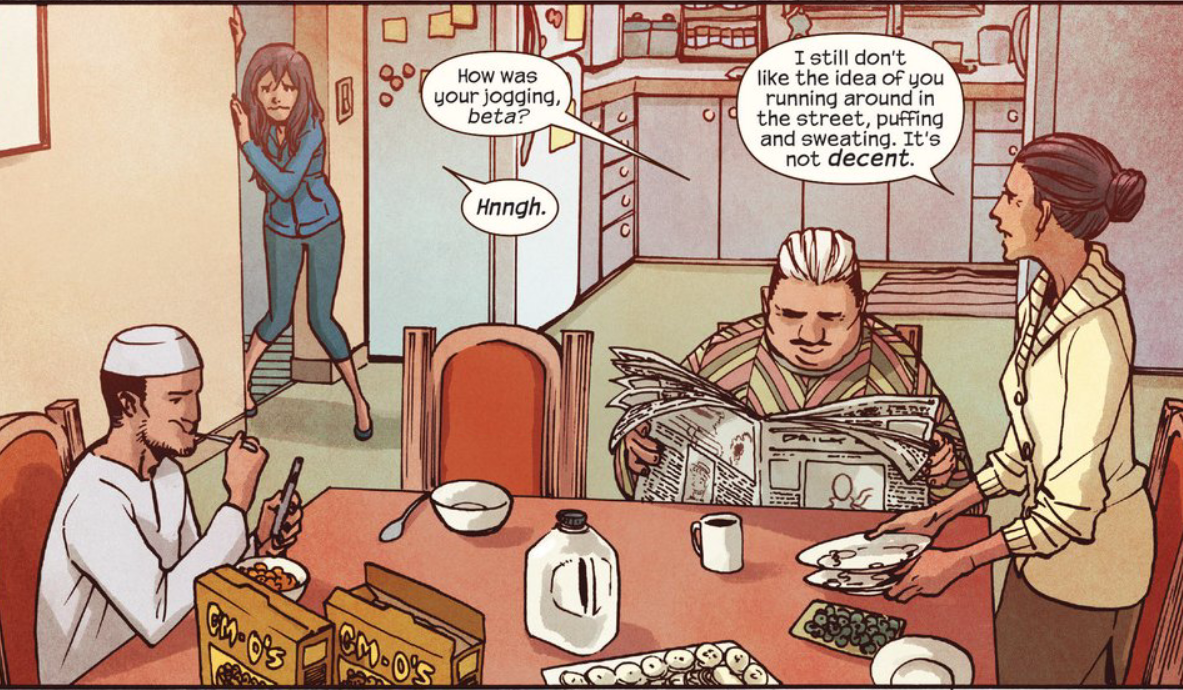
That last point is what truly made me love this comic, because the rest of the Khans get some quality pagetime after being out of the spotlight for so long. Take the following panel-

notdecent

It takes place after we see Kamala training in the Inhuman version of the X-Men’s Danger Room, and while seeing Medusa worry about her subject [she is queen of the Inhumans, after all] is intriguing all I could think of was: “older Pakistani people would probably not be down with the skin-tight leggings she has on.” Lo and behold we have her ammi chiding her for her indecency. Continue reading

Lisa Nakamura Part 2: Navajo Circuits and the “Nimble Fingers” of Asian Women

In my last post, I told you a little bit about Lisa Nakamura, her research, and the talk she gave at my university about Tumblr activism. I also promised to tell you about her second lecture the next time I wrote.

Both of Nakamura’s lectures were about digital media, but unlike her first talk, her second presentation focused on the physical material of digital technology.

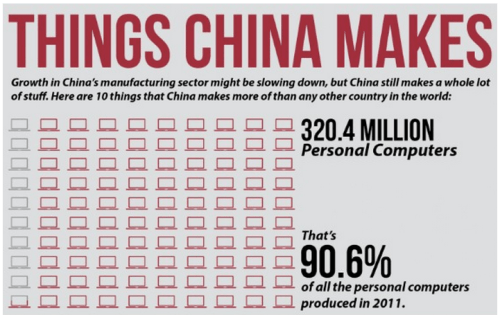
Unless you’ve been hiding under a rock, or recently time-travelled to 2015, you probably wouldn’t be surprised to hear that most of your digital hardware came from Asia. You may even be familiar with the way Asian women have been racialized as innately predisposed to factory work because of their “supposed docility, nimble fingers and attention to mind-numbing detail”.

Screen Shot 2015-03-09 at 8.39.54 PM

Click on the image to view the full infographic.

However, you might be surprised to learn that this stereotype has been applied to women of colour ever since the digital revolution. In her paper on “Indigenous Circuits: Navajo Women and the Racialization of Early Electronics Manufacture”  Nakamura examines the way digital factory work is both gendered and racialized. She refers to the work of Karen Hossfeld when she insists that

“…by the eighties in Silicon Valley, electronic assembly had become, not just women’s work but women of color’s work.” (290)

Continue reading