Tag Archives: Violence

Evan and Gordon Talk: Why Christian Media Is So Bad

EVAN: The particular topic of discussion that comes to us today is more one that finds itself passed back and forth within Christian circles, and that is: “Why is Christian media so bad?”

GORDON: I think the problem is self-imposed by the religion (I use the term loosely) itself. We’re not talking about a lack of funding (we’ve got plenty of good low-budget films), or a lack of good directors (there’s plenty of decent talent out there), we’re talking about an issue that runs right down the core of it all.

“Christian” media can’t just be media- they have to drag in everything that goes with it.

EVAN: So basically what you’re saying, and we talked about this a little earlier, is that Christian media more often than not has an agenda, correct?

GORDON: I’d say plenty of it has an agenda, but no, I don’t think that’s the core issue-  there’s plenty of other preachy movies out there.

EVAN: So what are you saying, exactly?

GORDON: I’m saying that “Christians” can’t make good media because they won’t allow themselves to. Every protagonist has to fit the moral code to a tee, so that they wind up as either Aslan 2.0 or the epitome of Christian morality: John Smith, the middle class suburban, patriotic family man. Which is why I keep putting “Christian” in quotation marks.

We’re not talking about Catholic peasants in El Salvador or the East Orthodox Church in Ethiopia.

EVAN: Okay, I like that a lot, this idea that those creators of Christian media [and primarily I think we’re talking about films] box themselves in. They’re telling the same sorts of stories to who they perceive to be their audience [and they’re not wrong]: white suburban middle class families.
To sort of break this up a little, I actually saw a Christian film that was reasonably passable at some point last summer.

GORDON: Was it related in any way to Steve Taylor?

EVAN: Is that any way related to “End of the Spear”? It was not, if that’s what you’re referring to.

GORDON: Steve Taylor is the only good Christian musician who ever has or ever will have existed.

But anyway, what was the movie you saw?

EVAN: It was called “To Save a Life,” and it stood out for a couple of reasons:

1) The cinematography was shockingly good for something produced and made by Christians. You can tell which movies they are within the first few seconds.

2) The “villain” of the piece was actually the pastor’s kid. Which was- refreshing, and kind of nice.

It kind of broke out of the whole stereotype you introduced earlier.

GORDON: Huh- interesting. I’ll have to check out the trailer. But let me ask you this:

Can a Christian make a James Bond movie?

EVAN: You mean a movie starring a suave, debonair British man who beds women and guns down henchmen as naturally as he dons his suit jacket every morning?

I’d say no, probably not.

GORDON: I think that’s the problem. It’s not just that you can’t have any explicit sex or graphic violence or excessive profanity (which are overused and abused as is), you can’t have anything even remotely sensual or rough or crude. It rips away reality and humanity in the name of not stepping on anyone’s toes.

Self-imposed legalism.

EVAN: Well, I’d say the difference is that you can’t have a protagonist who glorifies such things as wanton sexuality-

I say that Christian filmmakers will never produce anything like James Bond because of who the character is.

GORDON: Did you like the movie “Fight Club”?

EVAN: I liked it a fair amount.

GORDON: Did you like “Ocean’s 11” or “Snatch”?

EVAN: I haven’t seen the latter, but I very much enjoyed the former.

GORDON: Did you like “Superbad”? “Kick-Ass”? “Ironclad”?

EVAN: I enjoyed aspects of the first, thought the second was a shaky, though fairly decent adaptation of the source material, and thought the third was pretty unfair in its depiction of “strong female characters.”

But I think you’re going to have to get to your point-

GORDON: Could a Christian make any of these movies?

EVAN: I think a Christian could, yes. In relation to “Fight Club”, at least, Christian author Ted Dekker has penned novels [sold both in and out of Christian bookstores] which offer a fairly decent psychological thriller aspect to the reader.

GORDON: Ah, Dekker. The whole reason he stands out as an exception is- I believe- that he grew up among Indonesian headhunters, and not in Middle America. Again, it’s about having that different perspective on life.

EVAN: And I think what he’s realized, as a creator of the arts, as someone who has a hand in shaping Christian media, is that you can have these other sorts of exciting, thrilling stories told with a faith-built worldview. People of every religion want a little excitement.

GORDON: Of that there’s no question. The heavy use of the video library at our school stands in testament to that.

But again I think the issue is that “Christian” self-imposed isolation inevitably leads to the vast majority of their work winding up as “White People Problems” or “Chronicles-of-Narnia-minus-the-good-stuff”…

EVAN: Or “Lord-of-the-Rings-but-way-more-heavy-handed.”

GORDON: Exactly.

EVAN: I mean, we’ve talked a little bit about why Christian media can be bad [terrible production values, cookie-cutter story lines, sheer absurdity], but how could it be better [to harken back a little to our last talk]?

GORDON: They have to stop being terrified of the big bad world. They have to realize they can show characters with flaws- real flaws- not drunkard stereotypes and the occasional swear word.

Saying this will get you expelled from Liberty, Pensacola, and BJU

EVAN: I mean, a deeply flawed person who finds redemption is a much more compelling story than a white bread sort of guy with his middle class problems.

And they have to stop coddling their audience. Yes, Christians turn to Christian media for “better alternatives,” but the odd cuss word won’t negate an overall positive message; neither will a fight scene, or two guys sitting around enjoying a beer.

GORDON: There’s this one scene in a (Christian) movie Steve Taylor directed:

A character hurts his hand loading something into the back of van. He lets loose a cuss word and his buddy chides him for it, saying “God don’t like it when we cuss.”

Later on in the film, the buddy hangs his head and apologizes, saying “I’m sorry. I was upset that you cussed- I should’ve just been upset that you hurt your hand.”

EVAN: Wow. That is very, very good.

GORDON: That right there is the problem not just with Christian media, but with the whole religion.

EVAN: Misplaced priorities.

GORDON: More obsessed with present clean-cut paragons of middle class etiquette than anything really real.

That’s why we turn to “secular” movies for actual substance. The struggle for identity in “Fight Club”, the heroism in “Kick-Ass”, the friendship in “Superbad.”

EVAN: I think what’s really ironic is that Christian media-makers have a Christian-made work out there that’s immensely popular. “The Hobbit: An Unexpected Journey” came out just this past December.

GORDON: I again reference an (alleged) quote by Steve Taylor.

“I’m not a Christian artist- I’m an artist who is Christian- it affects what I do.”

EVAN: Really well-put. And something that a lot of us [I speak for many in our graduating class] as writers, musicians, artists, et cetera would benefit from keeping in mind.

And that puts us more than a little overtime.

GORDON: Well, people, you know what that means. Time to vote on our subject for next week.

EVAN: My contribution this time around is . . . wow, I never think ahead . . . masculinity. You’ve done a post about “Manly Culture” in the past, but I want to talk about what it is at present, and how we feel about the shifts and trends and things.

GORDON: Interesting subject. I submit we speculate on the upcoming Star Wars movies.

EVAN: If you think you’re up for it, then yeah, cool. I’ve read quite a few of the post-original-trilogy books, so I know a reasonable amount about the subject.

GORDON: Nerd.

And with that witty response, we’re out! Have a good night, everyone.

EVAN: Spend it with better friends than Gordon.

Will The Real Reverend Doctor Martin Luther King Please Stand Up?

If you’ve read even a couple of my posts, you’ll probably be able to guess that yours truly is more than a little bit political.

The problem with having political views pretty divergent from the rest of the country is that I often get stuck between two (supposedly) diametrically opposed worldviews who flood my inbox with conflicting petitions. The group whose legalize gay marriage petition I signed fully expects that I’ll jump at a chance to demand a ban on assault rifles, and vice versa.

Today being both inauguration day and Martin Luther King day, the liberal and progressive groups I’ve signed with have naturally been rejoicing like kids on Christmas morning.

Me?

Not so much.

What ticks me off isn’t that Obama is going to be president for another four years (okay, that does tick me off, but no more than any other proposed candidate), it’s all these people attempting to draw lines between what happened earlier today on the steps of the capitol and what happened half a century ago only a short distance away.

Now this certainly isn’t the first time Obama and MLK have been thrown together, and as simple examples of key figures in African American history, there’s really nothing wrong with that. What gets me- what really gets me- is how the two men are imagined as being part of the same great lineage, and nothing could be further from the truth.

What is so often forgotten is that MLK wasn’t simply an advocate of non-violence for the purpose of advancing the cause of civil rights- he was an advocate of non-violence for the purpose of stopping violence. MLK despised conflict, and was one of the staunchest voices of opposition to the Vietnam war. But hey, don’t take my word for it, hear it from the man himself:

Strong words, eh?

Those sentiments of King don’t exactly overlap with those of Obama on the subject of drone strikes and decade-long military occupations. Heck, at 3:40, King straight up declares his views to be biblical- something that the neo-cons and religious right in this country would definitely take issue with. Can you imagine MLK living today?

Well you don’t have to- Aaron McGruder, creator of The Boondocks, already has.

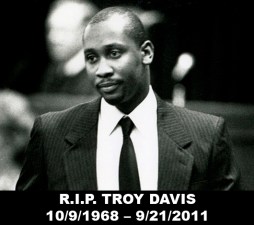
Again- regardless of feelings about either MLK or Obama, you can’t deny that the two of them were/are integral figures in American history, but it’s there that the similarities need to stop. Guantanamo Bay was not King’s dream for the country. Same goes for drone strikes, indefinite detention, record deportation rates, and the White House’s inaction on the wrongful execution of Troy Davis.

I’m just speculating, but I imagine King’s reaction would look a bit more like this.

And not so much like this:

It’s just something to think about…

Apocalypse Wow

There is, if sources are to be believed, going to be a rebooted Left Behind movie coming out sometime next year.

Your reaction should be as follows:

If it isn’t, then you probably aren’t familiar with the series (and should count yourself truly fortunate), so for you blissfully innocent, here’s the basic run-down.

The Left Behind series is based on the book of Revelation in the Bible, as well as certain (delectably) apocalyptic verses in Old Testament books. I say “based on”, but that’s more to demonstrate the authors’ intentions. Left Behind is “based on” the book of Revelation in the same way that Teenage Mutant Ninja Turtles is based on Vasari’s biographies of Italian Renaissance artists.

In the sixteen-novel series, all true (cough, Protestant, cough) Christians have been “raptured” (removed from the world and taken directly to the after life), leaving behind the unsaved protagonists of the story who find themselves contending with the oncoming “tribulations” (the host of hardships and catastrophes marking the end times) and the rise of the antichrist, who walks the earth in the form of a Romanian politician who takes control of the UN (because, you know, there’s no one more powerful than the UN).

Things more powerful than the UN:
The Student Government of MLK Jr. Middle School,
A Junior Sales Rep from Prescott Pharmaceuticals,
Paris Hilton’s Chihuahua

Needless to say, I don’t think very highly of the series. But hey, if we’re looking for badly written fan-fiction, why not haul Twilight to the guillotine?

It’s because of the fan part. That’s what really gets me. We’re not talking about someone fawning over the idea of stalker-veggie-sparkle-vampires, we’re talking about someone fawning over the idea of millions- billions– of human beings undergoing agonizing deaths. Think I’m reading into things? Take a look at this passage from the series:

The riders not thrown leaped from their horses and tried to control them with the reins, but even as they struggled, their own flesh dissolved, their eyes melted, and their tongues disintegrated. As Rayford watched, the soldiers stood briefly as skeletons in now-baggy uniforms, then dropped in heaps of bones as the blinded horses continued to fume and rant and rave.

Seconds later the same plague afflicted the horses, their flesh and eyes and tongues melting away, leaving grotesque skeletons standing, before they too rattled to the pavement.

You might say “Sure, that’s violent, but that isn’t exactly glorifying it, is it?”. Let me continue on.

…Jesus nudged His magnificent white charger and descended to the top of the Mount of Olives.

As He dismounted, Carpathia shrieked out his final command, “Attack!” The hundred thousand troops followed orders, horsemen at full gallop firing, foot soldiers running and firing, rolling stock rolling and firing.

And Jesus said, in that voice like a trumpet and the sound of rushing waters, “I AM WHO I AM.”

At that instant the Mount of Olives split in two from east to west, the place Jesus stood moving to the north and the place where the Unity Army stood moving to the south, leaving a large valley.

All the firing and the running and the galloping and the rolling stopped. The soldiers screamed and fell, their bodies bursting open from head to toe…

So much for turning the other cheek, eh?

And here’s what gets me about the series. It’s not the generally bad writing or the twisted theology- it’s just how freakishly popular the series is. Popular enough not to spawn just one movie attempt, but two. It’s hard enough for good stories to get a second chance at something like that, let alone this junk. And it’s the implication of that popularity which gnaws at me. There are people out there- a lot of people- who genuinely look forward to this supposed apocalyptic scenario, or an apocalyptic scenario, anyhow. People who fully expect the end of the world to be a plague and hellfire ridden Armageddon, complete with WWIII and genocide of unheard of proportions. People who look forward to this- and not in a “in the sweet by and by” way, I’m talking about a “I love the smell of napalm in the morning” kind of way.

You can’t deny that this blood-thirsty anticipation does exist. If you’re even only vaguely familiar with the Christian (American-Christian, more on that in a second) subculture, you’ll almost have certainly run into this. There’s plenty of other lousy Armageddon fantasies out there.

And what makes it all the worse is just how utterly undeserved all this hidden vitriol is. This vengeful glee isn’t coming from people who have been mercilessly persecuted for their faith. This isn’t coming from the families of martyrs or the congregations of assassinated priests and pastors in the third world. The churches of Africa, Asia, and South America have enough problems combating war, poverty, and disease to be drooling over prophesied war, poverty, and disease. No, this is the bitter vindictiveness that only comfort and safety can breed. All this body-bursting leering isn’t a result of imprisonment (not that it would be justified there either), it’s a result of being snubbed by Bill Maher or portrayed as yokels on some sitcom.

That’s just messed up.

Now this isn’t Shame Day, but that doesn’t mean we can’t all gather ’round and ruthlessly mock something that so richly deserves it, and if this drivel doesn’t deserve it, I don’t know what does.

Evan and Gordon Talk: Django Unchained

GORDON: You know what they call a quarter pounder with cheese in France?

EVAN: What?

GORDON: A poor attempt at distracting our readers from the fact that we ain’t gonna be talking about drugs like we said we would.

EVAN: I have seen very few Tarantino films, and only barely recognize the references.

GORDON: You make me sad.

EVAN: I know.

That aside, what we’re going to be talking about today is Django Unchained, a movie I finished watching less than an hour ago and the subject of this Monday’s post [written by Gordon].

GORDON: So what did you think?

EVAN: Initial thoughts are: Very long. Not what I expected. Apparently in Django’s world everyone is a skinbag filled to bursting with blood.

GORDON: Speaking as someone who’s fired black-powder guns, I can actually kinda see something like that happening.

EVAN: That is ridiculous, but interesting to know.

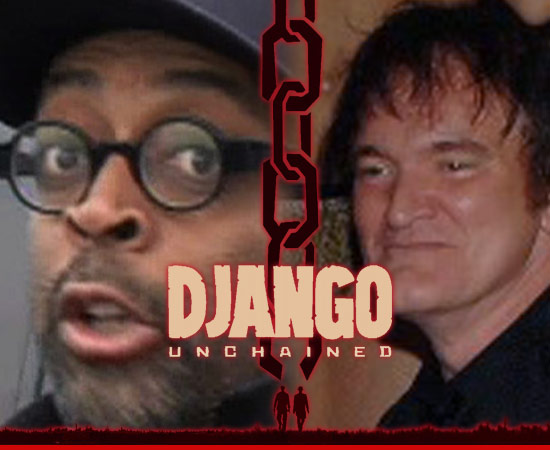
Now if you don’t have anything in particular you wanted to talk about, did you want to maybe address Spike Lee’s reaction to this film really quick?

GORDON: The Lee-Tarantino feud has been going on for a long time now, so I really wasn’t surprised that Lee reacted the way he did. I naturally wish he had at least seen the movie, but I don’t think it would’ve made a difference in his mind.

EVAN: To give readers a little context, director Spike Lee tweeted:

American Slavery Was Not A Sergio Leone Spaghetti Western. It Was A Holocaust. My Ancestors Are Slaves. Stolen From Africa. I Will Honor Them.

He also straight-up said “I cant speak on it ’cause I’m not gonna see it. All I’m going to say is that it’s disrespectful to my ancestors. That’s just me…I’m not speaking on behalf of anybody else.”

GORDON: I get where he’s coming from, but (1) I don’t think the movie dishonors the slaves and (2) I don’t think that there should be any time period off-limits for telling stories.

EVAN: I definitely agree with both points. Tarantino does not disrespect the plight of slaves during the time period, and there are really no eras of history that we shouldn’t be allowed to explore through various media. How it’s done is what matters.

GORDON: It’s Tarantino; you either love him or you hate him. He does a spastic, scatterbrained style of movie which is two parts tense dialogue and three parts references to obscure exploitation flicks. It is what it is.

EVAN: So did you like it?

GORDON: I did, but not as much as his other movies. And not for the subject matter, simply for the storytelling. I felt it was anticlimatic. Especially compared to his second latest, Inglourious Basterds.

EVAN: Very much agreed. You expect [SPOILER ALERT YOU’VE BEEN WARNED] Monsieur Candy to be killed by Django, or at least in a big way, but instead he’s just shot by Dr. Schultz with his sleeve-Deringer.

GORDON: And there’s still plenty left in the film, we just kinda trudge through it. I simply wasn’t impressed. I mean- I ain’t asking for a John Wu fightscene, but something more than [SERIOUSLY YOU GUYS, SPOILERS] Django shooting unarmed people from the top of the plantation stairs.

But as far as the whole thing goes, relatively amusing and a major stepping stone in addressing the subject of slavery.

EVAN: I mean, sort of going back to where Lee was coming from, it’s not a very realistic depiction by any means, a revenge story of this fashion can’t be. That being said, isn’t it the same sort of concept as Inglourious Basterds? Revenge enacted by the persecuted?

GORDON: That’s exactly what it is. A revenge fantasy. Bad guys being killed by the people who they oppressed. It gives us a feeling of divine judgment upon the wicked. Which is a theme a lot of westerns have.

REVENGE.

EVAN: I have seen at least one, and you are not wrong.

GORDON: I think what Lee needs to get is this:

This was not a movie about slavery, this was a movie about revenge set in the world of slavery. This wasn’t- and shouldn’t be- taken as a commentary of any kind about African-Americans anymore than Kill Bill should be taken as a commentary on women.

You wanna pick a fight with Tarantino, do it over something that’s actually there. (And just so everyone knows, I really like Spike Lee’s work and admire the guy as an individual)

EVAN: So you’re saying that slavery must be viewed as a backdrop, and not the subject matter? I know that you wrote your Monday post on this, but we can go over it just a little.

GORDON: That’s exactly it. It’s not a history film, it’s a Tarantino film. Don’t look for realism there, and don’t look for buoyancy in a nightstand; it’s not what either of them are for.

EVAN: I agree with you to a point, in that the exploration of slavery was in no means Tarantino’s intent. It’s just difficult to look past that as subject matter when it permeates the film [what with it opening up on a slave’s scarred back, etc].

GORDON: That is true, and you can question whether or not it’s right for Tarantino to use the subject matter to shock and horrify people and draw in crowds, but from what I saw and understood of the film the scenes of horror inflicted upon the slaves were, what’s the word for this, “respectful?” enough to indicate that even blood-and-guts Quentin wasn’t unaware of what he was dealing with.

EVAN: I can accept that. Two more thoughts as we wrap up this talk: the soundtrack and Samuel L. Jackson as a real life Uncle Ruckus.

GORDON: The soundtrack sucked. We can all agree on this. Usually he can make it work- this time he didn’t.

EVAN: My cousin and I actually really liked it.

GORDON: Really? I couldn’t disagree more. I felt it lacked cohesion, which the soundtracks in his other works normally have. Heck, more often than not it’s the commonalities in the soundtracks trying the whole thing together.

EVAN: I felt like the more contemporary hip-hop rap tracks were a little bit jarring, but thought the other songs overall were good picks.

GORDON: We’ll have to agree to disagree on that one. Let’s move on.

EVAN: Samuel L. Jackson’s character.

If you don’t know who that is on the right you need to start watching The Boondocks right now. Finish this post first, then immediately go find an episode online or something.

GORDON: I thought he knocked it out of the park. Didn’t have any problem with him whatsoever.

EVAN: 1) Did not know Samuel L. Jackson could play such a convincing old man. 2) Sycophants in films are normally played up for comedic value, and that is no less the case here.

GORDON: Let’s not forget that Jackson was not only an active member of the civil rights movement, but even associated with some of its more radical leaders.

EVAN: That is something that I, and presumably our readers, did not know.

To end this off, did you have a favourite moment in the film? [I SHOULDN’T HAVE TO WARN ABOUT SPOILERS, BUT I AM ANYWAY]

GORDON: For me, it would have to be the scene where Christoph Waltz (who really stole the show) was explaining bounty-hunting the Django in the bar. The dude is awesome to watch.

EVAN: Christoph Waltz’s accent was amazing. I could listen to him talk all day.

My personal favourite was the posse getting ready to go kill Django and Schultz and arguing about the masks. The dialogue was hilarious, and Jonah Hill was a nice surprise, too.

GORDON: That was awesome. And speaking of awesome stuff, our discussion topic for next week:

EVAN: Ah man, I kind of just want to talk about movies. Could we somehow generally address the trend towards big budget sci-fi flicks that’s coming about in Hollywood?

GORDON: No. No more movies. We do ’em too much already.

EVAN: Fine, fine. Suggestions?

GORDON: College: what should its purpose be? Careers or Well-Rounded Individuals?

EVAN: Or just in general, I’m not sure it has to go one of two ways. But that’s a good one. I’m on board.

Thanks everyone for reading, and for continuing to unwittingly stumble upon our blog in 2013! Evan and Gordon out.

Django and the N-Word

Let me begin by explaining that this is not a review of the simultaneously acclaimed and decried 2012 Tarantino blood-fest. You want to hear one of those, I’d recommend clicking over to Spill or The Escapist’s “Escape to the Movies.” No, what I want to talk about are some specific elements and segments of the film which have become points of contention, controversy, and debate in the past weeks.

Let’s start with the most obvious:

I. Saying “Nigger” Every Other Word

I won’t claim to know your stance on the word “Nigger”- heck, I’m not even sure of my own stance. Perhaps you view the term as so degrading and reprehensible as to merit burning it from spoken language. Perhaps you believe that appropriating and using the word strips it of its power to even be used as an insult. Maybe you see it as being purely contextual- a term of address with audience and a terrible insult with another.

It’s all Elmo ever thinks about

There are probably strong points to be made on all sides, but perhaps the stance you cannot take is that the use of the word “nigger” was inappropriate for the movie.

Now before you take up the battle-cry of “Tarantino is just trying to shock us!” or “Tarantino uses the word excessively in his other movies!” I have to say this.

You’re right.

It’s Tarantino; that’s not an excuse, that’s a fact. You wanna take up his use of the word in other films, then that’s part of the whole debate mentioned above. Simple truth of the matter is that this use of the word “nigger” would still be controversial if the film had been made by anyone else. So let’s talk about it.

Let’s assume that this movie, with selfish or noble intent, is trying to demonstrate a glimpse of the world in question; the use of that word is almost bound to come up. I might throw out the example of Mark Twain’s classic novel Huckleberry Finn, and while by sheer volume Django probably has Huck beat for use of the word, by percentage I’d posit the two are pretty evenly matched. The escaped slave Jim is repeatedly and almost exclusively referred to as “Nigger Jim,” as are the other black characters in the book. Now Twain was anti-slavery and used that word to demonstrate the dehumanization of African Americans (which is why taking the word out of versions of the book is so dumb), as well as reflect the general use of the word. Now I’m admittedly no historian, but if the writings of Twain and other authors are any indication of the times, I wouldn’t say the film is quite so far off as some critics might suggest.

And speaking of historical accuracy…

II. The KKK, or Lack Thereof

There is a scene in the film during which a group of men wearing white sacks over their heads attempt to stage an attack on Django and Schultz. New Yorker contributor Jelani Cobb writes “Tarantino depicts the K.K.K. a decade prior to its actual formation in order to thoroughly ridicule its members’ (literally) veiled racism.” While that scene was (in my own opinion) side-splittingly hilarious, Jelani, and many others, are dead wrong in assuming that this scene depicted historical inaccuracy.

Take this section from Huckleberry Finn:

Why don’t your juries hang murderers? Because they’re afraid the man’s friends will shoot them in the back, in the dark — and it’s just what they WOULD do.

“So they always acquit; and then a MAN goes in the night, with a hundred masked cowards at his back and lynches the rascal. Your mistake is, that you didn’t bring a man with you; that’s one mistake, and the other is that you didn’t come in the dark and fetch your masks.

Again, this is a Tarantino movie set in a Tarantino universe. That’s not a defense, simply, as I’ve already stated, a fact. If you’re looking for a historical account of the pre-war South, a spaghetti-western revenge flick probably ain’t the best place to look for it. There are going to be certain inaccuracies, and there are going to be things the filmmaker has to get right- but all of that is beside the point (which we’ll get to in a minute). All of that’s to say if you’re gonna try to criticize (or praise) the movie’s deviation from historical truth, make sure you’re (1) doing it for the right reason and (2) that you’re critique is actually right.

III. Samuel L. Jackson as Uncle Tom

In Django, Samuel L. Jackson plays the role of the villain’s head-slave Stephen, who isn’t so much a character as a caricature of the most groveling, snivelling Uncle Tom you will ever see or even imagine. This guy makes Uncle Ruckus look like Eldridge Cleaver.

You are guaranteed one genuine Gordon hug if you know who Eldridge Cleaver is.

I’ve heard people call this portrayal offensive, bordering on “black-face” in its depiction of stereotypical “black” mannerisms. It’s exactly for that reason that I didn’t have a problem with the character.

I really have no reason for putting this gif in here…

See, the entire point is to make fun of the guy- and not just him, but the quisling slaves that did indeed exist. I don’t think that this portrayal robbed the film of the gravity of slavery anymore than Bugs Bunny foiling a cartoonized Hitler robbed WWII of it’s gravity.

Now let’s get right to it-

IV. The Horror, The Horror

LA Times journalist Erin Aubry Kaplan said this of Django’s depiction of slavery: “It is an institution whose horrors need no exaggerating, yet Django does exactly that…”

This is a flat-out falsehood.

If Django Unchained exaggerated the horrors of the slavery, if the film depicted one one-hundredth of the horrors of slavery, I will never write again. Despite the allegations of this critic, the truth of the matter is that we could depict the institution of slavery for a century and be no closer to depicting an ounce the inhumanity of it all than when we first started. Does the film exaggerate slavery? Absolutely not. Does it make light of it? Certainly this was a concern of mine going into the movie, but having seen it, I really don’t think it can be faulted there either. The film does, I believe, make a distinct effort to show slavery as brutish and ugly as possible. Or, at the very least, the slavery scenes; this is, after all, a revenge movie first and foremost.

V. The Point

That’s the thing I feel most people are missing here. This ins’t a movie about slavery, this is a movie with slavery in it. It’s a revenge film in which one sorely persecuted character dispenses well-deserved justice upon his persecutors and we all nod our heads in approval and feel a sense of pride and joy well up as we look into this fantasy where the bad guy does get what’s coming to him. Slavery is the backdrop, not the subject, of the movie, but it’s just such a major issue that most of us are getting hung up on it. The equivalent might be bashing a western on the basis that the actual “wild west” was pretty peaceful- factually true, but still missing the goal of the story.

No, this is not a historically accurate film. No, it doesn’t capture the horror of slavery. No, it doesn’t even try to wrestle with it. No, it’s not a discussion of our checkered heritage. No, it’s not the film to drag that dark, bloody history out into the light of day.

But damn it, it’s a start.

British Television VS American Television

Despite our focus on American issues, we here at Culture War Reportersrecognize that in our world of ever-shrinking borders, there’s plenty more out there than just the cloudless skies of Nevada or the homeless-packed streets of Toronto (Evan, seriously- if the healthcare system’s so good, why does Canada have so many crazy people?).

Today we turn our attention to our pasty cousins across the pond, more specifically, their TV,  excuse me, “Telly” (this is why you lost your empire- well, this and genocide), and how it stacks up next to ours.

CGI and Production Values

Now I have to admit- I haven’t extensively researched British and American television financing, nor have I had a chance to compare the two, taking into consideration differences in the economy and advertising fees over the past couple decades.

What I’m saying is- I’m not an expert.

That said, I don’t need to be an architect to tell you that chances are pretty good that a lot less money was put into making a tent than a condo. British TV shows, put bluntly, just seems to be vastly less funded than their American counterparts. Just take a look at this scene from America’s Battlestar Galactica.

Pretty intense, right? If there’s any poor-quality, it’s probably from the YouTube video, rather than the actual series.

Now look at this clip from Britain’s Doctor Who.

Way worse. And oddly enough, Doctor Who has a bigger fanbase than Galactica, and despite it’s ever-increasing popularity, still has to deal with props dug out of someone’s kitchen drawers. I’m not saying Doctor Who is bad- it’s not. It’s really good- only it’s tough to really feel the full effects of a horrific reveal when the monstrous alien that’s been lurking the shadows until now makes your sock-puppets look scary by comparison. I can’t claim to know the reason for it, and I’m not putting the Brits down for it- I’m simply saying that funding- especially in CGI- appears to be a significant difference between the worlds of British and American TV.

Pretty Faces

You’ve probably heard jokes cracked about this. Not the “British are ugly” or the “British have bad teeth” jokes- the fact that the people on British television have the audacity to look like the people you’d see on the street.

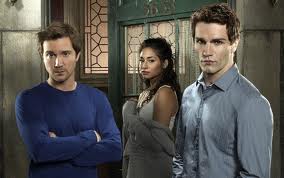
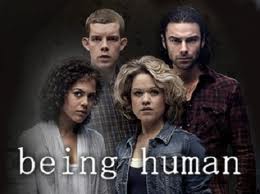
That’s not to say the Brits don’t share the American weakness for fantasizing and glamorizing each and every facet of life, but it’s pretty clear that it’s nowhere near on the scale we have here in the US. Here- take a look at the leading characters of the American version of Being Human.

The guy on the left is decently attractive, as is the girl, and the guy on the right looks more or less like a life-sized Ken doll. Idealized people- no question about it. Now look at the same characters in the British original:

There’s not a huge difference between the girl (the blonde girl is another character- ignore her), and the dark haired guy certainly isn’t his American counterpart and stop looking at that guy’s ears! Yes, they’re huge- they’re gargantuan– and no, this isn’t just an unflattering photo- they actually are trying to escape his head in the first three seasons.

The point is, when it comes to their actors, the British are- well, appear to be- considerably less shallow. They don’t need a couple of supermodels to tell a compelling story of murder, secrecy, and perversion- and speaking of which…

Raunch Codes

Watch this clip- but before you do, get all children and Weslyans out of the room.

Pretty nasty stuff, right? Don’t say we didn’t warn you!

People complain that American media is nothing but sex and violence, but believe me- those Axe commercials are prudish compared to the Brits (and indeed- most of Europe). We may give the Brits a run for their money when it comes to blood and gore but never will we compete with them when it comes to explicitness of this degree. It’s almost to the point where it’s not even repulsive- you’re just impressed at how logic-deafeningly far they take it.

But only almost.

The Dying and the Dead

It’s been said that the difference between British comedies and American comedies is that American comedies begin with everything going wrong and end with everything being fixed, while British comedies begin with everything going right and end with everything falling apart. I wouldn’t call a story where everyone dies of scurvy at the end a comedy, but then again, I don’t whittle my life away on a miserable island full of alcoholics and skinheads.

I can say that because the only people who hate the British more than the Irish, the Kenyans, the Indians, the Chinese, the Australians, the New Zealanders, Iranians, and the Egyptians are the British themselves.

The simple fact of the matter is that there is this viciously self-deprecating mentality that pervades every element of British culture (barring fox hunts, which are just weird) that couldn’t be further removed from the general sense of optimism that you tend to find in America. Just take a look at British crime series.

Now I’ve seen quite a few, and while this certainly isn’t universally true, what I’ve typically found is that British murder mysteries focus on the whole “Whodunnit?” element, whereas American murder mysteries either have a “How’d he do it?” or a drive to keep the murderer from murdering again. Gross over-generalizations, I know, but it does seem to be true that American crime series episodes end with the detectives patting each other on the back for having done justice, while British crime series episodes end with the detective giving some despairing monologue about the tragic depravity of all mankind.

Because that’s a very depressing (and therefore, British) way to end the post- allow me offer this:

To say I’ve been ragging a bit on the British would be an understatement, and no- despite our attempts to be unbiased, we here at Culture War Reporters don’t care much for contemporary English culture. That established, there may very well be something to be said for the Brit’s here. Is it pretty? Not remotely, but for all the weirdness (from our perspective) that British TV has to offer, it can’t be denied that it’s simply more “real” than American TV. The sets aren’t shiny, the people aren’t (exclusively) gorgeous, and a stories of sin and murder actually recognize human suffering. There’s certainly a lot from British TV that merits imitation here in America.

Except for sexually explicit sausage commercials. **** that.