Category Archives: art

Is Stormgate Postapocalyptic or Post-Postapocalyptic?

Stormgate is, to use the developers’ own words, a “next-generation” RTS game that is currently in the Early Access stage of its release. For those who aren’t in the know, real-time strategy emphasizes building bases and commanding an army of various units, and Frost Giant Studios counts among its number some of those responsible for such hallmarks of the genre as StarCraft II and Warcraft III. While the “sci-fi and fantasy” setting clearly cribs ample inspiration from its predecessors, recent developments beg the question of when the Human Vanguard faction is supposed to exist in relation to the initial invasion by the demonic Infernal Host. To ask it plainly, is Stormgate set in a postapocalyptic world?

The most obvious place to find our answer would be the official site’s homepage, which I’ve already cited above (all following emphasis has been added): 

These resilient soldiers have harnessed futuristic technology to rebuild their civilization after surviving an Infernal Host invasion – a devastating near-extinction event.

The Vanguard’s own faction page:

The Vanguard was formed to serve as humanity’s last bastion of defense with Earth on the brink of extinction. Representing the greatest scientific minds, toughest soldiers, and most brilliant strategists from around the world, the Vanguard stands resolute against the invading Infernal Host.

And, finally, the Media Kit page, which explicitly presents the setting:

The story takes place hundreds of years in Earth’s future, in an all-new post-apocalyptic game setting where science fiction and fantasy collide.

So why the confusion? While much hay has been made about the game’s art style, many detractors have pointed specifically toward the Vanguard’s general aesthetic as being too shiny and polished in light of their position as “humanity’s last bastion of defense” after a “near-extinction event.” It would seem that the present visuals don’t actually match up with this postapocalyptic setting, but digging further into Frost Giant’s other posts it appears that fans are being told two distinct things.
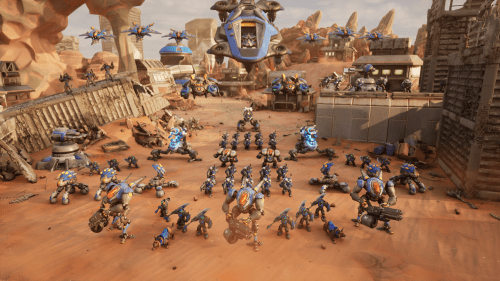
A Vanguard army readies themselves for battle.

Continue reading

A Look Back at CWR 2019 (And a Look Ahead to 2022)

When last I updated this blog Donald Trump was still the President of the United States, and it would still be a little over half a year before COVID-19 significantly made its presence known in North America. Since then life has undergone drastic, almost unimaginable changes, and as I make my entirely unexpected return to Culture War Reporters I thought it would be fitting to provide updates on the half dozen posts I wrote back in 2019 to underscore the ways in which time has moved inexorably onwards.

Who Did It Better? Coming Out with J.K. Rowling and Overwatch Lead Writer Michael Chu – January 11, 2019

It’s laughable to look back on a post that explores J. K. Rowling’s take on representing the LGBTQ+ community given that the author has positioned herself as a bastion against what she views as the dangers of transgender men. How could I have known that at the tail end of the year she would tweet support for Maya Forstater, a British woman who was fired for her comments about that particular group of people? Since then Rowling has doubled, tripled, quadrupled, and so on, down on her stance, in many ways becoming a figurehead for the TERF (trans-exclusionary radical feminist) movement. This has caused a rift in the Harry Potter fandom between those who would demonize the author and paint her entire body of work as being “bad” or “problematic” and others who would defend her writing to the point of adopting beliefs and stances that they might not otherwise.

Michael Chu, on the other hand, is no longer the head writer on Overwatch, and in fact no longer works for Blizzard Entertainment at all. He now acts as Narrative Director at 31st Union, a “San Fransisco Bay Area studio formed with a common purpose of crafting highly engaging entertainment and a commitment to putting fans first.” As far as his former employer, we’ll be digging into that oversized can of worms a little further down.

Continue reading

The 2017 Evan Yeong Literary Awards

As laid out in the first-ever Evan Yeong Literary Awards, the purpose of these blog posts has been to provide a retrospective of the books read in the past year. Typically these have been written and published in January, but here we are. Better late than never, as I always say.

2017

This is the first of these awards to be written during my relatively new career in publishing. While I wouldn’t say I have a strong understanding of the ins and outs of what’s hot in the industry, I certainly have a healthier grasp of things, especially compared to past years when I had none whatsoever.

The other notable difference is that the list of books read has been censored in part, due to a number of the books having been unsolicited manuscripts that I was asked to read during my time as an Editorial Intern at Penguin Random House Canada. A handful were also unpublished manuscripts or ARCs (Advanced Reader Copies) and have been marked as such. You can check out a full list [with the exact dates of when I read each one] at this link.


zealot

ALMOST AS COMPLEX AS THEIR NAMESAKE

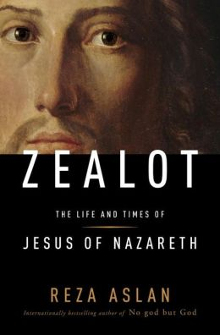
Zealot: The Life and Times of Jesus of Nazareth by Reza Aslan
Published 2013

Those who aren’t as familiar with the works of C.S. Lewis should know that “Aslan” is the name of the Judeo-Christian-God-stand-in of that author’s Narnia series. The lion is a complex figure, embodying a dichotomy of a being that is “isn’t safe” while also “good”. Aslan himself is a likewise complicated man, having been raised Muslim, converted to Christianity in his teens, then back to Islam, a faith he continues to practice, and did during the writing of this book. A fascinating fact for both believers and nonbelievers alike is his statement that whether or not he was the son of God, the Nazarene definitively performed miracles.

brother

SHOULD HAVE WON THE 2017 GILLER PRIZE

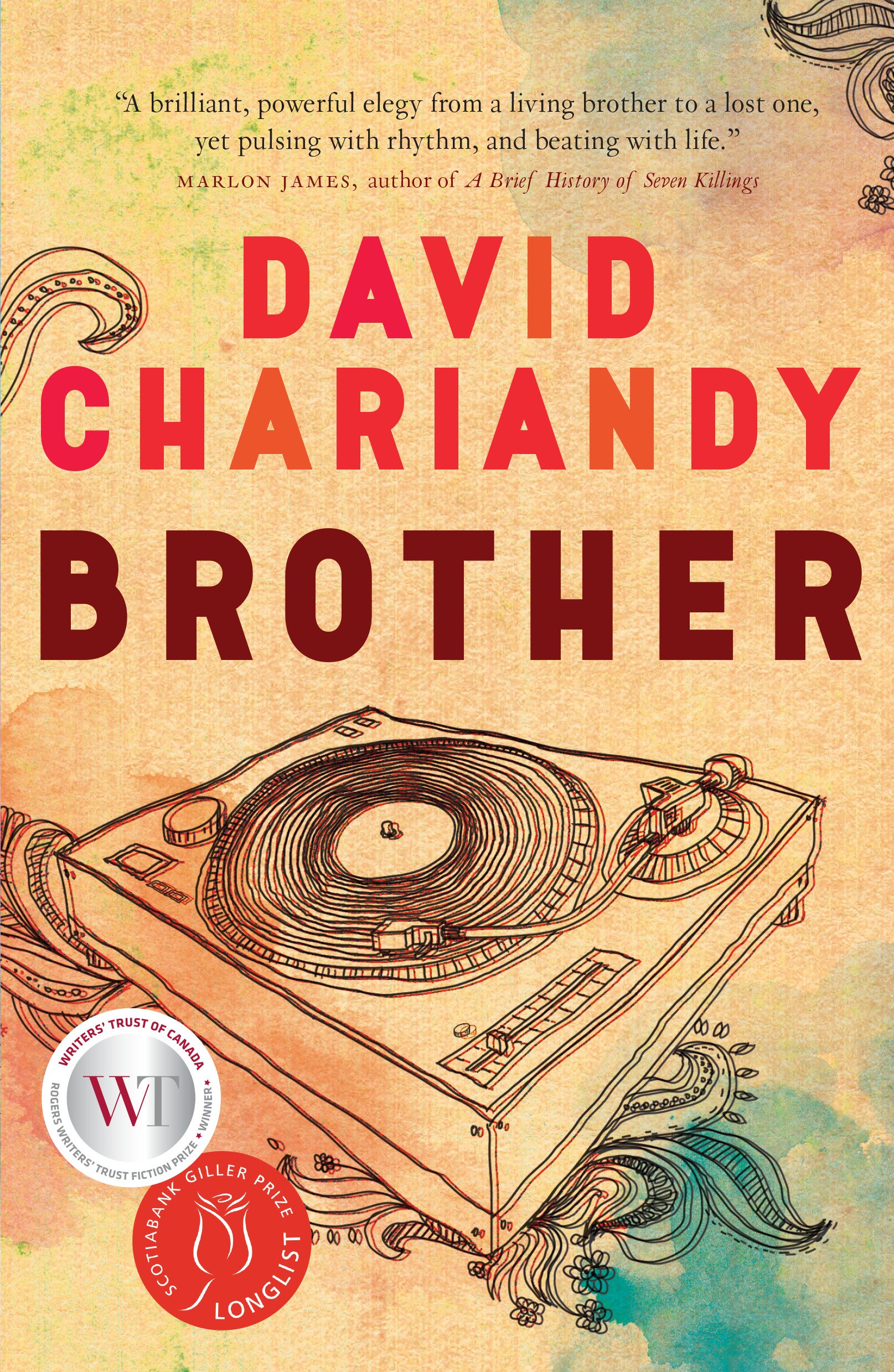
Brother by David Chariandy
Published 2017

One of many short, powerful works of fiction that I read this year, Brother is as unpretentious and beautiful a novel as you’re likely to find, and a worthy contender for Canada’s loftiest and most coveted literary prize. Shining a spotlight on Scarborough in the 90s, an area that I have (recently) shamefully joked about only “technically being Toronto”, this book would have served as a reminder of the real life stories that are overlooked and underheard.

The actual winner of the 2017 Scotiabank Giller Prize was Michael Redhill’s Bellevue Square, which I read the ARC of. Brother was longlisted. Continue reading

Dance Like Somebody’s Watching: Director Juanjo Giménez on His Short Film Timecode

mv5bodvkymrjm2qtnmy1os00zda1lthmzgety2u1mti0n2vhzde3xkeyxkfqcgdeqxvynti5njiymw-_v1_sy1000_cr007031000_al_With the 89th Academy Awards coming in just a few short days I’m grateful for the opportunity to interview director Juanjo Giménez and pick his brain about Timecode, which has been nominated for Best Short Film.

This comes roughly two weeks after my review, and I made the most of the occasion by trying to unpack so much of what I enjoyed about this particular piece of work. While I was only able to ask so many questions, I hope that Giménez’s answers help shine a little light on why Timecode was considered for this great honour, as well as why it might deserve it.


To start with, it’s almost no surprise that Timecode was nominated for both an Academy Award and a Goya Award given your impressive filmography. Has having written, directed, and produced so much award-winning work changed your approach with each new project?

I don’t think so. I think that no filmmaker thinks about awards or recognition when making a new film. In our case, financing every new project has always been difficult, even if the previous film has been a successful one. The only thing that is essential for approaching a new project is the need to make it.

 It’s notable that much of the work you’ve received the most attention for are your short films. What is it that appeals to you about that particular format?

Timecode is my ninth short film as director. I learned that short films usually fit the way I approach filmmaking better. And what’s more important, there’s nothing wrong with that! That doesn’t mean I won’t make a feature film again, but shorts provide a great platform for experimenting without the financial struggles that usually constrain a fiction feature. Even if I speak as a producer, in terms of financial results, my shorts have always been more profitable than my features.  Continue reading

Timecode: A Short Film Review

mv5bodvkymrjm2qtnmy1os00zda1lthmzgety2u1mti0n2vhzde3xkeyxkfqcgdeqxvynti5njiymw-_v1_sy1000_cr007031000_al_

“Actions speak louder than words.”

That’s a difficult motto to live by on a blog, but a crucial one in regards to short films given their limited run time. Considering the fact that you could fit the dialogue in Juanjo Giménez’s Timecode on a single sheet of paper only elevates its importance.

With a handful of award-winning short films [including Rodilla and Maximum Penalty]
already to his name the Spanish director’s latest features two security guards who work in an underground parking garage, one taking the day shift and the other the night. Playing Luna and Diego are Lali Ayguadé and Nicolas Ricchini, respectively, and although their shared acting experience is limited there’s no question of their being talented performers.

Both Ayguadé and Ricchini have impressive careers as dancers and choreographers, and their remarkable control over their bodies causes them to imbue every movement with purpose, whether it’s stiffly brushing past each other or jogging back up a hallway to clock-in to work. This even extends to the corner of a mouth being raised ever so slightly. This largely wordless short film might collapse in on itself with different talent, but the duo make it look effortless. Continue reading

Animus: A Short Film Review

mv5bowrioda2ngmtntvjns00nzizlwjkzgqtmwe1yjhmmdlly2qzxkeyxkfqcgdeqxvymju5otazmzi-_v1_sy1000_cr006581000_al_An earnest, plaintive piano melody opens as desperate figures stare out into the middle distance. A woman drops in on an old flame, using some flimsy pretext neither of them believe for a moment. What follows is a terse, tense, and incredibly human exchange as our two protagonists verbally fence over decaf and destiny.

And it’s good.

It’s really, really good.

Two individuals of differing (but equally compelling) perspectives clash over tea. It’s as simple a set-up as you can imagine, but director Mark J. Blackman manages to wring both depth and emotion from it. Sienna (Katie Goldfinch of Crucible of the Vampire, Genie in the House) and Elliot (Johnny Sachon of Cloud 9, Late Shift) examine each others’ lives, what they themselves have become in their time apart, and what they could have become. It’s a beautifully ****ed-up My Dinner With Andre, keeping in mind that I’ve never seen My Dinner With Andre and all I have to go on is Wallace Shawn’s showdown in The Princess Bride. Continue reading