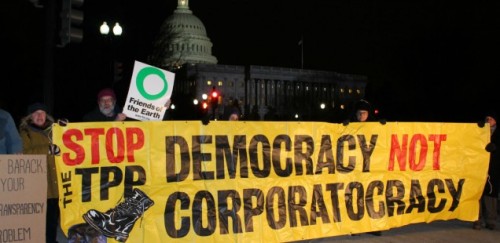
The Trans Pacific Partnership: A Threat to Canadian Taxes, Food Security, Democracy, and More

My name is Jonathan. I am 26 years old and living a typical Canadian life. I can honestly say that I spent the majority of my life wanting “the dream”: money, fame, and fortune. I believed that everyone had a chance to get that dream, especially living in a Country like Canada.

After I graduated from high school, I moved to the city. I learned about myself and experienced new people and cultures. I partied, shopped, and socialized, then went to work so that I could go out and spend more money and time with people. I was living the life but something seemed empty about it all. Everything in my life felt like it revolved around spending money.

We may talk about things like homelessness, world hunger, climate change, environmental pollution, wars, and diseases, but as a whole, my society isn’t worried about this. We are concerned about making and spending money, we feel obligated to go out and work those 40 hours every week so that we could have the means to pay for our consumer lifestyles.

What many people don’t realize is that the North American lifestyle wasn’t always this kind of rat race. In many cases, it used to be possible for a middle class family to support themselves on only one income. However, after the introduction of the NAFTA agreement many of those dependable unionized jobs moved to Mexico, where businesses could exploit workers without unions getting in the way. Since then, our economy has become much more dependent on debt. Not to mention that since the 2008 housing crisis in 2008 purchasing a home in many cities is now nearly impossible.

Currently, Canada is looking to introduce a bill that could have just as wide flung effects as the NAFTA agreement: The Trans Pacific Partnership (TPP).

What is the TPP?

Right now our nation is at a crossroads. Recently, our government signed onto the The Trans Pacific Partnership. This agreement threatens many of our rights and freedoms. If it is ratified, we will be allowing corporations to make decisions for us, but with the priority of profit over the welfare of people.

This agreement is quite a bit like the North American Free Trade Agreement that Canada signed in 1994. NAFTA allowed a lot of wealth to be made, but by corporations, and not the people of the countries involved. The new Trans Pacific Partnership may have even worse consequences than NAFTA, as the video below highlights.

While the video explains the general problematic aspects of the TPP, I’ve addressed several aspects below that will directly affect us in Canada.

1. Canadian tax dollars are being spent paying lawsuits to Corporations

Screen Shot 2016-04-26 at 4.58.21 PM

Art courtesy of Jon Marks

Companies within NAFTA are allowed to sue countries whose policies affect their profits. Canada has already paid out around $160 million to companies for lost revenue. How much will Canadians have to pay in the future to satisfy the Companies suing for lost profits?

Policies that are meant to protect Canadians are being challenged just to boost profits. The health and job security of Canadians are not a corporate priority, and the TPP will only further threaten their safety. Canadian policies or decisions can be legal, fair and designed to effectively protect the environment or public health, yet they can still face corporate lawsuits demanding hundreds of millions of dollars in compensation. A powerful tool of corporate rule is already undermining our democracy. Why would Canada want to willfully sign up for more of that? 

2. It threatens Canadian Food Security and Health Security
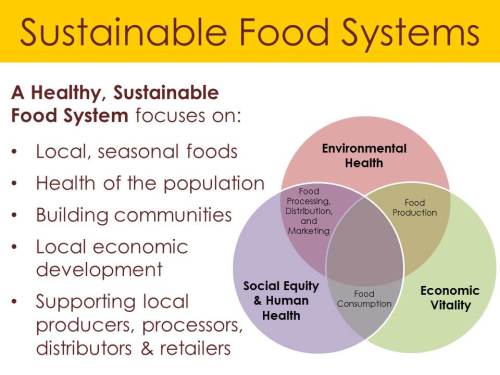
fsn_understanding_food_security

Courtesy of Food Security News

We live in a globalized world. We have a constant supply of food, a wide variety of options, and goods are cheap. The often overlooked problem with this system is that our world is not a stable one, there are wars, famines, droughts, floods. The Climate is changing dramatically and fast.

We are almost completely dependent on imports for many food and goods that could instead be grown and produced in Canada. At the same time we are exporting our natural resources. If global trade were to stop, Canadians would be ill-prepared to deal with the food and goods shortages.

The TPP opens more markets to Canadians, which pushes down the prices of everything, leaving little motivation to have more expensive Canadian-made products and food. It could even threaten the few industries that are still protected here in Canada, like dairy and poultry. And any dairy farmer could tell you that the difference between our dairy standards and those in the United States are staggering.

The TPP also opens up opportunities for companies to challenge food labeling. Since labeling where food comes from, or how the produce was grown (i.e. GMO) could affect profits, companies could sue Canada for requiring labels.

Personally, I want my food to be labeled so I can know where my garlic is grown and whether my tuna was caught without killings thousands of dolphins. Consumers should have the right to know where and how food is produced. Cost shouldn’t be the only deciding factor.

3. It Threatens Canadian Socialism

Canadians think that we live in a socialist country. We have free health care, employment insurance, and we would like to think it’s a fairly even playing field when it comes to finding a rewarding career. We are told that we have opportunities to become successful, that there’s a piece of pie for everyone. We are told that our lives are best.

Unfortunately, reports and studies continually state that the world’s wealth continues to stay with the 1% of the population and the rest of us are getting poorer.

Canadian corporations have tax havens of up to $200 Billion, which keeps money out of Canada and costs regular Canadians more taxes. Canada should make laws preventing these loopholes and recoup the ‘stolen’ money.

Canada, with countless resources, should be a country of bounty. We shouldn’t have widespread homelessness and poverty shouldn’t be such a problem. People shouldn’t have to decide between supporting themselves and receiving a post-secondary education.

Canadians pride ourselves on universal healthcare, but many medical services and products aren’t actually included under that coverage. This could get even worse if the TPP is passed, since it includes excessive patent protections and other intellectual property rights that are guaranteed to make medication much more expensive in Canada. Call me a socialist, but I believe medicine should not be a profit-focused industry. I think pharmaceuticals should be heavily regulated by the governments, with the goal of bettering mankind, not just the stockholders. The health and wellbeing of humans should not just be seen as an opportunity for profit. Unfortunately, Global News has already reported on certain Pharmaceutical companies dramatically increasing drug prices.

Canadians need to decide what we want our future to be like.

We can allow the TPP to be signed and continue the corporate and banking invasion of our country, allowing rich corporations to benefit at the expense of the rest of the population.

Or we could stand up to the corporate world and demand that our country protect our rights and freedoms. We could see our governments take down economy-destroying banking systems and regulate corporations to once again benefit humans before profits. We could work towards health and food security, only selling or sharing surpluses with other countries. With less focus on profits, we might be able to solve many of the problems plaguing our world.

It is not too late to challenge the TPP. It may have been signed, but it is not yet ratified. The recent election was a political shakeup; it could allow Canada to rewrite our embarrassing trade, environment, and social policies.

So what will you do? Say nothing, and allow the TPP to pass? Or stand up and contact your MP to let them know that you care about Canada’s future. You can tell Ottawa that Corporations have no right to rule Canadians. We are a free country, we are a democracy, and we will not go down without a fight.

The time to decide is now. You have everything to lose.

24169248014_eb975c4259_b

Courtesy of The Council of Canadians acting for Social Justice

JON Marks is a 26-years-young, flamboyant, micro-writer who works in the garden and irrigation industry. He is a hobbit at heart and loves a good cup of tea. He is often a quiet fellow, but some situations can cause him to voice his opinions. He has no problem dishing the T.

If Protecting Women Against Sexual Assault was the Point, Bathroom Preference Wouldn’t Be Our Main Focus

The bathroom use of transgender people has been a topic that’s hard to avoid, especially on social media. Here in Canada, the following video began to circulate after Alberta’s 61 school boards decided to “revise regulations and hash out new policies by March 31 to protect the rights of LGBTQ students and teachers, support gay-straight alliances and create a safe learning environment.”

And in the U.S., the American Family Association recently began a boycott of Target after the organization stated that transgender visitors should be allowed to use the bathroom they feel most comfortable in. Meanwhile, several States have attempted to pass bills that would force “transgender people to use restrooms that don’t match the gender they live every day”.

Along with the debate, a variety of memes have popped up on both sides of the conversation. While it irritates me to see the particularly popular Chuck Norris-themed meme belittle transgender experiences, I thought trans activists were easily holding their own in the meme department by reminding readers of how difficult it can be to spot a transgender person, and therefore how ridiculous it is to police who enters which bathroom.

Unfortunately, there have already been several cases of bathroom policing, where women who aren’t deemed feminine enough are challenged for entering their bathroom (as might be expected, the video below includes some strong language).

Continue reading

The State of the Revolution

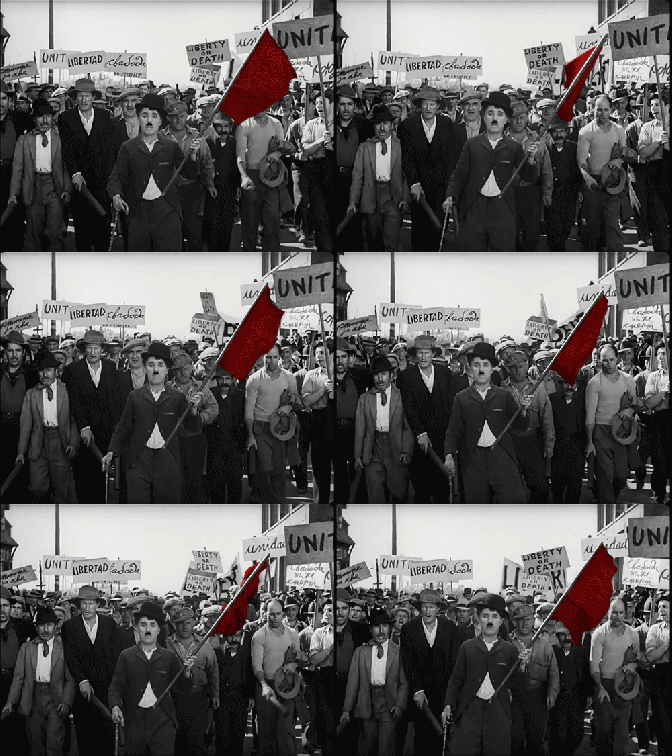
Well comrades, it’s that time of year again! Deck your union halls with black and crimson bunting and gather around the tree for the redistribution of wealth! It’s May at last, and revolution is in the air!

tumblr_n4v8f3dzfg1sq4ug3o1_500

Image retrieved via Tumblr, fair use

Or is it?

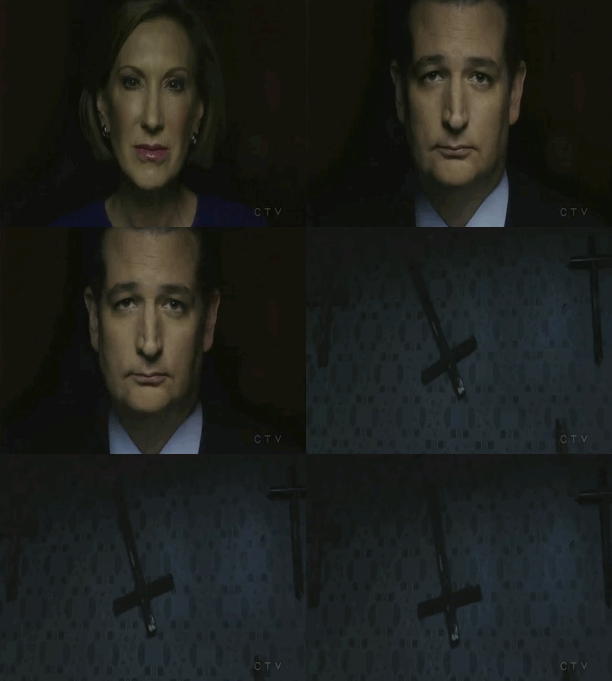
The seeds that were planted during the Arab Spring are far from dead, but no one can say that they’re flourishing. Europe has seen (as predicted by yours truly) a massive rise in openly Fascist parties, rising to power on a tide of xenophobia and racism. A similarly ugly nationalist movement has catapulted Donald Trump to the forefront of the Republican party- and lest anyone think that he’s an insane outlier, second in the race is Tea-Party darling Ted Cruz, another depraved bigot who’s even been called “Lucifer in the flesh” by high-ranking members of his own party.

tumblr_o6ex2mp3zj1sh261fo1_400

Which I will never not find funny

And that’s accompanied by a nationwide assault on the BDS Movement, with universities across the country making a concerted push to ban the organization under flimsy (and utterly false) accusations of antisemitism.

So yeah, things could be better.

tumblr_o61sq2quna1s6zpepo1_250

“But what about Sanders?”, you ask.

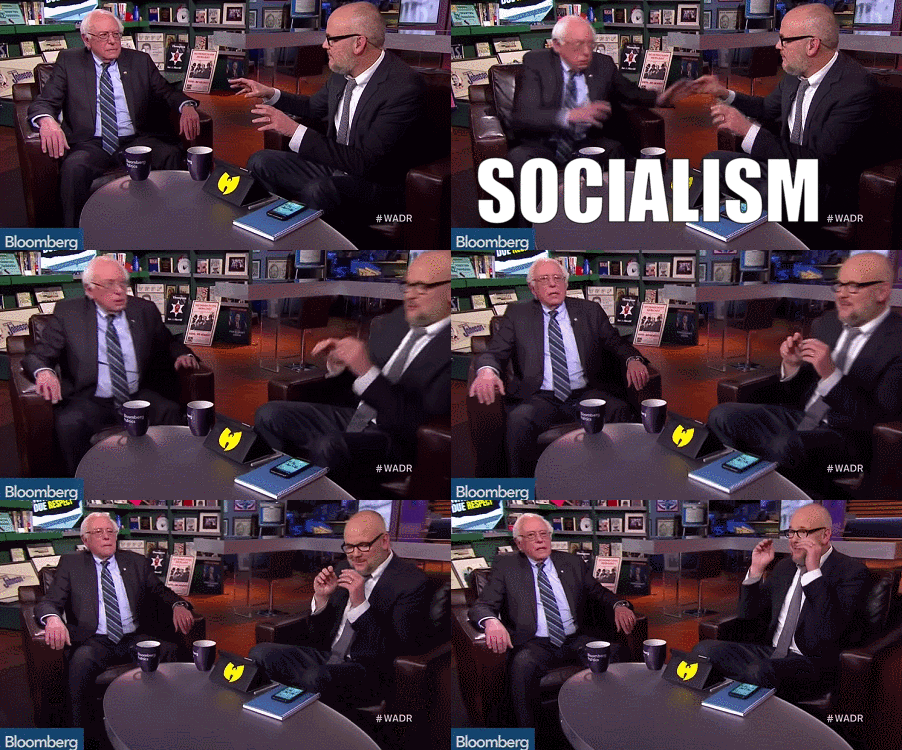
Sanders isn’t a socialist.

giphy

“…by which I mean heavy state subsidies of public services and increased regulation, but let’s not go crazy here.” | image retrieved via giphy, fair use

Continue reading

Free State of Mind: Andrew Govender Discusses Acting, Tradition, and Religion

Free-State-Updated-PosterThis is the third and final installment of “Free State of Mind”, a series of Q&As with the cast and crew of a South African film currently making the rounds at film festivals. You can read my review here, find out more about its creation from producer Terwadkar Rajiv here, and get some insight on how co-lead Nicola Breytenbach’s prepared for her role here.
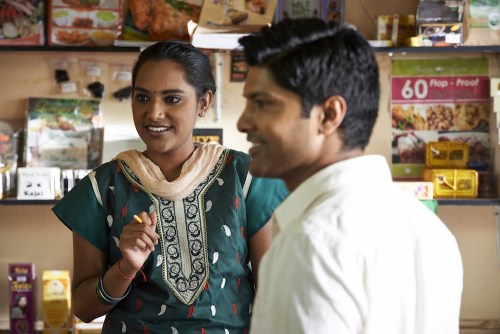
Today’s interview is with Andrew Govender, who plays Ravi, the other half of the couple at Free State‘s core. Another former model like his co-star, he began his career at just sixteen-years-old. Being crowned Mr. South Africa in 2012 is only one of his many achievements, which include creating the Andrew Govender Book Club with the Nelson Mandela Foundation and being involved in various awareness campaigns.

Given that their characters share a few interesting parallels Govender answers a number of the same questions that Breytenbach did, with a few that are unique to Ravi himself.


An arranged marriage is the biggest barrier that Ravi faces in his relationship with Jeanette. How would you say he views that tradition and what it means for his future?

I think he respects it and accepts it. He was brought up in a traditional Indian family and those are Indian traditions. However, when he gets to meet his arranged wife he realises that he doesn’t have much in common with her. That’s when he meets Jeanette and falls madly in love. He knows that he shouldn’t be pursuing a relationship with her because it’s illegal during that time for inter-racial relationships. However, he can’t help himself and that results in detrimental consequences.

ravisister

Ravi makes it clear that he’s concerned about his sister’s safety, but what does he ultimately think about what his family does under cover of darkness?

He understands that they are doing it for a greater cause and he respects that. However, he does care deeply for them and doesn’t want anything to happen to them when they go on these missions. He’s close to his family and wants to protect them.

From what I can tell this is your first role in a feature film. How was that experience, especially with it being a South African production instead of a big Hollywood movie?

It was an incredible experience. I got the opportunity to work with some really talented South African actors. I learnt a lot by being on set and having these actors mentor me throughout the filming process.

Our director Sallas de Jager was also really supportive and helped me to give the best performance I could. Even though this was a South African film, the production standards on the movie were really high. That can be attested to with all the international awards that the movie has won. I really hope that I will have the opportunity to work on more films both in South Africa and Hollywood. Acting is really something that I enjoy immensely.

How much did you know about South Africa’s Immorality Acts before signing on to this film?

Not a lot. I grew up post Apartheid, so most of what I knew was from what I heard, not what I could have experienced. It was quite eyeopening to learn more about that time in South Africa’s history and how Indian people were treated. I gathered as much information as I could from my parents about their experiences during that time. I also was really fortunate that my acting teacher had been in an inter-racial relationship and she was able to help me understand my character better.

meditation

Religion plays a large part in Free State for both Ravi and Jeanette’s families. Did you come from a religious background, and did this have any affect on how you played the role?

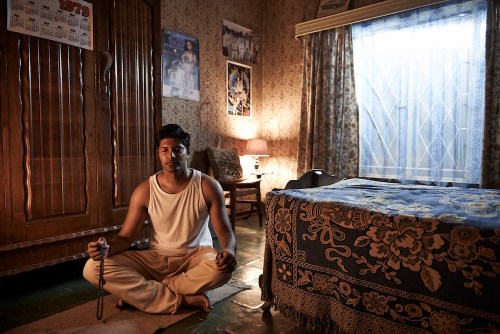
Yes, I did. I grew up in a conservative traditional Indian family so religion was important to us. My character was also brought up with the same core values and so religion would have been important to him too. There’s a scene in the movie where my character meditates and also seeks relationship advice from a guru. So we are aware that he relies on religion to guide him in the choices that he makes.

2 Broke Girls, S5E20 “And the Partnership Hits the Fan”: A TV Review

partnership

Cue the 7th episode of 2 Broke Girls featuring Ed Quinn’s Randy and I’m feeling a lot less gracious than I was last week. While that installment focused on just how far Max’s boyfriend would go to prove his devotion to her [entering her apartment and stepping on the dangerous Nail Patrick Harris, for one] this week chooses to, well . . . do more of the same.

I actually spelled out in that review what typically happens with Max’s romantic partners, i.e. that: “as she grows closer to them the increased intimacy makes her uncomfortable, causing her to want to pull away.” While earlier episodes have revealed that Randy is just in town for the month he reveals to both girls that he’s actually considering becoming a partner at one of the law firms in the city.

This is obviously a huge step, him looking to actually work and live in NYC full-time, and as a result Max takes some drastic action. Or rather, her body does.  Continue reading

Opportunity or Catastrophe? Weighing in on the Upcoming Legalization of Pot in Canada

Legalizing recreational marijuana was part of Justin Trudeau’s election campaign platform, but it wasn’t something many people took seriously. What with the common mistrust of politicians and the opposition of the very powerful Hell’s Angels gang, who stand to lose a lot of revenue if pot becomes legal, it was hard to take Trudeau’s proposition seriously.

That’s why I was surprised to hear that the Federal Health Minister had announced plans to legalize marijuana by 2017. CBC’s recent episode of Cross Country Checkup gave Canadians an opportunity to respond with a few of their thoughts on the new legislation. Many of the callers brought some great points to my attention, some of which I’ve touched on below. However, it was apparent that some callers were still buying into weed propaganda, from exaggerated health benefits to exaggerated threats. For this post I decided to pull together a few of the best arguments I’ve heard from both camps and try to find at least a little research to support their claims.

Pros of Legalization

1. Legalization could reduce an unnecessary drain on police resources

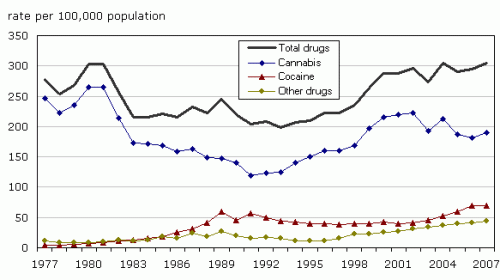
Cannabis related offences are the most common type of drug offence in Canada, especially here in British Columbia.

c-g2-eng

Source: Statistics Canada, Canadian Centre for Justice Statistics, Aggregate Uniform Crime Reporting Survey.

According to Stats Canada, “in 2012, 43% of Canadians reported that they had used marijuana at some time in their lives, and 12% reported using it in the past year”. That means half of all Canadians could have been charged with possession at one time or another. Although in some places police will turn a blind eye to mere pot possession, there are still a significant number of cases reported by police. CBC explains that 

there were 57,314 marijuana possession-related “incidents” reported by police nationwide, according to Statistics Canada. More than 24,540 people were charged as a result. The year before that, 25,819 Canadians faced charges.

What’s disconcerting about this grey area of crime is that police can often use their discretion when it comes to actually prosecuting an offence. According to a recent CBC News analysis, where you live can affect if you will be charged. They report that “you’re almost 23 times more likely to face a possession charge in Kelowna, B.C., than in St. John’s.”

Marijuana use is so widespread that it is taking a massive amount of police resources to even pursue pot users. According to a report last year, “police report a pot possession incident every 9 minutes in Canada”. Inevitably, chasing down the almost endless amount of pot users and dealers takes police away from pursuing other criminal activity. Continue reading