Tag Archives: Arab

Fame Day: The Young Turks Arabs

A few days ago, a client at the nonprofit where I work heard that I was from the Middle East.

The conversation went as it usually does, beginning with some surprise, followed by a few questions like “why on earth were over there?” and “How did you learn to speak English?”

You get used to questions like that.

Then came the inevitable comments on the ongoing violence in my adopted homeland of Syria. Those comments are always pretty vague- existing as a result of having to say something so as to not appear ignorant while being ambiguous enough to avoid proving that you are ignorant. In this case it was a theatrical, sad shake of the head, followed by the statement “Well that’s a shame. But y’know? There always has been fighting over there and there probably will be to the end of time.”

I’ve always hated that statement.

In all fairness, that’s true as well…

First and foremost, it’s a complete lie: “There’s always been war in the Middle East?”

No, there hasn’t. For centuries, the Arab world was the shinning pinnacle of human civilization. Even in its decline, the Middle East was still a relatively peaceful place- especially when compared with the rest of the world. Look at European History in the 19th and 20th centuries and compare its body count with that of the Middle East in the same time period.

Secondly, there’s a deeply racist implication in the statement that “there will always be war in the Middle East.”

Why?

Because of the way the borders are drawn? Because there’s oil in certain parts of the desert?

Or is it because the Arabs are simply and inherently angry, violent people?

That statement is on par with saying “Africa will always be poor.” Why?

Because, you know… Africans?

This is some ol’ bull. “Africans are capable of nothing but starving, as they always have done and always will do, and Arabs are capable of nothing but fighting- always have and always will”?

Nevertheless, that was the line (and often still is) that was fed to the public over the past couple decades. Recently however, the events of The Arab Spring have completely and utterly turned that picture on its head.

Starting with the self-immolation of 26-year-old street vendor in Tunisia, ripples of protest spread out across the Arab world, building in power and momentum until they evolved into revolutions against some of the most brutal and dictators and entrenched bureaucracies in modern history. Egypt, in particular, stands out as a shining example, with thousands of young, unarmed Egyptians doing in 18 days what the US and all her allies couldn’t do for Iraq in nearly 10 years.

And no, in case you’re wondering, that had nothing to do with either Facebook or Twitter. I recall during the weeks following the victory of the Egyptian revolutionaries, pundits in the West were desperately fishing for some way to co-opt the accomplishments of the young Arabs and paint them as somehow being ultimately rooted in the bounty and decency of America. Facebook and Twitter were cited as essential tools, without which there would surely be no free Egypt. Again, any sane person is going to call bull on this. Twitter never set itself on fire. Facebook didn’t dodge gas canisters or face-off with riot police and tanks. Again, as a result of the American media’s desire to scare you without actually showing you any blood or gore, grasping the full scope of what many of these young protesters were up against is difficult, if not impossible.

You’ve got to see the casualties of battle to really and truly understand the courage and sacrifice of those going into the maw. Perhaps its for that reason that westerners often look to social media to take a slice of a glory (though my bet is still on jealousy).

And what’s even more impressive isn’t simply that the Arab people have faced off with their governments in the past, it’s that they’re still doing it.

You might think “Hey- we came, we saw, we conquered. Insert-dictator-here is dead and/or gone, let’s all go home and take a much deserved and well earned break.”

That’d certainly be a temptation for me.

But instead of resting on their laurels, the Arab people (again, the Egyptians serving as a prime example) continue to stand on the front line and demand nothing short of total freedom and complete justice. Yesterday, another young Tunisian vendor set himself ablaze in protest. In the occupied West Bank, Palestinians continue to hold hunger strikes. In spite of recently reaching over one million refugees, the rebels in Syria continue fight on against the Assad regime.

Across the Arab world, in the face of vicious repression, the Arab people are fighting on. Through their perseverance and valor, this generation of Arabs is changing the image of the Middle East from a place that “always has been violent and always will be” to something soon to be synonymous with democratic revolution, collaboration, and freedom. There’s certainly still a long way to go, but time and time again the young Arabs have proven that they’re on the right path and they’re not taking one step backwards.

What did you do today?

Fame Day: All The Little Things

I’ve always had a rough time with Fame Day posts. I’m a generally dispassionate guy, and the things that I do like either aren’t around anymore (good rock, for example) or don’t have much to be said about them (beer is good, that is all).

Bitter cynic that I am, it’s a lot easier (and more fun) to rail on things I despise (which is a lot of things) than make a case for what I enjoy. That issue is only compounded by the simple fact that at the end of the day, it’s really just all the little things which get ya.

With that in mind, today’s Fame Day [in lieu of the usual Shame Day] will not be spent dedicated to a single person or group or trend, but rather to a number of things which deserve some recognition, even if it’s just a little.

Middle-Eastern Jesus:

Even with a better understanding of history and geography, portrayals of Jesus are still pretty much limited to the fair-skinned, flowing-haired images of the Middle Ages. Even if we are, at the very least, keeping away from the blonde hair and blue eyes, we still have a long way to go. That’s the reason it’s always so refreshing to see Jesus portrayed with a stocky build, dark skin, dark hair, and a beard one would sooner associate with an Al-Qaeda commander.

He is not gonna tan well…

For everyone portraying Jesus as something more like that below, and less like this above- thank you.

PFC Bradley Manning:

In retrospect, I could’ve simply dedicated this Fame Day to saluting Bradley Manning, the young American soldier who leaked a massive number of documents to Wikileaks. Inevitably however, such an attempt would have simply devolved from a round of applause for Manning into a vitriolic diatribe against the increasingly Orwellian US government. Heck, even here I’m gonna be tempted to do so. Better just keep it short and to the point.

Included in the footage Manning leaked was video of a strike by American forces on targets they mistook for combatants, but who were in reality journalists and civilians. This footage would have doubtlessly been suppressed, as would similar  information PFC Manning leaked, and kept from the public eye, perhaps forever. Rather than being given a medal, Manning has been arrested, imprisoned, intimidated, and presented with a host of charges, including “aiding the enemy,” which carries the death sentence. Again, I’m tempted to run off into a wild condemnation of this entire farce, so let’s throw PFC Manning a round of applause and our wishes for his speedy release.

Chill Parents:

In our paranoid world, we have a tendency to attempt to control and protect our loved ones- kids in particular- from any possible harm or danger, no matter how minor. You’ve probably seen it in some form or another. Loading the kids down with every imagine medication, drilling the idea of “stranger-danger” into their disproportionately large heads, heck, even tracking phones or school IDs  is viewed as just a logical move in this chaotic and evil world.

I guess that’s why it’s  always good to see parents who are okay with their kids getting a little dirty and scraped-up, or even view such things as a healthy part of development. I’m not talking about neglect, mind you, but rather an understanding that keeping kids penned up inside a house or wasting away in front of a TV is just as bad- if not worse- than having to liberally apply the iodine after Jack and Jill fall down some hill.

And there you have it folks- a grab bag of things worth nodding your heads at. Be sure to check in tomorrow for a new installment of “Evan and Gordon Talk,” and Free Bradley Manning!

Evan and Gordon Talk: Deadliest Warrior

EVAN: Ladies and gentlemen, boys and girls, welcome to the first installment of E&GT where Gordon and I try to uncover the magic that was lost. The last post we did fell a little flat, so we’re here to casually discuss a subject we both know is awesome: DEADLIEST WARRIOR.

GORDON: That’s right- Deadliest Warrior, a show 90% about mutilating ballistic gel dummies, and it was STILL too intellectual for Spike. At least, that’s my version of why they cancelled it. You can probably tell we’re a little bit bitter about the whole thing.

EVAN: Ugh, Spike. Have you seen the little bits of footage they slot in between shows to fill up the space?

GORDON: I have not.

EVAN: It’s like . . . Here, let me find one.

Readers, the following is kinda PG-13. I kind of apologize for embedding this, but it’s just too ridiculous not to:

Continue reading

Evan and Gordon Talk: Racially Accurate Casting

EVAN: Today’s topic is something that I hold very near and dear to my heart. Years of research on the topic has made me witness to all of the arguments that can be used against needing to have racially accurate casting, and because of this I’m going to propose something a little different

GORDON: Namely?

EVAN: That I switch sides for this conversation, and speak out against it.

GORDON: Intriguing. Mind starting us off with the first salvo?

EVAN: Statement: Racially accurate casting is not important. The most talented actor should be the one who gets the role.

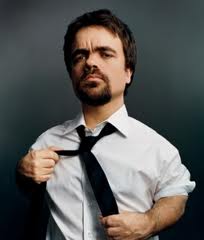
GORDON: Doesn’t appearance play a key role in what makes an actor good? Peter Dinklage is good, but you wouldn’t really find him believable playing Abraham Lincoln or Kareem Abdul Jabbar.

EVAN: In this case his stature, not his race, is what would keep him from playing either role in a convincing manner.

GORDON: But isn’t that essentially the same issue? Imagine the great Denzel Washington playing Lincoln- you’d be sitting there the entire time, no matter how much of a powerhouse Washington would be, taken out of the film because you have to deal with a black guy playing a white guy during the height of the civil war.

In any piece of film where you’re expecting realism, you’re going to expect the actors to conform to the styles and facts of the time. If you portray Georgia in the 1960s, you’re obviously not going to have a largely black cast portraying the upper class  or if you were to set the scene in early 1900s Ghana  you wouldn’t have a cast comprised of Caucasians. It wouldn’t make sense, no matter how good they are.

EVAN: If anything, Cloud Atlas at least proves that a talented actor can portray whoever they like, given an adequate amount of makeup. Halle Berry plays a Korean Man in the film, and does so in a convincing fashion that doesn’t at all take viewers out of the film in the least.

GORDON: I haven’t seen that film, so I can’t speak to the use of the actors for the parts they play. From my understanding that was a work of fantasy (or science fiction, I’m only going off what I can gather from the trailers). And in one or two movies, it’s probably not a big deal. After all, Cate Blanchett played Bob Dylan.

But imagine this applied to each and every movie, it simply wouldn’t work. Realism would deteriorate- and this would be especially detrimental in a film trying to deal directly with race relations.

EVAN: I personally feel that allowing any race to play any other speaks much more in terms of race relations. That’s a world where colour is a non-issue  because it shouldn’t be.

EVAN: I’m dying, Gordon. My life force is seeping out of me.

GORDON: Try to stick with it…

GORDON: And while it’s true that race ought to be a non-issue, that’s simply not how things are or have been in the past. Using black actors to play black characters and white actors to play white characters is fundamental to demonstrating past inequity and injustice with American racism and segregation. And that’s just one element.

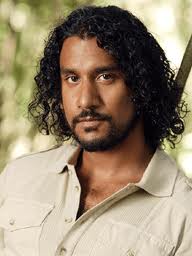
Let’s talk about Indians playing Arabs. It happened in Lost and it happened in Community (with multiple actors), but Arabs look nothing like Indians. Indian actors are used simply because they fit the stereotype of what most people think an Arab looks like. It perpetuates an inaccuracy.

EVAN: Isn’t the fact that the role is an Arab important a large enough step? This is a minority with a major role on a TV show, and an opportunity for minority actors to step up, which they have in both cases.

GORDON: Barring Monk and Arrested Development, when’s the last time you saw an Arab actor? I’m not trying to argue against Indian actors, or actors of Indian heritage getting roles, but for the purpose of portraying the world as it is (or at least with some realism) we should have actors with some vague resemblance to the people they’re portraying on film.

After all, would you not be thrown off by guys with German accents playing French resistance fighters during WWII?

EVAN: If they had German accents then they simply wouldn’t be right for the role, which brings me back to my first point.

GORDON: Which, by proxy, brings us back to my first response. Ethnicity (depending on the situation) is just as valid an element of a guy’s candidacy for a role dealing directly with ethnicity as accents, or height, or any other factor (actual talent, of course, being the most important).

Vincent Cassel should probably not play Malcolm X. Adrien Brody should probably not play the Queen of England, though that would be pretty funny.

EVAN: If we’re going to stick with believability, than why is it so important that Indians not play Arabs? No one has ever made a big deal out of this, so clearly people believe that they are what their role calls them to be-

Likewise a Korean can to play a Chinese person can play a Japanese person. Audiences can’t tell the difference and believe that they are whatever the role is, and that’s okay.

GORDON: But Koreans do not look Chinese, Chinese people don’t look Japanese, and Arabs and Indians certainly don’t look like each other. The only reason this happens is because most people either don’t know (partly due to this inaccurate casting) or don’t care (in other words, all non-whites are basically one homogenous mass.

If all your life, you had seen black men and been told “these are Uzbekistanis,” then you’d go your whole life simply assuming that Uzbekistanis are, in fact, indiscernible from guys from Benin.

Your ignorance should not dictate which actors get which parts. Further, no Uzbekistan could really ever get a chance to play and Uzbekistani because of the years of misinformation.

EVAN: But there is a huge difference between a black person and an Uzbekistani. The examples I made have similarities that the example you used clearly does not.

To be such a stickler for accuracy is the other extreme, and just as wrong. You wouldn’t get someone with mental problems to accurately portray a character with mental problems, that just doesn’t make sense. Race should matter if it is noticeable, and like I said in the case of shows like Lost it is not.

EVAN: The logic above was used against me by someone in a thread on Reddit  You can check out our exchange here.

GORDON: Granted, my example was extreme, but that doesn’t change the point. Even though a Thai guy and a Japanese guy share more similarities than a Beninese guy and an Uzbekistani guy, there are still distinct differences between people from Thailand and people from Japan.

With regards to being a stickler- I admit, as I have previously, that you don’t have to have an exact replica of the character you’re trying to portray. Jet Li, I imagine, is doing pretty well for himself, and I still wouldn’t doubt his ability to portray a poor man very well. However, while you don’t need to be point for point, you do need to have some general similarity. That’s why we don’t have Emma Stone portraying Fidel Castro.

EVAN: I feel like the extremeness of your examples is damaging your point. If we’re sticking with race we should do that, and not bring in gender.

GORDON: It’s to demonstrate the underlying point in all of this: Verisimilitude. Realism. Accuracy.

EVAN: And since you said “you don’t have to have an exact replica of the character you’re trying to portray” why isn’t it okay to have Naveen Andrews play Sayid Jarrah on Lost?

GORDON: But the distinction is great enough. The accent is Indian, not Iraqi. Naveen does not look Iraqi. When an actor neither looks nor sounds like the character he is meant to portray, we have a problem.

EVAN: So if Jarrah had managed to sound Iraqi, would that have helped?

GORDON: It would’ve added to the realism and accuracy, yes. But that doesn’t change the fact that he’s very clearly Indian, not Arab.

EVAN: Clear to a very select few. As mentioned, people didn’t seem to notice for the most part.

GORDON: Clear to a very select few. As mentioned, people didn’t seem to notice for the most part.

Most people don’t know what an Arab looks like. Do they know that Monk is Lebanese? That Cousin Maeby is Iraqi? Most do not. Ignorance is not an excuse for inaccurate casting.

EVAN: And that brings our exhausting exchange to an end. Trying to argue for something I so strongly disagree was one of the more difficult things I’ve ever done. I hope that in reading this you were able to see the holes in my argument and the truth in Gordon’s.

GORDON: Booyah.

The past few paragraphs alone have had the same effect on Evan as that life-sucking device in the Princess Bride. Commend him for biting the bullet.

And as for our discussion next time, your options are: What do we make of the upcoming Star Wars sequel?

EVAN: And. . . how about . . . How much artistic merit is there in a show like Adventure Time?

GORDON: I like it.

And to our beloved and devoted followers (who would organize into a vicious and unholy army of darkness if we ever were to ask it of ’em), feel free to suggest your own topic down in the comments section.

EVAN: And, as usual, thanks for reading.