We make no pretension of being unbiased here at the CWR. We have our particular axes to grind and banners to wave. Evan, you’ll notice, often covers the place of Asians in culture- in no small part because Evan is a combo of a few Asian peoples himself, and more directly affected by that issue. I, alternatively, grew up in the Middle East, and after having spent pretty much the entirety of my life with Arabs and Muslims (not the same thing, shouldn’t have to explain that), I’m more sensitive to Middle Eastern issues- Islamophobia in particular.
I could spend all day railing on the treatment of the Middle East/Arabs/Occupied Palestine/Muslims/etc. The way Arabs/Muslims are singled out for scrutiny and criticism. Casting Indian actors to play Arabs, since Arabs don’t match their own stereotype. The lack of appreciation for the key role the Middle East played in preserving and advancing science and philosophy.
You get the idea.
So rather than trying to tackle a single issue that could be (should be, and has been) covered by an entire academic book, I’m going to hit up super-specific issue.
EVAN: Readers of every gender, young and old, today Gordon and I shall be discussing a somewhat more sensitive topic of our own choosing due to there being no comments on our last post.
Our subject of conversation for the day is, and I cleared my throat before typing this, the word “nigger.”
GORDON: I’d like to talk about just that right off the bat-
Do we have to abbreviate it? I mean, I can’t think of any other word in the English language that we won’t even say. Surely we can all agree, regardless of where we stand on the word itself, that calling it the “n-word” is on par with superstition.
First off, CISPA, passed by Congress last Friday, is headed to the floor of the Senate. If you haven’t already, get in contact with your senators and send them this message:
Now back to business.
I’ve been meaning to take a crack at this issue for a while. In fact, I’ve even tried a few times to actually write a post on it- I just couldn’t quite find the words to illustrate the problem succinctly.
Then, earlier today, I came across this image [click to open up larger in a new window]:
EVAN: Today’s topic is something that I hold very near and dear to my heart. Years of research on the topic has made me witness to all of the arguments that can be used against needing to have racially accurate casting, and because of this I’m going to propose something a little different
GORDON: Namely?
EVAN: That I switch sides for this conversation, and speak out against it.
GORDON: Intriguing. Mind starting us off with the first salvo?
EVAN: Statement: Racially accurate casting is not important. The most talented actor should be the one who gets the role.
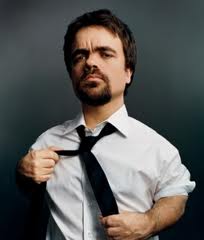
GORDON: Doesn’t appearance play a key role in what makes an actor good? Peter Dinklage is good, but you wouldn’t really find him believable playing Abraham Lincoln or Kareem Abdul Jabbar.
EVAN: In this case his stature, not his race, is what would keep him from playing either role in a convincing manner.
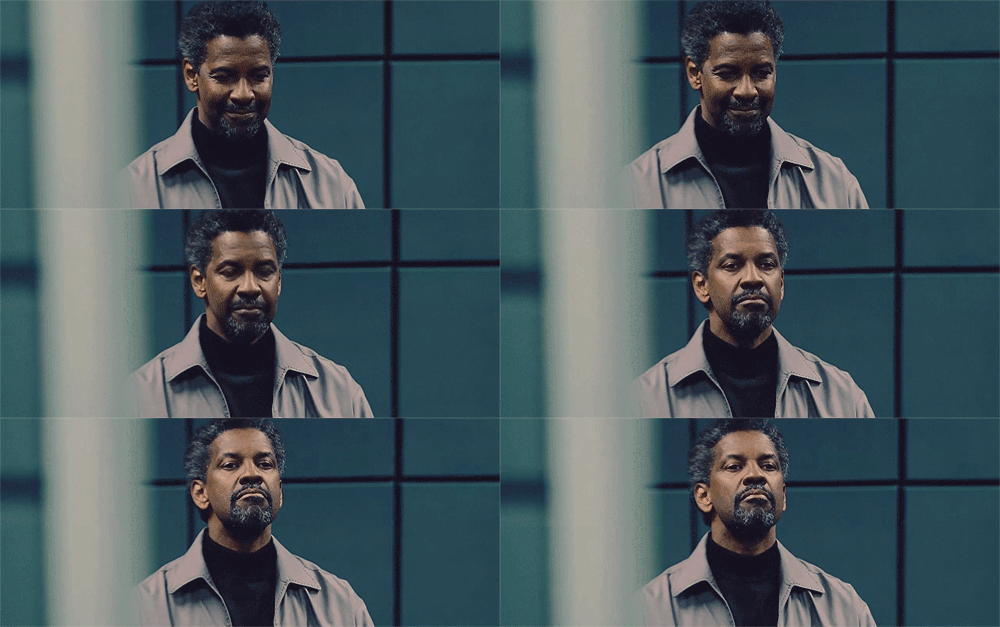
GORDON: But isn’t that essentially the same issue? Imagine the great Denzel Washington playing Lincoln- you’d be sitting there the entire time, no matter how much of a powerhouse Washington would be, taken out of the film because you have to deal with a black guy playing a white guy during the height of the civil war.
In any piece of film where you’re expecting realism, you’re going to expect the actors to conform to the styles and facts of the time. If you portray Georgia in the 1960s, you’re obviously not going to have a largely black cast portraying the upper class or if you were to set the scene in early 1900s Ghana you wouldn’t have a cast comprised of Caucasians. It wouldn’t make sense, no matter how good they are.
EVAN: If anything, Cloud Atlas at least proves that a talented actor can portray whoever they like, given an adequate amount of makeup. Halle Berry plays a Korean Man in the film, and does so in a convincing fashion that doesn’t at all take viewers out of the film in the least.
GORDON: I haven’t seen that film, so I can’t speak to the use of the actors for the parts they play. From my understanding that was a work of fantasy (or science fiction, I’m only going off what I can gather from the trailers). And in one or two movies, it’s probably not a big deal. After all, Cate Blanchett played Bob Dylan.
But imagine this applied to each and every movie, it simply wouldn’t work. Realism would deteriorate- and this would be especially detrimental in a film trying to deal directly with race relations.
EVAN: I personally feel that allowing any race to play any other speaks much more in terms of race relations. That’s a world where colour is a non-issue because it shouldn’t be.
EVAN:I’m dying, Gordon. My life force is seeping out of me.
GORDON: Try to stick with it…
GORDON: And while it’s true that race ought to be a non-issue, that’s simply not how things are or have been in the past. Using black actors to play black characters and white actors to play white characters is fundamental to demonstrating past inequity and injustice with American racism and segregation. And that’s just one element.
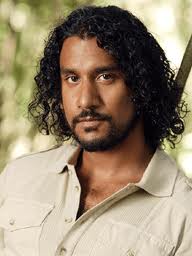
Let’s talk about Indians playing Arabs. It happened in Lost and it happened in Community (with multiple actors), but Arabs look nothing like Indians. Indian actors are used simply because they fit the stereotype of what most people think an Arab looks like. It perpetuates an inaccuracy.
EVAN: Isn’t the fact that the role is an Arab important a large enough step? This is a minority with a major role on a TV show, and an opportunity for minority actors to step up, which they have in both cases.
GORDON: Barring Monk and Arrested Development, when’s the last time you saw an Arab actor? I’m not trying to argue against Indian actors, or actors of Indian heritage getting roles, but for the purpose of portraying the world as it is (or at least with some realism) we should have actors with some vague resemblance to the people they’re portraying on film.
After all, would you not be thrown off by guys with German accents playing French resistance fighters during WWII?
EVAN: If they had German accents then they simply wouldn’t be right for the role, which brings me back to my first point.
GORDON: Which, by proxy, brings us back to my first response. Ethnicity (depending on the situation) is just as valid an element of a guy’s candidacy for a role dealing directly with ethnicity as accents, or height, or any other factor (actual talent, of course, being the most important).
Vincent Cassel should probably not play Malcolm X. Adrien Brody should probably not play the Queen of England, though that would be pretty funny.
EVAN: If we’re going to stick with believability, than why is it so important that Indians not play Arabs? No one has ever made a big deal out of this, so clearly people believe that they are what their role calls them to be-
Likewise a Korean can to play a Chinese person can play a Japanese person. Audiences can’t tell the difference and believe that they are whatever the role is, and that’s okay.
GORDON: But Koreans do not look Chinese, Chinese people don’t look Japanese, and Arabs and Indians certainly don’t look like each other. The only reason this happens is because most people either don’t know (partly due to this inaccurate casting) or don’t care (in other words, all non-whites are basically one homogenous mass.
If all your life, you had seen black men and been told “these are Uzbekistanis,” then you’d go your whole life simply assuming that Uzbekistanis are, in fact, indiscernible from guys from Benin.
Your ignorance should not dictate which actors get which parts. Further, no Uzbekistan could really ever get a chance to play and Uzbekistani because of the years of misinformation.
EVAN: But there is a huge difference between a black person and an Uzbekistani. The examples I made have similarities that the example you used clearly does not.
To be such a stickler for accuracy is the other extreme, and just as wrong. You wouldn’t get someone with mental problems to accurately portray a character with mental problems, that just doesn’t make sense. Race should matter if it is noticeable, and like I said in the case of shows like Lost it is not.
EVAN: The logic above was used against me by someone in a thread on Reddit You can check out our exchange here.
GORDON: Granted, my example was extreme, but that doesn’t change the point. Even though a Thai guy and a Japanese guy share more similarities than a Beninese guy and an Uzbekistani guy, there are still distinct differences between people from Thailand and people from Japan.
With regards to being a stickler- I admit, as I have previously, that you don’t have to have an exact replica of the character you’re trying to portray. Jet Li, I imagine, is doing pretty well for himself, and I still wouldn’t doubt his ability to portray a poor man very well. However, while you don’t need to be point for point, you do need to have some general similarity. That’s why we don’t have Emma Stone portraying Fidel Castro.
EVAN: I feel like the extremeness of your examples is damaging your point. If we’re sticking with race we should do that, and not bring in gender.
GORDON: It’s to demonstrate the underlying point in all of this: Verisimilitude. Realism. Accuracy.
EVAN: And since you said “you don’t have to have an exact replica of the character you’re trying to portray” why isn’t it okay to have Naveen Andrews play Sayid Jarrah on Lost?
GORDON: But the distinction is great enough. The accent is Indian, not Iraqi. Naveen does not look Iraqi. When an actor neither looks nor sounds like the character he is meant to portray, we have a problem.
EVAN: So if Jarrah had managed to sound Iraqi, would that have helped?
GORDON: It would’ve added to the realism and accuracy, yes. But that doesn’t change the fact that he’s very clearly Indian, not Arab.
EVAN: Clear to a very select few. As mentioned, people didn’t seem to notice for the most part.
GORDON: Clear to a very select few. As mentioned, people didn’t seem to notice for the most part.
Most people don’t know what an Arab looks like. Do they know that Monk is Lebanese? That Cousin Maeby is Iraqi? Most do not. Ignorance is not an excuse for inaccurate casting.
EVAN: And that brings our exhausting exchange to an end. Trying to argue for something I so strongly disagree was one of the more difficult things I’ve ever done. I hope that in reading this you were able to see the holes in my argument and the truth in Gordon’s.
GORDON: Booyah.
The past few paragraphs alone have had the same effect on Evan as that life-sucking device in the Princess Bride. Commend him for biting the bullet.
And as for our discussion next time, your options are: What do we make of the upcoming Star Wars sequel?
EVAN: And. . . how about . . . How much artistic merit is there in a show like Adventure Time?
GORDON: I like it.
And to our beloved and devoted followers (who would organize into a vicious and unholy army of darkness if we ever were to ask it of ’em), feel free to suggest your own topic down in the comments section.
Even if you haven’t recognized it for what it is, chances are, you’ve seen elements of it. The resurgence of beards, comments on period piece clips like “Why don’t we wear hats anymore?” or “Dang- they knew how to dress back then.” Or perhaps you’ve stumbled across The Art of Manliness or are (like me) a faithful apostle of Ron Swanson.
Now whether you’re aware of it or not, there is a growing culture based around this general perspective of “manliness” that supposedly existed from 5,000 BC to 1974 AD. The resurgence in the popularity of the beard, the wave of internet memes centered around being “classy,” our love affair with period pieces- all of this compounded has created the beginnings of a whole new subculture.
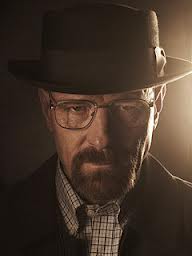
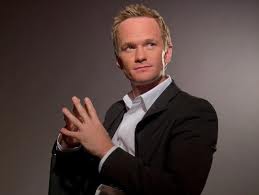
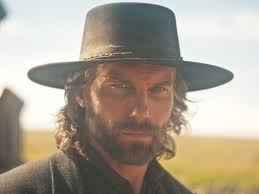
Don’t believe me? Just take a look at some of our favorite TV characters.
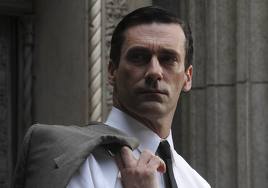
Don “F***-You, Liver!” Draper
Jack “Even Ayn Rand Thinks I’m Egotistical” Donaghy
Rick “Bad Decisions” Grimes
Walter “Tied with Draper for Making People Love Fedoras” White
Barney “Legen- wait for it… -DARY!” Stinson
Cullen “I Will Punch You For No Particular Reason” Bohannon
Comedy, Drama, Action/Horror, Westerns- this is a pretty broad range, and we’ve got the same strong, dour antihero type in all of them. Men who remind us of our fathers and grandfathers. Tough as nails bastards who came to this country with only a dollar in their pockets- who took a break from their honest 8 to 8 jobs of hitting metal with other pieces of metal to kill Nazis and look dapper doing it.
So what’s this culture all about? As with any group, we can talk about the superfluous or cosmetic elements- in the case of the “manly” group, handshake etiquette, strait-razor whetting, and driving stick- but to really understand ’em, we’re going to need to look at the underlying values in play here.
Independence:
What do all the men shown above have in common? A degree of independence. They’re DIY guys. Men who aren’t reliant on the help or charity of others- in short, dudes who can take care of themselves in most any situation, from car repair to providing for the family to killing the undead. And on that note…
Initiative:
These are all men who don’t allow themselves to be victims. They’re proactive moment-seizing leaders who don’t wait idly by for someone to step up. Good or bad, they’re leading the way- and speaking of bad…
Stoic:
These are guys who tend to lend credence to the stereotype of the unspeaking, unfeeling male. At best, the strong, silent type- at worse, the uncommunicative lout. One way or another, they don’t let the situation get the better of them. That’d be undignified, and if there’s one thing that they’re about, it’s…
Dignity/Pride:
It’s in the way they dress, the way they speak, the way they expected to be treated. A kind of code that prohibits some things and makes others compulsory. You can’t hold your head high, then what’s the point in having one?
Moral Ambiguity:
These men are all, to varying degrees, antiheroes. Guys with their own agendas and a certain degree of moral ambiguity that keeps you on your toes. There’s a level of egotism, self-centeredness, and disregard for others that makes them pretty good at what they do, but what they do not all that good- certainly they don’t fit the traditional mold of the selfless, self-sacrificial hero.
Wealth:
And while it’s not true for all of them, money tends to be a major element of their stories. A drive to be successful, prosperous, and (again) independent. It’s the age-old dream of being your own boss.
So what does all of this boil down to?
Power.
It’s about power. These guys represent everything we, as a generation, aren’t. Independent, wealthy, self-assured, proud. Does that sound like us? Not at all. We’re the casual dressed, globally conscious masses struggling to make it by, and taking whatever miserable, degrading soulless job we can find. We’re not strong like these glamorized images of our grandparents are (having conveniently erased the racism, bigotry, and misogyny).
But we want to be.
And so begins the perpetual motion machine of life-imitating-art and art-imitating-life. Epic Meal Time, Memes, Period Pieces- the list goes on.
So is this a good thing or a bad thing?
Well, there are good and bad elements to every culture (some more bad than good, and vice versa), but let’s list out the positives and negatives.
Positive:
We can stand to toughen up a bit a lot as a generation. We don’t need to be bending horseshoes with our teeth, but some basic survival skills and a thicker skin when it comes to discomfort and hardship would be nice (battery running out on your phone doesn’t count as suffering).
In these tough economic times, be able to do basic repairs to your house and car aren’t just good- they’re necessary. Same goes for any of the thrifty elements of the culture.
Even if we don’t have it quite yet, demanding a certain level of dignity in our work and our day to day lives isn’t just good for you as an individual- it improves society on the whole.
While we probably shouldn’t worship the fedora or declare the suit to be the only appropriate clothing for a man over the age of twelve, it certainly doesn’t hurt to know how to dress ourselves, or conduct ourselves well in any given situation.
Negatives:
The glorification of the past can, as I jokingly mentioned above, lead to the uglier elements of it being glossed over. We hail our grandfathers as being great men, forgetting how easy it is to make a name for yourself when none of the good or prestigious jobs can be given to equally qualified women or non-white men.
The culture really doesn’t leave a whole lot of room for women at all, other than the kitchen. This is not to say that all adherents of the culture see it this way, but when you’re trying to espouse 1950s society, that includes 50s traditional gender roles as well.
It can’t be denied that there’s a strong conservative appeal in this culture, as well as hints of Ayn Rand’s Objectivism. Glorifying wealth and success, especially when coupled with a “do whatever you need to do” mentality, can lead to the twisted perspective that poor people are poor because they are lazy.
This culture, despite the intentions of its adherents, does give a home for sexism. The uglier elements of the masculinity movement, those who view women as belonging in the home and nowhere else will doubtlessly find it a lot easier to fly under the radar in a culture that’s utterly dominated by males.
So what’s the final verdict?
“Manly” culture doesn’t appear to be either helpful or harmful- at least, not yet. The underlying issue being power, it’s going to be faced with the task of walking the thin line between empowerment and megalomania. So long as self-control is kept in mind, they oughta be fine.
If you’ve heard of this series (in either its film or book form), there’s a good chance it’s because David Fincher of Fight Club/Se7en/The Social Network fame directed the American remake. Even if you’ve heard of it, there’s a also a good chance you haven’t seen it- Fincher’s The Girl with the Dragon Tattoo did only so-so at the box-office, not quite tanking, but also not becoming as popular as many were speculating it would be. And that’s a real tragedy, because the story, in spite of its flaws, is a really good one- you’re just going to have to make a few adjustments in how you see it.
I. Watch the Swedish Version Instead
In my post about the differences between British and American television, I pointed out that American film typically physically glamorizes each and every character- no matter how minor- while the Brits are comfortable with their protagonists actually looking like people you’d meet on the street. While not quite to on the level of the British (from what little I have seen of Swedish film), the Swedes do seem to lean more towards the Brits when it comes to this, and while it doesn’t like it’s all that important, “humanizing” the characters a bit more by making them look like people you’d actually know gives all that more grittiness and clout to the issues the story grapples with.
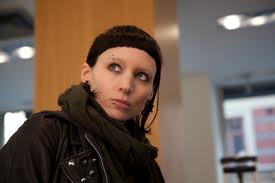
Beyond that, there’s the issue of casting for Lisbeth Salander. Now I’m not going to knock either Noomi Rapace or Rooney Mara, partly because they’re both terrifying…
But I do nevertheless have to address the eyebrows.
More specifically, the fact that Mara’s Lisbeth doesn’t have any.
Ok, that’s not entirely fair- Mara’s version does have eyebrows- they’re just wispy blonde and really hard to see. And that’s something that’s pretty dang unsettling- heck, it’s downright terrifying.
I know it’s probably petty, but Rapace’s Salander, having eyebrows we can actually see, makes it that much easier to watch an already tough movie.
II. Watch the Second Movie First (Then the First, Then the Third)
Not having had any background knowledge of the series, I accidentally wound up watching the second part of the trilogy (The Girl Who Played With Fire) instead of the first segment (The Girl With the Dragon Tattoo). As confusing as it was, I think that this is the best way to do it. While it’s a good movie, The Girl With the Dragon Tattoo really is something of a stand-alone piece, often accused of being pretty linear and slow. The subsequent stories, filled with high stakes of human trafficking and political intrigue, are a lot faster and more action-packed, but really depart from the general style of the first segment. By starting with The Girl Who Played With Fire, you get to be dropped right into the action and have a relaxing “flashback” with TGWTDT that fills in all the blanks and builds up tension and momentum for the final film, The Girl Who Kicked the Hornet’s Nest. Give it a shot- I promise it’ll pay off.
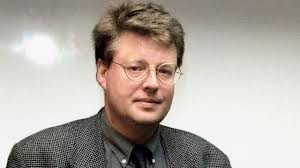
IV. Cut Steig Larsson Some Slack
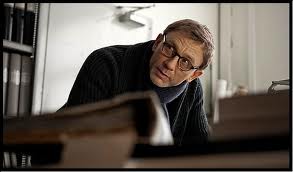
A lot of critics of both the film and the books have pointed out that the male protagonist in the stories, Mikael Blomkvist, is essentially author Steig Larsson’s literary avatar. As a result, plenty of people blow off the films and books as just being Larsson’s own little fantasy in which he, the last honest journalist teams up with a goth-punk hacker to solve mysteries together. The fact that Fincher chose Daniel Craig (a.k.a. James ****ing Bond) to play Blomkvist probably didn’t do anything to assuage those accusations.
But here’s the thing- Larsson can’t be accused of writing a fantasized version himself into his books because the real Steig Larsson is way more badass!
As a boy, Larsson witnessed the rape of a woman, and so wracked with guilt at not having been able to do anything, wound up dedicating the rest of his life to fighting for justice and equality. In the 70s, he traveled to Eritrea to train an all-female squad in the Eritrean People’s Liberation Front. He returned to Sweden to found a watchdog journalist group and investigate and combat neo-nazism and white supremacy, despite continually receiving death-threats.
Yeah, that’s not so much a biography as it is a superhero origin story. That’s enough right there to make Jack London and Ernest Hemingway look like pansies. If anything, Blomkvist is a version of Larsson nerfed for the sake of believability. Let’s cut the guy some slack.
IV. Understand a Bit About What’s Being Addressed
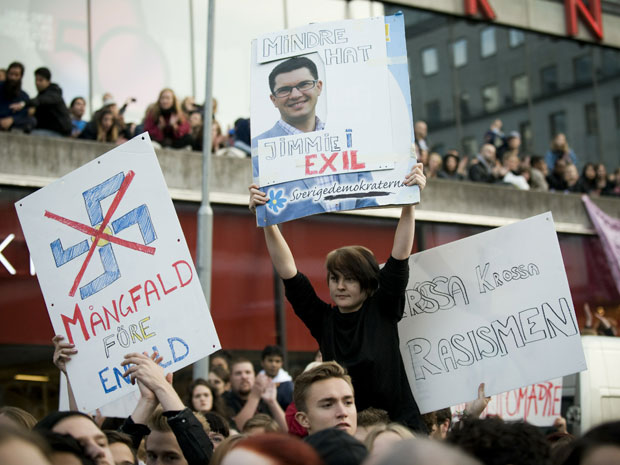
Part of the issue with the series is that it’s a commentary in no small part on Swedish social and political issues. I only recall it being hinted at in the American version, but the Swedish version of the film spent a bit more time touching on the Wennerstrom family’s (and the entire country’s) shameful flirtation with Nazism in the 30s and 40s, as well as the ongoing issues of xenophobia and racism in contemporary Sweden. Beyond that the series tries to address issues of corruption within the state, as well as the ugly reality of human trafficking (which despite growing awareness, might not quite strike home with American audiences). You don’t need to have a detailed understanding of the intricacies of State-Capitalist governance and Scandinavian history, but knowing a bit about the very real issues of fascism and racism in Europe does add a whole lot.












 I. Watch the Swedish Version Instead




 Culture War Reporters
Let’s Talk About The Hijab
I could spend all day railing on the treatment of the Middle East/Arabs/Occupied Palestine/Muslims/etc. The way Arabs/Muslims are singled out for scrutiny and criticism. Casting Indian actors to play Arabs, since Arabs don’t match their own stereotype. The lack of appreciation for the key role the Middle East played in preserving and advancing science and philosophy.
You get the idea.
So rather than trying to tackle a single issue that could be (should be, and has been) covered by an entire academic book, I’m going to hit up super-specific issue.
The hijab. Continue reading →
Rate this:
3 Comments
Posted in America, Europe, feminism, Islam, media, race, religion
Tagged Aceh, afghanistan, Africa, America, Arab, Asia, bigotry, Christopher Titus, comments, congressman todd akin, Culture, Egypt, Europe, expression, feminism, Feminist, freedom of speech, Hijab, human-rights, indian actors, Indonesia, Iran, Islam, Islamophobia, Jordan, Kevin Hart, Lebanon, Malala Yousafzai, mennonite, Middle Eastern, middle-east, misogyny, missouri congressman, modesty, no shirt no shoes no service, north america, patriarchal, patriarchy., politics, racism, racist, rape, religion, saudi arabia, secular, social standards, stubbenville, Syria, Todd Akin, trial, western, westerner, women's issues, women's rights