Author Archives: Evan

A Comprehensive Timeline of Overwatch and Playable Black Female Characters (And Why It Matters)

While the Overwatch League, Blizzard’s high-profile international esports endeavour, is well underway (#RiseTogether), casual players who are in tune with the ebb and flow of the game’s content await with bated breath. With the end of the month fast approaching, history dictates that sometime within the next week or so a new hero will be announced, with the latest addition to the roster going live close to the end of March (see: Orisa and Brigitte’s respective release dates).
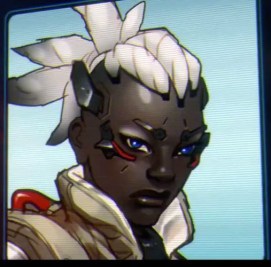
yeah

A new hero is an exciting prospect for a number of reasons, with competitive players hoping for a chupacabra to finally kill the GOATS meta and lore fiends longing for something, anything, to forward the molasses pace of the universe’s story. It’s also an opportunity for a particular contingent of fans to ask, once again, when the award-winning shooter will finally create a playable Black woman.

Similar to my breakdown of the character of Ned Leeds in Spider-Man: Homecoming and his relationship to Ganke Lee from the comic books, I will be creating a thorough chronology that highlights select dates in Overwatch‘s history, as well as the public outcry for a Black female hero. Unlike the earlier article, however, I will also be providing my own commentary on why this is so important to some (and perhaps should be to everyone).


November 7th, 2014: Overwatch is announced at BlizzCon, an annual gaming convention that celebrates Blizzard Entertainment’s games and their countless fans, marking their first original IP in 17 years. While a cinematic trailer spotlights four key players in the universe’s lore, a gameplay trailer focuses on the 12 heroes currently available at that time.

Notably, even at this early stage the roster featured a surprising amount of diversity, with the Egyptian combat-armoured Pharah and Indian light-bending Symmetra.


lucioMarch 10, 2015 to November 6, 2015: The remaining nine heroes are announced, rounding the final hero count out to 21.

Lucio (as seen on the right), a world-famous DJ-turned-freedom-fighter, appears to be Afro-Brazilian (and originates from that country).


December 7, 2015: In one of the very first (and soon-to-be heavily memed) Developer Update videos, game director Jeff Kaplan discloses that all future content for Overwatch
(“additional maps and heroes that we’d like to add to the game”) will be free, indicating that the number would not stay 21 for long.


May 24, 2016Overwatch is officially released. Continue reading

#Justice4Revian: The State of Asian Contestants on The Bachelor

As I write this #BachelorNation, millions of viewers strong, is wrapping up the second episode of the 23rd season of The Bachelor. Having said that, let’s cut to the chase: I’m watching The Bachelor again (though I have not resurrected my meme instagram account)! In all seriousness, the actual chase being cut to is this: there’s a Chinese girl on Colton’s season!

As a quick aside, there have been other Asian women on The Bachelor, and vastly more than the number of Asian men on sister show The Bachelorette. Those contestants, mentioned in past race-related Bachelor posts, have (to my knowledge) all been mixed race (and always with one white parent). All of a sudden here we are, 17 years after the show has premiered, and we have Revian Chang.

Similar to past topics only cursorily mentioned, the Facebook group subtle asian traits is entirely deserving of its own blog post. Putting that aside for now, it’s the following post on that page that brought the news to my attention:

revian

For the uninitiated, “ABG” stands for “Asian Baby Girl”, which Urban Dictionary helpfully defines as a “Cute asian girl looks like aecinira on twitch.” Which is helpful to some readers, probably. The post was edited soon afterwards to reveal the reason for the title of this post: Revian never made it past the first night.

Continue reading

Who Did It Better? Coming Out with J.K. Rowling and Overwatch Lead Writer Michael Chu

It’s the Year of Our Lord 2019 and storytelling is still important. In some cases the stories are the same, like the age-old tale of good triumphing over evil, but they’re being delivered in increasingly more novel ways. Comics are drawn and fan fiction is written and YouTube sketches are filmed, and sometimes the collaborators aren’t even in the same city, let alone country. In other cases the stories, while nothing new, are finally being given the opportunity to be told. The idea of finding yourself isn’t an original one, but the narrative of coming out as gay or lesbian or transgender or any other identity has only recently found a foothold in popular media.

rowlingchuStorytelling and identity are crucial building blocks to our culture, and both are heavily intertwined (as are all things, these days) with the internet (it would be remiss of me not to mention that I chose to do so in a podcast I co-hosted). This is certainly as true for a multi-award-winning online first-person shooter as it is for a series of books that wrapped up a dozen years ago. The Overwatch and Harry Potter universes are like ours in that they are populated by a myriad of different characters, some straight and some LGBT+, but I want to delve into how the similarities, and ultimately the differences, of their respective coming out stories (in both cases the term “coming out” feels accurate, as none of the characters discussed were initially introduced as being anything other than straight).

“Yer a Gay Man, Dumbledore”

Before touching on her approach to revealing one of her characters’ sexual orientations, it’s worth making note of how the billionaire author has reentered our collective conversation. Two years ago a BuzzFeed writer was one of the first to report on a shocking revelation found on Pottermore, a site Rowling created for her legion of fans to learn more about the Wizarding World. Most people online will have come across this by now, but the page in question was about the Chamber of Secrets, and explained that wizards once vanished their excrement in lieu of using toilets. It resulted in one of my favourite Tumblr posts:

brooke

The user has since deleted their blog, so no direct link, sorry!

Continue reading

The 2017 Evan Yeong Literary Awards

As laid out in the first-ever Evan Yeong Literary Awards, the purpose of these blog posts has been to provide a retrospective of the books read in the past year. Typically these have been written and published in January, but here we are. Better late than never, as I always say.

2017

This is the first of these awards to be written during my relatively new career in publishing. While I wouldn’t say I have a strong understanding of the ins and outs of what’s hot in the industry, I certainly have a healthier grasp of things, especially compared to past years when I had none whatsoever.

The other notable difference is that the list of books read has been censored in part, due to a number of the books having been unsolicited manuscripts that I was asked to read during my time as an Editorial Intern at Penguin Random House Canada. A handful were also unpublished manuscripts or ARCs (Advanced Reader Copies) and have been marked as such. You can check out a full list [with the exact dates of when I read each one] at this link.


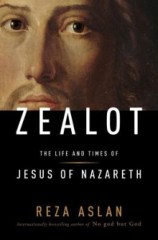
zealot

ALMOST AS COMPLEX AS THEIR NAMESAKE

Zealot: The Life and Times of Jesus of Nazareth by Reza Aslan
Published 2013

Those who aren’t as familiar with the works of C.S. Lewis should know that “Aslan” is the name of the Judeo-Christian-God-stand-in of that author’s Narnia series. The lion is a complex figure, embodying a dichotomy of a being that is “isn’t safe” while also “good”. Aslan himself is a likewise complicated man, having been raised Muslim, converted to Christianity in his teens, then back to Islam, a faith he continues to practice, and did during the writing of this book. A fascinating fact for both believers and nonbelievers alike is his statement that whether or not he was the son of God, the Nazarene definitively performed miracles.

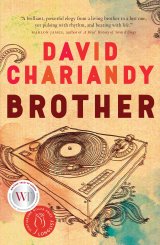
brother

SHOULD HAVE WON THE 2017 GILLER PRIZE

Brother by David Chariandy
Published 2017

One of many short, powerful works of fiction that I read this year, Brother is as unpretentious and beautiful a novel as you’re likely to find, and a worthy contender for Canada’s loftiest and most coveted literary prize. Shining a spotlight on Scarborough in the 90s, an area that I have (recently) shamefully joked about only “technically being Toronto”, this book would have served as a reminder of the real life stories that are overlooked and underheard.

The actual winner of the 2017 Scotiabank Giller Prize was Michael Redhill’s Bellevue Square, which I read the ARC of. Brother was longlisted. Continue reading

Creating Mum: Director Anne-Marie O’Connor and Actor Kate O’Donnell on Their Award-Winning Short Film

To say that the relationship between a child and parent is fraught with emotions, most of them far from easy to put into words, is putting it lightly. Yet this is the subject of Mum, a short film that captures a visit from a trans woman to her aging mother. Having already won a handful of accolades, it began screening as part of New Irish Shorts 3 at the Galway Film Fleadh just this past Thursday, July 13th.

Mum is the creation of many talented individuals, chief among them being director Anne-Marie O’Connor and actor and star Kate O’Donnell. In addition to being able to review the short film I was also offered an interview with the two of them that allowed me to gain a better understanding of how this particular work came to be.


First off, congratulations to the both of you on the awards that Mum has won so far, at both the London Independent Film Festival and Global Shorts. To springboard off of that into our first question, as it’s screened as part of “New Irish Shorts 3” at the Galway Film Fleadh, what helps to make this an Irish film outside of the talent involved?

O’Connor: The song that is played and sung throughout the short is Black Velvet Band. It was important to me for this to link the film as it was a song that Kate’s mum used to sing to her and a song that my dad used to sing to me as a child. And although geographically it isn’t set in Ireland, the relationship between Kate and her mum feels very Irish to me and in writing this I felt that Linda was second-generation Irish and that Kate was a product of that upbringing.

I noticed in the credits that Mum was created by the two of you, but that it was only written by Anne-Marie. Could you both go into some detail regarding the creative process?

O’Connor: Kate and I are good friends and have been for years, and as she’s a leading trans actor and activist I’ve always wanted to work with her creatively. We often discuss the way that transgender people are portrayed in film and TV (the fascination with the transition, the no-one-will-ever-love-me storyline, sex workers or outsiders) and wanted to make a short that didn’t fall into those familiar tropes, to have a transgender central character in a universal story.

So I met with Kate and I asked her what story she would tell if she could and it simply came from her saying she’d love to go home and paint her mum’s nails; something she used to do when she was younger but is impossible to do because her stepfather makes life difficult (he’s always been difficult, way before Kate transitioned!). And so we built the story around her own story. It was very important for both of us that Kate was acknowledged in the creative process. So that is why it is created by both of us.

Continue reading

Mum: A Short Film Review

“Mum.”

It’s a term that elicits a broad range of emotions, with each of our respective childhoods affecting how we react to it. Who we were, growing up, is a significant factor. But what about instances when who we are now is worlds apart from the person we once were?

Having spent much of her career up to now working in television, Mum is Anne-Marie O’Connor’s first short film, and one that she created with the help of star Kate O’Donnell, a transgender actor. Her debut short focuses on a trans character of the same name whose visit home is derailed by the discovery that her mother is in very poor health.

Much like the director, O’Donnell’s limited experience is also in television, where she starred in an episode of the transgender romcom series Boy Meets Girl. As the character at the centre of this short film she delivers a performance that, while uneven at points, always feels painfully real. Continue reading