I began the first installment of this two-parter making note of the long and ultimately wearying experience it has been, starting with Doctor Strange going into pre-production and continuing on to the recent exposure of the Swinton-Cho Letters. While I spent time describing the ups and downs of casting news what I neglected to mention, and what I’m going to focus on today, is the outset and ultimate resurgence of an argument in defence of whitewashing.
That’s right, an argument defending what Wikipedia helpfully defines as “a casting practice [. . .] in which white actors are cast in historically non-white character roles.” The very faint silver lining is that the justification here does not revolve around star power and A-list draw, or the idea that “the best person for the role” was hired, the latter of which rarely ever swings in the other direction. In spite of not being deeply rooted in these ways of thinking, however, the argument presented remains deeply flawed.
Before we get into that, however, we should probably get to its origin story.
Like I Said Last Time, “It’s Always Podcasts”
Having to hit all of this again it’s important to be thankful for small blessings, with one being that I don’t need to hear C. Robert Cargill’s voice again due to already having done the research for another post. The person in question was one of the screenwriters for Doctor Strange, and dropped in on the Double Toasted podcast mid-April to answer a few questions about it.
“The Ancient One was a racist stereotype who comes from a region of the world that is in a very weird political place. He originates from Tibet. So if you acknowledge that Tibet is a place and that he’s Tibetan, you risk alienating one billion people who think that that’s bullshit and risk the Chinese government going, ‘Hey, you know one of the biggest film-watching countries in the world? We’re not going to show your movie because you decided to get political.’ If we decide to go the other way and cater to China in particular and have him be in Tibet [. . .] If you think it’s a good idea to cast a Chinese actress as a Tibetan character, you are out of your damn fool mind and have no idea what the fuck you’re talking about.”
In essence Cargill chalked the reasons for the casting decision up to politics and economics, implying that having the character played by a Tibetan would cause Marvel Studios to lose out on Chinese box office sales. He also suggests quite strongly that, conversely, having a Chinese actor play a Tibetan would cause a large amount of controversy. This was picked up by sites from IndieWire to ScreenRant to The Hollywood Reporter, with several using words like “reveal” in their headlines, as if a longstanding mystery had finally been solved.
The justifications he laid out were to become the go-to response for every commenter looking to defend the Swinton’s casting, and why not? After all, as one of the screenwriters of the film Cargill should be a direct and dependable source. The answer to that hypothetical starts with what happened a few short days later- Continue reading →
I was tired when I wrote, last June, about how Tilda Swinton was in talks to play the Ancient One in the then-upcoming Doctor Strange, because it was just one of several announcements where a role that could have gone to an Asian person didn’t. And it made me weary to have to read comments like “if any young white woman can pull off an old Asian man, it’d be Tilda Swinton,” and “PLEASE TELL ME HES PLAYING WONG!” after it was revealed Martin Freeman would be appearing in Captain America: Civil War.
Swinton ultimately being cast as the Ancient One, a Tibetan man in the comics, was never far from my mind moving forward. I would inevitably bring it up when discussing whitewashing and racebending in The Martian that very same year, and in many ways it made Doctor Strange a film that loomed in the impending future, a comic book movie I would need to see for myself in order to determine whether or not they did right by the groups they were trying not to offend.
Just to be clear, I can’t honestly say that I was angry when finally watching the movie. Like the title of my write-up plainly states I was left feeling disappointed. It also notes that my expectations were never particularly high, and how could they be when the filmmakers rewrote the character of Wong back into Doctor Strange upon finding that casting Swinton left them without any prominent Asian roles [in a movie that is set in Asia roughly half the time].
It was over a year of waiting for a film whose creators touted the representation of an older white woman to offset what was, without argument, whitewashing. It’s a defence that implies that in some cases the choices are feminism/anti-ageism and racial diversity, and that the two are mutually exclusive. It was, to put it more strongly, exhausting. And it’s easy to say that I should just care about this less and not let it affect me so much, but Asian representation is an issue that directly affects me, and one that will affect my children if and when I have any.
I was already so tired of all of this, and was looking forward to being able to stop thinking about Tilda Swinton and Doctor Strange and enjoy the few moments before we get any closer to Ghost in the Shell being released [difficult as a teaser aired before the Marvel film being discussed]. And what should I find this past week but an email conversation between Tilda Swinton and Korean American comedian Margaret Cho, which I have dubbed the Swinton-Cho Letters, and the internet’s response to the whole thing.
When I first started putting my fingers to the keyboard this was meant to be a single blog post split into two parts, but over a thousand words in and I thought two separate posts might be more efficient. And what better way to end a horrible year than to devote so much time and effort towards such a truly draining topic? Continue reading →
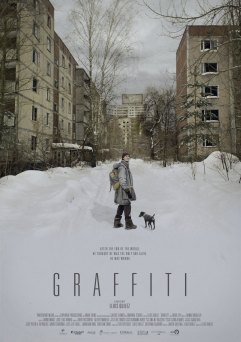
Seven years after an unnamed apocalypse, lone survivor Edgar (along with his beloved puppy, K.O) wander a urban wasteland. Edgar spends his days scouring local buildings for supplies and marking contaminated zones with spray paint warnings and signals for help.
From the first frame the audience is taken on a brutal journey of brutal isolation as we follow Edgar (Orial Pla) through the cold and decaying cityscape, both depressing and still strangely beautiful. And that, right there, is perhaps the greatest charm of the film.
Director Lluís Quílez does a masterful job at creating a stark, bitter, but still utterly believable world. Quílez captures not only the grand sense of loss but the simple, even monotonous existence of his protagonist. Throughout I was constantly reminded of the feel of first half of I Am Legend (in the best possible way). Special kudos to Quílez for his research, as Edgar’s own warning symbols bear an uncomfortable resemblance to the FEMA marking system used during actual disasters.
A fantastic job is done of showing the mundane, day-to-day “chores” of living in a post-apocalyptic wasteland. Which is something I’ve ironically always found to be one of the most interesting parts of the genre, but I’m weird like that.
Welcome to another installment of “For Your Consideration”, every one of which thus far has covered comic book and video game movies [and this week’s is no exception]. The point of this particular feature was to present just the facts, allowing readers to come to their own conclusions, as well as to cobble together a short post due to a lack of time to devote to a longer piece. The latter is less applicable this time around as this required a lot of research and was not at all published in a timely manner.
Thursday night marked the premiere of the first ever trailer for Spider-Man: Homecoming on Jimmy Kimmel Live!, as well as the international trailer online. What caught my eye watching it, and what I’m going to detailing below, is the appearance of Ned Leeds, played by actor Jacob Batalon. Below I’ve compiled a timeline that tracks the history of that character, another character named Ganke from the comics, as well as the film franchise’s track record with diversity.
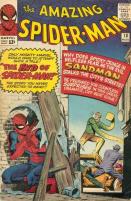
November 1964: Ned Leeds debuts in Amazing Spider-Man [Vol. 1] #18. His character is a field reporter at the Daily Bugle, where he meets Peter Parker and Betty Brant, the titular hero’s ex-girlfriend who he will one day marry. In later years Leeds went on to become the villain Hobgoblin for a spell, and was later killed [though you know what they say about death in comic books].
Ned Leeds is, as so many comic book characters at the time, a White man with brown hair and blue eyes.
Ultimate Comics: Spider-Man (Vol. 2). Written by Brian Michael Bendis, illustrated by Sara Pichelli.
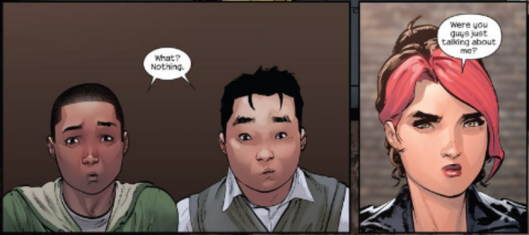
November 2011: Ganke Lee debuts in Ultimate Ultimate Comics: Spider-Man [Vol. 2] #2. His character is the best friend of Miles Morales, a half-Black/half-Latino teenager and the new hero headlining the title.
As pictured on the left, Ganke is of Korean descent and a larger kid. The character is also shown to be a fan of LEGO blocks, or whatever non-copyright-infringing alternative can be found in the Marvel universe.
April 30th, 2014: IndieWire former chief creative officer for Marvel entertainment and founder of Marvel Studios Avi Arad is interviewed by Indiewire. When asked if “Spider-Man in the cinematic realm [would] always be Peter Parker” [in reference to Morales ever taking the role] he responded: “Absolutely.” I further covered his comments a week later.
“This new level of collaboration is the perfect way to take Peter Parker’s story into the future.”
June 6th, 2016: It’s revealed that fourteen-year-old actor Michael Barbieri has been cast in the upcoming Spider-Man: Homecoming. ComicBook.com reveals that, according to its sources, Barbieri’s character will be new, and “based off the Ultimate Spider-Man character Ganke.”
As seen on the left, Barbieri is currently not particularly heavyset, and is also not Korean or of Asian descent at all. It’s also worth noting that Peter Parker and Ganke Lee do not currently have any kind of relationship within the Marvel universe as the latter is a stalwart part of Miles Morales’ supporting cast.
EthniCelebs, while likely not the most reliable of sources, notes that Batalon was born in Hawaii and lists his ethnicity as “Filipino, possibly other”.
November 15th, 2016: In addition to the Comic-Con announcement made several months earlier, Batalon reveals on KHON 2 News, a Hawaiian program, that he will be playing Ned Leeds in Spider-Man: Homecoming. He reiterates that Leeds is “Peter Parker’s best friend in the film.”
December 8th, 2016: As mentioned, the first Spider-Man: Homecoming trailer premieres on Jimmy Kimmel Live!;the international trailer likewise makes its way onto YouTube.
“Admittedly it’s a very easy mistake to make. As we see in the trailer, Batalon plays Spider-Man’s best friend and one of the only people to learn his Spider-secret. Ganke Lee, a supporting character introduced in 2011’s “Ultimate Comics Spider-Man” #2, is also the best friend of a Spider-Man and also knows his secret identity. And yeah, both Batalon and Ganke are of Asian descent (Batalon is Filipino American and Ganke is Korean American). To be honest, maybe Batalon should be playing Ganke. But he’s not — he’s playing Ned Leeds.”
The final line hammers that point home, with columnist Brett White writing, “So right now, Spidey’s best friend looks and sounds a lot like Ganke — but he’s not Ganke. He’s Ned Leeds.”
December 9th, 2016: Inverse, the website responsible for the article Watts was likely responding to back in June, publishes another titled “‘Spider-Man: Homecoming’ Appears to Have Jacked a Miles Story”. Their coverage includes tweets from comic book fans who find the inclusion of Ned Leeds as he appears particularly damning, with one noting:
The article also highlights a moment within the trailer, drawing comparison between it and a moment in the comic books.
Miles Morales: Ultimate Spider-Man (Vol. 1). Written by Brian Michael Bendis, illustrated by David Marquez.
To summarize, Jacob Batalon will be appearing in Spider-Man: Homecoming as Ned Leeds, Peter Parker’s best friend. He bears a very heavy [no pun intended] resemblance to Ganke Lee, Miles Morales’ best friend in the comics. While the appearance of an Asian character in a major role certainly backs up Watts’ desire for the Queens depicted to reflect being “one of—if not the—most diverse places in the world” what may need to be addressed, by Watts or whoever else, are some fans’ concerns about poaching a POC character from another POC character’s story.
Miles Morales ever making an appearance in the Marvel Cinematic Universe has yet to be confirmed, but the question many have been asking since Thursday’s trailer dropped was if Ganke showing up is even possible now that this Ned Leeds exists onscreen.
Today marks the last installment of “Making Till We Meet Again“, a series of interviews with the creators of the award-winning indie film in question. Focused on a handful of tourists making their way through Thailand, many of the questions and answers to date [with director Bank Tangjaitrong and actor/writer Johan Matton] have revolved around depicting another country and culture given that framework.
Actor Emrhys Cooper is the last person to share with us, in particular about how both he and his character, David, have experienced being in the South East Asian country as visitors and guests. Fair warning, this interview contains mild spoilers for Till We Meet Again.
David tells Joanna that being in Thailand “realigns you with who you really are.” Had you been there prior to filming Till We Meet Again? Do you think there’s any truth to that?
Yes, for many reasons South East Asia has pulled me into its orbit. That powerful land mass includes a major portion of this planet’s populations, including both India and China which are the two of the most densely populated nations on earth.
At the naïve age of 18 I went on a backpacking tour of Thailand. What an incredible experience that was. Then, in 2013, I was back again as I was cast in a movie called Kushuthara which shot in Bhutan. That’s a tiny country located up in the Himalayan mountains between India and China; one must go via Bangkok to get there.
This year I returned to Thailand to shoot another movie in Bhutan. I was lucky to get to spend New Year’s Day in Bangkok, followed by an impromptu trip to Vietnam. When I finished shooting in Bhutan I went to Cambodia, which is a country any person interested in animal protection should see. The elephant sanctuary reminds us that we are not God’s greatest creatures, but only the caretakers of his best and most precious treasures. To hear and see an elephant in all its glory, means more than any person’s hug or kiss. All human beings who value our animal companions, both great and small, should understand this.
Traveling helps realign you; travellers look to find themselves or something that will help them grow. In that sense, traveling is one of the greatest therapies. It belongs alongside the couch of Sigmund Freud as a great tool for our minds, to escape from a solely interior world.
Till We Meet Again is an award-winning indie film focused on the way relationships can both begin and change when traveling abroad. So far I have been given the opportunity to watch and review the film, as well as bounce a few questions off of director Bank Tangjaitrong in the first installment of “Making Till We Meet Again“.
Today I’ll be sharing an interview I conducted via email with Johan Matton, whose role in the production include writer, executive producer, and acting as Erik, one of the leads. That being said, while the film was ultimately directed and brought to life by Tangjaitrong it can’t be argued that its very existence largely lies on Matton’s shoulders.
David tells Joanna that being in Thailand “realigns you with who you really are.” It seems apparent from the film, which you wrote as well as starred in, that you’d been there before. How much truth do you think there is in that statement?
I wanted the character David (Emrhys Cooper) to come across as a flirtatious, charming person who always knows what to say but is still real and sincere, not the stereotypical obstacle of a man for Erik and Joanna that he could have been. I believe in this moment he speaks about what is true to him; he is not just using catchy lines to charm Joanna (Linnea Larsdotter) at this point, I think he means it sincerely and believes this to be true. For me I believe in individuality [laughs] and that expressions such as this where “you” means “everyone” can be a bit naive.
Some people might be aligned, some people may not. However, empirically for me, Thailand definitely aligns me and I find myself looking inwards and realizing what more I can give to the world and how egotistical New York makes me if I do not take enough pauses from the city. I also believe strongly that some people do tend to get grounded sometimes when they travel and change perspectives from the loop of life we are usually in. So the statement is true to David and for me, but most likely not to everyone. Continue reading →






 June 6th, 2016




 Culture War Reporters