Category Archives: race

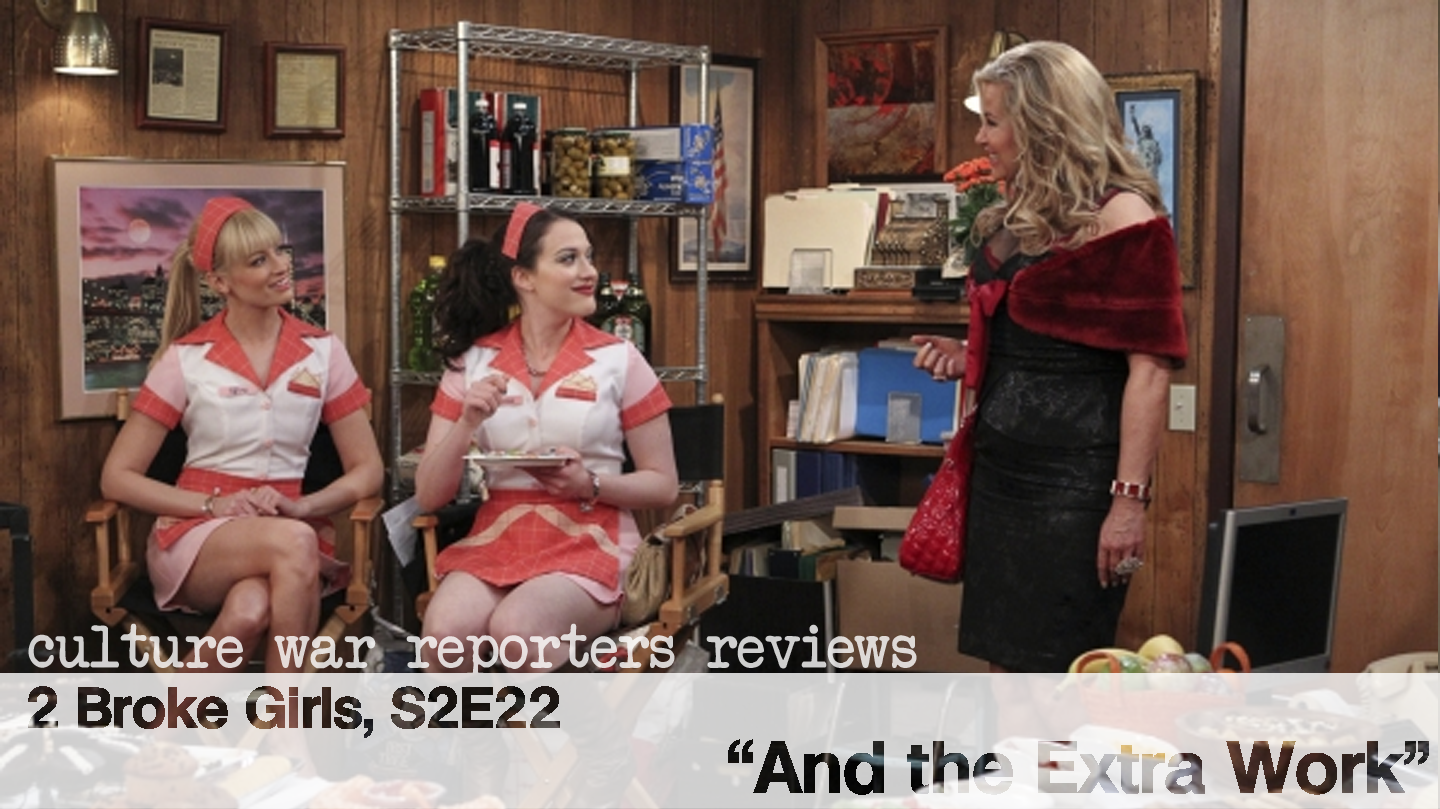
2 Broke Girls, S2E22 “And the Extra Work”: A TV Review

extraworkkk

Fair warning, I attended a screening of Iron Man 3 tonight in order to write a review for a children’s magazine. I enjoyed it a lot. I am not sure how my enjoyment of that movie will affect my opinions of this episode.

We start things off with a cake literally out of carrots, so colour me interested from the outset. Then Max jokes about how she and Chestnut [their horse] should one day get the same rights as gay couples, and Caroline admits to subway molestation as being an acceptable poor man’s version of an actual massage. Oof. Maybe I should have waited a day before writing this. Continue reading

Shame Day: Africa Will Always Be Poor (And Other Racist ****)

First off, CISPA, passed by Congress last Friday, is headed to the floor of the Senate. If you haven’t already, get in contact with your senators and send them this message:

Now back to business.

I’ve been meaning to take a crack at this issue for a while. In fact, I’ve even tried a few times to actually write a post on it- I just couldn’t quite find the words to illustrate the problem succinctly.

Then, earlier today, I came across this image [click to open up larger in a new window]:

Continue reading

Black Panther, Batwing, and African Superheroes

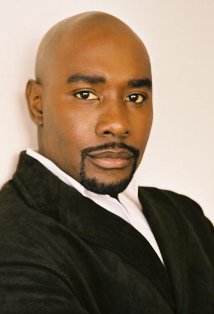
Four days ago actor Morris Chestnut, who will appear in the upcoming Kick-Ass 2, posted the following on both his Twitter feed and Facebook page:

It’s time to get familiar with the Black Panther character.

This prompted the usual onslaught of internet speculation, and both have since been taken down. The next day he wrote a tweet to quell the masses who were clamouring to hear more about an upcoming Black Panther film.

I, for one, was personally grateful to hear this news.

“Why?” you might be asking, “Evan, I thought you were all about introducing the Wakandan super-king into the Marvel cinematic universe.” You would not be wrong in your assessment, and let me explain why, exactly, I felt this way. Continue reading

Fame Day: The Young Turks Arabs

A few days ago, a client at the nonprofit where I work heard that I was from the Middle East.

The conversation went as it usually does, beginning with some surprise, followed by a few questions like “why on earth were over there?” and “How did you learn to speak English?”

You get used to questions like that.

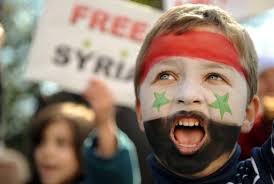
Then came the inevitable comments on the ongoing violence in my adopted homeland of Syria. Those comments are always pretty vague- existing as a result of having to say something so as to not appear ignorant while being ambiguous enough to avoid proving that you are ignorant. In this case it was a theatrical, sad shake of the head, followed by the statement “Well that’s a shame. But y’know? There always has been fighting over there and there probably will be to the end of time.”

I’ve always hated that statement.

In all fairness, that’s true as well…

First and foremost, it’s a complete lie: “There’s always been war in the Middle East?”

No, there hasn’t. For centuries, the Arab world was the shinning pinnacle of human civilization. Even in its decline, the Middle East was still a relatively peaceful place- especially when compared with the rest of the world. Look at European History in the 19th and 20th centuries and compare its body count with that of the Middle East in the same time period.

Secondly, there’s a deeply racist implication in the statement that “there will always be war in the Middle East.”

Why?

Because of the way the borders are drawn? Because there’s oil in certain parts of the desert?

Or is it because the Arabs are simply and inherently angry, violent people?

That statement is on par with saying “Africa will always be poor.” Why?

Because, you know… Africans?

This is some ol’ bull. “Africans are capable of nothing but starving, as they always have done and always will do, and Arabs are capable of nothing but fighting- always have and always will”?

Nevertheless, that was the line (and often still is) that was fed to the public over the past couple decades. Recently however, the events of The Arab Spring have completely and utterly turned that picture on its head.

Starting with the self-immolation of 26-year-old street vendor in Tunisia, ripples of protest spread out across the Arab world, building in power and momentum until they evolved into revolutions against some of the most brutal and dictators and entrenched bureaucracies in modern history. Egypt, in particular, stands out as a shining example, with thousands of young, unarmed Egyptians doing in 18 days what the US and all her allies couldn’t do for Iraq in nearly 10 years.

And no, in case you’re wondering, that had nothing to do with either Facebook or Twitter. I recall during the weeks following the victory of the Egyptian revolutionaries, pundits in the West were desperately fishing for some way to co-opt the accomplishments of the young Arabs and paint them as somehow being ultimately rooted in the bounty and decency of America. Facebook and Twitter were cited as essential tools, without which there would surely be no free Egypt. Again, any sane person is going to call bull on this. Twitter never set itself on fire. Facebook didn’t dodge gas canisters or face-off with riot police and tanks. Again, as a result of the American media’s desire to scare you without actually showing you any blood or gore, grasping the full scope of what many of these young protesters were up against is difficult, if not impossible.

You’ve got to see the casualties of battle to really and truly understand the courage and sacrifice of those going into the maw. Perhaps its for that reason that westerners often look to social media to take a slice of a glory (though my bet is still on jealousy).

And what’s even more impressive isn’t simply that the Arab people have faced off with their governments in the past, it’s that they’re still doing it.

You might think “Hey- we came, we saw, we conquered. Insert-dictator-here is dead and/or gone, let’s all go home and take a much deserved and well earned break.”

That’d certainly be a temptation for me.

But instead of resting on their laurels, the Arab people (again, the Egyptians serving as a prime example) continue to stand on the front line and demand nothing short of total freedom and complete justice. Yesterday, another young Tunisian vendor set himself ablaze in protest. In the occupied West Bank, Palestinians continue to hold hunger strikes. In spite of recently reaching over one million refugees, the rebels in Syria continue fight on against the Assad regime.

Across the Arab world, in the face of vicious repression, the Arab people are fighting on. Through their perseverance and valor, this generation of Arabs is changing the image of the Middle East from a place that “always has been violent and always will be” to something soon to be synonymous with democratic revolution, collaboration, and freedom. There’s certainly still a long way to go, but time and time again the young Arabs have proven that they’re on the right path and they’re not taking one step backwards.

What did you do today?

Shame Day: Microaggressions

A few weeks ago I stumbled onto a website called The Microaggressions Project and then promptly forgot about it. Returning to it tonight I looked over the “About” page, which had the following paragraph at the top:

This project is a response to “it’s not a big deal” – “it” is a big deal. ”It” is in the everyday. ”It” is shoved in your face when you are least expecting it. ”It” happens when you expect it the most. ”It” is a reminder of your difference. ”It” enforces difference. ”It” can be painful. ”It” can be laughed off. ”It” can slide unnoticed by either the speaker, listener or both. ”It” can silence people. ”It” reminds us of the ways in which we and people like us continue to be excluded and oppressed. ”It” matters because these relate to a bigger “it”: a society where social difference has systematic consequences for the “others.”

A little later on they define what “microaggressions” are, a term that was originally coined to speak about racial experiences. From the essay “Racial microaggressions in everyday life: implications for clinical practice,” which appeared in American Psychologist, Vol. 62, No.4:

“Racial microaggressions are brief and commonplace daily verbal, behavioral, or environmental indignities, whether intentional or unintentional, that communicate hostile, derogatory, or negative racial slights and insults toward people of color.”

One example of this could be a White couple walking down the street and having a Black man pass by them on the sidewalk. The woman clutches her purse tighter against her body, the subconscious idea being, of course, that Black men are prone to crime and should not be trusted.

As an Asian-Canadian I’ve experienced microaggressions plenty of times. I’ve had someone ask me if I was half-White [I am clearly not] with their rationale being that my “English was very good.” It can be an everyday occurrence for non-White people [I deign to use the word minorities, since I do believe that balance is turning the other way], and begs the question: “Why is this such a big deal?”

Writer of the aforementioned article and author of Microaggressions in Everyday Life: Race, Gender, and Sexual Orientation, Derald Wing Sue, PhD, has observed that microaggressions have actually been found to: “(a) assail the mental health of recipients, (b) create a hostile and invalidating work or campus climate, (c) perpetuate stereotype threat, (d) create physical health problems, (e) saturate the broader society with cues that signal devaluation of social group identities, (f) lower work productivity and problem solving abilities, and (g) be partially responsible for creating inequities in education, employment and health care.”

In other words, a Black or Latino man being stopped for a “random vehicle check” by police could be upset, and may even be accused of overreacting. Maybe they should simply be used to this and not let it bother them. The truth is that it makes them feel, even if only subconsciously, like second-class citizens. It’s true in a case as blatant as this one, and in an as subtle an action as hanging a Confederate flag or  having a Native American stereotype as a high school mascot.

To broaden this to the scope that The Microaggressions Project seeks to attain, microaggressions can include people saying to a person with Asperger’s, with no ill-intent whatsoever, “That you seem so normal!” It can be a 17-year-old girl being told by her gynecologist that just because she has access to birth control pills doesn’t mean she can just sleep around.

Microaggressions work in every direction. It’s like going to a Vietnamese restaurant and being given a fork and spoon instead of chopsticks because you’re White and not Asian. Microaggressions are built on assumptions and can make people painfully aware of who they are. They are rarely meant to offend, but often do. 

It truly is a shame that so much of the time we send out microaggressions without so much as a second thought, and then defend ourselves by deeming the offended to be “too sensitive.” While we won’t always be aware of how our words or actions can harm others, we can at the very least listen to the people being hurt, and in doing so try to lessen the presence of microaggressions in our society.