
A few months ago, I had the opportunity to hear PhD candidate Rachel Brown speak about her research on food and religious identity in French and Quebecois Muslim immigrant communities. I found Brown’s talk fascinating and contacted her soon afterwards; I wanted to find out if her work was publicly available so I could write about it here on the blog. While Brown has written a chapter on her work for an academic publication it hasn’t been published quite yet. Lucky for me, Brown was willing to share a draft with me. Throughout this interview I will be referring to, and occasionally quoting, that draft in order to give you context for the questions I ask Brown.
According to Brown, her “primary research interest lies in the study of immigrant religious experience and how members of immigrant communities negotiate their religious identities through food and food practices in their host countries.” In order to write on this topic, Brown conducted fieldwork and semi-structured interviews in both Paris, France and Montreal, Quebec.

This was the most French gif I could find.
Kat: Hi Rachel, thanks again for being willing to share your research with me and our readers. Before I dive into the questions I have from reading your draft, can I ask, what drew you to this area of study?
Brown: I came to the project out of a love of all things food and all things France. On one of my many visits, I noticed that how and what the Muslim community in France ate was a point of interest for media, politics, and everyday conversation on the street between friends and neighbours. There was clearly a subject to be addressed. I figured if I was going to be in the field for a year I might as well be somewhere I love and studying something I am passionate about, and so I set out to study the topic of food and religion. As I got further and further into the topic I realized just how essential food practice is to identity, especially religious identity and my research has grown exponentially ever since. The importance of food in religious identity negotiation for immigrants can be seen across a variety of locations and traditions.
Kat: I’m also curious about the technical side of things. Did you intentionally limit your case studies to individuals from the Maghreb? If yes, then why? Also, how did you go about arranging these interviews, or even making these connections in the first place?

Brown: I definitely limited my study to individuals from the Maghreb. I did this because the largest Muslim community in both France and Quebec comes from the countries of the Maghreb. This is not only because of proximity, of the Maghreb to France, but also because of a colonial history between France and the countries of the Maghreb. When one thinks of Muslims in France, this is most often the community that comes to mind.
In terms of arranging the interviews, this was a tough process. I started by going to the Grand Mosque of Paris and just getting to know people there. I had to build up trust, and spent many hours just helping out at the mosque in order to show that I was not a journalist (a profession folks are very hesitant of in France) and that I meant well with my research. After people got to know me, some started to agree to do personal interviews with me. Once I conducted the first interviews the people I interviewed then put me in contact with friends or family members to interview. So I followed a snowball methodology. It was not easy to get people to talk to me, but because my topic is such an approachable one (who doesn’t want to talk about food?), it made it a little bit easier to get people to agree to interviews. Having the personal connection, and a validation from friends or family members that had already done the interview was also key. Continue reading
 War.
War.
 Fortunately cancelled after only four weeks of airtime, NBC’s Stars Earn Stripes stands as a demonstration of just how depraved we can be when it comes to exploiting the horror of war and our sympathy for folks in uniform. Here we break down every repellent detail of why this show (and shows like it) are as damaging as they are deluding.
 During the height of tensions with North Korea during the spring of 2013 there was more than a little bravado on the side of Americans mocking the little dictatorship and laughing at the prospect of bombing the country out of existence. Frustrated by the cavalier attitude of so many, we provided this reminder of the actual nature of war and conflict.
 Later that same year, Evan covered the trend on militaria as a fashion, targeting the ironic(?) use of Vietnam War caps specifically. Disrespectful to veterans? Trivializing of combat? Read on to see for yourself.
 In what was perhaps the most shocking titles ever given to a post here at CWR, yours truly argues that the sympathy offered the members of the armed services (especially on days such as today) are by and large crocodile tears. Actual gratitude to the men and women in uniform has a strange habit of disappearing when it involves any actual sacrifice or effort on our part. Read on to discover why.
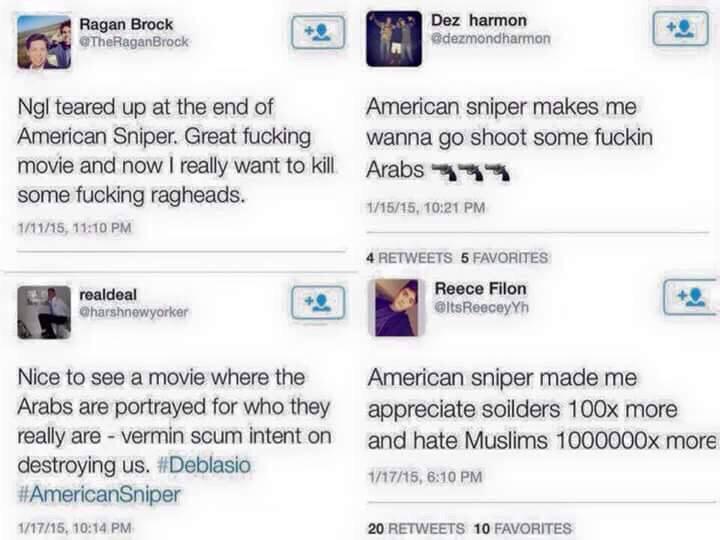 While real support for the armed forces is no easy task, honest criticism’s no picnic either, as Evan demonstrates in his analysis of the reactions to American Sniper. In addressing the legacy of celebrated marksman Chris Kyle we examine how quickly both history and our depictions of it can be distorted to complement our own views. If you look at nothing else today, look at this one.
 Look, I know


 If you’re reading this comic issue to issue, like I am, I know what you’re thinking: a new Ms. Marvel, already? Not that I [or you, in all likelihood] am complaining, but the last issue did come out just two short weeks ago.


 Culture War Reporters