Tag Archives: representation

Stereotypes and Tokenism: What Daredevil Did Wrong and What Riverdale Appears to Be Doing Right

So right off the bat, I want to say that Arthur Chu of Jeopardy-winning fame has already done much of the groundwork for me with his [spoiler-filled] article “Not Your Asian Ninja: How the Marvel Cinematic Universe Keeps Failing Asian-Americans“. In it he recounts his primary disappointment with the second season of Netflix’s Daredevil, namely that the Asians presented in that show are generally villains across the board.
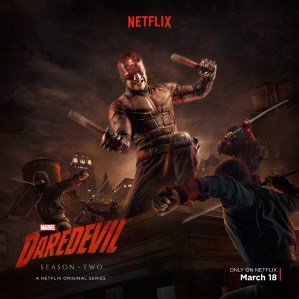
daredevil2poster

Not only are they of an evil persuasion, they’re also, as the title of his piece implies, mostly ninjas. In terms of sheer volume the vast majority of Asians seen on screen during the season’s 13 episodes are that particular brand of martial artist. The rest are, in terms of representation, gangsters, white collar criminals, and crime lords. It is, as Chu says, “Not a good look.”

He picks the Kitchen Irish, a gang of an obvious ethnic background, as his primary example of the show using nuance with a people group. Matthew Murdock, the titular crimefighter himself, is of Irish descent, and another character nicknamed “Grotto” is a former member of the mob who elicits sympathy from both the show’s cast and its audience. While I understand that Irish heritage is unique and distinct from many others, and that people of Irish descent suffered extreme racism in early American history, what shouldn’t be ignored is the fact that on the surface they are White. As are the members of fellow gang the Dogs of Hell. As are Murdock’s friends Karen Page and Foggy Nelson. As is Frank Castle, the Punisher, as well as newspaper editor Mitchell Ellison. Television is full of White people, and with Daredevil being no exception simply stating that there are varied roles within even one subgroup feels like a given.

Unfortunately, Asians fail even when stacked up against other racial minorities. Continue reading
The Power of Twitter Showcased at the Oscars: #OscarsSoWhite, #YesAllWomen, and #AskHerMore

Twitter has changed the way news is reported. The Black Lives Matter movement has been particularly successful in raising awareness for cases of police brutality that generally would have been overlooked by mainstream news channels.

Arguably the second most important aspect of Twitter is its ability to connect celebrities to their fan base. With the prevalence of these two features, it’s hardly surprising that celebrities and celebrity events have become more politicized.

This year’s Academy Awards are a prime example of this overlap between the celebrity world and political struggles that have been highlighted via Twitter. Below, I’ve included a few notable examples of Twitter flexing its muscles at the Oscars

#OscarsSoWhite

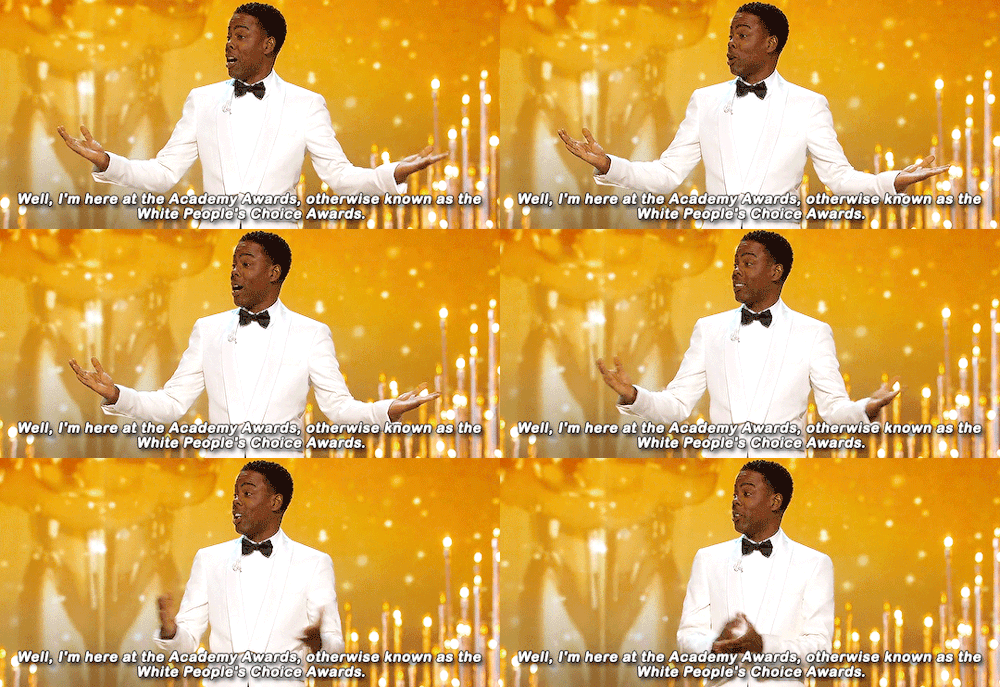
I’m not going to dwell too much on the circumstances of the #OscarsSoWhite boycott, since Gordon and Evan have already thoroughly explained its context. However, I do want to talk a bit about how the controversy was handled by the Oscars host, Chris Rock.

tumblr_o3ajap2ea01rwbf4ro1_500

Overall, I thought Rock did a great job calling out the Academy without reducing his monologue to a humourless lecture. However, in his article for Salon, Arthur Chu points out that,

Acting like caring about day-to-day violence in the streets and the impact media and culture have on that violence are somehow mutually exclusive — a common, frustrating, tired argument anyone who talks about racism in media will inevitably see dozens of times in the comments section — ignores history.

It ignores the many, many arguments that have been made about how the excuses made for the deaths of Trayvon Martin and Mike Brown frequently come verbatim from untrue stereotypes out of TV and movies, how the only way Darren Wilson’s description of Brown as a “demon” who was “bulking up to get through the bullets” could possibly make sense to anyone is after a lifetime of media portrayals of the scary superhuman black man. It ignores Martin Luther King going out of his way to call Nichelle Nichols and tell her not to quit “Star Trek” because having a black woman on TV who wasn’t a domestic servant mattered. It ignores the ongoing civil rights protests around the Oscars back in the 1960s and ’70s, including Marlon Brando making history as the first and only best actor winner to boycott the ceremony, sending American Indian Movement activist Sacheen Littlefeather to accept the award in his place.

Similarly, several activists have since pointed out the one-dimensionality of calling for more black representation only to appeal to Asian-American stereotypes for a laugh. Continue reading

Asian Iron Fist: Point, Counterpoint, and My Two Cents

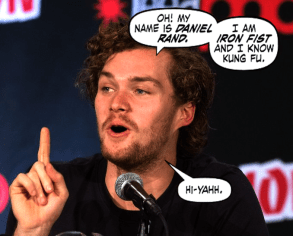
hi-yahhYesterday Entertainment Weekly revealed that Marvel had finally found their next star in Game of Thrones actor Finn Jones. The character he’ll be playing is Daniel Rand, AKA Iron Fist, the face of their fourth Netflix-exclusive series [following DaredevilJessica Jones, and the upcoming Luke Cage]. I could sum up who he is, but EW did a pretty good job with that in their coverage already:
“…Iron Fist is Daniel Rand, who at age of 9 travels with his family from New York to a lost mystical city called K’un-L’un. After some tragic twists of fate, Rand is adopted by the city’s ruler and taught advanced martial arts and the mystical power of the Iron Fist. As an adult, Rand returns to his native New York and begins a career as a superhero.”

In the comic books Danny is, much like his silver screen compatriots Captain America and Thor, White, blonde-haired, and blue-eyed. Ever since it was announced that he would be headlining his own show there has been a discussion over what race he should be, with Keith Chow over at Nerds of Color making his stance clear with his article “Marvel, Please Cast An Asian American Iron Fist“. As soon as the news hit my tumblr feed was flooded with like-minded individuals, with one post in particular that caught my eye, presenting the following two tweets-

https://twitter.com/Wheeler/status/702941414942855170

-labeled “Point” and “Counterpoint”, respectively.

Now I have no intention of dedicating a large portion of this post to Liefeld, known in many comic book circles as being a man incapable of drawing feet [though now probably vastly more famous for co-creating Deadpool]. He also had just the two words to share, as opposed to a full article that Wheeler penned on the subject, so instead I’ve chosen to have Albert Ching of Comic Book Resources take his stead. Continue reading

Having Put The Martian on Blast, Let’s Talk Briefly About Intersectionality

Last Friday was such an outpouring of emotions [alongside a fair amount of research] that even with roughly 2,700 words there was bound to be something I missed. While I had initially planned on making room for it, an omission was made starkly apparent to me once I began sharing the post. As those of you who read it [and you should, before continuing on with this one] it ended with a call to action: kickstarting the discussion about diversity and representation through asking others to read what I’d written [or however else they felt led].

That’s a risky thing to ask of anyone, for obvious reasons.

ahaRbz4 - Imgur

One of my friends shared the post on Facebook, and was immediately faced with another friend of theirs who had an issue with a small section that I’ve since amended. Here it as it was originally written:

“Chiwetel Ejiofor is an Academy Award winning actor. He’s also a Black [not African American] man, part of a demographic that has not struggled in Hollywood compared to many others.”

Going back you’ll notice that it now refers to Ejiofor as being “Nigerian English”, which is of course much more accurate. The issue that the person had with the original was that by going so far as to state that other actors were “Asian” and even “East Indian” I was snubbing Ejiofor’s own background. I was even accused of doing racebending of my own by overlooking this fact. Continue reading

Justin Trudeau Makes Me Cry: The Trouble with Strategic Voting

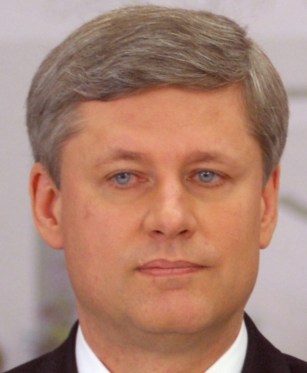
I love democracy. No bullshit. The idea of “one citizen, one vote” fills me with hope and pride. As a woman, a Canadian, and a self-declared citizen of the world I am acutely aware that voting is a hard-won privilege. People my age (particularly women) have given life and limb to make voting my right. So usually, when I vote, I swell with pride. This year I hated voting. Voting made me so sad. Because this year I voted strategically. In Vancouver South Liberal party candidate Harjit Sajjan is most likely to beat Conservative candidate Wai Young. So I voted Liberal.

Before I get too far I need to note I’m not a right-wing-hater. In fact, I pride myself on being relatively non-partisan (but left). I don’t think that people who vote Conservative have bad hearts. In fact I am sure there is enormous goodness in the heart of your average Conservative MP. Good hearts aren’t hard to come by. I do think that the government, as it is, has gone too far. I believe that Stephen Harper’s once good heart has been corrupted by unchecked power. And that’s why I lied on my ballot.

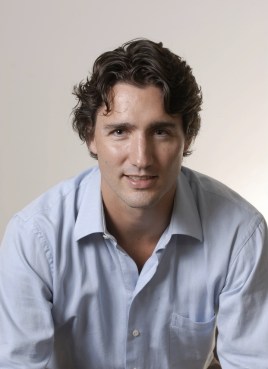
Nor am I a Liberal-hater. Like many of his Conservative competitors and coworkers Justin Trudeau has a good heart. Since I was a child I loved Justin Trudeau. He was my political celebrity crush. He was my rock star. He was like the sensitive one from a political boy band.

trudeaujpg

Photo by Jean-Marc Carisse – CC BY 2.0, 

I had so much hope for his solo career. And that childhood crush sort of lingered through until adulthood. I was SO excited when I heard that he (he!) would be speaking at my university (mine!!!). I was going to get to be in the same room as Justin Trudeau! I couldn’t wait to hear what political wisdoms he would impart and what solutions he would offer to the Conservative infestation we seemed to be having in the cabinet. I arrived two hours early and helped set up chairs. Then he started to speak. At first I was confused. Then I got sad. Then his stupid face started to piss me off. Continue reading

Marvel’s New Black Panther and the Ghettoization of Comic Books

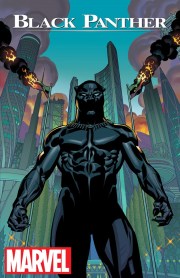
Black_Panther_Cover_StelfreezeThis week Marvel announced that their new Black Panther title, dropping next spring, would be drawn by Brian Stelfreeze and, more importantly to many, penned by Ta-Nehisi Coates. For those of you unfamiliar with the latter Coates was at one point most well-known for his contributions to The Atlantic, in particular the contentious “The Case for Reparations”. More recently, however, a significant amount of attention has been given to his second published book, Between the World and Me, which was released just this past July.
The various news outlets that have covered this story, those dedicated to comic book journalism and otherwise, have taken note of the fact that both Coates and Stelfreeze are African-American. While the character himself hails from the fictional African nation of Wakanda he is nonetheless Black, and many have praised the publisher for allowing top-of-their-game, Black creators to take the reins of the person soon to be their most famous Black hero [due to his appearance in the upcoming film Captain America: Civil War].

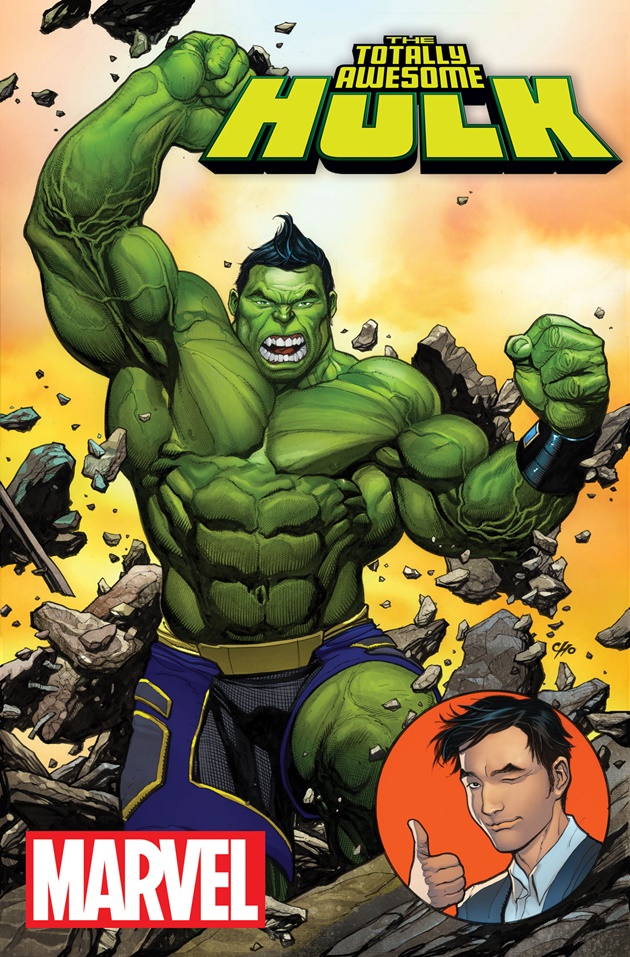
Totally_Awesome_Hulk_1_CoverThis announcement comes, while not necessarily hot on the heels of, soon after Marvel breaking the news that the latest character to hold their own Hulk title will be Amadeus Cho. A Korean-American character and one of the smartest people on the planet despite his years, his adventures were also given to another match made in comic book A-list heaven. Writer Greg Pak and artist Frank Cho are both Korean-Americans themselves, with the former being of mixed descent. In the very same vein as next year’s Black Panther this December’s Totally Awesome Hulk bears a creative team that has a lot racially, as well as culturally, in this case, in common with their book’s titular character. Continue reading