Category Archives: film

Five Requests Of An Angry Young Man

I’m not going to pretend that I speak for all Millennials.

I grew up overseas. The 90s nostalgia over cartoons, cereal, and toys was never part of my life. I’d made plenty of trips back to the US, but never really spent any time in the culture until I was 17, arriving on the shores of the new world like the opening of some cliched immigrant story.

tumblr_o0ghzxggr51ujwj3ho1_500

Not quite so dramatically, but I was still very much a stranger in a strange land…

So maybe I’m looking at things through a strange, distorted lens. Maybe I’m alone in feeling that I’ve been seriously shortchanged on my future in the land of opportunity.

But I don’t think so.

Still, as I was writing this, I was starting to have second thoughts. Maybe my tone was too harsh, my criticisms to generalized, my frustration too warrant-less.

And then I watched this SNL skit titled “The Millennials

“Beautiful twenty-somethings (Kate McKinnon, Pete Davidson, Miley Cyrus, Jon Rudnitsky) search for the love and success they’re entitled to on The Millennials.”

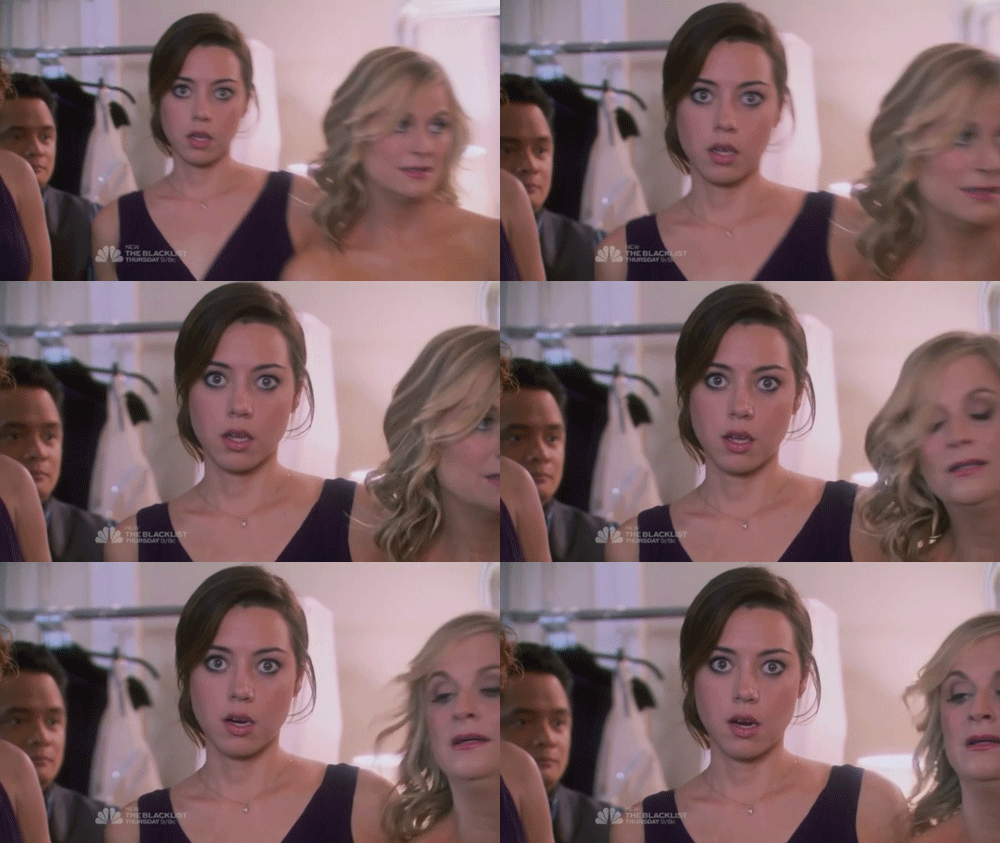
We watch a couple god-awful caricatures of Generation Y make outlandish demands of their sensible, long-suffering precursors. Near the end of the sketch, one of the smarmy Millennials threatens to jump out of a window. The two older workers stand back and say:

“Just do it.”
apwe

Cue the applause and cheers from the audience.

So yeah, **** being nice and measured here. Let me break down what I’m sick and tired of hearing from Gen X and their Boomer counterparts:

I. Kindly Ease Up With Demanding That I Get Married/Have Kids

Yes, Millennials are getting married later than previous generations, but the average has only only gone up by a couple years. Yet to hear some folks talk, you’d think Millennials were actively attempting to dismantle the institution of marriage entirely.

I guess I just don’t understand what the big deal is.

Right along there with the pressure to get married is the pressure to spawn offspring- though again, the exact why isn’t ever really covered.

It almost seems to be presented as some kind of civic duty. That establishing the nuclear family is vital to ze velbeing of ze fatherland.

And I could deal with that.

I disagree with it, but I could deal with it as an argument. Just not one presented by the Boomers and Gen Xers.

I mean, seriously.

Boomers? Continue reading
What Would Make For A Good Christian Movie?

It seems like a lifetime ago that this blog’s editor and yours truly discussed the question “Why is Christian media so bad?”

Because it is.

So bad.

Like there are dirty limericks carved into the side of gas station bathrooms with more artistic and spiritual merit, and for anyone who doubts me I’d challenge you to watch God’s Not Dead 2, which premiered on the first of this month.

As much as you might pray otherwise- no, this is not some elaborate April Fool’s trick. This wretched, pandering slog of garbage is absolutely real, the hellspawn of 2014’s disturbingly popular (and obliviously sacrilegious) God’s Not Dead.

Look, as much as I’d like to pour out seven bowls of wrath upon this nasty, ugly product of a nasty, ugly franchise, I’m not going to. There are people who’ve already done so with more eloquence than I could muster, and I legitimately think I’d have a stroke if I tried to convey my repulsive and rage to this unholy dreck. If you’ve got a shred of artistic judgment or basic morality, you can see what makes this movie bad.

So let me ask this instead:

What would a good Christian movie look like?

Here’re some of my ideas-

That Dark Battle

The God’s Not Dead franchise has a habit of using death and disease to hamfistedly make its points. Is the prideful atheist looking down her Ivy-League nose at these simple, humble Christians? Smite her with cancer! Haha! She’s not so high-and-mighty now that she’s facing a slow and painful death! Thanks, God!

Think that’s a bit cruel?

It’s OK! She converted and has been miraculously cured! Because no God-fearing person has ever died of cancer and no atheist has died of anything else!

I **** you not- that happens in the first God’s Not Dead.

maxresdefault

Mr. David A.R. White- On behalf of everyone who’s ever lost a loved one to cancer, allow me to say a heartfelt “****. You.”

Continue reading

Free State: A Film Review

Free-State-Updated-PosterA film covering “a pair of star-cross’d lovers” is certainly nothing new, and for centuries creators have strived to honour the trope by putting their own distinct spin on it. As a film by South Africans set in their very own country Free State sets itself apart from the crowd at its outset, in particular because it neglects the assumed Black and White mixed couple [and all of the baggage that comes with it] in favour of an Afrikaans woman and an Indian man.
Jeanette, South African model Nicola Breytenbach’s first role, is a law student in the mid-70s returning home to Memel and her father. Ravi, played by Andrew Govender, another model, is a man whose family is currently working out the specifics of his upcoming arranged marriage.

The reason they can never be together is spelled out in the first few minutes of the film in which Jeanette, describing her childhood, relates the story of a man arrested for being Indian in the Free State province after dark. She also shares the details of South Africa’s Immorality Acts that she learned about while in school, which explicitly prohibit sexual intercourse between White and non-White people. It’s racism, plain and simple, and while not the freshest romantic deterrent it’s nonetheless framed in way most viewers won’t be familiar with. Continue reading

A Non-Female Writer’s Opinion About That Wonder Woman Promo Picture

As the title attests, and as you probably know by now, I’m a guy. A cisgendered male, to be more specific, which for those not in the know means that I was born male and identify as one. And as a guy I’ve been writing about feminism on this blog since day one. While it’s always been my goal for the site to be a platform for female voices speaking out on those same issues [made reality in having Kat hop on board as well as the majority of our guest writers] the truth is that there are an essentially infinite number of topics and only so many bloggers.

That’s all to say that ideally this probably should’ve been tackled by a woman. While a given female perspective may not necessarily be the correct one, the fact of the matter is that they would be able to write from a level of understanding that I cannot. Yet here I am, covering Wonder Woman, arguably one of the biggest feminist icons.

ewWW

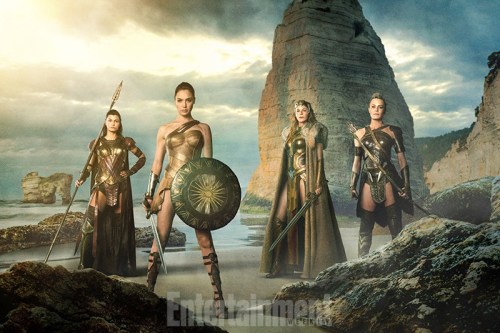
Yesterday Entertainment Weekly shared an exclusive promo image from Warner Bros.’ upcoming Wonder Woman movie. Diana Prince AKA Wonder Woman, the titular character, played by Gal Gadot, is second from the left. The other women, from left to right, are her mother Hippolyta [Connie Nielsen],
Menalippe [Lisa Loven Kongsli], and General Antiope [Robin Wright].

As it’s made its way across the internet it has generally been regarded with a lot of excitement and enthusiasm, which should be no surprise given the fact that Wonder Woman is literally the biggest draw for people lining up to see Batman v. Superman: Dawn of Justice. When it comes out in theatres next year it will have been Hollywood’s first return to female-led superhero movies since 2005’s Elektra, and arguably stands for so much more than the Jennifer-Garner-played red-clad assassin ever could.

wwMake no mistake, I am very excited for it. Seeing the Amazonian on the silver screen for the first time is also the primary reason I’m seeing BvS in the next few days, and a Wonder Woman t-shirt that I shamefully purchased at Hot Topic [shameful for the store, not the product] is the only merchandise I have bought and plan on buying [the poster on the right was free]. In spite of that, or maybe directly because of it, I ended up with a number of thoughts about the promo picture released. While the first point is the shortest and has nothing to do with my gender, the ones that follow may be defended by readers who can better relate. Which is to be expected, and that I hope people feel comfortable doing if they want to. Continue reading
The Power of Twitter Showcased at the Oscars: #OscarsSoWhite, #YesAllWomen, and #AskHerMore

Twitter has changed the way news is reported. The Black Lives Matter movement has been particularly successful in raising awareness for cases of police brutality that generally would have been overlooked by mainstream news channels.

Arguably the second most important aspect of Twitter is its ability to connect celebrities to their fan base. With the prevalence of these two features, it’s hardly surprising that celebrities and celebrity events have become more politicized.

This year’s Academy Awards are a prime example of this overlap between the celebrity world and political struggles that have been highlighted via Twitter. Below, I’ve included a few notable examples of Twitter flexing its muscles at the Oscars

#OscarsSoWhite

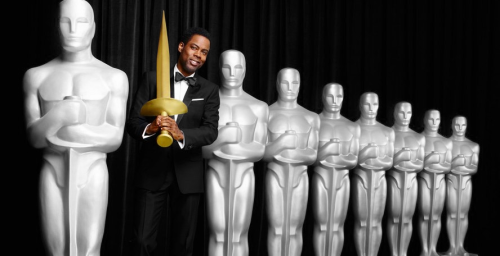
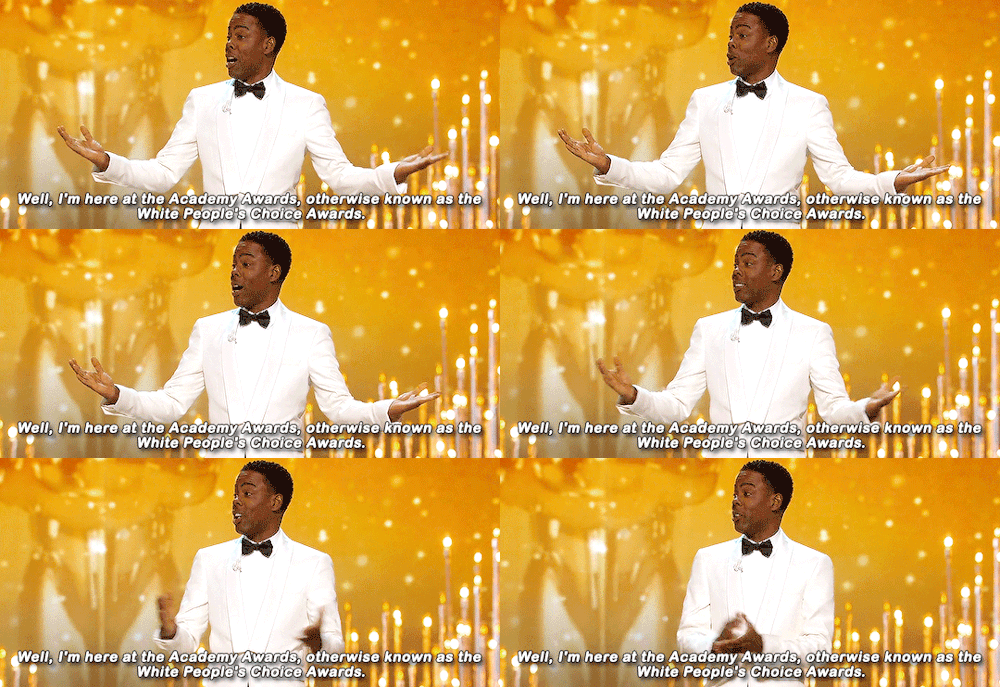
I’m not going to dwell too much on the circumstances of the #OscarsSoWhite boycott, since Gordon and Evan have already thoroughly explained its context. However, I do want to talk a bit about how the controversy was handled by the Oscars host, Chris Rock.

tumblr_o3ajap2ea01rwbf4ro1_500

Overall, I thought Rock did a great job calling out the Academy without reducing his monologue to a humourless lecture. However, in his article for Salon, Arthur Chu points out that,

Acting like caring about day-to-day violence in the streets and the impact media and culture have on that violence are somehow mutually exclusive — a common, frustrating, tired argument anyone who talks about racism in media will inevitably see dozens of times in the comments section — ignores history.

It ignores the many, many arguments that have been made about how the excuses made for the deaths of Trayvon Martin and Mike Brown frequently come verbatim from untrue stereotypes out of TV and movies, how the only way Darren Wilson’s description of Brown as a “demon” who was “bulking up to get through the bullets” could possibly make sense to anyone is after a lifetime of media portrayals of the scary superhuman black man. It ignores Martin Luther King going out of his way to call Nichelle Nichols and tell her not to quit “Star Trek” because having a black woman on TV who wasn’t a domestic servant mattered. It ignores the ongoing civil rights protests around the Oscars back in the 1960s and ’70s, including Marlon Brando making history as the first and only best actor winner to boycott the ceremony, sending American Indian Movement activist Sacheen Littlefeather to accept the award in his place.

Similarly, several activists have since pointed out the one-dimensionality of calling for more black representation only to appeal to Asian-American stereotypes for a laugh. Continue reading

Angoulême, #OscarsSoWhite, and the Possibility of Change

I had initially planned on permanently shelving this blog post, for the most part due to the fact that I felt the two incidents I was comparing had come and gone, and I try to stay topical. Then recently Facebook notified me that Kate Winslet not boycotting the Oscars was trending, and just today that acclaimed director Steven Spielberg had some thoughts about the awards ceremony. It appears that a discussion that began with the continuing hashtag #OscarsSoWhite is far from over.

rock

I wanted to call Chris Rock the one bright spot in this upcoming Academy Awards, but the irony was too much.

This may surprise you, but the focus of this particular blog post isn’t race. It is about social justice in general, though [just because this pony has more than one trick doesn’t mean that he has a lot of them]. Social justice is ultimately concerned with change, a positive transformation of our society, and is more often than not battling against the presumption that this is impossible. I’m going to be covering two somewhat recent events, both surrounding awards shows, that prove it’s not. Continue reading