Category Archives: history

Remembering Christopher Hitchens

Today marks the what would have been Christopher Hitchens’ 66th birthday. While the controversial writer lost his long battle with cancer in 2011, nearly half a decade later his legacy continues to remain a puzzle to most. To some, Hitchens was a brilliant iconoclast, fearlessly proclaiming truth and reason in a world crippled by political correctness and blind sentimentality. To others, Hitchens was a traitor who abandoned his radical roots in favor of jack-booted imperialism and  militarism. After all this time, the question remains: Who was Hitchens?

Born in Porstmouth, England, Hitchens first began his prolific career as a writer for a number of leftist magazines, eventually joining New Statesman in the early 70s, where he quickly made a name for himself as a fiery critic of the the Vietnam War. Hitchens would go on to become an acclaimed foreign correspondent, frequent contributor to The Nation and Vanity Fair, and unapologetic critic of most of the political establishment. No one- from Ronald Reagan to Bill Clinton, from Jerry Falwell to the royal family- escaped Hitchens’ unique blend of unimpeachable logic and acidic invectives. Hitchens made a name for himself in particular by viciously decrying Henry Kissinger, who he argued (not without cause) was a power-worshiping war criminal…

Continue reading

Explaining American Politics to Non-Americans – Part II: The Republican Party

Welcome again readers, to Culture War Reporter’s second installment of “Explaining American Politics to Non-Americans” [Part 1 here], in which yours truly attempts to explain the chaotic carnival that is our great democracy.

This week, we’ll be looking at the Republican party. Or parties, if things keep progressing as they do.

But let’s dive right in.

I won’t pretend I don’t have my own bias but I will try to be as fair as possible.

To say that the “Grand Old Party” has made itself unpopular abroad would be an understatement. The Bush-era wars, sanctions, and seemingly indiscriminate use of military force has created an international image of Republicans as blood-thirsty imperialists. While Obama has been far more liberal (pardon the pun) use of drone strikes, others point to the Republicans shaky relationship with environmentalism, science, and women’s issues to cast the GOP as backwards and puritanical.

But how fair are these assertions? If they’re true, where do they come from?

The History

The “Grand Old Party”, as it was once called was established in 1854, just prior to the American Civil War. Evolving from a number of groups, the Republican party came to stand largely for federal power and industrialization, contrasting with the emphasis on state’s rights and agriculture that the Democrats had (who we’ll get to next week). Indeed, while now struggling now to rid themselves of the accusation of being an “old, white guys’ party”, the Republicans of old were actually the more progressive, liberal and inclusive of the two parties. Although racism would remain an issue across the political spectrum, it was Republicans who could often count on the African-American voter demographic throughout much of the late 1800s.

Exactly when and why that stopped being the case is still a matter of heated debate.

Some would cite that the “Red Scares” (anti-communist witch hunts) of the 1950s pushed the party increasingly towards aggression, militarism, and social conservatism. Others might argue that as issues of civil rights, poverty, and the war in Vietnam caused many African-Americans to shift towards the Democrats, leaving the party almost exclusively in the hands of the white tycoons.

In spite of this shift, Republicans nevertheless have consistently managed to gain and often dominate American politics, the Reagan-era in the 1980s seeing massive cuts to government spending while increasing intervention in Latin America, the Middle East, and Afghanistan. The short-lived presidency of H.W. Bush, however, would see the abrupt end to the Republican Golden Age, with economic downturn and issues from within the party leading to Democrat victories in the 90s.

And then came “W”.

Continue reading

Explaining American Politics To Non-Americans – Part I: Why We’re ****ed

It’s been my ambition for some time now to dedicate a series to explaining American politics to our substantial audience of non-Americans. While this blog is comprised 50% of Canadians (our frosty neighbors north of the wall), the simple fact of the matter is that the land-the-free has long been the front line of culture war. What happens here affects the rest of the globe.

With the already hotly contested primaries underway and prospects for the 2016 election being widely debated, what better time could there be than now to explain just why it is that we the people are fundamentally screwed.

Let me break it down here.

I. The Person Who Wins Isn’t Always The Person Who Gets Elected

In spite of our praise for democracy, the American republic does not have a one-man-one-vote policy. Every four years, there’s a decent chance that the candidate with the most votes will still lose to his opponent.

See, we have something called the “electoral college”- a staggeringly complex system that not even this succinct TED video can completely cover. At its simplest, the system boils down to states having “points” assigned to them on the basis of their populations and number of congressmen and senators.

This system means that a political candidate doesn’t necessarily have to get a massive number of people to vote for him- just a majority. So long as he or she gets that majority, no matter how slim, they still takes away as many “points” as if they had won a landslide.

What that means is that a person can get elected president in spite of his or her opponent getting more actual votes. Just look at this image below:

While the majority of votes cast in this example are blue, red still wins by virtue of this system. While supposedly protecting states with smaller populations (preventing them from being drowned out by heavily populated states), the result is that a person’s vote can very well be rendered utterly pointless. Plenty of folks simply don’t even bother voting, especially in states dominated by one party. Alternatively, states with greater electoral power (more points, that is) and a habit of swinging between parties (Ohio and Florida, most famously) get disproportionate amounts of attention.

In spite of being viciously despised by folks on both sides of the political spectrum, there’s really very little hope for any reform on this point. While part of that can be blamed on tradition, plenty of it also boils down to a little thing called- Continue reading

Re: #DontStayInSchool: In Defense of the System

A few weeks ago my brother sent me the following video and asked if I could write about it on the blog. He challenged me to defend academia and promised that he would respond by commenting on why this video resonated so deeply with him. So, although I agree with many of the comments Dave from Boyinaband makes in his video, I’m going to offer you several reasons why our education system can be, and has often been, a good thing.


1. Our education system was designed to promote equality

In his video on the history of education, Salman Kahn explains how our contemporary education system was shaped by ideologies that valued class equality. According to Kahn, the Prussian education system, despite its faults, insisted on providing public education for all citizens. Meanwhile, even the “Committee of Ten”,  the group of educators who originally introduced standardized curriculum, were motivated by their belief that economic status should not prevent students from having access to “higher order” skills. Standardization of curriculum meant that every student would (ideally) have access to the kind of information that was once restricted to the elite.

Continue reading

Lisa Nakamura Part 2: Navajo Circuits and the “Nimble Fingers” of Asian Women

In my last post, I told you a little bit about Lisa Nakamura, her research, and the talk she gave at my university about Tumblr activism. I also promised to tell you about her second lecture the next time I wrote.

Both of Nakamura’s lectures were about digital media, but unlike her first talk, her second presentation focused on the physical material of digital technology.

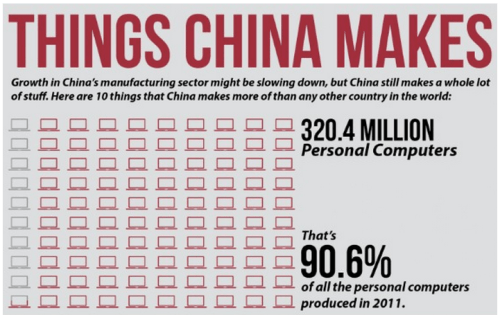
Unless you’ve been hiding under a rock, or recently time-travelled to 2015, you probably wouldn’t be surprised to hear that most of your digital hardware came from Asia. You may even be familiar with the way Asian women have been racialized as innately predisposed to factory work because of their “supposed docility, nimble fingers and attention to mind-numbing detail”.

Screen Shot 2015-03-09 at 8.39.54 PM

Click on the image to view the full infographic.

However, you might be surprised to learn that this stereotype has been applied to women of colour ever since the digital revolution. In her paper on “Indigenous Circuits: Navajo Women and the Racialization of Early Electronics Manufacture”  Nakamura examines the way digital factory work is both gendered and racialized. She refers to the work of Karen Hossfeld when she insists that

“…by the eighties in Silicon Valley, electronic assembly had become, not just women’s work but women of color’s work.” (290)

Continue reading

There Is Neither Male Nor Female – Rethinking Gender Roles

…And for those of you concerned, Evan has mandated a cut-off for these posts. As important as they are, and as many interesting questions as they raise, there’s only so many weeks in a row we can dedicate to beating a dead horse.

I feel first that I should clarify some of my points in my original response. When I was first drafting it, I was concerned that Kat (who had written a rather personal piece) might take it the wrong way- I’m glad that she gave me the benefit of the doubt on it. Truth is, my issue isn’t with Kat (who I think would agree with most of what I’m about to argue) but with the wider implications of Deschanel’s statements (though there were a few points I take issue with in Kat’s response- but we’ll get to that).

Deschanel argued that “we can be powerful in our own way, our own feminine way“. My response was “No, you ****ing can’t”.

Not “no, you *****ing can’t be powerful”, not “no, you can’t be feminine” (whatever “feminine” means), but rather “no, you can’t have your ‘own feminine way.'”

Why? Continue reading