After the events of this past week [and given the temporary resolution] now is as good a time as any to have a little bit of fun. With so many of us actively fighting for both our rights and the rights of those who cannot speak for themselves a momentary reprieve is needed, a way of recovering in between bouts. It may even be a good idea to turn to comedy, to try laughter in the face of the shockingly grim edicts being rained down by a particular governmental administration.
For a broad number of reasons 2017 appears to be the only year where the current POTUS could ever have been inaugurated. It’s not just our contemporary political landscape that has become so dauntingly complex, however, the same can be said of the comedic sphere as well.
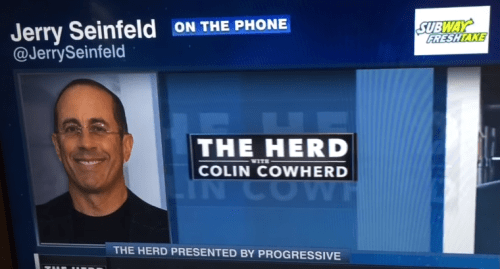
“I don’t play colleges, but I hear a lot of people tell me, ‘Don’t go near colleges. They’re so PC.’
He elaborated on that a bit, saying-
[College students] just want to use these words: ‘That’s racist;’ ‘That’s sexist;’ ‘That’s prejudiced.’ They don’t know even know what they’re talkin’ about.”
-before agreeing with Cowherd that these people are “hurting comedy.”
My favourite thing about this is the “PRESENTED BY PROGRESSIVE” right at the bottom.
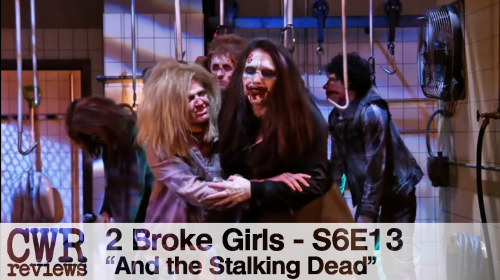
So I’ll be honest, I’m actually frightened that three years later we’re seeing a retread of “And the Not Broke Parents”. That episode marked the last we saw of Deke, Max’s then-boyfriend, and he left with so little fanfare that for months after the fact people came across these reviews by Googling “when did max and deke break up”. Essentially what I’m saying is that I think this might be the end of Rax.
“And the Stalking Dead” is Ed Quinn’s 17th episode playing the incredibly fit Hollywood lawyer, and it’s much to his credit that their on-again, off-again relationship has proven so compelling; his dynamic with Kat Dennings works, even when he’s a face on a phone or tablet. Adding to that is the show’s tendency to push Max after him, her increased vulnerability showcasing a side of her we rarely get to see. If there’s any hope that he’ll be returning it’s that last point, as the 2 Broke Girls writers’ room appears to be really into exploring that facet of her character. Continue reading →
As I say at the beginning of every year, you can look back at the first-ever Evan Yeong Literary Awards in 2014 for a fuller description of my relationship with reading, which in turn led to their inception.
While eventually I’ll run out of ways to write this, the purpose of the third installment of the Evan Yeong Literary Awards is to shine a spotlight on an artistic medium that has taken a bit of a back seat as screen media becomes increasingly more prevalent, calling attention to a select handful of books I read these past 12 months. In 2015 every pick was objectively a winner, but given the rocky year following it’s no surprise that these awards have their ups and downs.
In 2016 my resolution was, just as it will likely be every year moving forward until it becomes unfeasible, to read more than the year before. That said I was devastated to do the final count to see that I read exactly the same number as I did in 2015. You can check out a full list [with the exact dates of when I read each one] at this link.
wokest novel, PRE-2000’s
The Wayward Bus by John Steinbeck
Published 1947
Although it’s fallen out of fashion since the time of its coinage in 2015, “woke” is still the most concise way to say “aware of racism and social in justice”. Throughout a novel that could serve merely as a cautionary tale of public transportation Steinbeck communicates time and time again that even though he lived as a person of great privilege, during an era where those privileges were even greater than they are now, he wasn’t afraid to pen several scathing indictments against the very class he was a part of.
most disappointing, though by no means awful
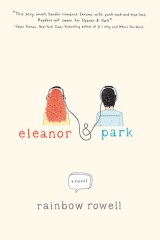
Eleanor & Park by Rainbow Rowell
Published 2012
The fault with this YA novel can be laid at the feet of those who framed it as a solid example of an interracial relationship in the genre. Although the titular Park is half-Korean the fact is that this is not something he personally relates to as a character, and certainly isn’t a factor that others take into consideration when viewing him [save for Eleanor, who gushes over his features in a way that borders on the fetishistic]. Apart from that this book very competently portrays the familial issues that can plague teenagers, as well as the most authentic depiction of how intense young love can be that I’ve ever read. Continue reading →
I began the first installment of this two-parter making note of the long and ultimately wearying experience it has been, starting with Doctor Strange going into pre-production and continuing on to the recent exposure of the Swinton-Cho Letters. While I spent time describing the ups and downs of casting news what I neglected to mention, and what I’m going to focus on today, is the outset and ultimate resurgence of an argument in defence of whitewashing.
That’s right, an argument defending what Wikipedia helpfully defines as “a casting practice [. . .] in which white actors are cast in historically non-white character roles.” The very faint silver lining is that the justification here does not revolve around star power and A-list draw, or the idea that “the best person for the role” was hired, the latter of which rarely ever swings in the other direction. In spite of not being deeply rooted in these ways of thinking, however, the argument presented remains deeply flawed.
Before we get into that, however, we should probably get to its origin story.
Like I Said Last Time, “It’s Always Podcasts”
Having to hit all of this again it’s important to be thankful for small blessings, with one being that I don’t need to hear C. Robert Cargill’s voice again due to already having done the research for another post. The person in question was one of the screenwriters for Doctor Strange, and dropped in on the Double Toasted podcast mid-April to answer a few questions about it.
“The Ancient One was a racist stereotype who comes from a region of the world that is in a very weird political place. He originates from Tibet. So if you acknowledge that Tibet is a place and that he’s Tibetan, you risk alienating one billion people who think that that’s bullshit and risk the Chinese government going, ‘Hey, you know one of the biggest film-watching countries in the world? We’re not going to show your movie because you decided to get political.’ If we decide to go the other way and cater to China in particular and have him be in Tibet [. . .] If you think it’s a good idea to cast a Chinese actress as a Tibetan character, you are out of your damn fool mind and have no idea what the fuck you’re talking about.”
In essence Cargill chalked the reasons for the casting decision up to politics and economics, implying that having the character played by a Tibetan would cause Marvel Studios to lose out on Chinese box office sales. He also suggests quite strongly that, conversely, having a Chinese actor play a Tibetan would cause a large amount of controversy. This was picked up by sites from IndieWire to ScreenRant to The Hollywood Reporter, with several using words like “reveal” in their headlines, as if a longstanding mystery had finally been solved.
The justifications he laid out were to become the go-to response for every commenter looking to defend the Swinton’s casting, and why not? After all, as one of the screenwriters of the film Cargill should be a direct and dependable source. The answer to that hypothetical starts with what happened a few short days later- Continue reading →
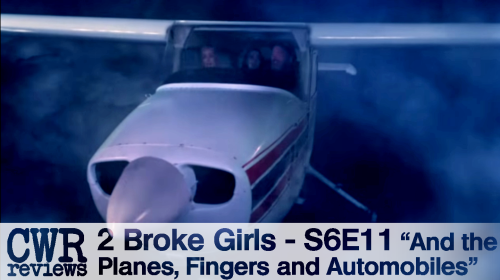
2 Broke Girls is not exactly a show that I would call jet-setting, let alone, uh . . . taxi-setting. I mean, sure, they’ve gone off to Rhode Island and even Paris, but for the most part this is a sitcom that revolves around either The Williamsburg Diner or the recently renovated Dessert Bar. In this episode, however, the girls take a page from Sun Wukong and embark on their very own journey to the west [just look it up, it’s a great reference].
Despite Max’s sobering realization last week that things between her and Randy are officially donzo we open up, after what I believe is an unprecedented “Previously on 2 Broke Girls” segment, with her announcing that she’s off to LA to save their relationship. “And the Himmicane” marked a real low for the character, with half of the titular duo actively deluding herself that the breakup was in fact just a break. Watching “And the Planes, Fingers and Automobiles” I kept noting how much stronger Max appeared compared to the last time I saw her, but also observed that it was still in service to keeping things with Randy going. Continue reading →
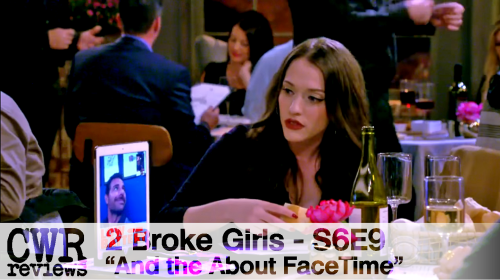
There are many things I expect from 2 Broke Girls. Off-colour humour and painfully bad puns number among them, of course, and as of this season solid jokes/gags as well. What I don’t tune into this CBS sitcom for, however, is a strong theme that is heavily featured throughout an episode. All that said, “And the About FaceTime” was a pleasant surprise, especially after having taken last week off.
A fairly successful cold open kicks things off, with the gang trapped inside the Williamsburg Diner due to aggressive canvassers blocking off both exits. Nobody wants to be confronted by the unnervingly gleeful young people, and it’s that same procrastination and fear of facing things head-on that will be experienced and dealt with by various members of the cast moving forward.
For Oleg it’s putting off selling his beloved Toyota Yaris, as Sophie wants them to become a minivan-owning family. For Caroline it’s the fact that she hasn’t had sex in two straight years, the implication being that she’s been too preoccupied with her business and the rest of her life to give it any attention. For Oleg it’s death [wow, making old people jokes really is that easy]. When it comes to Max, however, it’s not made explicitly clear until over halfway through the episode. Continue reading →

 While eventually I’ll run out of ways to write this, the purpose of the third installment of the Evan Yeong Literary Awards is to shine a spotlight on an artistic medium that has taken a bit of a back seat as screen media becomes increasingly more prevalent, calling attention to a select handful of books I read these past 12 months. In 2015 every pick was objectively a winner, but given the rocky year following it’s no surprise that these awards have their ups and downs.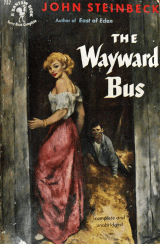



 Culture War Reporters