Tag Archives: Culture

Save Refugees, Save America

I believe in America.

I believe that the defining characteristic of this nation was its unerring sense of moral conviction- that all we did was in the advancement of some great work set into motion by ages past. That every undertaking stemmed from the deepest confidence in the simple rightness of our cause.

This faith led us, countless times, to commit terrible acts that damn the conscious of the nation. Slavery and Wounded Knee. Manzanar and Kandahar. McDonald’s and McCarthy. It’s led to the popular image abroad of Americans as fundamentally arrogant; loudly voicing their opinions without being asked, demanding where they have no right, interfering where they have no business.

And it was this same faith that has pulled this nation back every time. Yosemite and Normandy. Harlem and Harper’s Ferry. John Muir and Eugene Debs. The faith that sent millions to these shores from every corner of the world and the same unabashed confidence that sent American music, art, film, and literature back.

In spite of our divisions and our failings- and they are neither minor nor few- we are united by the common belief that our cause is not merely just but justice itself, and that its triumph needs only ingenuity, passion, and will to be secured.

For good or ill, it is this value that made America. Continue reading

Is It Time To Stop Reading Shakespeare?

I never really liked Shakespeare.

Never hated the guy, mind you- downright enjoyed a few of his plays (The Tempest, Coriolanus, Hamlet). Still, I never really could bring myself to relish the bard’s works with the same zealous enthusiasm of the drama geeks and English majors.

With that in mind, you might spare me perhaps a little of the horrified gasping when I ask:

Is it time to stop reading Shakespeare?

And I ask that with all sincerity. I’ve made no secret about my general dislike of the theater and the culture surrounding it, but I’m not here to talk about those guys.

You know the type. Melodramatic airheads who’ll actually only refer to this as “the Scottish play”…

I’m talking about the actual works of William Shakespeare here.

Why still read ’em?

After all, with every passing year, we drift further and further away from those stories. In spite the film industry churning out one or two adaptations or modernizations of Shakespeare’s plays, there’s only so many ways to re-imagine Romeo and Juliet.

Continue reading

Can A Feminist Wear High Heels?

And that’s a weird question to ask- especially coming from me.

Yours truly, for any new readers, is a dude. I’ve never worn high heels, and with my long and elegant (if somewhat hairy) legs, I’ve never had cause to.

Like this, only more so.

In spite of my obvious lack of experience, compounded with a whole gamut of cultural-historial-societal variables, I’d still wholeheartedly call myself a feminist. As such, I still feel compelled to ask-

Can a feminist wear high heels?

And I know this isn’t a new issue. For years, folks have generally agreed that high heels are uncomfortable and impractical. There’s not shortage of studies demonstrating the range of health issues they can cause: calf cramps, chronic (and permanent) pain, pelvic issues, callouses and corns, inflammation, pinched nerves, tendinitis, and a host of others which I could spend this entire post just listing.

I’m not going to do that.

According to science and common ****ing sense, no one’s are…

High heels are bad for you. That’s a cold, hard medical fact, and one that most everyone’s familiar with by now. Still, women continue to wear ’em, which again begs the question of “Why in heaven’s name would they put themselves through this?” Continue reading

Language as a Product of Cultural Evolution [Or Why Chimpanzees Can’t Talk and We Can]

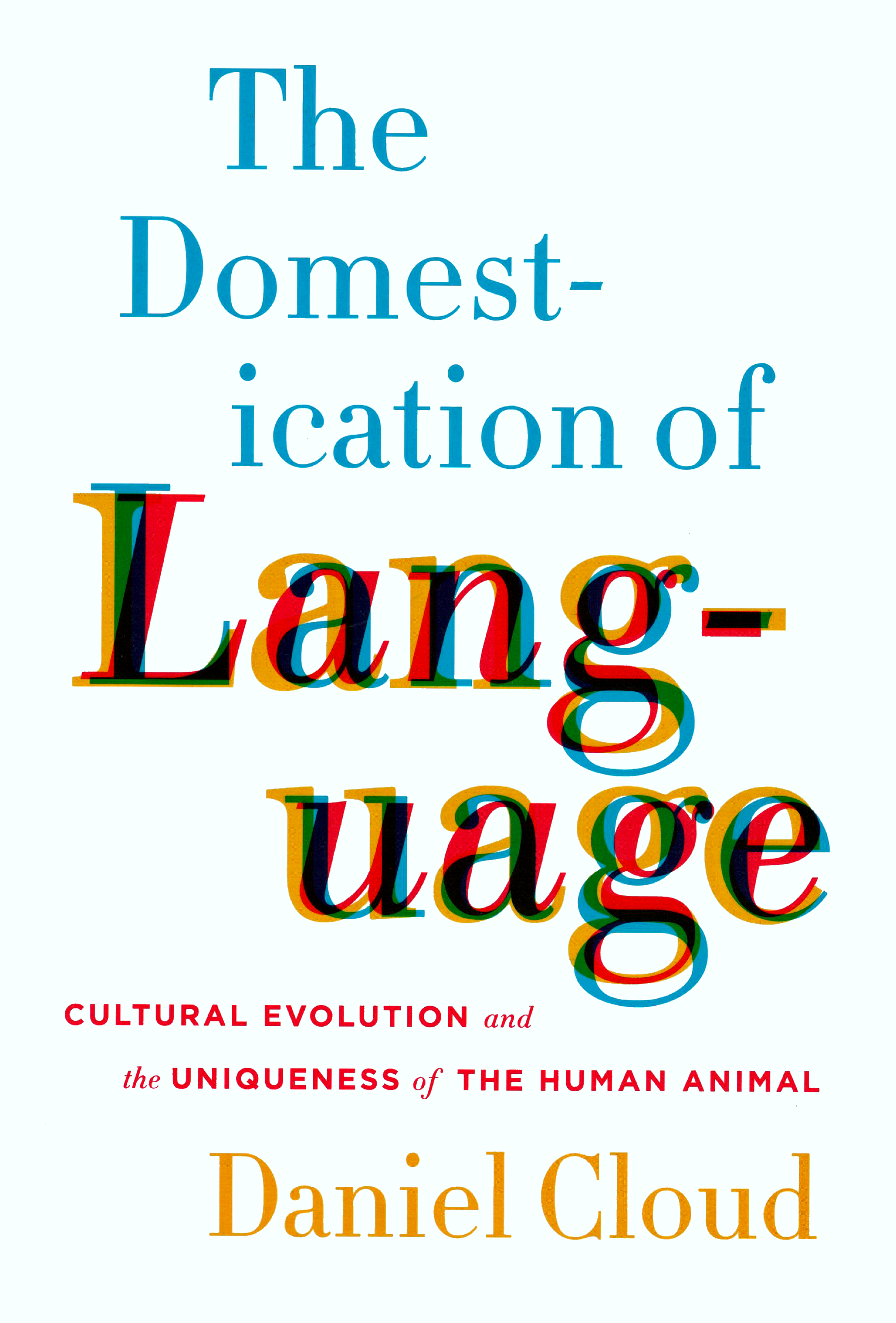
thedomesticationoflanguagecoverThis week I finished The Domestication of Language: Cultural Evolution and the Uniqueness of the Human Animal, a book whose subject matter should be self-evident. Shortly afterwards I was given the opportunity to talk to Daniel Cloud, the author of said work and professor of philosophy at Princeton University.

To summarize it very briefly the book is a thorough and eye-opening examination of language as a piece of culture that has been grown and thus evolved due to choices and actions we’ve made as human beings. While our discussion of his work was incredibly thorough and actually exceeded an hour I’ve managed to cut it down to something that closely approximates a conversation, and one that I hope will convince you to pick up a copy for yourselves.

Evan: Now I will of course be putting together some form of introduction to preface this interview, but I thought it would be good for our readers to hear you describe yourself in your own words-

Cloud: I would say that I am an American philosopher carrying on the American philosophical tradition. I worked in science for a while in Russia and China which gave me some some experience with socioeconomic change; I was in those places during a period of upheaval. Research as a philosopher most interested me when I decided to quit and go back to school. Biology and evolution in particular stood out as I already knew a lot about the social sciences.

Evan: As far as The Domestication of Language: Cultural Evolution and the Uniqueness of the Human Animal is concerned I would describe your primary goal as breaking down the origin of human language. Would you agree with that?

Cloud: My goal was and is to explain where language comes from, yes, but specifically the theory of cultural evolution and if it works relative to language. Language is one type of culture, and the specific type of culture I chose to focus on in this book was words as they’re discrete identities that are easy to identify and track throughout history.

The larger project is actually to track humans as being distinct from other types of living things. To return to language I present it as a tool for exploring the way cultural evolution works. It’s the application of the word “domestication” as seen in the title, the theory that just like animals and plants what we have in the present day is very different from how it began. Words are only the first thing I’ve tried to identify in this way. I could just as easily have turned to fashion or clothes or any other kind of culture. Continue reading

3 Things About Valentine’s Day That Are Less Fun to Criticize Than 50 Shades of Grey

My Facebook feed has been peppered with articles about 50 Shades of Grey in the weeks leading up to Valentine’s Day, and the discussion doesn’t seem to be stopping any time soon. I certainly do agree that the books and movie sound like they have some super abusive content, and that they might just signal a larger cultural problem that we aren’t deal with, but I also feel like they’re just a little too easy to criticize.

tumblr_np2wpmhbkl1uqpgcto1_500

Instead of preaching to the choir about the 50 Shades series, I plan to make us all feel guilty about the part of Valentine’s Day that is much harder to address: consumerism. This post will focus specifically on the three most common gifts associated with the holiday: flowers, chocolate, and jewelry.

1. Flowers

Did I ever tell you about the job I had picking flowers? It wasn’t actually as easy as it sounds.

The organization I worked for paid by the bundle. If you didn’t cut the stems long enough, or if you included any flowers that had already started to bloom, that bunch was thrown out and you wouldn’t get paid for it. At first, I kind of enjoyed the work. It was monotonous, so I had lots of time for thinking, and I loved being outside in the sun. Unfortunately, it wasn’t always sunny. When it rained my shoes would be sucked deep into the mud. Not to mention how being constantly bent-over made my back hurt. Often, at the end of the day, I would suddenly
realize that the money I made didn’t even equal out to minimum wage. As soon as I was able to get another job, I quit.

That experience was probably the first time I started to think about the history of flowers. Where did they come from? Who picked them? How far were they being shipped? Continue reading

Why Men Need Feminism Too: On Shia LeBeouf’s Rape

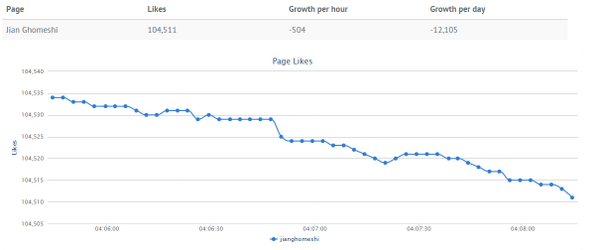
A couple weeks ago I wrote a post about how quick we seem to disbelieve rape victims when they share their story. Specifically, I was referring to the Jian Ghomeshi case, when the fanbase actually increased after he was initially accused of sexual assault. People rushed to show their support on social media because they they believed that his accusers were lying.

http://www.huffingtonpost.ca/2014/10/30/jian-ghomeshi-facebook-followers_n_6072544.html

Although those fans were also very quick to jump ship when more and more women stepped forward to accuse Ghomeshi.

Recently, another claim of assault has sprung up in the media, and once again, some people seem quite sure that the victim made up his story in order to get attention.

In a recent interview with Dazed magazine, Shia LeBeouf said that during his #IAMSORRY event in February “one woman whipped [his] legs for ten minutes and then stripped [his] clothing and proceeded to rape [him].”

Continue reading