Tag Archives: film

Making Till We Meet Again: Backpacking and Screenwriting with Johan Matton

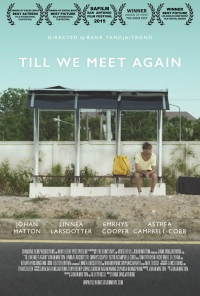
tillwemeetagainTill We Meet Again is an award-winning indie film focused on the way relationships can both begin and change when traveling abroad. So far I have been given the opportunity to watch and review the film, as well as bounce a few questions off of director Bank Tangjaitrong in the first installment of “Making Till We Meet Again“.

Today I’ll be sharing an interview I conducted via email with Johan Matton, whose role in the production include writer, executive producer, and acting as Erik, one of the leads. That being said, while the film was ultimately directed and brought to life by Tangjaitrong it can’t be argued that its very existence largely lies on Matton’s shoulders.


David tells Joanna that being in Thailand “realigns you with who you really are.” It seems apparent from the film, which you wrote as well as starred in, that you’d been there before. How much truth do you think there is in that statement?

I wanted the character David (Emrhys Cooper) to come across as a flirtatious, charming person who always knows what to say but is still real and sincere, not the stereotypical obstacle of a man for Erik and Joanna that he could have been. I believe in this moment he speaks about what is true to him; he is not just using catchy lines to charm Joanna (Linnea Larsdotter) at this point, I think he means it sincerely and believes this to be true. For me I believe in individuality [laughs] and that expressions such as this where “you” means “everyone” can be a bit naive.

Some people might be aligned, some people may not. However, empirically for me, Thailand definitely aligns me and I find myself looking inwards and realizing what more I can give to the world and how egotistical New York makes me if I do not take enough pauses from the city. I also believe strongly that some people do tend to get grounded sometimes when they travel and change perspectives from the loop of life we are usually in. So the statement is true to David and for me, but most likely not to everyone. Continue reading

Making Till We Meet Again: Director Bank Tangjaitrong on Filming Your Home Country

tillwemeetagainLast Wednesday I posted my review of Till We Meet Again, an award-winning American-Thai production. The film follows the experiences of a couple traveling through Thailand, paying particularly close attention to how separation and loneliness play a part in their relationship.

Following that is “Making Till We Meet Again“, a series of interviews with the creators. The first of which is an email Q&A with director Bank Tangjaitrong to get insight on how Till We Meet Again came to be. Following sometime after should be interviews with Johan Matton, who both starred in and wrote the film, as well as co-star Emrhys Cooper.


From what I could tell this is actually your second time working with Johan Matton, with the first being your award-winning short film That Girl, That Time, which you wrote and directed. He was the star of both films, but actually penned the script for Till We Meet Again. Can you share anything about your experiences working with him, as well as having him on story duties this time around?

I always look forward to my collaborations with Johan as we’ve worked together so many different times in the past from a director-actor capacity. With Till We Meet Again, Johan was not only the actor but also the writer and producer, and to most directors that would be an immediate red flag since lines would be blurred and there wouldn’t be a sense of hierarchy with too many “voices” on set, but that was not the case here. Collaboration is essential for me and I try to bring in the best people for the job and learn from them and listen to them. Every idea was valid whether it came from an actor, producer, writer, gaffer, etc. But it had to all be funneled through the director and he or she would choose what works what doesn’t and I think Johan understood that. During the shooting process our relationship was always about director and actor first, that was the priority.

I read that you were born and raised in Bangkok, and wanted to know what it was like filming the majority of a feature film in your home country. In particular I noticed that while shots are certainly beautiful, they never feel exoticized. Unlike, say, the way Thailand was portrayed in The Hangover Part II where it’s very clearly depicted as a foreign place.

The way we shot Thailand was very important to our story and I wanted to make sure that we weren’t just including famous landmarks and treating the visuals like an ad for the tourism authority. We needed to find that balance between what’s expected of a film shot in Thailand but also a film about the human condition. It’s important that a scene that takes place in the confines of four walls can be equally as intriguing as a scene on a secluded tropical beach.

walkin Continue reading

Till We Meet Again: A Film Review

tillwemeetagain“If you’re gonna go [. . .] it needs to be now.” 

Those are words that have been said countless times by the young, privileged, and recently travelled. And so they’re repeated to Erik [Johan Matton, who also wrote the screenplay] and Joanna [Linnea Larsdotter] over dinner on a New York City balcony. “Just go” is the advice given, and moments later we cut to the couple beneath the welcoming Thai sun.

The expectations for a story like this one are the same as they would be for an actual getaway to the Southeast Asian country: sexy, inspiring, exhilarating. Director Bank Tanjaintrong’s first feature length film, Till We Meet Again delivers on all of these fronts, but also tempers those feelings with the everyday matters of need and loneliness. Even before Erik and Joanna are separated, with the latter leaving earlier than planned to reconnect with David [Emrhys Cooper], an old friend, those issues lie just beneath the surface.

Likely attributed to the director having grown up there, Thailand is depicted with a comfortable familiarity that lacks the lurid exoticism many Hollywood movies have employed. With that in mind it serves primarily as a backdrop to the relationships playing out onscreen, which are further complicated by the introduction of Miranda [Astrea Campbell-Cobb]. While the setting’s natural and man-made beauty are never obscured there’s a tight focus on the core cast, and one that offers very little screen time for local talent. Continue reading

Asian Comic Book Fan Watches Doctor Strange…: An Addendum

Even though I wrote a little over a thousand words last week on my experiences with Doctor Strange [required reading for this blog post] there were a couple of additional criticisms I wanted to level against both that specific film and the industry as a whole. While I covered pretty thoroughly how Asians were poorly represented in Marvel Studio’s latest offering, what I didn’t really touch on was why.

When Diversity Means Painting With All the Colour of the Wind

In the months leading up to the release of Doctor Strange the conversation about the Ancient One’s casting began heating up. With mainstream news outlets picking up on the controversy there were many waiting to hear from the creators themselves, which brings us to the episode of the Double Toasted podcast that guest starred screenwriter C. Robert Cargill.

While his explanations regarding the character have since been championed by those defending the casting decision, even after his rescinding all comments made, and in spite of them being refuted by others, in particular by Shaun of the No, Totally! podcast, what I want to focus on are what he says right after that:


Now if you don’t want to actually listen to him, which I find perfectly understandable, I’ve also transcribed the relevant quote [emphasis added]:

“But when you start to see this film you’ll see that what we were able to do with Kamar-Taj, we made one of the most multicultural films most people have seen in years. Like this film is [. . .] I’m not certain that there’s a single major race that isn’t represented with a speaking role in this film. It allowed us to bring in, even as small characters to build upon later, a lot of characters from the Doctor Strange universe who come from all over the world. We were able to play with a lot of things and it gave us a lot to work with.”

Continue reading

NEON: Our Illuminating Interview with Director Mark Blackman

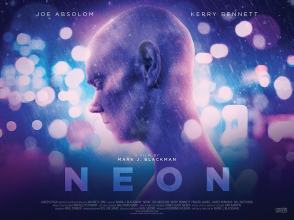
neonThe week before last we at CWR were given the opportunity to review a sci-fi thriller short film called NEON. In addition to that director Mark J. Blackman was also kind enough to answer a few of our questions about his work. He did change my correct spelling of “favorite” to the British-Canadian “favourite” (because he and all his lobsterback brethren are a bunch of heathens) but we’ll try not to hold that against him.


NEON definitely presents some surprises with the development of the story. What was the inspiration behind the plot?

The truth is, NEON was a story that just wouldn’t die, based on a very graphic, stark image of a man silhouetted in the rain who had fallen from grace and was the epitome of a lonely heart.

I was trying to work out what this man wanted and what had got him into such an emotionally dire predicament.  I awoke in the middle of the night just knowing it was about love and shame: it was about keeping another out of love’s way for your own selfish desires – and then it all just clicked: the tone, the mood, the emotion, why it was raining, why he was bald and his place in the world around him.

I was developing another short to direct, a haunting medieval horror, but pitched this to my producer and exec. producer instead – we then spent a year developing the script and working out the best way to present a narrative that goes far beyond what shorts usually handle, as there’s an entire history and world-building element to NEON that is intrinsic to it working. Narratively, we knew we were taking a monumental risk in how we were presenting our story but we figured go big or go home. We went big.

We really enjoyed that NEON was able to present such a vibrant world on what I can only assume was a bit of a budget. In your experience as a creator, what are some of the challenges and rewards in making a short film like this?

NEON is the first film for a while that I’ve directed in such a meticulous manner. I usually like to direct and shoot more organically – a bit more ‘guerilla’ – and feel things out as we go along following rehearsals and workshopping – but NEON was not that sort of film at all.

With so much backstory and world-building to accomplish, every second counted. The way in which the script was written was VERY prescriptive and we even made an animatic of the entire film to check our timings throughout. Every moment was accounted for – every angle, reason for a shot… the timing of an actor’s blocking was rehearsed in my head a million times before the camera ever rolled.

Was it rewarding? It was and it wasn’t. I like to be surprised on set, I like to encourage improvisation and to find new details or moments that are unexpected delights as they can often make a scene. However, the ambitious nature of NEON meant we had less time to allow for such moments and, as such, it was quite the military operation schedule-wise. Having said that, it was the very ambition of what we were trying to achieve with the story and emotion, the cinematography and saga-esque nature to the film that made the process rewarding. Up until NEON I’d been making films with what I could, budget-wise, resource wise – films I could make with what I had access to. NEON was a film for which my producer and I said to ourselves: “What’s the film we want to make?” And we put our money into that. Continue reading

Asian Comic Book Fan Watches Doctor Strange with Low Expectations of Racial Representation, Is Unsurprised but Writes Blog Post Anyway

This is the second part of a series I began almost exactly three years ago with “Asian Comic Book Fan Watches Thor: The Dark World Expecting Racial Representation, Deals with Crushing Disappointment by Writing Blog Post“. The Marvel sequel in question sidelined Hogun, played by Japanese actor Tadanobu Asano, almost completely, and as the title of the blog post would suggest I had been very excited to see him again.

sir

I can’t not use this image again, it’s just too perfect. Source: platoapproved.tumblr.com

With Doctor Strange, on the other hand, that anticipation was not present at all. Last June I covered the news that Tilda Swinton was in talks to play the Ancient One, the title character’s mentor, in “Celebrity Blind Spots and Fixing Racist Narratives [By Making Everyone White]“. The gist of that post was how, in an effort to be more “progressive” filmmakers have been choosing to “fix” problematic minority characters by simply casting them with white talent. That’s as opposed to simply amending what made them so racist and stereotypical to begin with.

At that point in 2015 Swinton starring in the film had not yet been confirmed, and absolutely nothing had been mentioned about the character of Wong, Doctor Strange’s manservant in the source material. With Benedict Cumberbatch already locked into the role it was a magical time in which there was still the possibility of Marvel releasing a movie with two prominent Asian characters.

Look, my hopes were never particularly high that Swinton wouldn’t land the part. As soon as it was announced she was in talks for the role support began pouring in. That she was a woman in her 50s in a genre that has helped shine a spotlight on men of all ages and women of a very particular age was laudable to many. The thing is, the optics are so bad.

twowhiteys Continue reading