 This is the third and final installment of “Free State of Mind”, a series of Q&As with the cast and crew of a South African film currently making the rounds at film festivals. You can read my review here, find out more about its creation from producer Terwadkar Rajiv here, and get some insight on how co-lead Nicola Breytenbach’s prepared for her role here.
Today’s interview is with Andrew Govender, who plays Ravi, the other half of the couple at Free State‘s core. Another former model like his co-star, he began his career at just sixteen-years-old. Being crowned Mr. South Africa in 2012 is only one of his many achievements, which include creating the Andrew Govender Book Club with the Nelson Mandela Foundation and being involved in various awareness campaigns.
Given that their characters share a few interesting parallels Govender answers a number of the same questions that Breytenbach did, with a few that are unique to Ravi himself.
An arranged marriage is the biggest barrier that Ravi faces in his relationship with Jeanette. How would you say he views that tradition and what it means for his future?
I think he respects it and accepts it. He was brought up in a traditional Indian family and those are Indian traditions. However, when he gets to meet his arranged wife he realises that he doesn’t have much in common with her. That’s when he meets Jeanette and falls madly in love. He knows that he shouldn’t be pursuing a relationship with her because it’s illegal during that time for inter-racial relationships. However, he can’t help himself and that results in detrimental consequences.
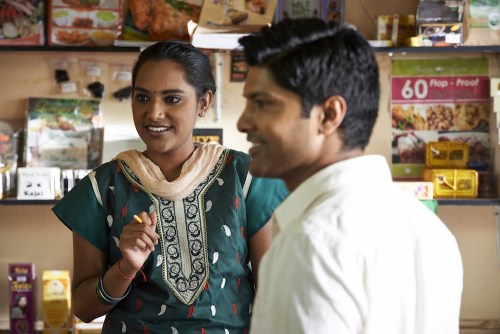
Ravi makes it clear that he’s concerned about his sister’s safety, but what does he ultimately think about what his family does under cover of darkness?
He understands that they are doing it for a greater cause and he respects that. However, he does care deeply for them and doesn’t want anything to happen to them when they go on these missions. He’s close to his family and wants to protect them.
From what I can tell this is your first role in a feature film. How was that experience, especially with it being a South African production instead of a big Hollywood movie?
It was an incredible experience. I got the opportunity to work with some really talented South African actors. I learnt a lot by being on set and having these actors mentor me throughout the filming process.
Our director Sallas de Jager was also really supportive and helped me to give the best performance I could. Even though this was a South African film, the production standards on the movie were really high. That can be attested to with all the international awards that the movie has won. I really hope that I will have the opportunity to work on more films both in South Africa and Hollywood. Acting is really something that I enjoy immensely.
How much did you know about South Africa’s Immorality Acts before signing on to this film?
Not a lot. I grew up post Apartheid, so most of what I knew was from what I heard, not what I could have experienced. It was quite eyeopening to learn more about that time in South Africa’s history and how Indian people were treated. I gathered as much information as I could from my parents about their experiences during that time. I also was really fortunate that my acting teacher had been in an inter-racial relationship and she was able to help me understand my character better.
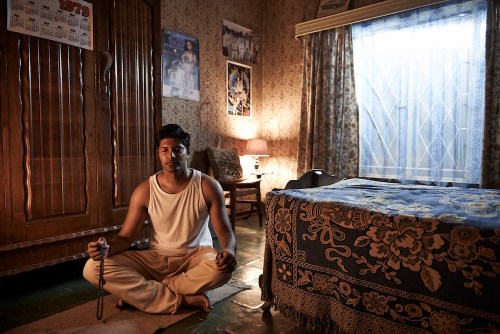
Religion plays a large part in Free State for both Ravi and Jeanette’s families. Did you come from a religious background, and did this have any affect on how you played the role?
Yes, I did. I grew up in a conservative traditional Indian family so religion was important to us. My character was also brought up with the same core values and so religion would have been important to him too. There’s a scene in the movie where my character meditates and also seeks relationship advice from a guru. So we are aware that he relies on religion to guide him in the choices that he makes.


 I prefaced that article with a short bit of fiction in which Arad awakens in a cold sweat, realizing that the world he had once foretold had finally come to pass. By saying that these changes are “inevitable” he acknowledges that they are the impending future. By stating in direct terms that as long as he’s involved Spider-Man will never be


 Culture War Reporters
“You Might as Well Have [insert character here] Be [insert 2-4 minority types here]!”
One of the most common adages on the internet is “don’t read the comments”. While this global network that we’re all currently using [unless you somehow managed to snag a printout of this post] has given us all the ability to share and discuss everything under the sun, the unfortunate truth is that a lot of that conversation amounts to hot garbage. You could scroll down past an article to see what people are saying about it, but chances are that it won’t be a particularly uplifting experience.
As someone who spends much of his time online reading about entertainment there’s a type of comment that I’ve seen crop up time and time again. It’s existence ties directly into a lot of the recent trends in comic books, television, and film, the push towards inclusivity and the people who are actively working to make that happen. A perfect example [of a handful I’ll be referencing throughout this article] is:
“disabled, multiracial trans women with disfiguring facial scars” – posted on “There are more (white) women starring in movies than ever before”
I’ve been compiling these for the past few months, originally with the intent of putting together another “For Your Consideration” and allowing readers to look them over and come to their own conclusions. A general [and accurate] takeaway would be to note them as being typical of inane online comments and move on, but I’d like to spend a little time breaking down the idiocy they represent.
They Perpetuate the Default
The default person, in case you needed to be informed of who generally holds the most power and screentime across the board, is a straight able-bodied cisgendered White man. I’m painfully aware that simply listing those words in successive order like that marks me as being one of the SJWs [my thoughts on that term here], but every one is important to take note of.
Take the following:
“black Asian gay lesbian transgender Spider-man” – posted on “Dear HOLLYWOOD REPORTER: May We Have a Word About ‘Cultural Appropriation’?”
To look at the list and mark it against the checklist of what makes a default human being, in the eyes of at least a few, we have:
Other comments I’ll be including later on will add examples that include disabled people, but the general gist of every one capitalizes on the absurdity of a person who doesn’t match the standard cutout. A straight able-bodied cisgendered White woman? Not a terrible strain of the imagination. Once you start to tick off more items that don’t coincide with the norm, however, things apparently get a lot shakier.
I don’t even think that many of these commenters are aware of the implicit message behind the words they type. By listing these adjectives and identifiers they end up with a person who most of them share absolutely nothing in common with, which exposes the very reason we need diversity at all. Everyone should be able to relate to entertainment, and for too long the industry has catered to an audience that gets smaller every day. Continue reading →
Rate this:
1 Comment
Posted in comics, film, gender, internet, lgbt, race, television
Tagged believable, black, character, comment, comments section, complaints, default, disabled, diversity, gay, internet comments, lesbian, lgbt, marginalized, minority, possibility, race, realistic, representation, straight, Transgender, transgendered, visibility, white, why not have