Category Archives: race

Rowling’s Wizarding World: Just As Small As Ours, Unfortunately

I like the Harry Potter books. I just can’t say I love them [my favourite YA series of novels is Percy Jackson & the Olympians], and after having finished all seven and catching the last few movies in theatres haven’t thought about them much. Certainly not enough to give the Pottermore website, created by Rowling to give HP fans what they continue to jones for, even a cursory visit.

On that same note I haven’t really been following Fantastic Beasts and Where to Find Them, a prequel and spin-off to the film franchise, aside from perking up at the idea that protagonist Newt Scamander might be something other than White. I briefly mentioned it back in 2013 when covering the inherent problem with assuming that White is the norm, but ultimately stopped paying attention after it was officially announced last June that Eddie Redmayne had been cast in the role.

That said, fantasy worlds and the worldbuilding involved in their creation have always interested me, and I didn’t hesitate to click on a link a friend had shared on Facebook stating that Rowling had “[revealed] four wizarding schools, including one in the United States“, with the latter being one of the settings in the upcoming film. After all, if one of the aforementioned magical places of learning was to be in North America chances were that the other three were located elsewhere. Harry Potter and the Goblet of Fire had always been my favourite of the series, with one of the many reasons being that it featured the two other wizarding schools and characters from them, expanding the universe beyond the borders of Great Britain. Continue reading

Black to the Oscars

Well readers, it was exactly one week ago that actress Jada Pinkett Smith announced her decision not to attend this year’s Academy Awards, citing a distinct lack of diversity in the nominees. In a brief video [embedded below], Pinkett Smith expressed her frustration at the apparent exclusion of people of color in the “mainstream”, and declared that “…begging for acknowledgement, or even asking, diminishes dignity.”


Upon hearing this, the nation has since had a moment of quiet reflection over the issues Miss Pinkett Smith has brought up, calmly and honestly discussing the root issues facing the representation of-

Nah, I’m just kidding. People went ape****.

tumblr_nqofbeqloy1twltp9o1_250

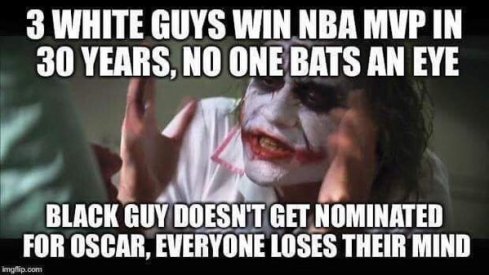
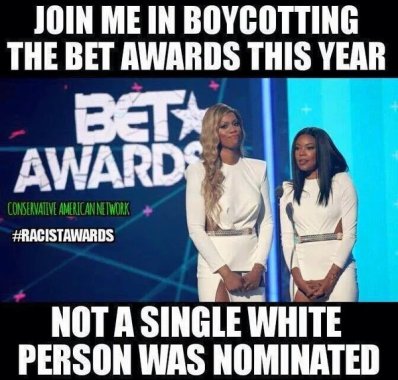
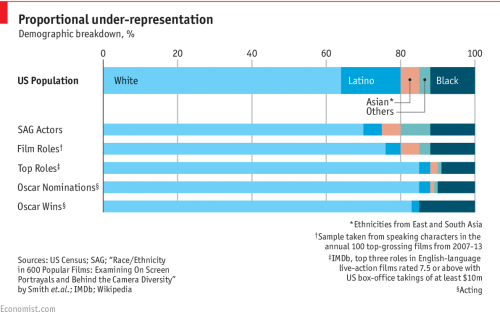
Cue the torrent of self-righteous indignation as folks started positively shrieking about reverse-racism, hypocrisy, and entitlement. And as more and more figures have come out in support of (or at least, sympathy with) Pinkett Smith’s cause, the outrage has only grown with it. It seems that you can’t go anywhere online without running into something like this:

czu22daumaapgu3

Or this:

czdq2uxwwaay9z7

Or this:

20160123_woc197

For the record, the stats on this lead to incorrect conclusions- but we can talk about that later.

Continue reading

The Character Assassination of Sam Wilson by the Publisher Marvel Comics

Captain America Is Old, Long Live Captain America

In July of 2014 it was announced on The Colbert Report that a momentous event would be occurring in the Marvel universe. The blonde, blue-eyed Steve Rogers would be stepping down as Captain America due to rapidly aging, with the mantle passing on to his partner [not sidekick] Sam Wilson aka The Falcon. As is typical for the industry the cover for Captain America #25, in which the event takes place, promised some level of mystery with a white silhouette asking readers to guess who it would be.

Captain America #25 (Vol. 7). Written by Rick Remender, illustrated by Carlos Pacheco.

As Sam himself states in the splash page on the right [I realize that the text is far too small for you to read]:

“You guys all knew it was me, didn’t you?

There’s literally no drama left in this reveal.”

The words are particularly tongue in cheek, with the writer himself acknowledging that even without the announcement on national TV it had always been fairly obvious who would be the next character to bear the shield. Captain America and The Falcon had been compatriots since the late 60s [even sharing a title], so there were few more deserving individuals than Samuel Thomas Wilson.

Now I was, and still am, all about this. To have as high profile a role as Captain America, a title that represents an entire nation, be given to a Black man is enormous. I’d also always been a fan of Sam as The Falcon. I added the title to my pull-list immediately.

I’ll Justify the Title, But First, This Week’s Events and a Rough Thesis

Now just this past Tuesday, roughly a year and a half after the original announcement, Marvel released the news that Steve Rogers would be returning as the ol’ Shield-Slinger.

This isn’t to say that the book on the left, Captain America: Steve Rogers, would be replacing the currently running Captain America: Sam Wilson. Instead the publisher’s plan is to release both side by side. They will also be penned by the same writer, Nick Spencer, a move which there has been plenty of precedent for [Jonathan Hickman on both Avengers and New Avengers, Brian Michael Bendis on All-New X-Men and Uncanny X-Men, etc.]. Oftentimes both titles will act as separate halves of a larger story, though that hasn’t been confirmed in this case.

This announcement was met with a similar lack of surprise across the internet, largely because Captain America: Steve Rogers coincides with the release of the summer blockbuster Captain America: Civil War. A number of changes have been made to the comic books to have them fall more in line with what happens up on the big screen, and slapping an “A” back on the forehead of the face most of the world knows and loves is generally seen as a solid business move.

Now I am fully aware of how incendiary the title of this blog post is, and hope to justify it by explaining how the existence of two Captain Americas is not similar to the same being true of other heroes, with the reason for that largely being justified by the character’s recent publication history. It’s in the exploration of that latter point that I truly hope to rationalize the words “character assassination.”

As with every article I write, I’ve done my best to make this accessible to both those who do and do not regularly enjoy comic books. If you have any further questions please don’t hesitate to drop me a line in the comments far below. Continue reading

Bigotry, Borders, and Beyond

Let’s try a little exercise here-

What’s the first image that pops into your head when I say the word “refugee”?

For many, it will be that of displaced African villagers, perhaps with stomachs bloated from hunger, listlessly waiting in line for water in some desecrated wasteland.

For others, it might be more recent images: those of shivering, terrified Syrians, crammed into boats as they prepare to make a perilous voyage across the Mediterranean.

But how many would think of scenes like this?

borderemergency-diowesttxerd

No, that’s not the Balkans or Turkey or Darfour. That’s the Congregational Church of Austin in Texas, barely over a thousand miles from where I’m writing these very words.

The “American Immigration Crisis” has been quietly brewing since 2014, when a sudden surge of migrants- most of them young children– attempted to cross into the US from countries in Central America.

The response by many, as you can probably guess, was less than welcoming-

Across the Southwest (and the country at large), outrage was expressed over these “illegals”, the town of Murietta, CA perhaps serving as the best example. In July of 2014  buses carrying migrant families were protested in a manner that can only be described as repulsive- but I’ll let you watch for yourself and decide:

Continue reading

The 2015 Evan Yeong Literary Awards

You can read a better introduction at the beginning of last year’s awards, but I can quickly fill in for any new readers out there that I began reading at a fairly young age and continued on to study literature in college. That being said reading and literature have been a part of my life for about as far back as I can remember.

evanyeongliteraryawards2015

This second installment of the Evan Yeong Literary Awards seeks to once again call attention to the artistic medium that I love most, taking note of the books I read in the past year and [at least this time around, solely] praising the standouts. A lot of pages were put away in 2015, and it was actually a challenge this year to keep the number of winners to just under a dozen.

In 2015 I once again resolved to read 52 books and this time met my goal; sweet success. You can check out a full list [with the exact dates of when I read each one] at this link.


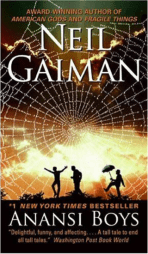
anansiboys

book that most helps “the cause/mission”

Anansi Boys by Neil Gaiman
Published 2005

The former as used by the hosts of the podcast Black Men Can’t Jump and the latter being the name of Joseph Philip Illidge’s column on Comic Book Resources, both terms are ultimately defined as work that progresses diversity. To that effect, White British author Gaiman is one of its truest champions, crafting a fantastical novel that lets its characters fall under the default race of reader’s assumptions only to have that torn away, much to even [or especially] my chagrin, in later pages. Fantasy as a genre is not often populated by men and women of colour, at least in Western fiction, and to have this novel exist, as well as be supported by such an unshakable talent, is a wonderful thing.

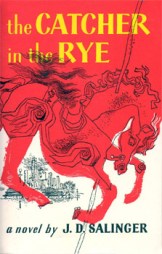
catcherintherye

novel that doesn’t, and then does, live up to the hype

The Catcher in the Rye in J. D. Salinger
Published in 1951

The only thing I knew about this [in]famous work of fiction prior to reading it is that the murderer of one of The Beatles was obsessed with it and that it has been a frequently banned book, so I was not at all expecting the tale of a teenager who just wanted to drink some drinks and go on some dates and figure out what adolescence is really about. On that same note, I also didn’t think I would be exposed to some of the most raw and honest writing about what it’s like to be a dumb, lost kid. I still don’t fully understand what all the hubbub was about, but I also see why so many dating profiles have it featured as their favourite book.  Continue reading

In The Force Awakens White Women get Representation, but Black Women get CGI

I loved Star Wars: The Force Awakens. I loved it so much that the first thing I thought about doing when I walked out of the theatre was hash out everything that this Star Wars reboot had done right.

Like including legitimately humorous dialogue rather than slapstick CGI sidekicks.

Unfortunately, everyone on the blogosphere had already come to the same conclusion long before I was back from my Christmas break. Still, I couldn’t stop thinking about the film, or reading articles about it. So I’ve decided to write about one of the few things that bothered me about the film, rather than many aspects of the film that I loved.

If you’ve been reading this blog for some time, you probably already know that we at CWR were excited to hear about the diversity of casting in The Force Awakens.

I was especially excited when I heard that Lupita Nyong’o had been cast. Ever since she won best supporting actress for 12 Years a Slave and was declared the most beautiful person of 2014 by People magazine, I’ve been keeping my eyes peeled for Nyong’o. After witnessing her sudden rise to fame, I was curious to see if she would continue to find roles in major films, or if she would slowly be pushed out of Hollywood because of her dark skin. As Gregg Kilday explains in his article about Nyong’o, few black actresses have ever managed to secure a spot as a permanent Hollywood heavyweight:

While the stage would appear to be set for [Nyong’o] to ascend to the A-list — just as Jennifer Lawrence did after her best actress win for Silver Linings Playbook last year — it’s not that simple. For while there have been a handful of African-American actors, from Sidney Poitier to Eddie MurphyDenzel Washington and Will Smith, who have reached that status, there’s never been a black actress who has become the equivalent of a Julia Roberts or Angelina Jolie. Whoopi Goldberg came closest, following her best actress Oscar nomination for 1985’s The Color Purple and supporting actress win for 1990’s Ghost, but despite an occasional hit like 1992’s Sister Act, she didn’t maintain that momentum. Hollywood also flirted with Angela Bassett, Thandie Newton, Halle Berry and, most recently, Mandela‘s Naomie Harris, without ushering any of them into its very top tier.

It seems like a habit for major blockbuster films to tick off their diversity checklist by casting a white woman and/or a black man. Meanwhile, actors from other minority groups, especially women of colour, get overlooked because all the non-white, male roles have already been taken. As Evan pointed out in his post about the Martian and racebending, this seems to be the impulse, even when it means casting a white women to play a Korean- American character and a black man to play an Asian- Indian character. Continue reading