
While the Overwatch League, Blizzard’s high-profile international esports endeavour, is well underway (#RiseTogether), casual players who are in tune with the ebb and flow of the game’s content await with bated breath. With the end of the month fast approaching, history dictates that sometime within the next week or so a new hero will be announced, with the latest addition to the roster going live close to the end of March (see: Orisa and Brigitte’s respective release dates).
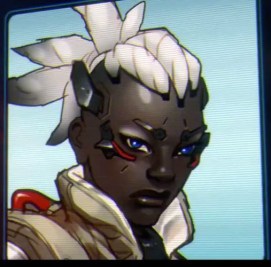
A new hero is an exciting prospect for a number of reasons, with competitive players hoping for a chupacabra to finally kill the GOATS meta and lore fiends longing for something, anything, to forward the molasses pace of the universe’s story. It’s also an opportunity for a particular contingent of fans to ask, once again, when the award-winning shooter will finally create a playable Black woman.
Similar to my breakdown of the character of Ned Leeds in Spider-Man: Homecoming and his relationship to Ganke Lee from the comic books, I will be creating a thorough chronology that highlights select dates in Overwatch‘s history, as well as the public outcry for a Black female hero. Unlike the earlier article, however, I will also be providing my own commentary on why this is so important to some (and perhaps should be to everyone).
November 7th, 2014: Overwatch is announced at BlizzCon, an annual gaming convention that celebrates Blizzard Entertainment’s games and their countless fans, marking their first original IP in 17 years. While a cinematic trailer spotlights four key players in the universe’s lore, a gameplay trailer focuses on the 12 heroes currently available at that time.
Notably, even at this early stage the roster featured a surprising amount of diversity, with the Egyptian combat-armoured Pharah and Indian light-bending Symmetra.
 March 10, 2015 to November 6, 2015: The remaining nine heroes are announced, rounding the final hero count out to 21.
Lucio (as seen on the right), a world-famous DJ-turned-freedom-fighter, appears to be Afro-Brazilian (and originates from that country).
December 7, 2015: In one of the very first (and soon-to-be heavily memed) Developer Update videos, game director Jeff Kaplan discloses that all future content for Overwatch
(“additional maps and heroes that we’d like to add to the game”) will be free, indicating that the number would not stay 21 for long.
May 24, 2016: Overwatch is officially released. Continue reading
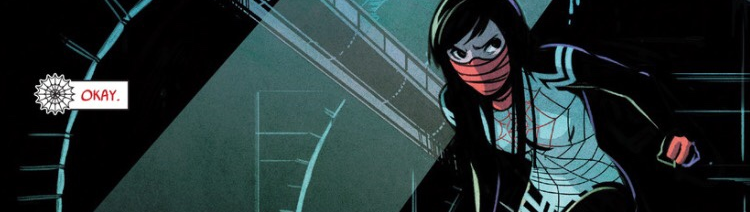
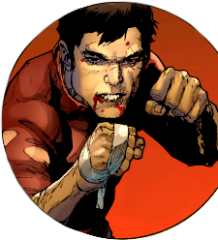 create biological webs from her fingertips. Other favourites from the same publisher include Shang-Chi, the Master of Kung-Fu, an Avenger at the time of this writing. He primarily relies on his master of martial arts, an ability which didn’t keep him from participating in an intergalatic war to save the universe. Another is Amadeus Cho, a teenager who attained the title of “7th Smartest Man in the World” and frequently took down superhuman assailants with only his intelligence and whatever else was available. Yes, at one point one of those superhuman assailants was the Hulk. The Hulk.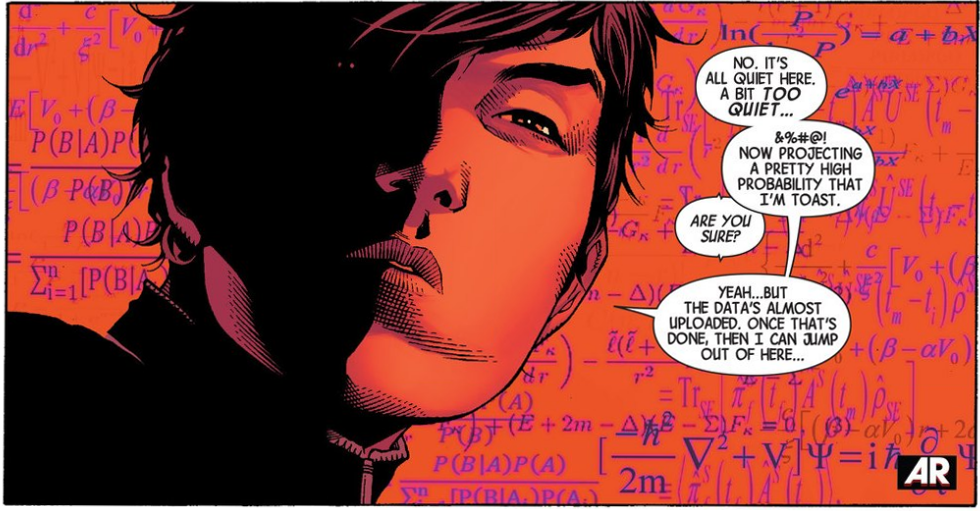
 Bradley Katsuyama is a real-life currently existing person. He is an Asian-Canadian and has been a doer of objectively heroic actions surrounding the investigation and consequent combating of algorithms that preyed on unwitting investors. While not the intellectual property of a company creating and producing recent years’ largest blockbusters he is the focus of the novel Flash Boys: A Wall Street Revolt, a film adaptation of which Aaron Sorkin is set to write the screenplay for. Yet at this point Katsuyama is no closer to having his story told than Shang-Chi or any of the rest of them.

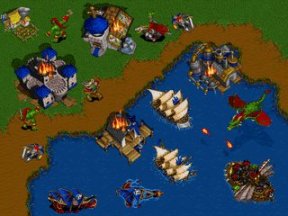 My first contact with anything Blizzard Entertainment-related was when a kid much older than I found a copy of WarCraft II: Tides of War on our aging PC in the Philippines. I found the fantasy story gripping, but as a child who drew far more than he wrote [a ratio clearly flipped on its head nowadays] it was the visuals that really grabbed me.


 Culture War Reporters