Tag Archives: Violence

The Power of Twitter Showcased at the Oscars: #OscarsSoWhite, #YesAllWomen, and #AskHerMore

Twitter has changed the way news is reported. The Black Lives Matter movement has been particularly successful in raising awareness for cases of police brutality that generally would have been overlooked by mainstream news channels.

Arguably the second most important aspect of Twitter is its ability to connect celebrities to their fan base. With the prevalence of these two features, it’s hardly surprising that celebrities and celebrity events have become more politicized.

This year’s Academy Awards are a prime example of this overlap between the celebrity world and political struggles that have been highlighted via Twitter. Below, I’ve included a few notable examples of Twitter flexing its muscles at the Oscars

#OscarsSoWhite

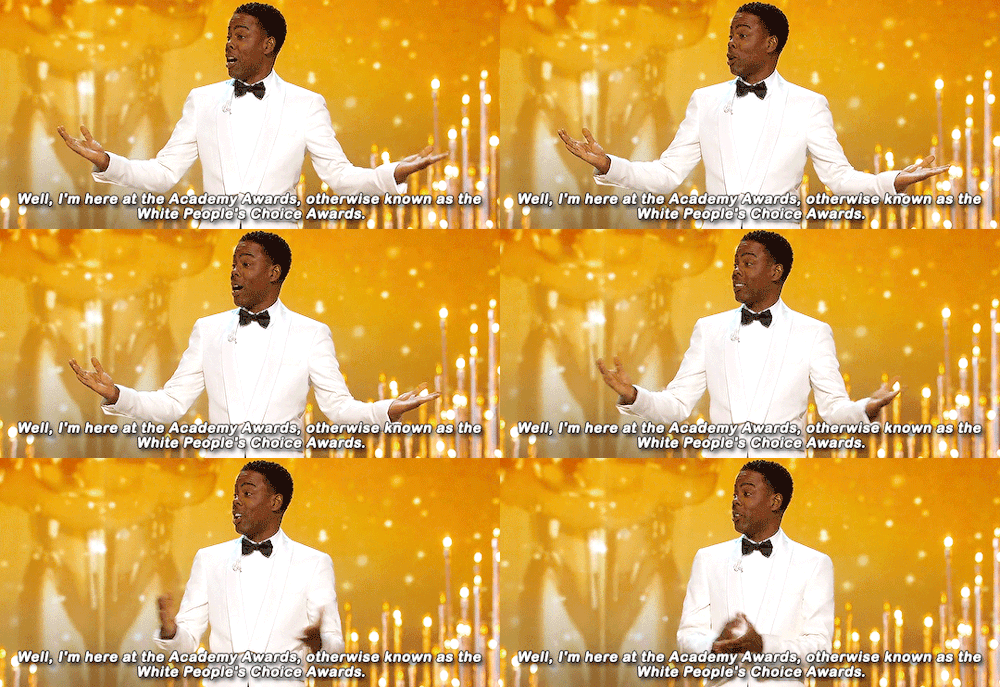
I’m not going to dwell too much on the circumstances of the #OscarsSoWhite boycott, since Gordon and Evan have already thoroughly explained its context. However, I do want to talk a bit about how the controversy was handled by the Oscars host, Chris Rock.
tumblr_o3ajap2ea01rwbf4ro1_500

Overall, I thought Rock did a great job calling out the Academy without reducing his monologue to a humourless lecture. However, in his article for Salon, Arthur Chu points out that,

Acting like caring about day-to-day violence in the streets and the impact media and culture have on that violence are somehow mutually exclusive — a common, frustrating, tired argument anyone who talks about racism in media will inevitably see dozens of times in the comments section — ignores history.

It ignores the many, many arguments that have been made about how the excuses made for the deaths of Trayvon Martin and Mike Brown frequently come verbatim from untrue stereotypes out of TV and movies, how the only way Darren Wilson’s description of Brown as a “demon” who was “bulking up to get through the bullets” could possibly make sense to anyone is after a lifetime of media portrayals of the scary superhuman black man. It ignores Martin Luther King going out of his way to call Nichelle Nichols and tell her not to quit “Star Trek” because having a black woman on TV who wasn’t a domestic servant mattered. It ignores the ongoing civil rights protests around the Oscars back in the 1960s and ’70s, including Marlon Brando making history as the first and only best actor winner to boycott the ceremony, sending American Indian Movement activist Sacheen Littlefeather to accept the award in his place.

Similarly, several activists have since pointed out the one-dimensionality of calling for more black representation only to appeal to Asian-American stereotypes for a laugh. Continue reading

Filmmaker Christine Welsh on Tracing Her Heritage in Women In the Shadows

My Canadian studies class recently watched Women in the Shadows, a documentary by feminist filmmaker and professor, Christine Welsh. Not long after we had watched her film Welsh agreed to visit our class for a question and answer period. Below I’ve included a little of what I learned from her film and her visit.

christine20qu27appelle20valley

1101331

Norbert Welsh’s oral history was recorded by Mary Weekes.

In an article detailing her documentary experience, Welsh explains that her interest had been sparked when her mother recovered a copy of The Last Buffalo Hunter, an oral history by her great grandfather, Norbert Welsh. In the film, however, Welsh attempts to recover more information about her great grandmothers, figures who were much harder to trace.

Along her search, Welsh discovers the name of her great grandmother, Margaret Taylor, and Margaret’s mother, Jane. Welsh surmises that Jane was most likely Cree. Jane’s union with George Taylor meant that Margaret was one of the first generations of Metis women. While documentation about women was lacking during early colonization, Welsh was able to uncover some details about her foremothers because of Margaret Taylor’s connection to Hudson’s Bay Company Governor George Simpson.

In the early period of Canadian colonization, Hudson’s Bay employees often took “country wives”. These women, of First Nations or Metis heritage, would create family ties between the explorers and the local community and were often the reason their husbands survived their first few Canadian winters. In Women in the Shadows, Welsh discovers that Taylor had been Simpson’s “country wife” for many years, only to be cast aside by Simpson when he returned from a trip to England with a new white wife.

Continue reading

Dividing Violence and Video Games

When I had originally planned on writing this post we were a little ways into November, with Remembrance Day having just passed. Walking through the subway stations here in Toronto it was impossible not to spot a bright red poppy pinned to a stranger’s lapel that inevitably forced me to, well, remember the war that lends them their importance.

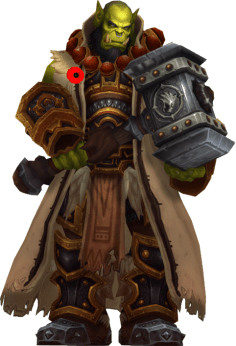
thrallflandersJust before the day on which Canada and the rest of the Commonwealth of Nations pay tribute to those who have fallen in the line of duty was Blizzcon, the annual convention put on by my favourite video game developer. With World War I on one hand and a company that holds the title of creating the highest grossing game of all time in World of WarCraft on the other the connection was clear.
Asking whether or not it’s possible to have a split between violence and one of the quickest growing forms of both entertainment and narrative device, for mainstream audiences, is a difficult enough question as it is, and I felt it all the more pressing as the longer I put off writing this post the more [extreme] acts of violence I could see reported on the news. I don’t even need to drop any news links for you to think back on an incident that occurred just this past week.

Now before I go any further I want to state plainly that this is not an indictment of violence in video games. As my co-writer Gordon related a few years back being exposed to such can actually be beneficial to the way we perceive and navigate the world. Former Culture War Reporter Stew, who assisted me in writing this, also mentioned that it can be “interesting because the interactivity of videogames presents us with a unique way to actually explore our violent tendencies, or our instinct for survival.” I don’t particularly believe that this aspect of the medium is harmful by any means. Instead what I’d like to explore is what video games could be with its absence. Continue reading

What Wouldn’t Jesus Do?

“Would Jesus have carried a gun?”

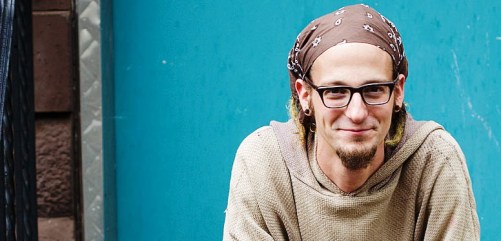
That was the question Christian activist Shane Claiborne posed in an article this Saturday.

The Jesus I worship did not carry a gun. He carried a cross.  Jesus did not tell us to kill our enemies. He told us to love them.”

These words come as a response to the shocking and repulsive comments by Liberty University’s president Jerry Falwell Jr. who, in a speech to his institution’s students, sneering declared that “if more good people had concealed-carry permits […] we could end those Muslims before they walked in and killed them.”

I shouldn’t have to explain how despicable those words are. And readers- I’m not going to.

If you’re reading this blog, I’m going to assume (to hope) that you have an iota of humanity in you. A speck of morality. A single shred of basic decency. I don’t think I need to describe what vile, bigoted, demonic filth that statement is. I don’t think I could even begin to. The heinous, cancerous insanity that Falwell spouts doesn’t merit a response.

Shane Claiborne, on the other hand, does.

shane-claiborne-believes-the-gospel-is-about-being-close-to-those-who Continue reading

Benjamin Netenyahu: Holocaust Denier

Readers, we interrupt your regular horror-themed post to bring you news from the Middle East- where, for anyone not keeping up, things have started heating up (even in this cold October).

Past weeks have seen a surge of violence on the streets of Jerusalem, as a spate of stabbings has left 8 Israelis and 56 Palestinians dead. Tensions continue to rise in a cycle of attacks and brutal retaliations, leading many to question if the region will see a 3rd Intifada in the coming days and weeks. With the looming threat of an all-out uprising, many within the region and internally have urgently called for peace.

Israeli Prime Minister Benjamin “Bibi” Netenyahu has not been among them.

Speaking at the World Zionist Convention this past Tuesday, Netenyahu proclaimed to his rapt audience that (and I quote):

Hitler didn’t want to exterminate the Jews at the time – he wanted to expel the Jews.”

-BBC World News (I’d link you to the YouTube clip, but I don’t want to give those racists the hits)

Netenyahu would go on to claim that it was only after meeting Haj Amin al-Husseini, the mufti (high-ranking Islamic religious scholar) of Jerusalem, that the “final solution” was implemented- Netenyahu claiming that Hitler only began the holocaust at the behest of the mufti.

And that is…

…just so ****ing stupid that I don’t even know where to begin.

I mean that every single word of that is wrong. And not just wrong but so obviously and categorically wrong. The wholesale murder of Jews/Roma/homosexuals/the disabled/communists/etc. was already well (as in years) underway by the time the mufti met with Hitler. Historians both within Israel and without, and across the full political spectrum, have poured their collective derision on Netenyahu’s barefaced lie.

-Everyone on the planet.

Continue reading

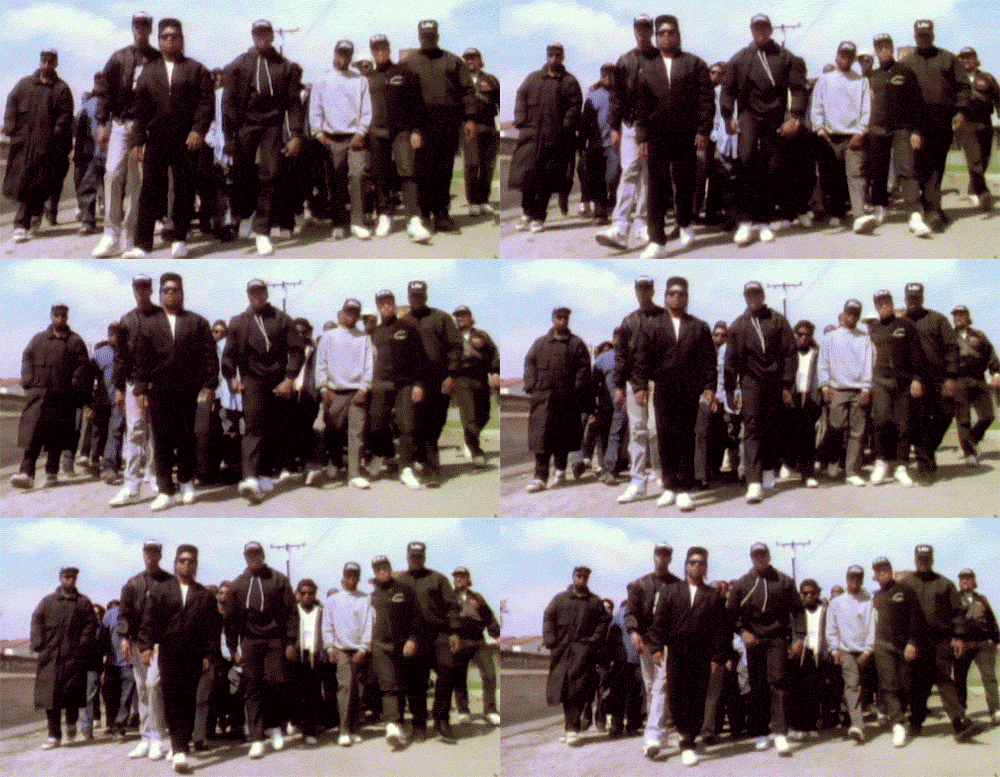
Straight Outta Compton: A Film Review

It can’t be easy making a biopic.

Err to much on the side of leniency and you get a sappy, self-congratulatory, and ultimately meaningless popcorn flick. Err to much on the side of harsh truth and you’ll often get a vicious hatchet job.

Now try doing that while the main character’s still alive.

Suddenly there’s the additional burden of being honest and fair and avoiding litigation at the hands of the offended and his or her legions of lawyers.

Now try doing that with eleven characters at once.

Against all odds, Straight Outta Compton does just that.

Continue reading