
I loved Star Wars: The Force Awakens. I loved it so much that the first thing I thought about doing when I walked out of the theatre was hash out everything that this Star Wars reboot had done right.

Like including legitimately humorous dialogue rather than slapstick CGI sidekicks.
Unfortunately, everyone on the blogosphere had already come to the same conclusion long before I was back from my Christmas break. Still, I couldn’t stop thinking about the film, or reading articles about it. So I’ve decided to write about one of the few things that bothered me about the film, rather than many aspects of the film that I loved.
If you’ve been reading this blog for some time, you probably already know that we at CWR were excited to hear about the diversity of casting in The Force Awakens.
I was especially excited when I heard that Lupita Nyong’o had been cast. Ever since she won best supporting actress for 12 Years a Slave and was declared the most beautiful person of 2014 by People magazine, I’ve been keeping my eyes peeled for Nyong’o. After witnessing her sudden rise to fame, I was curious to see if she would continue to find roles in major films, or if she would slowly be pushed out of Hollywood because of her dark skin. As Gregg Kilday explains in his article about Nyong’o, few black actresses have ever managed to secure a spot as a permanent Hollywood heavyweight:
While the stage would appear to be set for [Nyong’o] to ascend to the A-list — just as Jennifer Lawrence did after her best actress win for Silver Linings Playbook last year — it’s not that simple. For while there have been a handful of African-American actors, from Sidney Poitier to Eddie Murphy, Denzel Washington and Will Smith, who have reached that status, there’s never been a black actress who has become the equivalent of a Julia Roberts or Angelina Jolie. Whoopi Goldberg came closest, following her best actress Oscar nomination for 1985’s The Color Purple and supporting actress win for 1990’s Ghost, but despite an occasional hit like 1992’s Sister Act, she didn’t maintain that momentum. Hollywood also flirted with Angela Bassett, Thandie Newton, Halle Berry and, most recently, Mandela‘s Naomie Harris, without ushering any of them into its very top tier.
It seems like a habit for major blockbuster films to tick off their diversity checklist by casting a white woman and/or a black man. Meanwhile, actors from other minority groups, especially women of colour, get overlooked because all the non-white, male roles have already been taken. As Evan pointed out in his post about the Martian and racebending, this seems to be the impulse, even when it means casting a white women to play a Korean- American character and a black man to play an Asian- Indian character. Continue reading


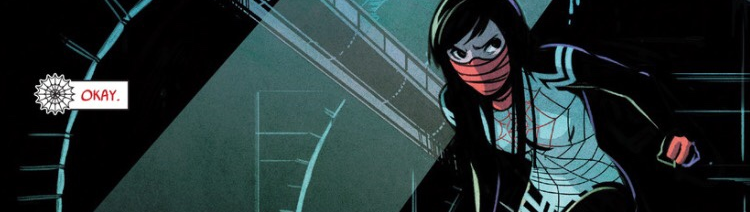
 create biological webs from her fingertips. Other favourites from the same publisher include Shang-Chi, the Master of Kung-Fu, an Avenger at the time of this writing. He primarily relies on his master of martial arts, an ability which didn’t keep him from participating in an intergalatic war to save the universe. Another is Amadeus Cho, a teenager who attained the title of “7th Smartest Man in the World” and frequently took down superhuman assailants with only his intelligence and whatever else was available. Yes, at one point one of those superhuman assailants was the Hulk. The Hulk.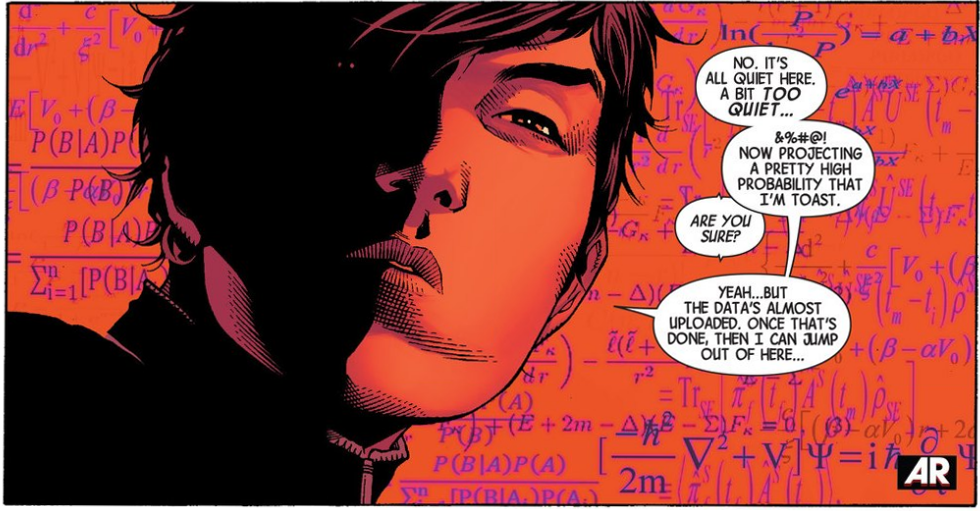
 Bradley Katsuyama is a real-life currently existing person. He is an Asian-Canadian and has been a doer of objectively heroic actions surrounding the investigation and consequent combating of algorithms that preyed on unwitting investors. While not the intellectual property of a company creating and producing recent years’ largest blockbusters he is the focus of the novel Flash Boys: A Wall Street Revolt, a film adaptation of which Aaron Sorkin is set to write the screenplay for. Yet at this point Katsuyama is no closer to having his story told than Shang-Chi or any of the rest of them.


 Culture War Reporters