When I initially read Gordon’s response to the post I wrote last week, I asked myself, should I be offended?

You see, my original post was one of my more personal pieces, where I touched on my struggle with self-acceptance (as a rather sensitive person) in a culture highly influenced by what I described as the warrior-princess/damsel binary.
As a child, I believed that I needed to become emotionless in order to be strong, and masculine in order to be taken seriously. That’s why I find characters who are feminine and strong, like those often played by Zooey Deschanel, an encouraging presence in films and TV shows.
So, you can probably see why, being the sensitive person that I am, Gordon’s closing statement came off as a wee bit hurtful:
Deschanel states that “we can be powerful in our own way, our own feminine way” [emphasis added].
No you ****ing can’t.
From what I know of Gordon, he seems like a pretty good guy, so I’m going to act under the assumption that he was not writing an attack on my personal character, but rather a critique of the concept of feminine strength as represented by Deschanel. That critique is what I will be responding to in the points below. If you don’t watch New Girl, then be aware, there are spoilers below.
1. The Critique Begins with Flawed Logic
I have to thank one of our most faithful commenters, Rosie, for pointing out the “strawman argument” made in Gordon’s critique. In “In Defense of the Warrior-Princess” Gordon describes traditionally feminine characteristics using words like “submissive” and “weak”, words that neither I, nor Deschanel used to describe femininity. Using these sort of terms creates a false dichotomy between my argument and his.
He also claims that Deschanel plays “ditzy, emotional, pathologically neurotic” characters “who don’t need no man to help them”. He includes a crying gif of Jessica Day, the character Deschanel plays in New Girl as evidence.

This isolated gif ignores the wider context of the show, where every single character deals with their day-to-day life in a “ditzy, emotional, pathologically neurotic” sort of way.



It also ignores how New Girl is not at all about being the kind of person “who don’t need no man”. Instead, this show demonstrates how relationships lead to personal growth. It also shows how every person sits somewhere on a spectrum between sensitive and stoic, and how both of these traits are essential to becoming a healthy individual. Continue reading →

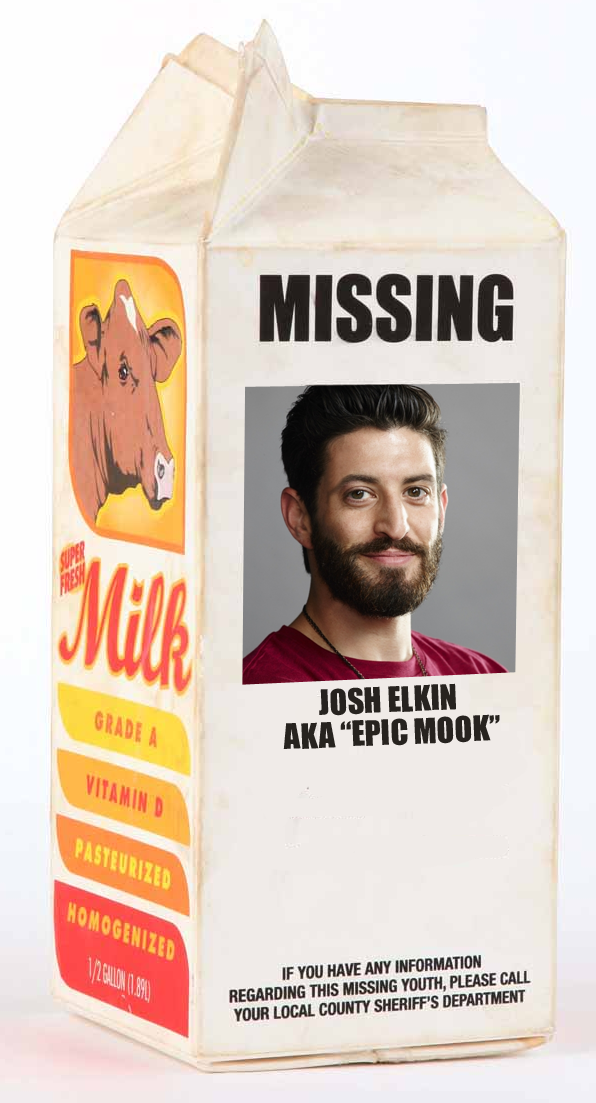 Today I watched the first episode of my favourite online cooking show equipped with the answer to the question that titles this post: “What happened to Josh/Epic Mook on Epic Meal Time?” It was a sombre occasion, and the burden lay heavy on my heart as I was witness to the EMT crew create a pizza enchilada, a “chicken from a drawer” enchilada, and a Baconator enchilada, all without the help of their most handsome member. Yeah, I said it, and before this blog post is done I’ll say it again.


 Roberto Aguirre-Sacasa, the publisher’s Chief Creative Officer, has been making strides to ensure that the world doesn’t forget about Archie Andrews. Non-comics-obsessives may not be aware of Afterlife With Archie, a series that he is writing himself which features the dead rising and the gang doing what they have to not to get eaten. Art by the immensely talented Franco Francavilla [who also illustrated the cover on the right] aside it’s good, with conventional tropes being carried out by characters we know like the backs of our hands. Crossovers with other franchises include Glee, Predator, and, somehow, Sharknado. Anywhere teens could potentially be found has the potential to host Betty, Jughead, Dilton, and the rest of them-


 Culture War Reporters
2 Broke Girls And the Interview with Federico Dordei, Part 2 – Behind the Scenes at Stage 21
AT THE REQUEST OF FEDERICO DORDEI HIMSELF I HAVE TAKEN DOWN THIS ARTICLE. APOLOGIES TO ANYONE INTERESTED IN READING IT.
Rate this:
2 Comments
Posted in Comedy, interview, television, writing
Tagged 2 Broke Girls, actor, behind the scenes, Cast, CBS, character, comedy, comments, criticism, Deke, direction, Eric Andre, Federico Dordei, funny, interview, Italian, Jennifer Coolidge, Jonathan Kite, Kat Dennings, live audience, Luis, Michael Patrick King, multicam, Oleg, regular, sitcom, Sophie, Supergirl, TV, writer, writing