Tag Archives: black

Not so Nice After All: 4 Examples of Racist Canadian History That You May Never Have Heard Of

Canadians like to think that we’re a pretty nice bunch.

canadasorry2323

Especially now, as Drumpf’s presidential candidacy reveals the racist underbelly of our neighbours to the South, we Canadians pride ourselves on being nothing like the States. We happily disassociate ourselves from the violence and xenophobia that seems to crop up at every Drumpf rally.

It’s just so incredibly convenient to revel in our not-Americanness, as though that in itself makes us not racist. We try to pretend that same kind of racism doesn’t exist here, even though the same fear-baiting tactic was used in our recent election. We try to ignore the recent hateful attack on Syrian refugees, newly arrived in Canada. We try to forget that our country was built upon the exploitation of people of colour.

In case you aren’t sure what I’m referring to, I’ve included a couple examples below.

1. Canada had Legal Slavery

In elementary school the only time I learned about slavery and Canada was when we studied the Underground Railway. Through these stories of escape and hope I, like many Canadians, was led to believe that Canada had offered an escape for Black men and women who were trapped as slaves in the United States.

What I never knew (until recently) was that Canada was not always the beacon of hope that it appeared. As historian Natasha Henry highlights in her article about Slavery in Canada,

“African slavery existed in the colonies of New France and British North America for over 200 years, yet there remains a profound silence in classrooms and teaching resources about Canada’s involvement in the African slave trade. According to available historical documents, least 4,000 Africans were held in bondage for two centuries in the early colonial settlements of New France (Quebec), New Brunswick, Prince Edward Island, Nova Scotia, and Upper Canada (Ontario).”

Luckily, novelists have begun to draw attention to the stories that our history books have overlooked. Afua Cooper’s The Hanging of Angélique, for example, tells the true story of Canadian slave Marie-Joseph Angélique. Meanwhile, Lawrence Hill’s Book of Negros, reminds us that many escaped slaves were actually shipped back to the States by Canadian authorities. He also explores the extreme racism that drove some black Canadians to move to Sierra Leone. Continue reading
Stereotypes and Tokenism: What Daredevil Did Wrong and What Riverdale Appears to Be Doing Right

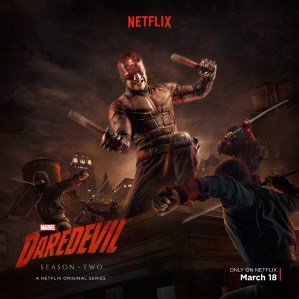
So right off the bat, I want to say that Arthur Chu of Jeopardy-winning fame has already done much of the groundwork for me with his [spoiler-filled] article “Not Your Asian Ninja: How the Marvel Cinematic Universe Keeps Failing Asian-Americans“. In it he recounts his primary disappointment with the second season of Netflix’s Daredevil, namely that the Asians presented in that show are generally villains across the board.

daredevil2poster

Not only are they of an evil persuasion, they’re also, as the title of his piece implies, mostly ninjas. In terms of sheer volume the vast majority of Asians seen on screen during the season’s 13 episodes are that particular brand of martial artist. The rest are, in terms of representation, gangsters, white collar criminals, and crime lords. It is, as Chu says, “Not a good look.”

He picks the Kitchen Irish, a gang of an obvious ethnic background, as his primary example of the show using nuance with a people group. Matthew Murdock, the titular crimefighter himself, is of Irish descent, and another character nicknamed “Grotto” is a former member of the mob who elicits sympathy from both the show’s cast and its audience. While I understand that Irish heritage is unique and distinct from many others, and that people of Irish descent suffered extreme racism in early American history, what shouldn’t be ignored is the fact that on the surface they are White. As are the members of fellow gang the Dogs of Hell. As are Murdock’s friends Karen Page and Foggy Nelson. As is Frank Castle, the Punisher, as well as newspaper editor Mitchell Ellison. Television is full of White people, and with Daredevil being no exception simply stating that there are varied roles within even one subgroup feels like a given.

Unfortunately, Asians fail even when stacked up against other racial minorities. Continue reading

Running the Race on The Bachelor

It’s been a quite a few years since the summer I spent watching Jillian Harris do her level best to find the perfect man on Season 5 of The Bachelorette. Fast forward to the beginning of 2016 and I find myself in the same position, this time with 27-year-old Hoosier heartthrob Ben Higgins. A number of things have changed in those seven years, like the price of bitcoin and the existence of this blog, while others haven’t, like my relationship status [single], ABC’s continued broadcasting of the search for love, and The Bachelor and The Bachelorette‘s respective track records with race.

Is Race on The Bachelor/Bachelorette Really an Issue?

Luckily for me, I’m not nearly the first person to cover this topic. Of particular note is Karen X. Cheng’s “Minorities on The Bachelor: When do they get eliminated?”, which lists the contestants who were racial minorities on both shows and, as the title suggests, exactly what week they did not receive a rose. Worth keeping in mind is that as of 2014 The Bachelor was in its 18th season, and The Bachelorette in its 10th.

Minorities On The Bachelor and The Bachelorette

Check out more specific, well-designed graphs by heading over to the article itself.

Cheng noted that there appeared to be a drastic spike after 2012, during which there was a class action lawsuit leveled against the series regarding “the deliberate exclusion of people of color from the roles of the Bachelor and Bachelorette underscores the significant barriers that people of color continue to face in media and the broader marketplace.” While the lawsuit was later dismissed she posits that the sheer amount of negative press the show garnered is what resulted in the network scrambling to make a change so quickly. Continue reading

“Hymn for the Weekend”: Appreciation, Appropriation, and the Exotic Black Woman

I don’t know about you, but I can’t stop listening to “Hymn for the Weekend” on repeat.

However, before I had even listened to Chris Martin and Queen Bey meld their voices in a divine mesh of harmonies, I was reading about it on Tumblr.

Cultural Appreciation vs. Appropriation

The first thing I heard about the video was that it had some pretty rampant cultural appropriation. Since there have been a number of music videos and performances accused of cultural appropriation over the last few years, I wasn’t too surprised to hear about “Hymn for the Weekend” being added to the list.

The video quickly split viewers into two groups, those who considered it cultural appropriation, and those who appreciated the video’s focus on Indian culture. The clip below highlights a few of the key elements that have been discussed and criticized.

This discussion is tricky for a variety of reasons. For example, there is a time and place when a white person can wear Indian clothing and accessories without coming off as disrespectful. In some cases, it’s actually much more respectful to embrace local dress customs than to ignore them.

There are even music videos where diverse customs and styles have been featured without any backlash about appropriation.

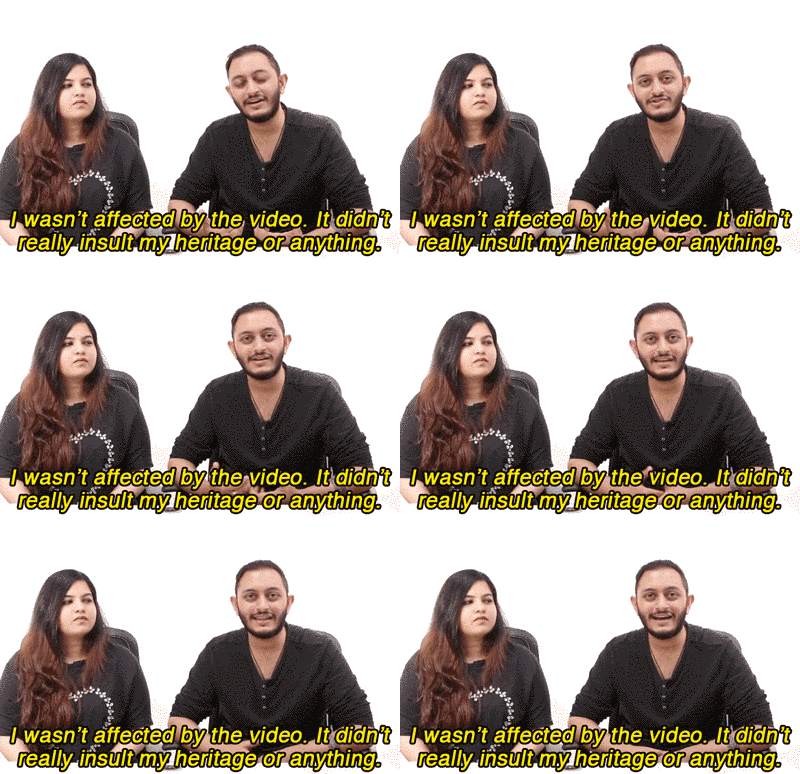
This debate can also seem confusing when Indian fans, or fans with Indian heritage, don’t seem to be bothered by the video’s representation of their culture.

anigif_optimized-20745-1454418987-1 Continue reading

In The Force Awakens White Women get Representation, but Black Women get CGI

I loved Star Wars: The Force Awakens. I loved it so much that the first thing I thought about doing when I walked out of the theatre was hash out everything that this Star Wars reboot had done right.

Like including legitimately humorous dialogue rather than slapstick CGI sidekicks.

Unfortunately, everyone on the blogosphere had already come to the same conclusion long before I was back from my Christmas break. Still, I couldn’t stop thinking about the film, or reading articles about it. So I’ve decided to write about one of the few things that bothered me about the film, rather than many aspects of the film that I loved.

If you’ve been reading this blog for some time, you probably already know that we at CWR were excited to hear about the diversity of casting in The Force Awakens.

I was especially excited when I heard that Lupita Nyong’o had been cast. Ever since she won best supporting actress for 12 Years a Slave and was declared the most beautiful person of 2014 by People magazine, I’ve been keeping my eyes peeled for Nyong’o. After witnessing her sudden rise to fame, I was curious to see if she would continue to find roles in major films, or if she would slowly be pushed out of Hollywood because of her dark skin. As Gregg Kilday explains in his article about Nyong’o, few black actresses have ever managed to secure a spot as a permanent Hollywood heavyweight:

While the stage would appear to be set for [Nyong’o] to ascend to the A-list — just as Jennifer Lawrence did after her best actress win for Silver Linings Playbook last year — it’s not that simple. For while there have been a handful of African-American actors, from Sidney Poitier to Eddie MurphyDenzel Washington and Will Smith, who have reached that status, there’s never been a black actress who has become the equivalent of a Julia Roberts or Angelina Jolie. Whoopi Goldberg came closest, following her best actress Oscar nomination for 1985’s The Color Purple and supporting actress win for 1990’s Ghost, but despite an occasional hit like 1992’s Sister Act, she didn’t maintain that momentum. Hollywood also flirted with Angela Bassett, Thandie Newton, Halle Berry and, most recently, Mandela‘s Naomie Harris, without ushering any of them into its very top tier.

It seems like a habit for major blockbuster films to tick off their diversity checklist by casting a white woman and/or a black man. Meanwhile, actors from other minority groups, especially women of colour, get overlooked because all the non-white, male roles have already been taken. As Evan pointed out in his post about the Martian and racebending, this seems to be the impulse, even when it means casting a white women to play a Korean- American character and a black man to play an Asian- Indian character. Continue reading

Having Put The Martian on Blast, Let’s Talk Briefly About Intersectionality

Last Friday was such an outpouring of emotions [alongside a fair amount of research] that even with roughly 2,700 words there was bound to be something I missed. While I had initially planned on making room for it, an omission was made starkly apparent to me once I began sharing the post. As those of you who read it [and you should, before continuing on with this one] it ended with a call to action: kickstarting the discussion about diversity and representation through asking others to read what I’d written [or however else they felt led].

That’s a risky thing to ask of anyone, for obvious reasons.

ahaRbz4 - Imgur

One of my friends shared the post on Facebook, and was immediately faced with another friend of theirs who had an issue with a small section that I’ve since amended. Here it as it was originally written:

“Chiwetel Ejiofor is an Academy Award winning actor. He’s also a Black [not African American] man, part of a demographic that has not struggled in Hollywood compared to many others.”

Going back you’ll notice that it now refers to Ejiofor as being “Nigerian English”, which is of course much more accurate. The issue that the person had with the original was that by going so far as to state that other actors were “Asian” and even “East Indian” I was snubbing Ejiofor’s own background. I was even accused of doing racebending of my own by overlooking this fact. Continue reading