Welcome again readers, to Culture War Reporter’s second installment of “Explaining American Politics to Non-Americans” [Part 1 here], in which yours truly attempts to explain the chaotic carnival that is our great democracy.
This week, we’ll be looking at the Republican party. Or parties, if things keep progressing as they do.
But let’s dive right in.

I won’t pretend I don’t have my own bias but I will try to be as fair as possible.
To say that the “Grand Old Party” has made itself unpopular abroad would be an understatement. The Bush-era wars, sanctions, and seemingly indiscriminate use of military force has created an international image of Republicans as blood-thirsty imperialists. While Obama has been far more liberal (pardon the pun) use of drone strikes, others point to the Republicans shaky relationship with environmentalism, science, and women’s issues to cast the GOP as backwards and puritanical.
But how fair are these assertions? If they’re true, where do they come from?
The History
The “Grand Old Party”, as it was once called was established in 1854, just prior to the American Civil War. Evolving from a number of groups, the Republican party came to stand largely for federal power and industrialization, contrasting with the emphasis on state’s rights and agriculture that the Democrats had (who we’ll get to next week). Indeed, while now struggling now to rid themselves of the accusation of being an “old, white guys’ party”, the Republicans of old were actually the more progressive, liberal and inclusive of the two parties. Although racism would remain an issue across the political spectrum, it was Republicans who could often count on the African-American voter demographic throughout much of the late 1800s.

Exactly when and why that stopped being the case is still a matter of heated debate.
Some would cite that the “Red Scares” (anti-communist witch hunts) of the 1950s pushed the party increasingly towards aggression, militarism, and social conservatism. Others might argue that as issues of civil rights, poverty, and the war in Vietnam caused many African-Americans to shift towards the Democrats, leaving the party almost exclusively in the hands of the white tycoons.
In spite of this shift, Republicans nevertheless have consistently managed to gain and often dominate American politics, the Reagan-era in the 1980s seeing massive cuts to government spending while increasing intervention in Latin America, the Middle East, and Afghanistan. The short-lived presidency of H.W. Bush, however, would see the abrupt end to the Republican Golden Age, with economic downturn and issues from within the party leading to Democrat victories in the 90s.
And then came “W”.
 Continue reading →
Posted in America, bizarreness, business, Christianity, government, history, media, money, morality, news, politics, race, religion
Tagged Abolitionist, Abraham Lincoln, Al Qaeda, arminian, black, Bush, calvinist, Christian, Civil War, Cold War, democrats, Explaining, free market, GOP, history, Inclusive, Industrialist, IS, marriage of convenience, Military, moderate, Mormon, north, Obama, party, politics, Primaries, progressive, radical, religion, religious, republican, RINO, south, tea party, USSR


 I very, very strongly recommend that you read it in its entirety, because with the sole exception of one small portion I’ll be addressing I believe it to be the gospel truth. If you still absolutely refuse to for some absurd reason, and I’m going to ask you to check it out again before moving on . . . the post catalogues the portrayal of Asian men in American cinema, specifically in terms of their desirability. It was particularly eye-opening to me in that one of the earliest examples goes back to the late 1950s with The Crimson Kimono [poster on the right, obviously].
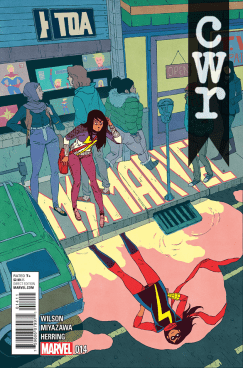 Before we really delve into this review, can we please pause for a moment and gush over its cover? Jake Wyatt returns after providing art duties for issues

 create biological webs from her fingertips. Other favourites from the same publisher include Shang-Chi, the Master of Kung-Fu, an Avenger at the time of this writing. He primarily relies on his master of martial arts, an ability which didn’t keep him from participating in an intergalatic war to save the universe. Another is Amadeus Cho, a teenager who attained the title of “7th Smartest Man in the World” and frequently took down superhuman assailants with only his intelligence and whatever else was available. Yes, at one point one of those superhuman assailants was the Hulk. The Hulk.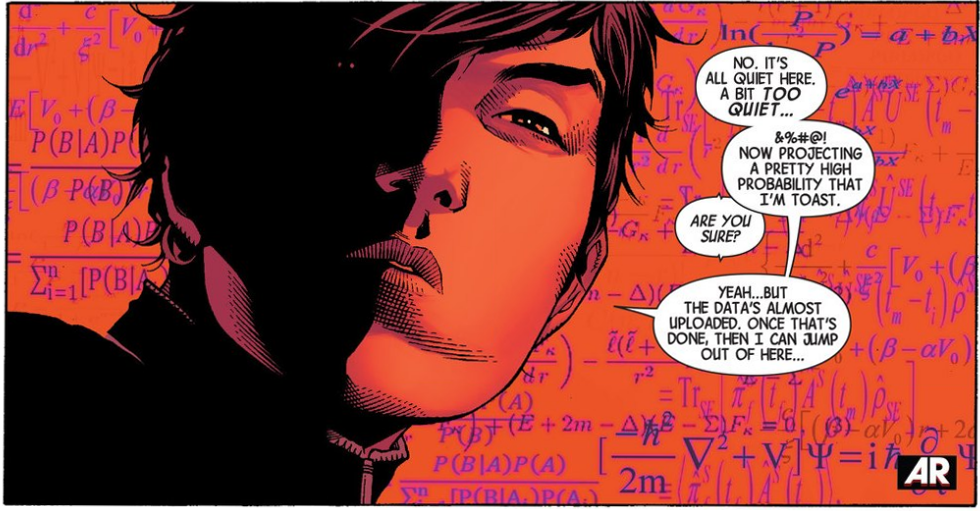
 Bradley Katsuyama is a real-life currently existing person. He is an Asian-Canadian and has been a doer of objectively heroic actions surrounding the investigation and consequent combating of algorithms that preyed on unwitting investors. While not the intellectual property of a company creating and producing recent years’ largest blockbusters he is the focus of the novel Flash Boys: A Wall Street Revolt, a film adaptation of which Aaron Sorkin is set to write the screenplay for. Yet at this point Katsuyama is no closer to having his story told than Shang-Chi or any of the rest of them.


 Culture War Reporters